First Lady Dolley Madison cut quite a character

Dolley Payne (1768-1849) was the widow of prominent Philadelphia lawyer John Todd when she married the future fourth president of the United States, James Madison from Virginia. She was a colorful character, even apart from her extravagant fashion sense (which I see as a rebellion against the Quaker Plain constraints of her youth), a charming hostess who can be viewed as a founder of bipartisanship in American politics thanks to her dinners. Pleasurable food does enhance conversation, no? Dolley’s legendary social gatherings, known as “squeezes,” were attended by influential figures such as politicians, foreign dignitaries, and intellectuals, making her a central figure in American society.

Or, as a North Carolina Quaker minute book wistfully records her, “Formerly of our society,” meaning the Society of Friends. She was also the first president’s wife to be called First Lady.

Today, we have a Double Tendrils. The first set of quotes reflects her time in the White House and her flight during the War of 1812 when she saved the iconic portrait of George Washington in the throes of the attack that burned the new White House, which she had furnished and decorated.

First, things she said as First Lady.

  1. Two messengers covered with dust come to bid me fly, but I wait for him. … I am accordingly ready; I have pressed as many Cabinet papers into trunks as to fill one carriage; our private property must be sacrificed, as it is impossible to procure wagons for its transportation. … It is done… the precious portrait placed in the hands of the gentlemen for safe keeping. … And now, dear sister, I must leave this house or the retreating army will make me a prisoner in it by filling up the road I am directed to take.
  2. I have always considered my husband my partner and equal, and have valued his opinions and ideas greatly.
  3. In times of crisis, it is important to remain calm and focused, and to make decisions based on reason rather than emotion.
  4. Leadership is not about wielding power, but about serving others with humility and compassion.
  5. You may imagine me the very shadow of my husband.
  6. A good leader listens to the voices of those they serve, and seeks to understand and address their needs.
  7. History is shaped by the actions of individuals, and we all have the power to make a difference.
  8. I believe in the importance of standing up for what is right, even if it means going against popular opinion.
  9. I have never been afraid to speak my mind and advocate for causes that I believe in.
  10. I believe in the power of collaboration and teamwork, and the strength that comes from working together towards a common goal.

The second set of quotes frame a larger perspective.

  1. It is one of my sources of happiness never to desire a knowledge of other people’s business.
  2. I believe in the power of education and the importance of women’s access to knowledge.
  3. I believe in the importance of preserving and protecting our natural environment for future generations.
  4. True strength lies in the ability to admit mistakes and learn from them. … Honesty and integrity are the foundations of a strong and lasting legacy.
  5. A strong woman is one who can support and lift others up, even in the face of adversity. … Women have the capacity to be leaders and agents of change, and should be given equal opportunities in all areas of society.
  6. Life is too short to hold grudges or dwell on the past.
  7. Excellence should be pursued in all aspects of life, whether it be in relationships, work, or personal growth.
  8. Everyone deserves to be treated with respect and dignity, regardless of their background or social status. … The true measure of a person’s character is how they treat others, especially those who are less fortunate.
  9. Kindness is not a sign of weakness, but a reflection of strength and compassion. … I believe in the power of forgiveness and the strength that comes from letting go of anger and resentment.
  10. I would rather fight with my hands than my tongue.

The backstory’s beginning to look presciently ominous for today

In my revisions of the novel Daffodil Sunrise into a more sweeping Daffodil Uprising, I added backstory involving Indiana politics and efforts to extract personal wealth from one of its state universities.

Considering the current effort of the governor to seize control of the school’s board of trustees has me realizing my dark imaginings were all too naïve.

We know what one-party rule did in Germany and also in the Soviet Union.

In my book, the administration had little interest in listening to the students, much less in responding to their needs.

You can bet that will be a renewed breakdown ahead.

In the larger span of time

Being a classical music fan induces a peculiar sense of history. If you love fine paintings or theater or literature, you may encounter something similar.

I found some of this being stirred up while sitting through a concert where Debussy was the oldest music performed. He was still considered “modern” when I began attending concerts in 1959 or so. He died in 1918, shortly before my parents were born. Not that far back, then.

For additional perspective, some major Romantic-era composers like Tchaikovsky, who died in 1893, or Saint-Saens, 1923, or Puccini, 1924, weren’t all that distant from me at the time, though it seemed they were much more ancient, say closer to Mozart. The span between them and me at the time would fit into my own life now.

I do recall hearing a live performance of the Tchaikovsky fourth symphony under Lukas Foss and the Buffalo Philharmonic and during the rapturous applause afterward have the gentleman sitting beside me lean over and say, “You should have heard it under Reiner in Cincinnati, as my wife and I did.” That would have been only 50 years after its composition, and this was 30 or so years later.

What is striking me is how much harder it’s been for new music to catch on since then. I don’t think it all has to do with the attempt to write in more original – and often strident – styles.

There’s also a looping of generations, as would happen when a ten-year-old heard something from someone who was 80 relating something he or she had heard at age ten from an 80-year-old’s encounter at age ten with an 80-year-old from age ten. It wouldn’t be hard to have two-century span at hand.

Now, as for naming compositions from the last 50 years that have entered the standard repertoire, it would be a shockingly short list.

Silent witness

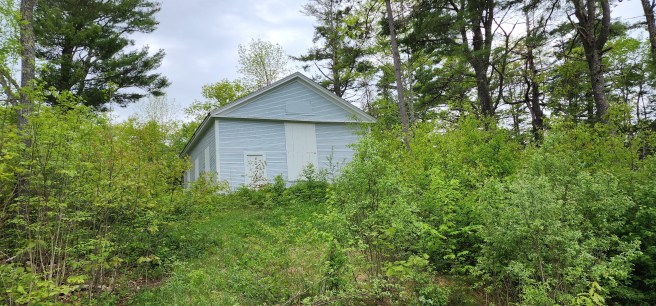
The former home of Methodist Episcopal congregation in Edmunds, Maine, once looked out over  the Lower Bridge across the Dennys River. The bridge disappeared after U.S. 1 was routed a quarter-mile to the east. The church, meanwhile, is being encroached by forest, a reminder of a more populous and more prosperous time. Its square belfry is long gone.

Below, remaining stone abutment of the bridge is seen on the Dennysville side of the river at low tide.

Piracy today, yes, it’s real

If you think that pirates are a long-ago thing or are cute and romantic along the lines of Disney’s Pirates of the Caribbean series or actor Johnny Depp, think again. This Tendrils won’t even attempt to name the ten best pirate movies ever or ten best pirate actors or ten examples of the crazy language employed there. Egads, matey?

Instead, let’s take a look at what’s taking place in the 21st century.

  1. After a trend of declining activity, the International Maritime Bureau reported a global increase in piracy against shipping in 2023, with an especially alarming rise in the number of crew being taken hostage. I don’t think we can blame Covid, though. More recent data are difficult to sift. There’s so much jargon and legalese, perhaps because of the insurance companies.
  2. The leading hot spots today have been the Gulf of Guinea, the Callao anchorage in Peru, and the Singapore Strait along with Southeast Asia in general. Look them up on the map.
  3. The majority of vessels targeted by attackers were bulk carriers, that is, merchant ships specially designed to transport unpackaged bulk cargo such as grain, coal, ore, steel coils, and cement. Tankers and containerships were also hit, as were smaller vessels such as commercial fishing boats. Even yachts have been at risk.
  4. Incidents were nearly evenly split between vessels anchored or underway. For those that were anchored, that usually meant attackers shimmying up the anchor chain in the depth of the night.
  5. Consider an attack undertaken in broad daylight when six pirates in a skiff began chasing the MSC Jasmine and opened fire with automatic weapons and rocket-propelled grenades. The master the ship raised an alert, sent most of his sailors to the ship’s citadel, and ordered his security team to return fire. The pirates retreated, but didn’t get far. Two warships, one American and one French, responded the distress signal, intercepted the skiff, and caught its mother ship to boot. Twelve pirates were taken into custody.
  6. In another violent attack, the Singapore-flagged product tanker, MT Success 9 was boarded along the Ivory Coast by 12 pirates wearing ski masks and gloves and armed with guns. They hijacked the tanker, restrained the crew with cable ties, and kept them hostage while part of the oil cargo was stolen. Before leaving the vessel, the pirates also destroyed the tanker’s navigational equipment.
  7. Other pirates even used military helicopters. So much for walking the plank.
  8. Southeast Asia, however, remains the primary area for piracy attacks. Most of those were petty crimes with ship stores or property stolen.
  9. Incidents in the Callao Anchorage in Peru and the Indonesian archipelago have also been rising, to the point that Indonesia’s 17,500 islands and surrounding waters may now take the title as the world’s most heavily pirated.
  10. Most of the attacks are driven by factors ranging from corruption and institutional weakness to depleted fishing conditions and a lack of economic opportunities in countries outside of the Western nations’ primary focus.

Online and intellectual piracy is a whole different matter.

So just how old is our house?

Real estate transactions did use the lot at the corner of Water and Third streets as a referent for other lots. We’ve already seen examples of John senior’s mention of “land owned by me” and the like. Later, we encounter “the homestead of my late father John Shackford” and “the old homestead of my father the late John Shackford.”

Yes, homestead.

This detail on our stairway resembles others from the 1830s and 1840s in town.

After considering the 1806 Samuel Wheeler house at 9 Washington Street and the Federal-style 1805 Hayden (the oldest two-story dwelling in town), the circa 1807 Lewis Frederick Delesdernier on Franklin Street, the 1810 Jonathan Weston, 1820 Daniel Kilby, and 1821-1822 Stetson-Starboard houses on Boynton Street as well as an 1812 Cape on Washington Street, the 1816-1818 Dr. Micajah C. Hawkes on Shackford Street, 1819 Jonathan Venzim-E.E. Shead on Middle Street, and 1821 William Bucknam and Captain Joseph Livermore houses on Key Street, I’m confident that ours predates them and may indeed be older than 1803, as the routing of Water Street route proposed.

I’m willing to venture 1780s. Feel free to argue otherwise.

The mortices and peg holes in this rafter from our house reflect timber framing techniques.

As for time? An Eastport Sentinel article on the Wheeler house, March 29, 1882, mentioned that under the ownership of Bion Bradbury, the home “was changed by the substitution of a pitch roof,” among other modernizations. I hadn’t really considered the pitch of our roof until this but now realize it is lower (or was, before our own modernizations) than many of the later structures in town. The Federal-style houses, of course, are an exception.

As for Shackford Head

While the 100-acre Shackford holdings along Water Street underwent subdivision and real estate development, the 100 acres at Shackford Head remained intact. So far, I’ve been unable to locate the original title that would have been bestowed by the Commonwealth of Massachusetts to Captain John Shackford senior, but the documents for the adjacent Coney or Cony Farm repeatedly refer to the land held by John Shackford, during his life, or later, “land formerly of John Shackford.”

In 1837, when Joseph Coney leased his 40-acre farm to his son, Samuel May Coney (1812-1895), the rent was recorded as one cent a year.

Samuel soon came into full possession. By the time of his death, he had added the Shackford property, too, as was noted in the sale from the estate (attorney John H. McFaul) to Charles O. Furbush in 1896. That transaction included an 1895 Plan of Shackford Head by surveyor H.R. Taylor.

All of this would become part of the controversial attempt of Pittston Company’s attempt to build a massive oil terminal and refinery on the site in the 1970s.

I can see why Shackford heirs living in Eastport would have held onto the rugged land. A house could go through 40 cords of firewood in a year, and with seven homes or more at times, having a large wooded reserve would have been useful. Depending on the proximity of a sawmill, the wooded land could have also supplied the Shackford shipyard or even the wood in our house.

When’s the last time you went bowling?

Well, the sport does figure prominently in the movie The Big Lebowski and the TV series Surreal Estate, a device that slyly dates the both stories.

That said, here are ten factors to consider.

  1. A realization that parking lots outside bowling centers were largely empty in sharp contrast to their crowded condition only a few years earlier prompted a landmark study by Harvard political scientist Robert D. Putnam. His 2000 nonfiction book, Bowling Alone: The Collapse and Revival of American Community, expanded on his 1995 essay, “Bowling Alone: America’s Declining Social Capital,” examining the steep decline of in-person participation in group activities pf all kinds by adults across the nation. It wasn’t just bowling but civic clubs, social lodges, churches and synagogues, labor unions, political meetings and campaigns, even neighborhood parties.
  2. In America, the sport usually refers to indoor ten-pin bowling on polished wooden lanes, although lawn bowling is popular in across much of the rest of the world. Think of the places named Bowling Green as a referent. Bocce and curling are close relatives.
  3. The pins themselves come in differing sizes, which then have matching balls to be rolled at the targets. The most common in the eastern United States and Canada are ten-pins – tall, fat, and the heaviest, matched with a large ball about 8.59 inches in diameter, weighing between six and 16 pounds, and having two or three finger holes. Duckpins, invented in Boston in the early 1890s, are shorter and like candlepins, invented in Worcester, Massachusetts, in 1880, are played with balls that fit in the palm of the hand and have no holes. Other varieties include nine-pin and five-pin.
  4. At its height of popularity in the United States in the years after World War II, hoards of players – men and women – participated in weekly leagues, wearing customized team shirts and their own bowling shoes and playing with their own balls. Non-league players could, of course, on a lark rent the shoes and balls, if they could find an open lane. For many, it wasn’t a bad date-night option.
  5. I won’t get into the intricacies of scoring – I never did figure that out, much less those for tennis. But I can admit that candlepins are tricky.
  6. Traditionally, the balls are constructed of blocks of maple glued together and then lathed into shape and covered with plastic, paint, and a glossy layer. Synthetics are now also allowed, depending, and rubber pins were once even in use.
  7. The sport has a long history in antiquity before some action moved indoors, as best as I can tell, in the mid-1800s. In 1875 in the U.S., rules for ten-pin play were standardized by the National Bowling Association in New York City, superseded in 1895 by the new American Bowling Congress.
  8. Chicago-based Brunswick Corporation was already well established as a maker of billiard tables when it began making bowling balls, pins, and wooden lanes to sell to taverns installing bowling alleys in the 1880s. The company became synonymous with bowling.
  9. The arrival of automatic pinsetter machines in 1952 eliminated the need for pin boys, a precarious and dangerous job for males who sat unseen above the pins to clear them and reposition new ones after each frame of play. (As I was saying about scoring?) The machines made by American Machine and Foundry of Brooklyn, New York, speeded the game and sent the sport’s popularity rocketing.
  10. The Golden Age of Ten-Pin Bowling took off around 1950, including weekly television coverage. Some professional bowlers earned as much as their colleagues in baseball, football, and hockey. The era ended in the late 1970s.

So much past under one roof

I never suspected our humble cottage would hold so many stories and twists. A sea captain’s home should have a widow’s watch, right?

Ours, as you’ve noticed, doesn’t.

Still, a single house like ours can be a miniature version of the whole island’s history.

There are still so many unanswered questions to work around in this puzzle, along with points that will require clarification and correction. Consider this, like the house itself, a work in progress.

Besides, we’re living out the next chapter, including the renovations and restructuring that’s occurring as I write this.

Meet patriot Lewis Frederick Delesdernier

In researching the history of our house, I learned about many of its earlier neighbors as well. Of note to the south was one with a rather exotic surname. Turns out he was a rather influential figure in the establishment of Eastport.

Here are a few points about him.

  1. He was born as Louis Frederic DeLesdernier in Halifax, Nova Scotia, in 1752 to Gideon de les Dernier and Judith Marie Madelon Martine. As for that French surname? The precise location at that time could have been under either French or English rule – the conflicts are quite tangled. He was, however, a generation removed from Geneva, Switzerland, by then. French-speaking, all the same, however anyone wound up spelling it.
  2. His uncle Moses was the first Protestant to farm among the French Acadians.
  3. When the American Revolution broke out, Lewis enlisted in an effort to bring the American Revolution to Canada. The attack on British Fort Cumberland in Nova Scotia was defeated and then, in retreat, Lewis ultimately wound up in Machias, Maine, where he was charged with maintaining good relations with the local Passamaquoddy to assure that they didn’t defect to the British. During this time, in 1779 he married Sarah Brown, the daughter of a fellow garrison member. For a Frenchman, attacking the English makes sense.
  4. After the war, he resettled on an island in the waters either in today’s Lubec or Eastport, Maine, one called variously Fredrichs or De Les Dernier island. There he was appointed as the first customs collector for the district, possibly encompassing both today’s Lubec and Eastport, and, in 1789, when the first post office was established, was named postmaster. Could that island have been what emerged as Moose Island, today’s Eastport?
  5. In Eastport, he was not only the first postmaster but also the first collector of customs. Case closed?
  6. The first owner of our house did have a ship named after him. In those days, naming a ship after someone often obligated them to buy a share in it. Did this present a conflict of interest for the custom’s collector?
  7. After Delesdernier’s first wife’s death in 1814, he married the widow Sophia Fellows Clark in 1817. Trying to determine the number of children remains elusive, but I’m finding no descendants in the region today.
  8. When he died in December 1838 at his son’s home in today’s Baileyville, Maine, a warm friend, Alfred A. Gallatin, the fourth U.S. Secretary of the Treasury (1801-1814) under President Thomas Madison, said, “He is to me of all Americans I have seen, the most zealous and full of enthusiasm for the Liberty of his country.”
  9. An 1803 arrival in Eastport of Harvard graduate Jonathan D. (the initial for you can guess what) Weston was auspicious. Shortly before his death, provided details on much of the early settlement of Eastport in a history published in 1834 and later woven into William Henry Kilby’s 1888 volume. He also hosted famed ornithological artist John J. Audubon at his 1810 home at the corner of Boyden and Middle streets. I’m not finding any direct relationship, but will venture that the middle name was in honor of Lewis, perhaps even hinting at the reason for Jonathan’s moving to Eastport.
  10. Lewis’ circa 1807 house was eventually moved from down on the water to higher ground. The only remaining evidence of its original location is in the naming of Customs Street, far from the later custom’s offices. Today, the Delesdernier home on the south end of the island is proudly owned by symphony conductor and cellist Dan Alcott, who anticipates moving into it year-round. We can’t wait!