Big city, big dreams

Who was I to think I could say something fresh about underground public transit? Well, the outsider has long had a place in the arts … and in comedy.

I had expected to wind up living in a big city, where I’d have access to frequent symphony concerts and perhaps opera as well. Foreign films, well-stocked bookstores, kindred souls. All the rest. My life journey and my career went another way, but I still wound up as a subway rider, of sorts. I was far from a private jet or even taxi kind of existence.

My introduction to underground transit probably came in a series of big, cartoonish, wildly rendered Subway Riders canvases that received a special exhibit at the Dayton Art Institute sometime in my high school years. I think they were by a hot New York rising star who was visiting Ohio as an artist-in-residence or an arts school guest instructor, though his identity eludes me now. Flash in the pan? Rubes in the sticks?

I wasn’t exactly wowed, but I was intrigued. He wasn’t Rembrandt.

The furthest east I’d been was Pittsburgh. Perhaps the next year my family got to Toronto and Montreal, though I didn’t venture on the subway in either of those cities.

Do families even take such vacations on the road nowadays? We did have our camping gear in the trunk of our red Buick Roadmaster.

~*~

Writing about subways – becoming fascinated by them, their offensive grit, stench, and loud noises included – was about the last thing I would have expected when I graduated from college or even high school. I was a Midwesterner through and through. The closest I had come to what I saw in those Subway Rider paintings was on the City Transit trolleys at rush hour. We definitely weren’t flashing along a dark tunnel or loading by hoards or packed together like sardines.

But people kept telling me I wasn’t destined for my hometown, no matter how loyal I felt. Or was that defensive? The message they conveyed was that I should look to Manhattan or some equivalent opportunity. Even Cincinnati, an hour away, looked sophisticated.

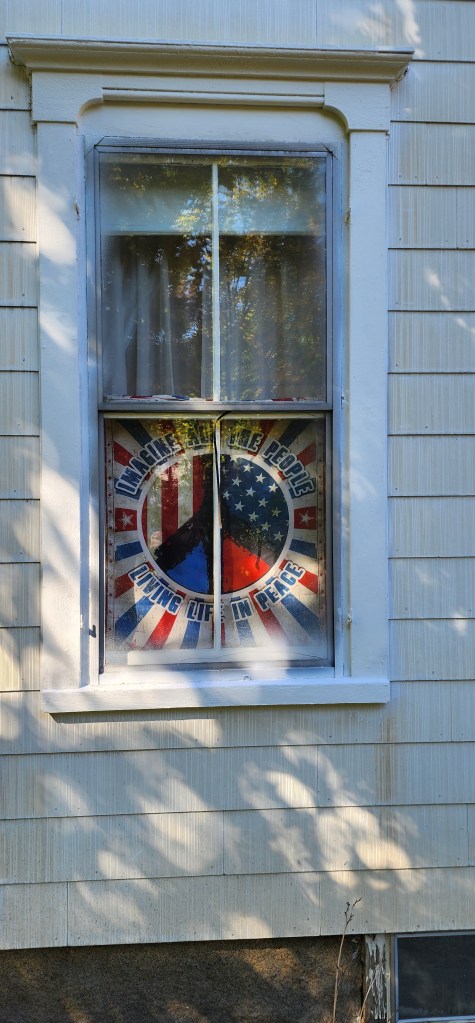
The hippie outbreak, or Revolution of Peace & Love, was still somewhere in the future, though the Beatles were shaking the status quo and skipping around Elvis in what we’d now call the pop culture scene. Culture was, let me emphasize, concerned with things that would raise our vision and intelligence rather than merely mark social norms as in averages, either mainstream or ethnic.

By the time I actually rode a subway train, I was nine months away from earning an urban studies certificate, thanks to my multi-disciplinary college studies. The journalism career that embraced me would instead lead out in the boonies or an equivalent emotional wilderness.

~*~

My book that sprang from those encounters started out short and flashy as its first draft in ’73. Inspired, in part, by Brautigan’s Trout Fishing in America, I typed away sitting cross-legged before a converted coffee table and my beloved Olivetti Lettra 22 blue typewriter. The very portable one.

Graffiti, wild splashes. This was going to be my wild hippie book, the essence of it all. It had the Midwest – what would emerge as Daffodil – and it had the Big Apple, where so many of the freaks I knew after graduation had grown up. The movement was a confusing clash of youthful excess.

It was too much – way too much, actually.

By the time I distilled it down into what was published as Subway Hitchhikers, it was more of a lacy collage presented in a strobe-light kind of then/now alternation that I came to see was overly ambitious to be effective rather than confusing.

What I did sense was the way big cities draw on the interior landscape, almost like vampires on the innocent. Not that I ever expressed it that openly, but I am now thinking it fit Gotham if only I were usually trying to look at the bright side of life.

Was it even a novel? Short, and perhaps meta-fiction?

Unlike any other.

Some things ‘Quaking Dover’ has in common with my novels

Not that I really noticed the parallels until now.

  1. Counterculture is central, leading to an awareness of an underground community or at least kindred spirits.
  2. Both have meant learning to write differently than my neutral third-person journalism. Emotion, for instance, over fact, is the rule in the fiction. And the history opened a similar vein as creative nonfiction.
  3. The role of a narrator in both. In the history, that meant developing the gently laughing curmudgeon as he pored over historical data. In four of the hippie novels, it was the snarky daughter reviewing her late daddy’s hippie experiences.
  4. Both veins are self-published, falling under the shadow of being “not commercially viable” by publishing houses. That places an additional burden on the author.
  5. Marketing is a huge challenge. Apart from Subway Visions, none of my stories take place in a big city or address a big audience. How many hippie novels can you name, anyway. As for Quakers?
  6. Spirituality and religion run through all of them. In the novels, it’s often yoga, though Hometown News runs up against a puzzling array of churches. In Quaking Dover, though, it’s often the clash between the upstart Friends and what I first saw as rigid Puritans before both traditions begin to, uh, mellow.
  7. There’s a strong sense of place, even if these locations are far from the mass-media spotlight.
  8. I go for the big picture. I really would like to have a simple book – something, as Steven King advises, having only one big idea – but that’s not how my mind works.
  9. They’ve all undergone deep revision. Much of the fiction actually got new titles and new characters after their original publication.
  10. They were all labors of love.

Various lifestyles I’ve lived

Maybe it’s a good thing we didn’t have selfies through most of it. Most of those shots would have no doubt been embarrassing now.

So here’s how my life’s shaken out in terms of lifestyles.

  1. Straight ‘50s middle class: Growing up in the Midwest.
  2. Hippie: From college to Upstate New York and various moves thereafter, including my first marriage to an emerging visual artist. Well, this does fuel my novels Daffodil Uprising, Pit-a-Pat High Jinks, and Subway Visions.
  3. Monastic: The rogue yoga ashram in the Pocono mountains. See my novel Yoga Bootcamp.
  4. Ascetic: In many ways, this was still hippie as I lived in a loft in a small downtown in a place resembling what I’ve called Prairie Depot.
  5. And back-to-the earth: The next move was a return to my college, this time as a research associate position before leaping on to the interior Pacific Northwest, one with my personal life filled with growth as a published poet, a shift to Quaker spiritual practice, and immersion in backwoods and wilderness wonder. These inspire my novels Nearly Canaan and The Secret Side of Jaya.
  6. William Morris: Steel mill region in what one called the Near East, aka the Rust Belt. Included a divorce and rebound. Hometown News arises in that experience.
  7. Nearly Plain Quaker slash Muppie: The Mennonite Urban Professionals I was hanging out with in Baltimore were the less expensive version of Yuppies. Living in a federal-style brick rowhouse in the Bolton Hill neighborhood was the culmination of my big-city dreams. During the week, I was often on the road with a company car and expense account. This was a rich mix for me, a time of much personal growth, ending in a self-gifted sabbatical year hunkered down in a suburb in which I drafted early versions of much of my fiction.
  8. Yuppieville on the Hill: Relocating to New Hampshire, I wound up living in a complex where I rented a small townhouse. Back in the working ranks rather than management, I was freed from long unpaid overtime hours and the neckties and suits of my earlier professional situations. Contradancing, especially, steeped me in Boston, an hour to the south, while I immersed my personal writing in poetry circles. My love life had many ups and downs.
  9. City farmer: Remarriage prompted my move to the New Hampshire Seacoast, where we bought an old house within easy walking distance of downtown and the Quaker Meeting. That “farmer” label actually befits my spouse, the avid gardener. The property also had the small carriage house you know as my Red Barn. Retirement included serious choral singer and daily swimmer roles.
  10. Island author: We needed to downsize, which led to the remote fishing village with a lively arts scene you’ve been reading about here.

We’re off to a most uncommon country fair

There’s no Ferris wheel, no cotton candy, no neon lighting, no celebrity performers – for years there wasn’t even coffee, until fair-trade organic became an option – but the three-day event still draws roughly 60,000 folks to a two-lane road toward its grounds in the rolling farmland of central Maine.

For the first dozen years I lived in New Hampshire, I heard about the most recent gathering and spotted its current T-shirts at contradances and farm markets afterward, but my work schedule didn’t fit attending.

And then, newly remarried, I took some precious vacation time that gave me a first-hand experience – including the now legendary traffic jam that rivaled any big city. Once there, we encountered a number of people we already knew, even though we lived three hours away.

Another dozen years passed before we returned, from the other direction, and this year’s an encore.

It’s the Common Ground Fair, a three-day weekend affair held a few weeks after Labor Day – more or less an equinox celebration held by the Maine Organic Farmers and Gardeners Association, or MOFGA,  the nation’s oldest and largest statewide organic organization in America.

It’s like a Whole Earth Catalog come to life. Of, if you’ve ever wondered where the hippies went, a good place to see places the movement has evolved and continues in practical ways.

Not all of it’s back-to-the-earth, either. Sustainable living, local economies, and spirituality augment the emphasis on organic agriculture and food use. There’s even a workshop on organizing a labor union.

Here’s hoping for some prime fall weather.

I’ve been meditating for more than 50 years now

Well, I haven’t been living as a monk in a Himalayan-mountain cave any of that time, but it does sound more impressive that being a “meditator” or someone who practices in a contemplative religious tradition that long even when it’s only once or twice a week.

The thought came to me in Quaker worship the other Sunday morning, the center of what has remained my spiritual discipline and community after the yoga-based version faded away over the years – even my rising before dawn to sit cross-legged in front of a small altar and its candle before I tackled poetry and then took off for the paying job for the rest of the day.

~*~

While I can no longer park myself on a cushion on the floor in the Asian style but rather settle in much more loosely on an old meetinghouse bench – do not call it a pew – the bigger change has been in the focus of my sitting.

The goal of the yoga exercise was to transcend, leaving behind mundane awareness altogether. Somewhere you might encounter your past lives, even. If not that, then a natural high, as an advanced version of a drug trip. At least an awareness of an altered state of consciousness that might even address authentic ethereal reality.

Instead, in the Quaker vein, what I’ve found is a time of being mentally and emotionally renewed and even gaining clarity into my daily engagements.

Or, as one quip goes, some of the best barns in New England were designed during Quaker Meeting. In this case, meaning the hour of shared and mostly silent worship.

~*~

The half-century mark also takes me back to my first Summer of Love, detailed my novel Pit-a-Pat High Jinks, a book that has scenes triggering the erotica filter, should you try to order a copy.

While I was preparing to live in the yoga ashram to our south back then, I experienced my first summer with a daily exposure to the outdoors, including swimming in mountain lakes, often naked, Upstate New York. It was a time of great struggle, discovery, growth, and redirection for me.

And at the end of all this, at the closure of our hour of silent worship here in Maine, one Friend (aka Quaker) voiced an insight from a Native perspective that when it comes to time, the focus is on the past – it’s the only one we can know. The future is the one behind us, rather than ahead. Not that there’s that much ahead for me in this lifetime.

~*~

Still, it’s was a kind of day that had me wondering, can life be any better than this? (Even with those aches et cetera of aging.)

Free, this month only

Do you read ebooks? If so, here’s an offer you really can’t pass up.

For the month of July, the digital version of my history Quaking Dover is being offered for free at Smashword.com’s annual summer sale.

The paperback edition has been selling very nicely, thank you, but I do want to share the excitement during the city’s 400th anniversary and, well, here’s one more opportunity to get in on the story. Yes, little Dover is older than Boston, New York, or, well, any other city along the northeast coast other than Plymouth and Weymouth, Massachusetts.  (Bet you didn’t know that!)

For details on obtaining this limited-time offer, go to the Jnana Hodson page at Smashwords.com.

It really is quite a tale.

All advocates of peace are invited

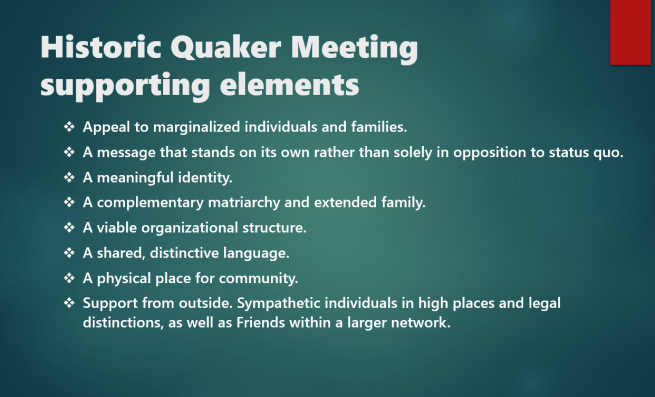
I didn’t make these points this baldly in my book Quaking Dover, but as I’ve prepared for my upcoming presentation from West Falmouth Friends’ Peace and Social Order committee’s Zoom presentation, I’m seeing these elements at play.

I do hope you can join us online for this free presentation on Sunday, July 9, at 12:30 pm. Please not that preregistration is required at https://bit.ly/QuakingDover

You don’t have to be a Quaker to participate, either. (Insert smiley face emoji if you must.)

Just how do peaceable communities emerge and survive?

Maine’s Common Ground Fair has a cult following – and we’re going

It’s like a state fair in the hippie, organic, granola-mind reality. There’s no midway with carnival rides, for sure, but for truly inquiring-minds folk, it’s an autumn equinox slash harvest-time celebration.

Yes, let’s declare a true Thanksgiving, minus turkeys.

Shortened in its post-Covid resurrection, this year’s gathering in Unity, Maine, is the premiere event of the Maine Organic Farmers and Gardeners Association (MOFGA), and runs Sept. 23 through 25.

Now that we’re living in Maine, we can identify as members and look forward to attending, even though in New Hampshire we were surrounded by devotees. Yes, it’s that boffo.

As an aside, I can attest to enjoying my best-ever souvlaki ever, from a wood stove, no less, at an earlier fair. Gee, and I hate standing in line. It was worth it.

This is definitely a hippie-vision positive manifestation of the radical mindset of nirvana. And there’s no honky-tonk.

This year’s poster will no doubt be displayed on a wall of our new abode.

See you there?

What happens when a journalist attempts a novel

It used to be said that every newspaperman had a novel inside him, waiting for release. (Yes, male. Women reporters and editors were a definite minority. My, how times have changed!)

Frankly, I rarely saw any literary ambition around me. Few in the business read fiction of a serious sort, much less poetry. There were, though, a couple of playwrights. More recently, however, I know of two colleagues who have self-published – one a mystery, the other a political intrigue.

Yes, we’ve had notable exceptions, with Edna Buchanan, Ernest Hebert, Carl Hiassen, and Tony Hillerman topping my list. (Hemingway wasn’t considered much of a reporter in his six-month stint in Kansas City, and earlier giants often cited reflect a much different kind of journalism than what’s been practiced from the rise of the last century.) The crush of daily deadlines is exhausting, and fiction requires an entirely different approach and sensibility to the telling of a story. Journalists are conditioned to put facts first, usually without any concern for feeling, and to be professionally neutral, reflecting the quest of objectivity. These stances place the reporter at a distance from the subject, no matter how fascinating. Journalists also tend to put action ahead of the actors. Most of the resulting novels leaned toward the crusading reformer slant of the Front Page tradition – Down with corruption! – or maybe sports, either way, with the emphasis on the game more than the inner mindset of the players.

Well, there was also one editor-in-chief who took a popular genre novel and did a paint-by-numbers kind of rewrite over it. I think it was a Western, but I’m no longer sure. His connections got it published, and his success led to a half-dozen more. He was sheepish about the whole thing, though. It was more like a game, I suppose.

I wasn’t typical. My first love was the fine arts beat, for one thing. Since jobs there were scarce, I wound up on the copy desk. No matter how much I love politics, I find meetings boring. Press conferences, even more so. My most satisfying post was heading up lifestyles sections. Long story, as you’ll see in Hometown News. Maybe I was mostly a misfit who happened to do some things extremely well.

News writing, for the most part, is supposed to sound anonymous. Short sentences, limited vocabulary, a structure with the most important details at the top and the rest in descending order. As a writer or editor, your craft can soon become dulled. As an editor, one of my skills went to headlines, trying to relate a story in as few as four or five words. I’ve written hundreds of thousands of them, and I can see the distillation as an element of poetry. In my personal writing, I often reacted against the broader restrictions – I wanted a richer range of diction, more accurate language, more varied sentence structure (yes, I love long threads that work), and often more background on the story itself.

Turning to fiction, I’ve learned the importance of withholding details until later in the tale, things like not including first name, middle initial, and last name when introducing a character, much less his or her age and address. As for my poetry, I’ve preferred experimental and edgy, where the image or fractured expression might open into its own ambiguity and potential.

I do remember the first time a poetry publisher reacted to my submission by saying how delighted he was that my work wasn’t what he expected from a journalist. He had received enough to develop a negative opinion, one I fortunately didn’t fit.

My novel “Hometown News” was drafted during my third break from the news biz, when I was approaching 40 and gave myself a sabbatical after two years calling on editors in 14 Northeastern states as field salesman for a major newspaper syndicate. Driving between my calls on the local papers and seeing their newsrooms from the other side of the desk, so to speak, gave me plenty of time to reflect on the industry and then augment what I had collected in my own career. At many papers, as I saw, the managing editor or his equivalent was gone in a year, and with each one, I’d have to start grooming a new connection all over again. Many of them had telling histories of their own. Many of their towns looked like bombed out shells after World War II, their industrial might boarded up or rusting. I kept notes. Many of their skirmishes reflected my own.

Later, developing my novel in a series of routine days set months apart, “Hometown News” gave me an opportunity to see what I could do with creating a computer-generated novel. I set a framework for the day and randomly inserted 80 to 120 markers I could hit with search-and-replace items for each round. There were many other places that had to be manipulated manually, but it the attempt was fascinating, the way working a thousand-piece jigsaw puzzle is.

The result was something like a Jackson Pollock painting, a theme-and-variations curiosity but not compelling reading. Through a series of revisions, I kept the bones but layer by layer added flesh and muscle to bring certain characters to the fore while the dystopian theme deepened.

Thirty-four years after starting out on the work, and seven years after its publication, I am struck by the story’s prescient warning of the collapse of a once very profitable business for the dominant voices, not that our salaries reflected that. What I saw was entire communities under attack, and they still are – not just their daily mirror.

The newsroom I present is a blend of five I’ve worked in over the years – another one was much smaller, and the remaining one was simply different. When you get a group of news folk together and we start talking what one spouse called Bodoni-Bodoni, after the typeface used for many headlines, we all have insider war stories. I hope “Hometown News” gives you an idea how ours translate.