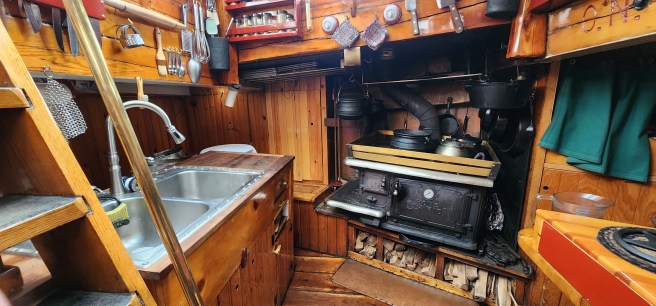
Wooden sailing vessels traditionally had only one fire onboard, the cook’s stove. I can’t imagine how cold sailors, much less passengers, were through most of the year.
Windjammers hew to that tradition.
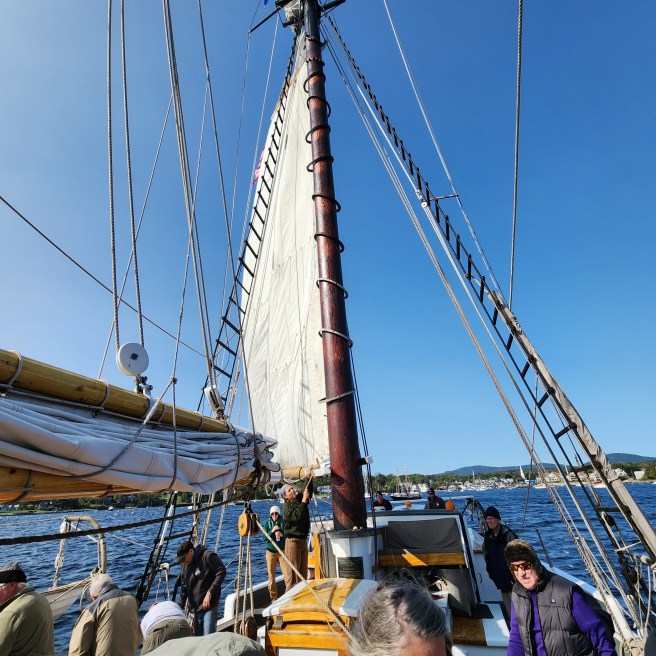
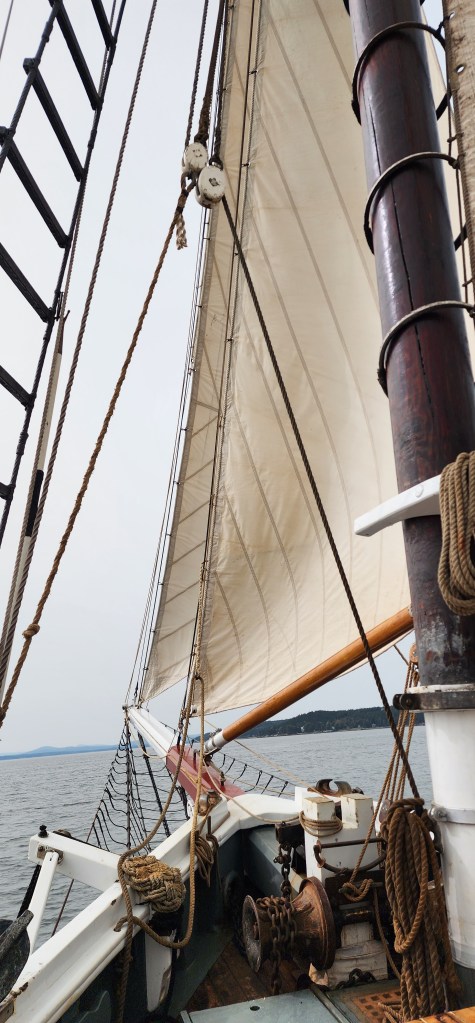
a wooden sailing vessel
with a wood-fired cook stove
and kerosine lanterns
two iceboxes
Smoke from the cookstove goes
into a T-shaped chimney vent
“all on the bowline, we sing that melody
like all good sailors do when they’re faraway at sea”
a song our Dylan doesn’t know
in his impressive repertoire
a generational gap
116th Street Blues, starts out with Captain Ahab
then more nautical lines
Remind me that not all candy is chocolate and not all flowers are roses. But you might want to check out just what’s inside those heart-shaped red boxes tomorrow.
Here’s some perspective:
Chocolate accounts for 59 percent of all candy sales in the U.S. The chocolate portion of that comes to an average of $145 a person each year.
The average American eats three chocolate bars a week.
The most popular time of the year to buy candy is the week before Halloween, followed by Easter, and then Valentine’s Day. Not all of that is chocolate. Think of all those little hearts imprinted with pink messages you’ll be facing tomorrow. But chocolate still weighs in big. For Valentine’s Day, it adds up to 58 million pounds – or, including all candy, $2.4 billion. Kaa-ching!
The top day for chocolate sales in the USA is November 1, right after trick or treating.
The most popular time of day to eat chocolate is in the evening.
Most candy is sold after 2 pm, with peak sales between 4 and 5 o’clock.
Online chocolate shopping now accounts for 40 percent of consumer action. What, it’s not the vending machine at the office?
Milk chocolate is preferred by 49 percent of the American public, followed by dark at 34 percent. My favorite, white, has to split the remainder with some other subcategories.
Three of the five biggest chocolate manufacturers are in the U.S. (Hershey’s comes in fifth, Modelez third, and Mars first.) But Europe is the biggest market.
The Covid-19 outbreak led to a sharp rise in the popularity of fine chocolate who turned to it as an emotional comfort. The consumers were generally younger, living in urban areas, and earning above-average incomes.
Thanks especially to Max at Dame Cacao. She just might be worth a Tendril of her own.
So who was Louis Robbins French?
Father of the three sons
who built this in South Bristol, Maine
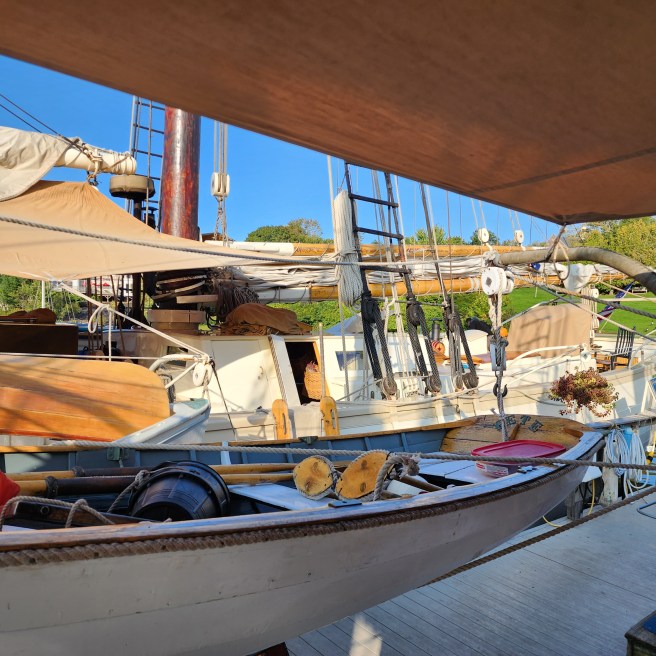
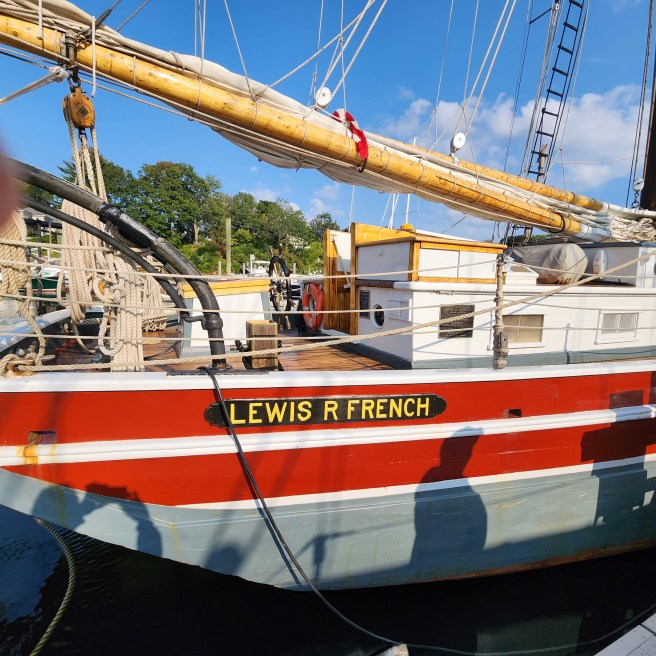
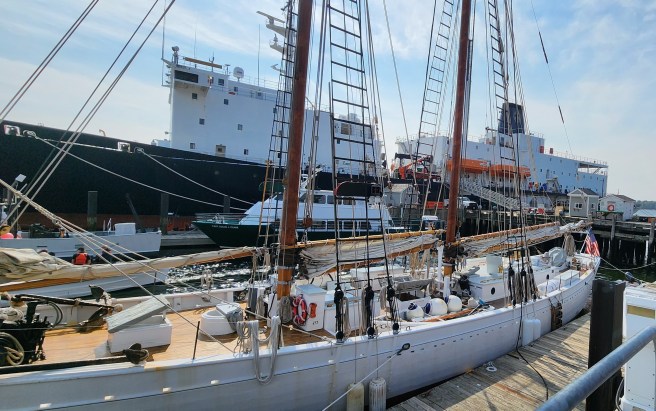
The French is docked at the left of the Mary Day in Camden, Maine.
The French is 101 feet overall, 65 feet on deck, with 19 feet of beam, as the brochure proclaims. She draws 7.5 feet with a full keel. A proven vessel in all conditions, she is a nifty and quick sailor, having won the Great Schooner Race many times. The French has also participated in recent Tall Ships gatherings in Boston. It spent part of its life based out of Lubec just south of Eastport.
The quarterboard carries the name proudly.
the French was largely stripped and gutted
and rebuilt for passengers
what’s left?
As my buddy Peter grinned at me at the end of our week:
It’s like camping, with the canvas over your head rather than a tent.
Peter tried to brace me for the, uh, unique quarters. And the pause when I mentioned taking a shower.
I had a snug berth, as you’ll see later. The only electricity on board came from some strong batteries and a small solar array.
Rather than a floating night club and hotel of a typical cruise ship, a Maine windjammer is small and laid-back. You even have to wash your own dishes.
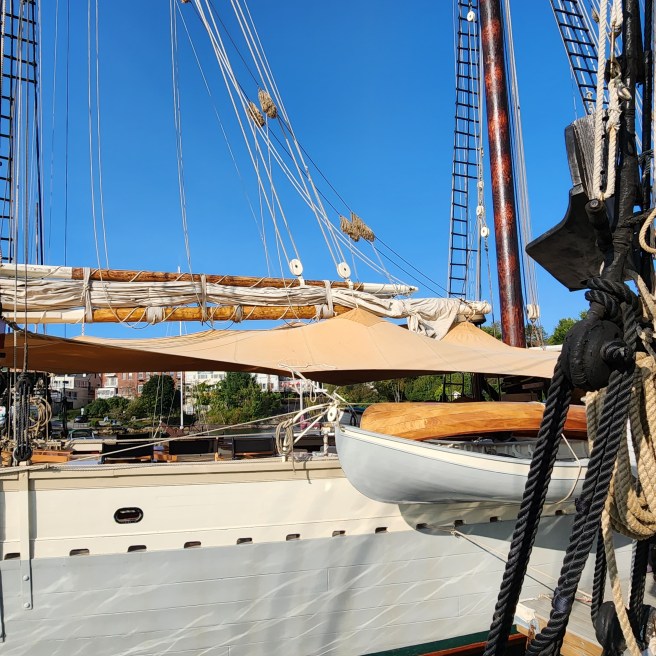
We were docked next to another schooner before departing.
As the windjammers’ association brochure says:
Unlike large cruise ships, windjammers have bunks and cozy cabins, not monster staterooms and 24-hour buffets. Windjammers are woody and compact below decks. Crew and guests live and work in close quarters. The ship’s galley and dining areas are like your kitchen at home – everybody mingles there.
The Maine experience dates from 1936, when Captain Frank Swift started offering adventurous passengers sailing opportunities formerly only available to private yacht owners.
Last summer I got to be one of them. It really was memorable.
Ships come in all sizes and shapes, and people aware of the differences see vessels that float quite differently than the rest of the population. Well, it’s like looking at birds and then birders.
Living beside the ocean I had learned to differentiate a sloop from a schooner, or so I thought. Both have triangular sails, with sloops having just one mast and schooners, two or more.
Not to be confused with square-riggers, the kind of tall-mast ships most people envision from history. Or so I once did. You know, Old Ironsides, the USS Constitution, or even the Mayflower, however much smaller.
As for triangular sails, like those on sailboats. Not quite accurate when it comes to schooners. There’s something called a gaff … creating the hip-roof look of a schooner’s sails.
The Bowdoin of Arctic exploration fame.
My closeup introduction to a schooner came in a side trip earlier in the day I would step aboard one for my virgin voyage that will inform later posts. To kill time, so I thought, my buddy and I headed off to Castine, then a hole in my inner map of Maine, apart from references by friends.
And that’s where I was introduced to the Bowdoin, now named for the college of the same name but more importantly a historic vessel used by Donald Baxter MacMillan in his Arctic expeditions. Quite simply, she was designed to withstand incredible freezing – and did. I’m now wondering how the crew did, under those conditions.
That said, she was a schooner. I had seen one docked in Eastport, but this time I had a curator at hand to explain the distinctive parts.
Emphatically, it is not a square-rigger.
Schooner, as Dutch, it’s not SHOONER, after all, as my New Amsterdam Dutch-descendant Peter could easily point out, yet from deference, hasn’t. (Do I get points for noticing?)
Typically, a crew of 2½
two men and a boy
no cook?
an average life of 25 years
for a wooden ship
(owned in shares
spread the risk and profits)
 a wooden sailing vessel



 Jnana's Red Barn