


You never know what we'll churn up in cleaning a stall
Even with the masks, it was an incredible experience. Appearing live in concert usually is.
Not every singer I’ve known enjoys performing in public, a situation that can be anxiety-inducing. Yes, even chorus members suffer butterflies. Going on stage or the equivalent is a much different encounter than singing together in a rehearsal space, perhaps even in a circle facing each other.
Wisely, our part of the program was shorter than usual, reflecting the Covid-restricted rehearsal schedule and our return after two years of distancing and general inactivity. Our vocal cords were rusty and have had to get in running order again.
Even after some of the pop standards I’d sung in the Boston Revels autumn equinox affair on the banks of the Charles River, I still didn’t expect to be performing a rock hit, much less a five-part arrangement that was mostly counterpoint with some wildly shifting time signatures. REM’s “Shiny Happy People,” anyone? It’s more sophisticated than I would have believed, even with a bass part that felt, well, like playing air bass guitar.
The Wailin’ Jennys’ “One Voice” and Eric Whitacre’s “Sing Gently” were gorgeous paeans to the art of vocal music made when we unite as one, in this case including singers and audience.
There was the premiere of conductor John Newell’s five-part memorial to longtime Eastport arts inspiration Joyce Weber, “Lux Aeterna.” I hope we did it justice.
The traditional spiritual “Keep Your Lamps” was lively fun with a bouncy piano accompaniment and some fine bass lines, something that’s not always a given.
Dan Campolieta’s passionate setting of Emily Dickinson’s “Will There Really Be a Morning” gave us males a chance to sit out and just listen.
The heart of a concert is the audience, somehow completing the art at hand and making it real. I’ll add there’s a parallel with a readership for a writer or poet or a table of diners for a chef.
The arts center’s upstairs performance space seats about 120, so we were close to an audience of family, friends, and neighbors sharing our love of making music together.
How can I not be looking forward to more?

Within the continental United States, these arctic bogs are found only in Maine, where they’re known locally as heath. These magical openings in the forest host a variety of unusual plants and even rare animals like the crowberry blue butterfly. The forests themselves are often thick with arboreal lichen – Spanish moss – which thrive in the cool temperatures and fog, as well as mossy bog.



Living in New England, I’ve gained a fondness for lighthouses, an appreciation that has been heightened by my relocation to Way DownEast Maine. This state alone has more than 60 still in working order.
My research regarding the towers and their beams has, however, had me admitting that the bulk of the world’s most glorious examples are to be found on the rugged Atlantic coastline of France. Some of them resemble small castles, and many are built in grand style, no expense spared.
The English, in contrast, appear stuffy and uninspired. (Sorry about the pun there.)
What I wasn’t expecting was the discovery that Ireland also has some stunning examples.
If I ever get to the Emerald Isle, they’ll be high on my list of sites to visit.
What’s on your travel bucket list?
Around mid-May across the New England coast, the alewives migrate en masse upstream to freshwater breeding grounds. Sometimes identified as river herring, they have played a role in the region’s heritage, from Indigenous peoples on.
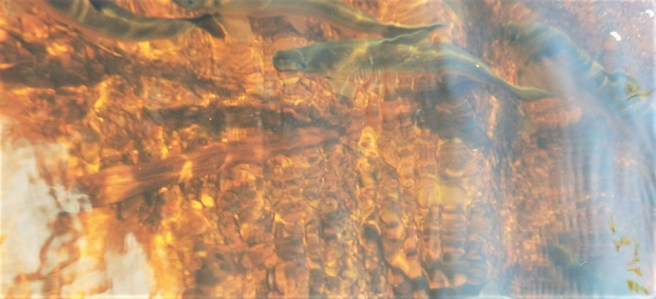
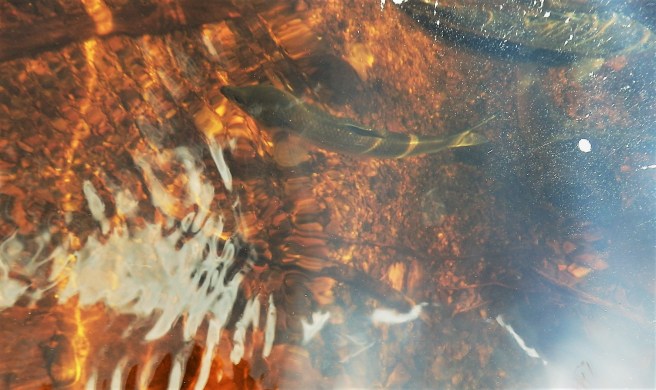
They still attract fishermen to the riverbanks and bridges, as well as eagles and osprey overhead.

And though bony, many folks consider them a seasonal delicacy, often worked into an appetizer. More commonly, they’re a common lobster bait.
A history book seems like a natural for a print edition, but it can be a risky deal for a publisher.
After all, few titles are of the bestseller scope aimed at a nationwide readership.
My Quaking Dover is a prime example of the niche appeal that can arise when you zero in on a small community and then further refine it to a crucial minority. Even when it becomes a microcosm of a much bigger picture, as I believe mine does, the hard reality is that it’s hard to break even in traditionally publishing such a work.
~*~
Independently producing at Kindle Direct Publishing was one alternative, but it wouldn’t get copies into brick-and-mortar bookstores, which would have to buy the books at full price from Amazon and then add an additional fee, or into many public libraries – and I do see those as essential outlets for this work.
I looked into several other services but concluded that the costs to me would have been prohibitive, no matter how attractive the result.
Now, however, I have good news to share.
Quaking Dover is appearing as a print-on-demand edition from Draft2Digital, available through its affiliated traditional retailers, including Barnes & Noble.
D2D first came to my attention when it acquired Smashwords.com, the pioneering ebook enterprise that’s been my literary haven for nearly a decade now. The more I learned of it, the more I sensed that releasing my print editions there was no-brainer.
~*~
See what you think. Like the ebook edition I’ve previously announced, the paperbook is being offered at a reduced price in a pre-release – in this case up till its October 8 release.
You can help me prime the pump by requesting your own physical copy at your favorite bookstore or library.
Check out my author page at Books2Read for details.
Let’s shake things up!
That’s the slogan of the Eastport Arts Center, housed in the 1837 Washington Street Baptist church after that congregation moved up the road and renamed itself Cornerstone Baptist in 2005.
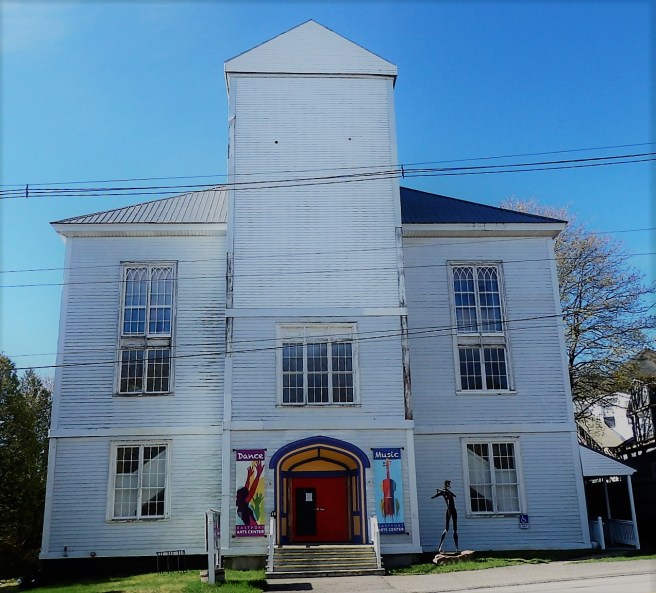
Only two blocks from the waterfront downtown, the center is the home of the Stage East theater company, Northern Lights Film Society (how I’m awaiting its reawakening from its Covid hiatus), Quoddy Voices, Passamaquoddy Bay Symphony, a series of visiting musicians in many genres, lectures of all stripes, and even yoga and New England contradances. Its activities range from performances and rehearsals to exhibitions and workshops, physical fitness and dance, open mics and communal meals. It’s also available for rental.
Upstairs features a 106-seat theater/concert hall, while downstairs has an open community gathering space, gallery, and commercial kitchen.
The venture itself was spearheaded by the eight artists who cofounded the Eastport Gallery on Water Street, which by 1990 had become a hub and magnet for creative spirits in town. The gallery remains a constituent organization member of the center.
I’m especially glad it’s all just a short walk from my doorstep.
Quite simply, I see it as the heart of the community, something that makes Eastport unique. Recent Sunday afternoons have hosted a delightful cycle of music, discussions of visual arts and local businesses, historical insights, and even free mustard.
Across the country, one institution often dominates the culture life of the wider community. In Cincinnati or Cleveland, for instance, I’d say it was the symphony orchestra.
In New Hampshire, was the New Hampshire Symphony, before its demise, or the Currier Gallery of Art.
What’s the biggest cultural influence where you live?
I had no idea how we’d sound as an ensemble or even whether I’d measure up. Officially, I’ve been a member of the choir more than a year now, but all of that time, we gathered only on Zoom. We soon learned to mute ourselves for even the warmups, and our director did accomplish a miracle in taking our individual home-recorded stabs at two pieces and blending them into a virtual performance that wound up sounding better than we had any right to expect, especially considering my horrid best efforts. I simply assumed he used only the finest voices in his studio note-by-note studio wizardry while mercifully sidelining the rest of us or at least me. I wouldn’t say that any of the other pieces recorded before Covid really offered a clue of what we’d be like now.
So Monday night was a kind of debut for us, our return to weekly live, in-the-flesh rehearsals at the arts center, nary a laptop in sight.
When we sat down in our semi-circle, just 15 of us, I had reason to be dubious. For starters, like the population in general around here, our median age skewers topside. Voices do change as they age. For another, a small body like this leaves no room for error, each member is more exposed and requires more precise breathing than we’d face in a group of 50 to 80, as I’d been privileged to have before. Five individuals were absent, all with decent excuses. Twenty can make for a fine professional chorus, but we’re amateurs of varying degrees.
I’d already met one of the basses and knew of a third, the one who can hit notes four steps lower than I’ll ever manage even with a heavy cold. And then, praise be, I was introduced to a fourth section member. Go team!
We were all masked as a Covid precaution, but even after ordering special singers’ coverings, we had no idea how freely we’d be able to breathe and enunciate.
I didn’t even know how well I could follow our conductor. You get adjusted to different styles of leadership and expression. On Zoom, he was always trying to juggle a keyboard, a score, maybe a screen-sharing insertion or a recorded track, plus beat time and throw cues to the little squares at the top of the screen while we wound up a half count off the beat as a consequence of delays in transmission or electronic hiccups.
All that was now irrelevant. Taa-taa! The time of launch arrived. We got our first pitch and then the upbeat, and when we opened our mouths and uttered the first notes, everything melted gloriously. And that was just in warmup exercises.
When we turned to the pieces we’ve been practicing at home, we were joined by a pianist who had already impressed me with a recent recital. Our director could turn his full attention to leading us cleanly and expressively. Yes, his mask prevented his mouth from conveying the words, but not every conductor does that anyway.
There were rough edges and other imperfections, but there was also a palpable feeling of support through the presence of each other and a certainty that we can accomplish what needs to be reached in time for two concert performances a month from now.
It’s exciting. Making music with them was one of the big reasons I had moved to Eastport. I liked their repertoire, akin to what I’d done in Boston, and I like the fact I can walk to our performance space. Learning something new about music, my own abilities, and us as a community is invigorating.
What are you especially enjoying as we come out of Covid restrictions?
 Jnana's Red Barn