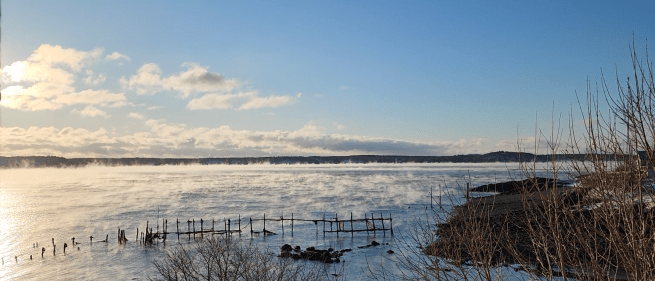
When the air temps drop to near zero Fahrenheit or below around here, these sprites start dancing atop the ocean.
You never know what we'll churn up in cleaning a stall

When the air temps drop to near zero Fahrenheit or below around here, these sprites start dancing atop the ocean.

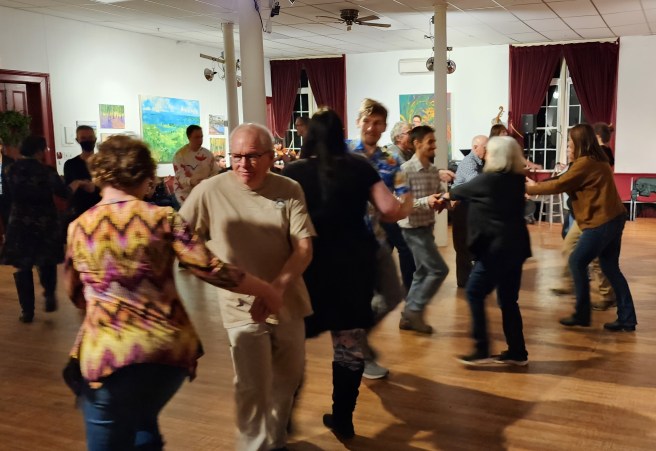
Last month we had our first indoor contradance this far east in Maine since the outbreak of Covid, and it was a blast.
I’ve posted before about the New England tradition from colonial times, which hippies then spread around the globe. Not that you have to identify as one to attend. Let’s just say free spirited?
A typical contradance is something for all ages and abilities, singles and couples alike – you do mix during the evening – and the live music is reason enough to come out for a substance-free environment. As we say, if you can walk, you can dance. Besides, a caller has us practice the figures, as they’re termed, before the music begins. It’s a great community-builder, for sure. A great way to meet neighbors of all kinds, or even a potential mate, if you’re unattached. It’s low-pressure, OK?
The whole point is to have fun, mistakes included. Just keep smiling. As I tell the newbies, we experienced dancers make just as many mistakes, mostly because we’re too busy talking.
Our dance last month had mostly beginner dancers, and they were delightful. I’m hoping and expecting to see them back Saturday night at the Eastport Arts Center, bringing a few friends in tow. Frankly, that’s how we all got addicted to this activity, word of mouth with an invite, or even being dragged, as I was, to show up.
Not that you need that much to enter the door.
Remember, just keep smiling.

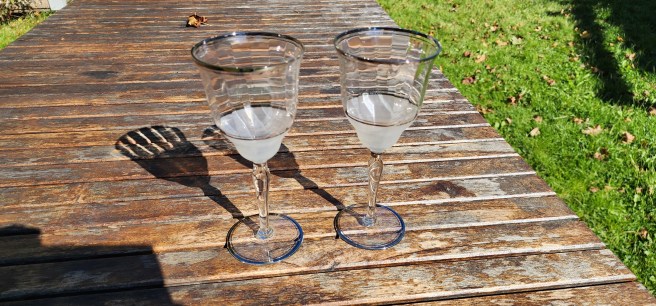
It’s really elegant thin glass that turns iridescent when light strikes through it, with or without the martini.
It and a set of metal olive skewers came wrapped at Christmas and have been duly admired and enjoyed since.

Getting a wood-burning stove is high on our list of home improvements.
With my elder daughter’s growing allergies to rabbits’ prolific fur, which flies everywhere, Salty and Pepper had to move on. The Lagomorph duo did provide companionship through two deep winters, as well as constant amusement. In late summer, they received a new home with a then 13-year-old and her 11-year-old brother. From what I seen from a distance since, they couldn’t have been luckier. Those are two happy kids.
Still, it’s surprising how many times I start to do something that might involve them – say bend over to pick dandelion greens while out on a walk or gather carrot ends or parsley stems to feed them while I prepping dinner or move an electrical cord or papers out of their reach – only to realize, emptily, their lusty absence.
Here are a few shots as reminders.


Love their fresh rye bread, if I can get down there in time on the weekend.
It makes great toast and croutons, in addition to marvelous sandwiches.
As improbable as it would seem now, Dover was a throbbing center of dissidents and misfits in its early years, at least from the perspective of the Puritan authorities to the south in Boston.
Nor would I have expected a settlement inland from the ocean to be the one that took root, rather than the companion complex facing the ocean, but the Dutch trading post at Albany, New York, was even further up a river and survived.
There are good reasons that Dover became the center of action north of Salem, Massachusetts, and of Boston further south, not that you were taught any of that in your history classes.
I have to admit, it’s taken a while for the fact to sink in. Dover was the heart of the New Hampshire province, not that we see that today. Still, the roots remain.
My book, Quaking Dover, looks at the history from a minority viewpoint that leaves most of the last 200 years pretty wide open. Yes, there’s so much more to examine and include in the full picture leading to the rebirth of the community in recent years.
But what I’ve found is still pretty remarkable.
To think, it was such a humble and audacious start 400 years ago and counting.
It’s gonna be a big year!
From 1653 until 1820, Maine was governed by Massachusetts.
The westernmost port down there is Westport, beside Buzzard Bay. A lovely place, by the way.
And the easternmost port was Eastport, in waters subsidiary to the Bay of Fundy. As you’ve been seeing here.
But then, come 1820, the two extremes separated when Maine finally became independent as a state.
Now I guess that easternmost point down under distinction falls on Chatham, out on Cape Cod. And Maine has no Westport.
One year, while still living in New Hampshire, I was in Eastport one weekend, and Westport, the next. I saw it as some kind of weird coincidence, not knowing there really had been a rational connection.
Have you ever thought about the name of the place where you’re dwelling?

I should add, now that electricity has been restored to the island and the gale winds are dying down.
How’s Christmas shaping up where you are?