You never know what we'll churn up in cleaning a stall
Maine is bigger than you’d think, and half of it is still unpopulated.
In fact, the easternmost county in the USA is more than twice the size of Rhode Island or New York’s Long Island – or, if you prefer, bigger than the two of them put together. And it’s merely half of Downeast Maine, with Hancock County comprising most of the western flank.
Washington County, aka “Sunrise County,” has a population of only 32,000 – about the size of Juneau or Fairbanks, Alaska, or Dover, New Hampshire, my home of the previous 21 years. You know, the one I repeatedly referred to as a small city. My, how my perspective’s changing!
Most Downeast folks live near the rugged coastline, with the largest municipality in Washington County being Calais, the connection to mainland Canada, followed by Machias-East Machias, Eastport, Lubec, and Jonesport.
The four largest public high schools have about a hundred graduates a year – combined.

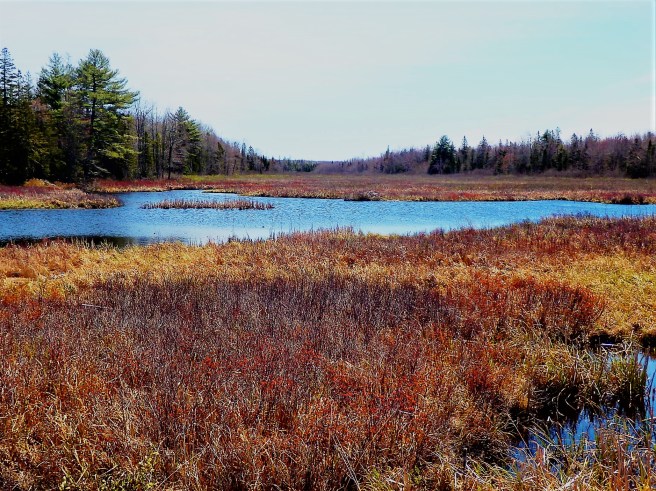
There are many reasons Downeast reminds me of the Far West, though it’s generally much wetter. In fact, 21 percent of the county is covered with water, much of it as big ponds running along the valleys between the low-elevation mountains. Many of these often island-specked bodies extend two to five miles in length and at least a mile across. And that’s before getting to the bogs and fens or wild rivers and tide meadows or marshes and swamps or prolific beaver ponds. The technical definitions vary, depending perhaps on how wet your shoes get. Quibble as folks might, the northern half of the county seems to be more lakes and wetlands than solid ground. I’m not sure if the Atlantic bays and coves even count in this tally. Quite simply, we’re surrounded by a lot of liquid, so watch where you step.

What also strikes me is how little development rings the shoreline of the lakes. Many have only a few “camps,” as we New Englanders call the cabins, trailers, or cottages and their docks, with the remainder in full, unspoiled forest. Make a bid, if you must.
It does make for a lot of unspoiled tranquility, for those who are so inclined, if you can deal with black flies and mosquitos. Moose often come as a bonus.
When you see sandals on an American man, thank a beatnik.
In the 1950s, it would have been nearly unthinkable for a man to dress that comfortably.
Really, we were that uptight.
Now?
They’re everywhere.
At least in summer.
Remember, where I live, we get snow – lots of it, some years.
Can’t blame a beatnik for that.
Anyone else running on rechargeable batteries?
What would you add to the list?
How can you not appreciate the way the word flows on the teeth and tongue and along the lips?
Given its name, Oyster River, in the Lenape tongue for the profusion at its mouth in Chesapeake Bay, the word ripples and sings.
Upstream, where I lived, a different name would have been fitting but, I’ll presume, no more beautiful.
 ~*~
~*~
For your own copy, click here.
Enter the woods. Listen. Breathe.
Sometimes a woodlot will do. Or a grove along running water.
You don’t always need a forest.
Don’t worry about getting lost. Just pay attention to the trail. And the wind. And the light. Maybe a companion or two. Some of them human.
We’ll talk about holy later.
 ~*~
~*~
For your own copy, click here.
Let me confess to struggling with the preposition for the title of this collection.
The initial thought was of being atop a mountain, with its panoramic views. But that runs the danger of suggesting superiority, submission of nature to man’s will, or placing more value on a given result rather than the process of getting there (and back). The climb, I’ll contend, is purification for what lies ahead.
An alternative “on the mountain” allows for the sense of having one’s feet on a trail or even presenting a series somehow “about” the mountain as a set of explanations.
I settled on “under” for its sense of looking upward, in awe or even reverence, as well as the fact that even in mountainous terrain, we live in the valley, with some degree of protection from the elements. Where the streams come down and weave their threaded branches together. Where at times the clouds nestle in. Where the eyes wander from the summit.
 ~*~
~*~
For your own copy, click here.
Food, shelter, clothing, bedding, cooking gear, toiletries, maps and guidebooks – everything practical, collected, focused – fit on your back. You’re as free as can be, if you make the effort.
Each trek is a revelation you pack home.
For your own copy, click here.

~*~
Chief Seattle, who appears in the Grilled Salmon section of this poetry collection, is an elusive figure in American history. Whether he pulled a fast one is another question, but he did get a major city named in his honor.
As for his role here?
I enjoy his company. I hope you do, too.
 ~*~
~*~
For your own copy, click here.
 Jnana's Red Barn