A friend sent me a copy of a letter I’d sent him years ago. August of 1966, in a church stationery envelope. It’s rather embarrassing.

As is the verse.
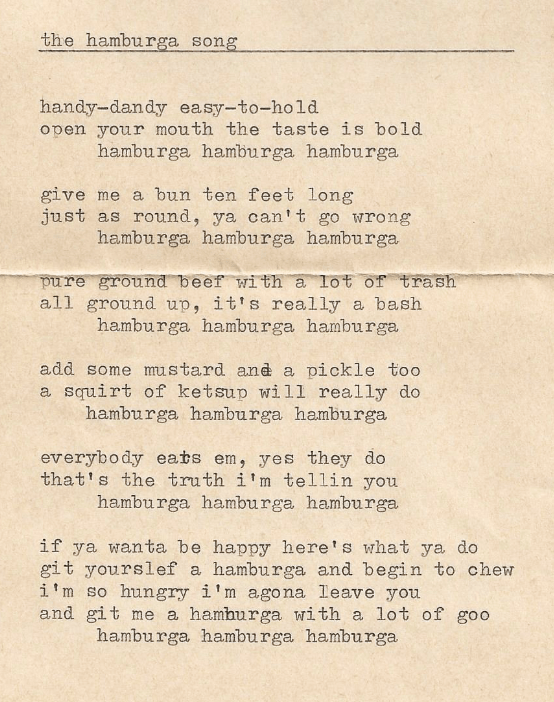
You never know what we'll churn up in cleaning a stall
A friend sent me a copy of a letter I’d sent him years ago. August of 1966, in a church stationery envelope. It’s rather embarrassing.
As is the verse.
What would your obituary say about you? What would you say there, if asked? Before you reply, pay attention to everyday stuff and your aspirations, especially what you love. Note as well how others see you. Besides, how do you fit into your neighborhood or wider community? Feel free to exaggerate, reflecting everyone else.
As a human, you assume a cluster of identities – some of them chosen and changeable, others immutable. My grandfather, for example, proclaimed himself Dayton’s Leading Republican Plumber, invoking a host of other identities as well: Protestant, Freemason, middle-class, married. “Grandfather” wasn’t high up in his awareness, from my perspective. Being male or female or teenaged or elderly, on the other hand, are simply givens. And the history of what we’ve done or failed to do cannot be altered, except in our own perceptions and retelling.
The range of identities is astounding. They include but are not limited to race, religion, nationality and locality, occupation, family (household and near kin to genealogy itself), education and educational institutions, athletics, hobbies and interests, actions and emotions, even other individuals we admire, from actors and authors to athletes, politicians, and historic figures. They soon extend to the people we associate with – family, friends, coworkers, neighbors. And, pointedly, our phobias and possessions.
Curiously, it becomes easier to say what we are not than what we are specifically. That is, set out to define yourself in the positive and you’ll find the list rapidly dwindling, while an inexplicable core remains untouched. Turn to the oppositions, however, and the list becomes endless. I am not, for instance, a monkey. At least, most of the time.
Sometimes, moreover, a specified negative becomes truly revealing: “I am not a crook,” for instance, as the classic revelation.
Behind the masks of public life – our occupations, religious affiliations, social status, economic positions, family connections, educational accomplishments, and so on – each of us engages in another struggle, an attempt to find inner balance and direction for our own life. As we do so, we soon face a plethora of interior and exterior forces that must be reconciled. We get glimmers into this struggle – both within ourselves and within others – in statements that begin “I am” and “I am not,” as well as “I have been,” which recognizes the history and habits we accumulate and carry with us. There are also the voices – “he remembers” or “she insists” – that also recur in our lives, defining and redefining ourselves both within, as conscience or the angel or devil on our shoulders, and without, as any of a host of authority figures and friends or family members.
All that brings us around to my latest poetry collection, Hamlet: A Village of Gargoyles. There, many of the imaginary individuals profiled are identified by occupation while their confessions typically reflect the more intimate concerns of their lives – relationships, activities, even the weather. These are, then, overheard snippets more than public proclamations.

Hamlet, of course, is a small town or a village as well as a famed play. In this collection, the inhabitants are profiled in five acts of two scenes each, plus intermissions and intermezzos. They’re even exaggerated, the way a stone carver would in creating gargoyles and grotesques.
Listen carefully – especially when others talk of their romantic problems or other troubles – and another portion of a mosaic appears. This collection of poems builds on such moments, constructing a community as a web of each its members. Sometimes, a place appears; sometimes, a contradiction; sometimes, a flavor or sound or color. Even so, in this crossfire, we may be more alike than any of us wishes to admit. We may even be more like the part we deny. Our defenses wither. Our commonality, and our essential loneliness, are revealed.
Just think.
Having originally appeared in literary journals around the globe and then as chapbooks at Thistle Finch editions, this collection of poems is now available in your choice of ebook platforms at Smashwords.com and its affiliated digital retailers. Those outlets include the Apple Store, Barnes & Noble’s Nook, Scribd, and Sony’s Kobo. You may also request the ebook from your local public library.
The move unites the poems in a single volume, rather than a series of ten smaller chapbooks and ten broadsides, and makes them available to a wider range of readers worldwide.
Welcome to town, clown.
I love the idea of artists who are inspired by other artistic fields. Too often, alas, they’re stuck in their own genre.
The term for what I’m discussing here is cross-disciplinary.
For example, I’m primarily a writer, lately of fiction as well as a poet, but I’m moved most intensely by classical music and then opera, jazz, folk, film, theater, and yes, painting and related visual fields. And I consider myself essentially a visual person?
Maybe you get the idea.
So a few months ago, I got news that a friend now living in California had a new book, Roots, Stones, & Baggage, and I assumed it was a catalog for his most recent gallery presentation. He is, after all, a marvelous painter, still active in his 90s.
What arrived in the mail was mostly his selected poems, revealing a whole other side of himself. They’re good, by they way. He respects craft. And there is a sampling of his paintings over the years, too.
I remember his reply during a Q&A at his gallery show opening at the Ogunquit Art Museum in Maine when he said he understood Blake’s poetry, something that left many dumbfounded. Think of understanding as gut-level rather than legalistic, OK?
The new booklet’s worth getting even for the wonderful introduction by his son, the celebrated novelist Jonathan Letham.
And the poet slash painter in question is Richard Brown Letham, still going strong.
Looking at the news of Vermont’s flood damage, I’m seeing places I know and have traveled. Towns I pass through on my way to and from Quaker Yearly Meeting sessions at Castleton University, for instance, all now heavily hit. I wonder about some of the covered bridges I anticipate visiting or places I stop for a stretch, too.
I’ve been waiting to hear from a dear friend, especially, though I know his home is high above the stream running through town. Still …
My wife and I retain strong impressions from seeing the devastation from Hurricane Irene nine or ten months after it delivered its wallop. You wouldn’t believe the extent unless you saw the evidence.
The mountains become a funnel for the falling water, and many of the roads have nowhere to go but beside the streams. People, of course, live along the roads … many of them at the foot of natural chutes from the hillsides.
It’s not just water, either, but the boulders and gravel it unleashes.
There are real stories that will unfold long after the TV cameras and breaking news headlines have moved elsewhere.
But it does make a difference when events do somehow seem to reflect home for you. Or when you look for what I think of as “slow news.”
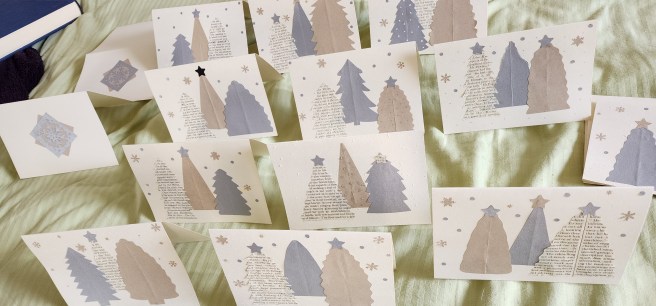
Once the renovations are finished in our old Cape, we’ll be looking to pick up where we left off in Dover, back before Covid interrupted travel and entertaining.
In no particular order, among the guests we remember fondly:
Who have been among your favorite guests?
In reflecting recently on the Quaker tradition of creating memorial minutes for “weighty Friends,” I was surprised that one example I had never posted was of another clerk of our Dover Meeting. She was struck down by a particularly virulent, fast-moving cancer, and it’s hard to me to see that nearly five years have gone by since her passing.
There’s much more that I could tell, but the approved minute will give you a good sense of her vibrant character.
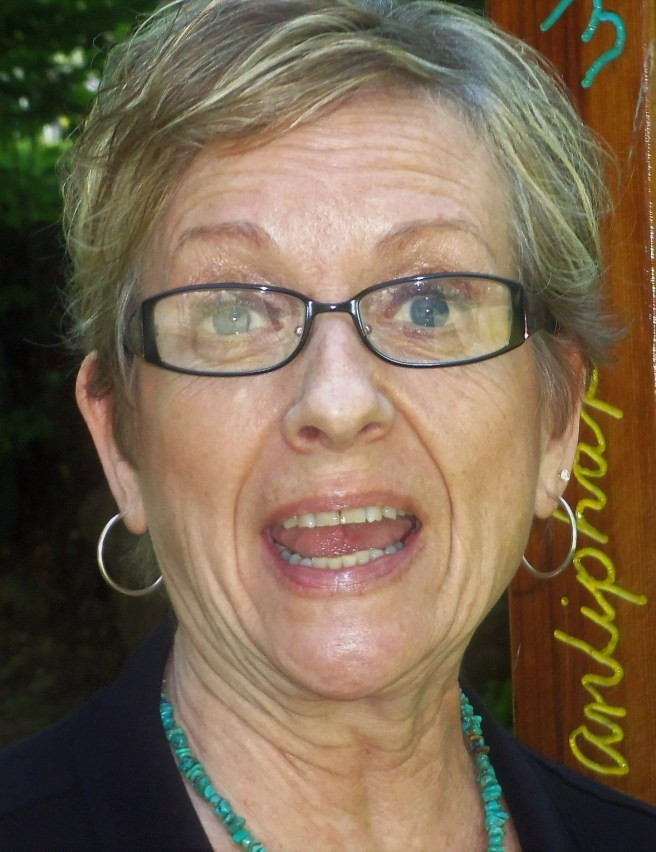
Among Dover Friends, Jean was the flash of gold in the morning, a welcoming soul others naturally confided in, a faithful worker who eventually filled nearly every organizational position – from children’s teacher and treasurer, to co-clerk and finally presiding clerk.
Raised Unitarian-Universalist in Methuen, Massachusetts, she came to Friends in the early ‘80s after she and her first husband, Dean L. Davis, had settled in Eliot, Maine, and were seeking the right church for a family that included daughters Thaedra May and Sarah Joy. They were quickly entrenched among us.
Jean was twice widowed.
She married Dean the day after his graduation from the Maine Maritime Academy in 1967, and then managed their home during his long assignments at sea. During his interludes ashore, they built their own post-and-beam house on the banks of the Piscataqua River and could often be found boating, sometimes to visit other Quakers upstream, or on his motorcycle, which they rode to Meeting in good weather. He died in a freak automobile collision in 1992, an accident his wife and daughters survived unscathed.
In 1998 she married Del Blickensderfer and worked as his partner at Del’s Service Station until his passing of lupus in 2006.
Deeply grateful for the mentoring she received from seasoned Friends, Jean was a stickler for Quaker process and, over time, became the memory of the Meeting’s business itself. She sought to walk a line between holding her tongue and being direct, when needed. A witness to the movement of Christ in our midst, Jean’s infrequent vocal ministry could be powerful. Her skills as a professional typist assured the Meeting’s minutes were of archival quality and, combined with her business-school training, led to the Blue Books for committees and their clerks detailing their responsibilities. She was particularly fond of drawing on the Advices and Queries from London Yearly Meeting’s 1994 edition of Quaker Faith and Practice as guideposts for our own action. An avid knitter, she took comfort in seeing others do needlework during our business deliberations, their patience reflecting the work before us. In time, a midweek knitting circle became what she called a “wicked good” time of refreshment, nurture, and fellowship.
More pressing obligations had precluded her attending yearly meeting sessions, a “bucket list” item she resolved to achieve. All along, she warmly welcomed the wider world of Friends to Dover.
Other delights in her life were yoga, visiting with neighbors, shopping and dining with dear friends, walking the beach, doting on her Pomeranian Sumi, and especially being with her grandson Jonah. His living in Albuquerque, New Mexico, did not prevent her from accompanying much of his childhood and youth, from celebrating birthdays and holidays to attending his piano recitals to cheering him on in mountain bicycle races, whenever she could.
In all, her presence, generosity, and deep and lively spirit were a gift.
With loved ones at her bedside through the final days of her cancer, she passed at age 70, peace and grace abundant.
APPROVED by Dover Monthly Meeting July 16, 2017, Charles Cox, clerk
ENDORSED by Dover Quarterly Meeting July 31, 2017, at North Sandwich, Erik Cleven, clerk
One of the cherished traditions among Quakers is the creation of memorial minutes for members who have served the Meeting faithfully.
The minute is a unique document. It’s neither an obituary nor a eulogy. Rather, it attempts to candidly reflect the movement of the Divine Spirit in the individual’s life.
Here is a recent example.

When Chip Neal brought his family to Dover from Maryland in 1978, they loved everything about their new home except the proposed construction of a nuclear power plant in nearby Seabrook.
He had been hired by New Hampshire Public Television to do a nightly news show, having worked his way up from entry-level floorman in a pioneering community college television station to cameraman at WETA in Washington and then director/producer at Maryland Public Television.
Across the Granite State he became known for the segments he produced and hosted on “New Hampshire Crossroads,” where spent many years traveling every corner of the state bringing unique New Hampshire features and people to a statewide audience. It was in one of those stories that he coined the phrase “Yankee yard.” His curiosity was sweet-tempered and non-judgmental. He also produced segments for the popular weekly “Windows to the Wild” outdoors adventures series featuring Willem Lange.
Although he attended the University of Illinois during the Vietnam era, he did not earn a degree until he worked at the University of New Hampshire for NHPTV. He graduated from college the same year his daughter, Amanda, graduated from high school.
He never aspired to go into management. Rather, he always preferred to be hands-on, something son James inherited.
That was reflected in the family’s old farmhouse near the Cochecho River, where they began rearing a few chickens, sheep, and honeybees. After aligning with the Clamshell Alliance opposing the Seabrook Station, he realized the activists he admired the most were all Quakers, and soon he, too, was worshiping in the old meetinghouse, along with children Jamie and Amanda, while his wife Nell continued at First Parish just down the street. Over time, as she felt her spiritual growth being nurtured more through connections with Friends, she, too, became part of the Meeting.
Their social life included visits by boat with other Quaker families living downstream or around Great Bay. Inspired by what he had read about the Amish and a “why not” attitude, Chip determined to try a barn-raising of his own, resulting in a merry one-day celebration that did, indeed, accomplish the task.
Chip was commissioned to create a private documentary profiling Silas Weeks, who had been instrumental in the reopening of the Dover Friends meetinghouse. The interviews, now available on YouTube, remain a touching intersection of the faithful lives of both Silas and Chip.
Many of the qualities of Chip’s spiritual life also infused his professional career. A fellow producer noted that Chip possessed a brilliant communication talent in short-form and long-form storytelling. He not only saw the heart of a story, he let it speak for itself, time and time again. Where most producers tended to interpret meaning for the viewer, Chip had the unending patience – and absolute stubbornness – to never let that happen in his work. Thanks to his relentless focus, firm discipline, and above all a fabulous sense of humor, time and time again he would dig down until he found the light of truth hiding inside the most humble to the most exalted story, and to let it shine like a diamond in the wide open, all on its own, available and meaningful to the viewer.
As he grew and matured, he more and more thought deeply and broadly about events and phenomena, all with a spiritual bent. Often, this led to rising in the middle of the night to write down his ideas and insights, sometimes as haiku with a snap.
He emphasized the necessity of being centered in the present, explaining, “Life is that thing you’re doing right now.” From that, he had an ability to view difficulties from the side and then provide helpful alternatives to the knot before us.
During his terms as clerk of Dover Friends Meeting, Chip would stand after the closing of worship with the shaking of hands and then, gazing around the room, say simply, “Thank you for sharing your spiritual journey with us this morning – whether spoken or unspoken.”
He loved serving as clerk and treasured Quaker process, especially taking sufficient time in our labors together.
The advance of Parkinson’s interrupted his service to family, Friends, and the wider world, but not his presence. He had often reminded us that in trying to reach a destination while sailing, one had to constantly make adjustments – tacking.
He was also fond of a Navajo prayer:
All above me peaceful,
all below me peaceful,
all beside me peaceful,
all around me peaceful.
He passed over peacefully on June 25, 2021, in the comfort of his wife, Nell.
Memorial minute approved by Dover Monthly Meeting, November 21, 2021
I know that everywhere you go, everybody seems to have their nose stuck in their cell phone, oblivious to just about everything going on around them. You know, the bubble people.
Or, where I’m now living, they have those phones up in the air taking pictures so they can look at what’s in front of them later.
Oh, my. What a world.
As a writer, I’m supposed to be active on all platforms as a matter of marketing , but as many others are discovering, those venues rarely lead to book sales or loyal readers. Let’s be honest.
I’ve toyed with some of them, but drifted away, even Twitter.
My primary social medium is here at WordPress, blogging. I know how to manage my posts easily. The Reader feels to me like a real mailbox, with dispatches from around the world – postcards, letters, clippings. As for you?
For that matter, I’ve never quite “got” Facebook. It’s cumbersome to navigate, most of the content feels like gossip cluttered with advertising, and I don’t like having to sign in to see what should be public information for local retailers, schools, or public events.
Still, living in a small town, I’m finding that’s where the local “party line” is, and checking in regularly is essential. I still have qualms about the bigger corporate picture, with its shadowy agendas.
Recently renewing contacts with folks from my ancient past has also had me turning to FB.
What’s surprising me, though, is the gap between those who are active in a social medium and those who are “members” but rarely or even never check in.
It’s not just FB. Even email accounts. I suspect many of my contacts are that way, too. Hello! Anybody there? Did you get my message? When was the last time they posted or commented? Take that as a clue to their presence … or absence.
The numbers, then, might not be nearly as big or influential as they’re boasted.
Meanwhile, I keep falling down these Internet rabbit holes, pursuing arcane information.
Where are you spending your time online? Or even elsewhere?
I’ve never been a dog person, but we did have cats when I was growing up and again in my first marriage. These days, it’s been household rabbits, a whole different story.
But my all-time favorite cat was an all-black, marvelously sleek male tommy who was half-Siamese. He’s the inspiration for Gobi in my latest fiction. Our dog-loving neighbors even gave him the compliment of saying he was more like a dog than a cat, and their own German shepherd was one dog I came to enjoy.
The naming came about in one of my flights of imagination. I was sitting in a classroom looking at a NO SMOKING sign and wondered about shifting the space. That led to NOSMO KING, which was soon bestowed on our kitty.
I thought I was being pretty clever, but a few years later my in-laws sent us a newspaper clipping where a human named Nosmo King was mentioned. I don’t remember if he had a different last name or whether King was it. Drat!
Yes, sometimes reality is stranger than fiction. And sometimes it just leads to some strange fiction.
 Jnana's Red Barn