I’m sold on Maine’s crab

Ours are smaller than the glorious Dungeness of the Pacific Northwest or Chesapeake Bay’s popular Blue delicacy, named for the color of their tips.

But that’s not to say Maine doesn’t have crabmeat that’s as sweet. Ours comes from two species.

Here’s some perspective.

  1. Jonah crabs are the slightly larger and more celebrated of the two. They’re reddish with large, black-tipped claws, and found primarily in deep waters offshore.
  2. The meat comes from the claws. When Jonahs show up in a lobster trap, a fisherman typically removes one claw and throws the rest of the crab back. The crab, we’re told, can survive on one claw while the other grows back.
  3. Jonahs are regulated by an interstate commission that places a 4.75-inch minimum size on keepers and prohibits the retention of egg-bearing females.
  4. Atlantic rock crab, or “peekytoes,” live in bays and tidal rivers closer to shore. These measure just five inches across and are the most commercially caught crab in the state.
  5. Peekytoes cannot be shipped live, presumably because they’re too delicate. Instead, they’re cooked and hand-picked before shipment.
  6. Both commercial and recreational crabbers require a license from the state and must observe strict limits on their take. At least, those specifically going after them. See the lobstermen, above, for a clue to exemptions.
  7. Locals in the know say that picking the meat from a crab is a nearly lost art. They admit they can’t avoid getting hard bits of shell in the tender flesh, no matter how carefully they try. Instead, as they advise, go to Betty’s in Pembroke or Earle’s down in Machias for your supply.
  8. Favorite dishes around here are crab rolls, crab salad, and crabcakes. Our house also celebrates a heavenly crab imperial. Others make them into a dip or spread. And, in some circles, Jonah crab claws make an appetizer served like a shrimp cocktail.
  9. They can be harvested year-‘round, though fall, when crabs are most packed with meat, is the peak season.
  10. Smaller, invasive, nasty green crabs have been proliferating as Maine waters warm, decimating other marine species and their breeding grounds. Some enterprising chefs, though, see tasty opportunity in some dishes to counter that.

Me? I haven’t yet had to complain of having too much. Now, please pass the Old Bay.

An island garden isn’t entirely quaint

I’ve loved the phrase, “island garden,” even before we relocated to Moose Island, Maine.

The resonance comes in a classic book of that title by poet Celia Thaxter from her efforts on Appledore Island at the other end of the state. Her volume is illustrated by the great American Impressionist painter Childe Hassam, an addicted summer visitor. He made some stunning paintings on the island.

My wife and I did make a pilgrimage to the site, which once included a hotel considered by many to be America’s first artists’ colony. Nowadays, you do need permission to land there – we arrived on a research vessel as guests of the University of New Hampshire, which shares a major ornithological center with Cornell in what had been a World War II watchtower and bunkers.

Moose Island, in contrast, connects to the mainland by a causeway – no need for a ferry – but it’s still an island, an element that grows in awareness the longer I’m here.

Celia’s text often laments the arrival of garden slugs on the previously uninfected island, a pestilence we certainly understand, even before relocating from New Hampshire.

Alas, we do have those slimy destructors here. Apparently, Celia was unaware of the advantages of using seaweed as a mulch, one that repels the offenders in both its fresh and dried states. It’s something I’ve previously posted on. And something I need to reapply here.

While her garden was mostly flowers, ours skewers more toward edible items. And that adds a further layer of offenders, as you’ve been seeing here: deer. The ones with voracious appetites.

Finally, a decent seafood selection Way Downeast

Even though we live a block from the ocean, we’ve been perplexed by the selection of local seafood available in the region’s markets. Or more accurately, it’s lack.

The bigger supermarkets have been a disappointment, and the smaller ones, quite limited.

The best overall selection we’ve found, especially for local catch, is Earle’s SUV that shows up on U.S. 1 down in Machias on selected days. That’s an hour away.

For crab, clams, and scallops, it’s Betty’s seasonal shack in Pembroke, about 20 minutes from home.

Other than that, it’s meant going directly to the fishermen, if you know where they are.

Finally, we’re feeling upbeat. The reopening of Quoddy Lobster’s dining operation, just a block from us, includes a fresh seafood counter.

New owner Look Lobster, a fifth-generation family company in Jonesport, has already invested heavily in the Eastport site by rebuilding the pier for straight-from-the-boat deliveries. Last summer it became my go-to place for fresh retail lobster, especially for anything over a pound and a half.

Now that the end-of-the-street site is serving traditional lobster plates for the first time since Covid, it won’t be long before the outdoor picnic tables by the sea are soon packed with devoted fans. The place, a very popular destination both among tourists and locals, was much missed.

A 17th century herb garden

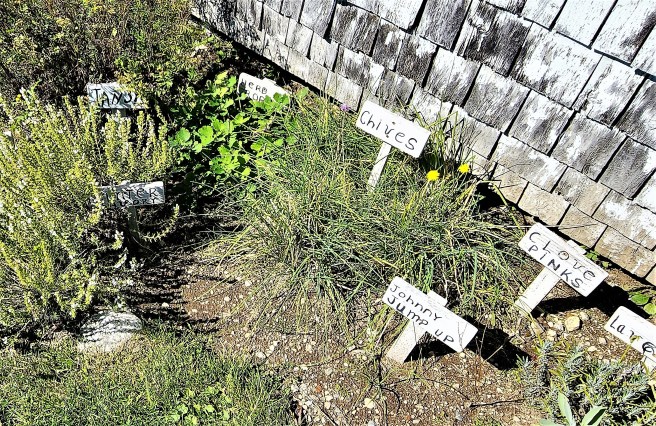
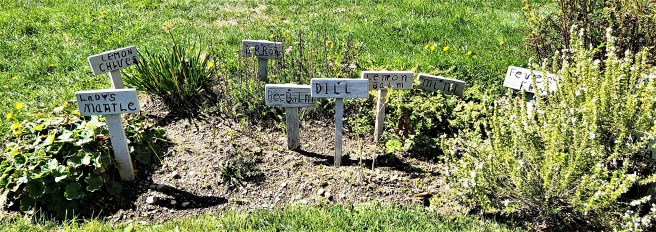
Well, this is how it looked last September.

The English colonists knew their herbs and spices, as shown in the Pemaquid state historical site’s garden. The selection includes bee balm, betony (lamb’s ear), celandine, chamomile, chives, clove pink, crane’s bill, dill, evening primrose, feverfew, Johnny jump up, lady’s mantle, lavender, lemon balm, mint, parsley, sage, savory, tansy, tarragon, thyme, and yarrow. Many of these were grown for their medicinal applications.

We never had much more than salt and pepper back in the ‘50s, at least as I recall as a kid.

Now, for the latest installment of our island garden venture

Few of our nights until late as June have stayed above 50 degrees, a detail that will likely surprise fellow gardeners across the rest of the U.S. That’s meant bringing flats of basil and other temperature-sensitive plants indoors overnight, in addition to the plastic tunnels my wife devised to warm the soil and protect our tomato and pepper seedlings outdoors until now.

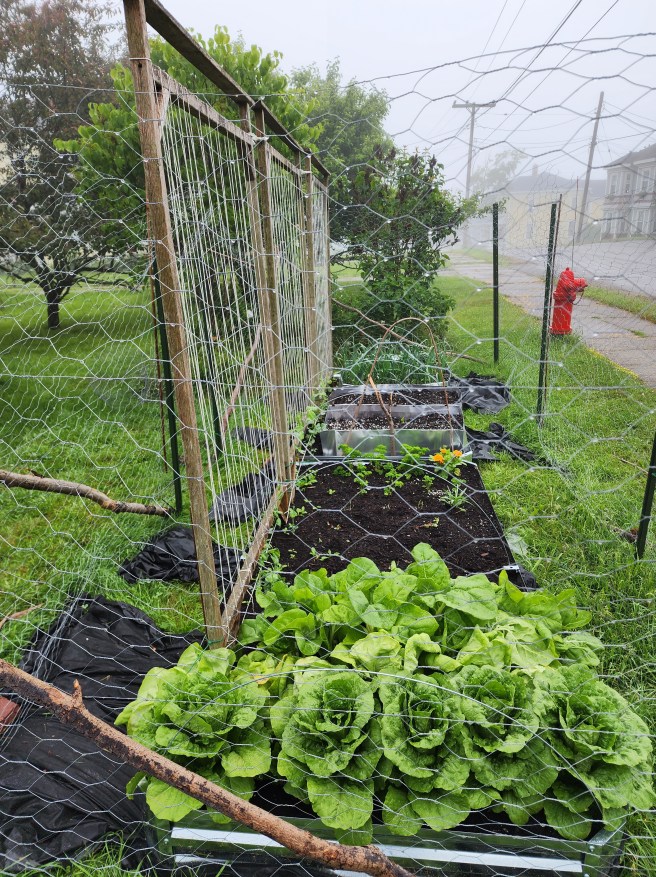
Our new raised beds, as previously noted here at the Red Barn, are an attempt to work around extremely high lead levels in our soil. Beyond that, the chicken-wire fencing is an attempt to deter Moose Island’s ravenous urban deer. That barrier will be further reinforced in the coming days.

The first night our fencing was up on the first bed, though, a wayward critter wound up bending – not just pulling over – one of the corner posts. The steel post was the stronger, pricier variety. I couldn’t bend it, I’ll tell you – not without an anvil and heavy hammer or maybe some heavy jumping. (Sorry I didn’t get a photo. We were too busy getting that corner repaired against a possible second attack.)

So here’s where we are now, in the midst of about three inches of rain in a week or so.

With a garden, there’s always more to do. Sometimes it even involves eating.

Let’s crack into shellfish

We’re too far north to harvest oysters, at least for now. Ours come mostly for midcoast Maine. But our Downeast waters are famed for their scallops and other shellfish.

Last year, a Tendrils focused on lobsters, and I’m thinking of a few others in that vein looking ahead.

So today, let’s look at shellfish more broadly. You know, things like the fact they’re spineless and have hard shells. Now, for a few specifics, working around the fact that scientifically, they’re classified in three groups.

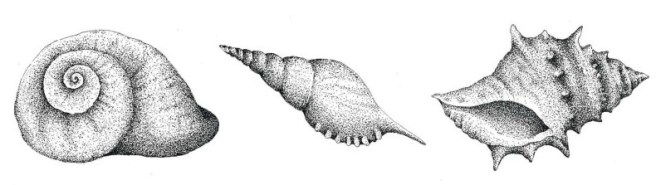
  1. Mollusks include snails, clams, mussels, scallops, oysters, octopus, cuttlefish, squid, slugs, and abalone. They form the second-largest phylum of invertebrates, making up 23 percent of the named marine organisms and also widespread in freshwater and terrestrial environments. The oceanic ones are usually very tiny.
  2. The expression of “happy as a clam” is more accurately understood in its fuller version, “happy as a clam at high water.” Or should that be “high tide”?
  3. The chemistry of creating their calcium-rich calcareous shells remains largely mysterious. Chalk, for one, is comprised of their deposits.
  4. But some of them, especially the larger species, have no bones at all. Can they even be considered shellfish?
  5. The second group, crustaceans, includes lobsters, crabs, shrimp, crawfish, krill, and barnacles. They come with a segmented body, two pairs of antennae, and a tough, semitransparent exoskeleton. That chitinous covering is something they have in common with butterflies, crickets, beetles, and caterpillars.
  6. A single shrimp can lay a million eggs. Of course, humans are far from alone in having a fondness for a shrimp dinner.
  7. Crabs communicate by thumping their claws and drumming in a kind of Morse code.
  8. And finally, echinoderms, which are found as adults on the sea bed at every depth. They include starfish, sand dollars, sea urchins, and sea cucumbers. They’re recognizable by their radial symmetry.
  9. In general, shellfish blood is blue, not red, because it relies on copper, rather than iron. And many shellfish rely on plankton for their diet.
  10. My favorite shellfish all seem to go well with melted butter and lemon.

The next steps

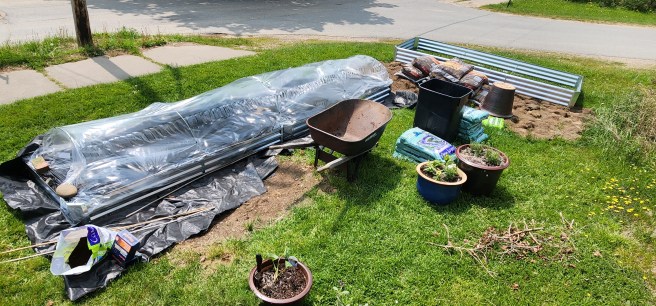
Filling the new beds with clean soil atop a landscape fabric and cardboard barrier against weeds and the tainted ground below takes shape. Our planting season here naturally runs late – early June still had overnight low temperatures in the 40s. So transplanting seedlings is running on schedule.

The plastic is to help warm the soil.

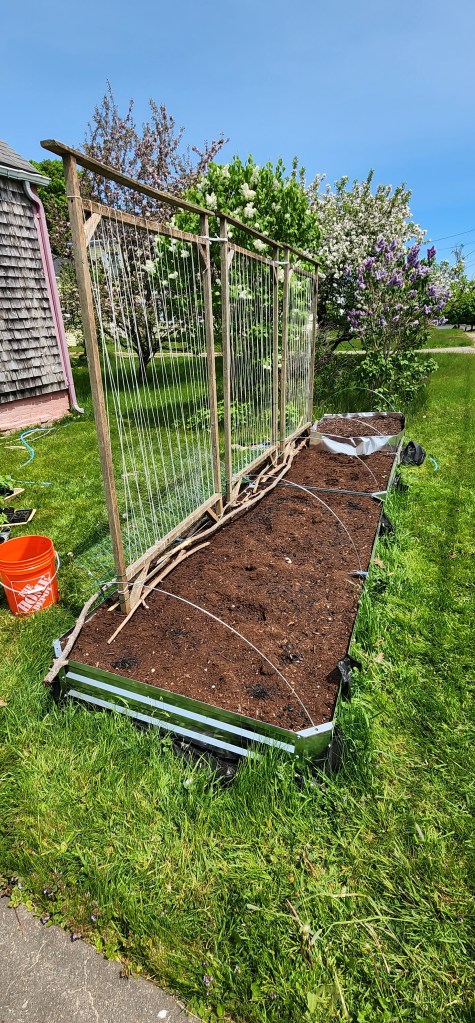
The upright frames are for peas, which will probably continue to produce through the summer, thanks to the cooler temperatures. Tomatoes, though, will be tricky.

The biggest challenge will be deer, as you’ll see.

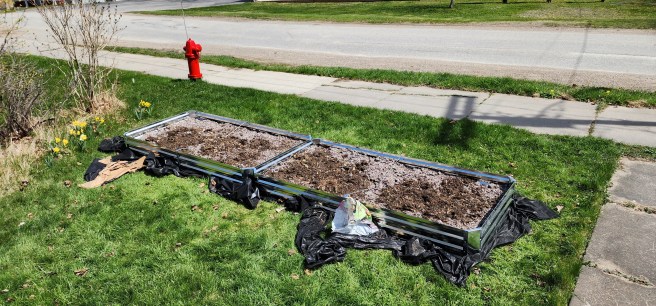
Just look at our new garden beds taking shape

Warning! Don’t get your soil tested. Ignorance can be bliss, until you discover you’re being poisoned.

Well, others in town told us we really should submit the samples. And then, when we opened the envelope with the results from the dirt we sent to Orono, we had to face the reality that the lead levels here are way off the charts.

It’s not just old paint, either, but decades of pesticides used on the apple trees all over the island, even before we get to the long-gone canneries. Maybe even the pearlescence factory, too.

Flowers are one thing, but what we plan on eating is another. And my wife is not only a devoted gardener but also a fabulous cook. Meaning fresh food from the garden is essential.

Contrary to the website blurb, these cannot be put together in five minutes. An hour and a half per bed is more accurate. The front yard, do note, has the best sunlight.

So here’s what’s happening. New raised beds, using kits ordered online. We went with metal, which prices out roughly about the same as wood these days and will definitely last longer. My experiences maintaining wooden frames in Dover had me leaning toward change here.

Set atop a layer of landscape fabric and cardboard to suppress grass and weeds, we then filled these with (ugh) purchased bags of soil and compost. As we were counseled, there was no guarantee local loam had been tested. We want to be safe.

Well, as she says, it’s cheaper than therapy.

Besides, we’re finding it’s generating a lot of talk around town and the conversations from the sidewalk are lively.

Now, if we can only keep the deer at bay. As they used to say on TV, please stay tuned.

Does any of this sound fishy?

I’ve come a long way from the frozen fish sticks of my Midwestern youth, OK. Seafood’s a favorite part of my cuisine, which is one more reason I love living in coastal Maine. But I still have trouble telling one species from another.

So here are some starting points.

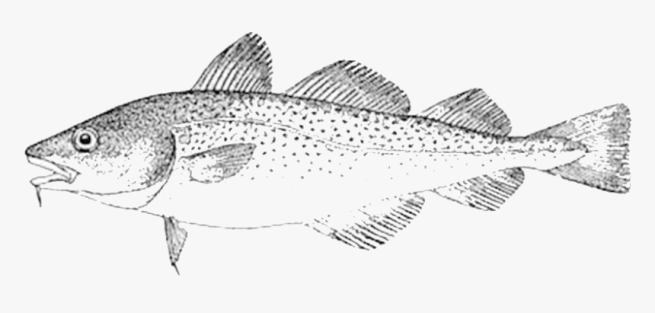
  1. Most fish fall under the taxonomic group Osteichthyes, or bony fish, meaning they have skeletons composed of bone tissue. With a diverse range of 20,000 or so species, it’s the largest group of vertebrates today and is comprised of both freshwater and saltwater members.
  2. That contrasts with the Chondrichthyes, which have skeletons composed primarily of cartilage. This group includes sharks, rays, skates, and sawfish – saltwater species of saltwater vertebrates with jaws, paired fins, and other distinctions.
  3. Jaws on fishes, by the way, are not connected to their skulls. Instead, they can shoot their mouths forward to capture prey, like a kind of spring.
  4. Fish breathe oxygen, not air. The fine blood vessels of their gills diffuse the oxygen to the fish’s membranes. In contrast, mammals rely on lungs.
  5. Since fish don’t have eyelids, except for sharks, you can’t say they sleep, but most of them do rest, either floating motionless, wedging themselves into a safe place, or even building a nest. But they do remain alert to danger.
  6. Tunas, billfish, and certain sharks are the speed champions, reaching 50 miles an hour in short bursts. In contrast, some strong swimmers maintain five to ten mph in cruising.
  7. Fish would suffocate if they tried to chew their food. So some, like sharks, have sharp teeth to hold their prey until they can swallow bits or parts whole. Bottom dwellers have large flat teeth to grind the shellfish they consume. And the herbivorous grazers lack jaw teeth but have tooth-like grinding mills in their throats.
  8. The organs of some fish are poisonous to man, while others become toxic because of compounds in their diets. Most of what fishermen catch, however, can be considered edible. I suspect that doesn’t always translate, though, as tasty.
  9. Truly fresh fish is odorless. The “fishy” smell comes from deterioration, typically when they’re not stored or preserved correctly.
  10. To hold their place in a school, fish use their eyes and a row of pores along their sides running from head to tail, called a lateral line. Special hairs in the pores sense changes in water pressure from other fish or predators. And some schools contain millions of individuals. So far, I’ve heard of no teacher at the head of the class. Do fish even have leaders?

For the record, neither starfish nor jellyfish are fishes.