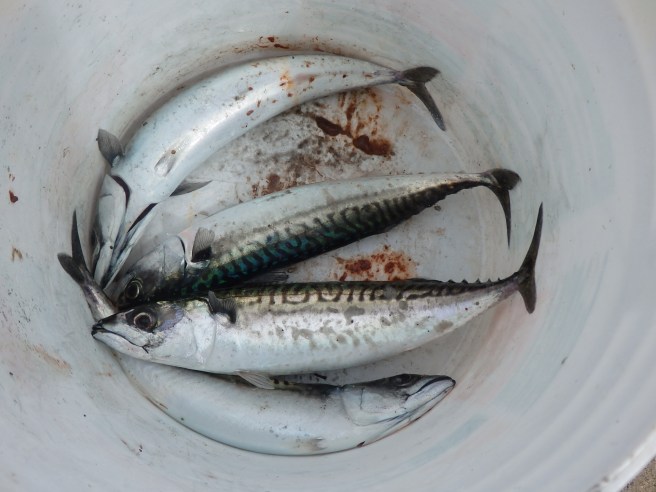
The humble mackerel – usually less than a pound apiece – is a popular fish caught around here. Its delicate nature means it doesn’t keep long, so for human consumption, it’s typically smoked for preservation. An oily fish, it tastes somewhat like salmon. More commonly, it’s used as bait in lobster traps.
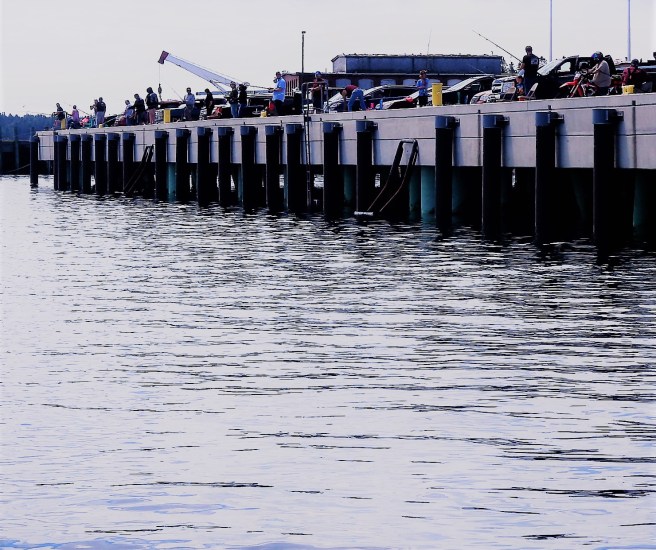
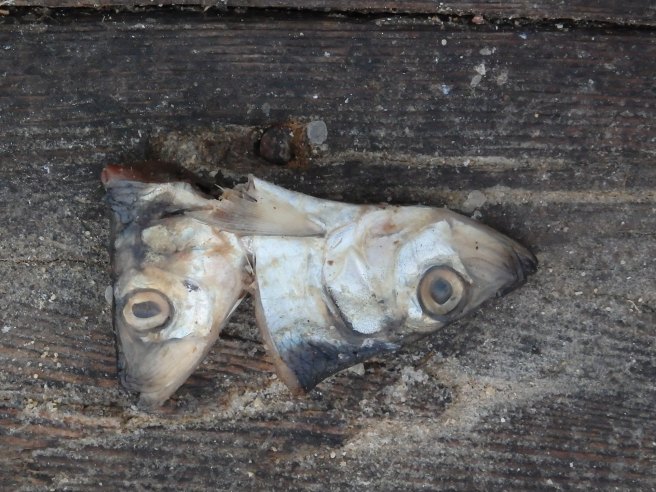
I think it’s a beautiful fish.The Breakwater is lined with fishermen.Two heads left on a pier, likely used as bait.
The Maine coast is 3,478 miles, not including islands. They raise the figure to 7,000 miles.
I live on an island.
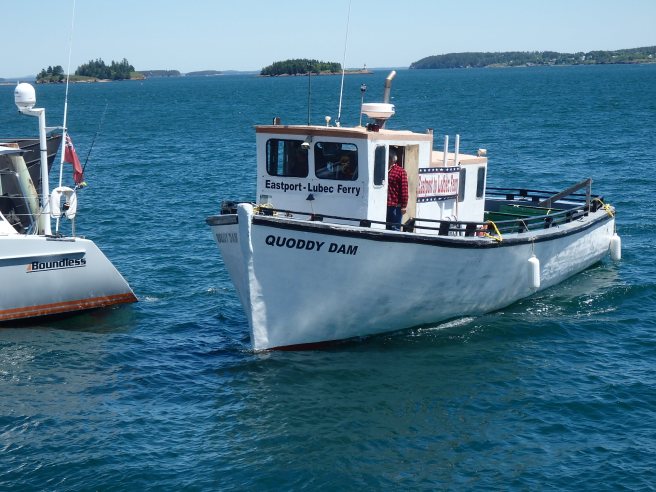
Just two miles away, as the crow flies, but an hour by land is the waterfront town of Lubec. One of the best ways for tourists to appreciate the coastal nature of Downeast is by taking the passenger ferry that runs between there and downtown Eastport. I promise you it’s much less crowded than Acadia.
We go down for a walkabout the town, a New Jersey-style pizza, and a sit in the brewpub’s beer garden. One day I watched seven gray seals cavort in the current. And then we catch a ride back, which runs along the other side of the channel from the one we followed down.
Folks from Lubec do something similar, including a stroll though Eastport’s art galleries.
Either way, you get fine insights the shoreline, history, and wildlife in a way you’d never get from land. There’s the Cargo Terminal, salmon farms, Roosevelt summer home, Treat Island. Maybe seals and eagles, too.
The ferry runs every two hours on Friday, Saturday, and Sunday, weather permitting.
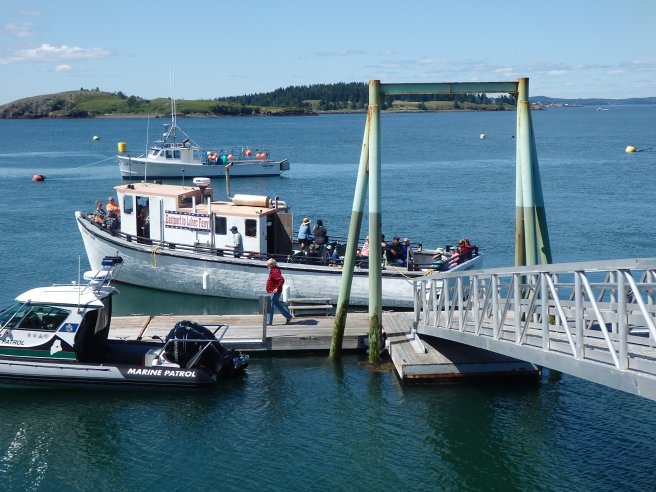
The Quoddy Dam is a friendly little vessel, named as a joke about the federal project that was quickly jettisoned.
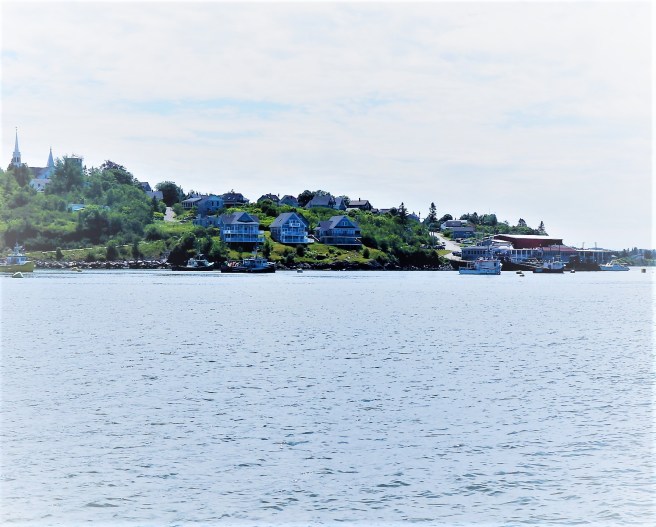
Approaching Lubec.
At the dock. Treat and Dudley islands are in the background, with Eastport sticking out to the right.
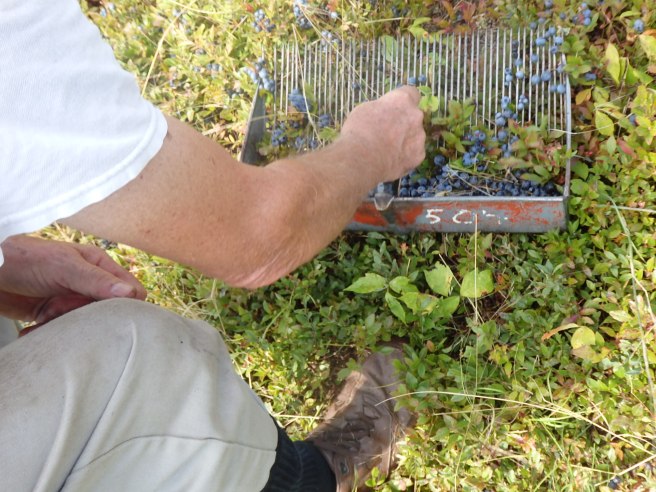
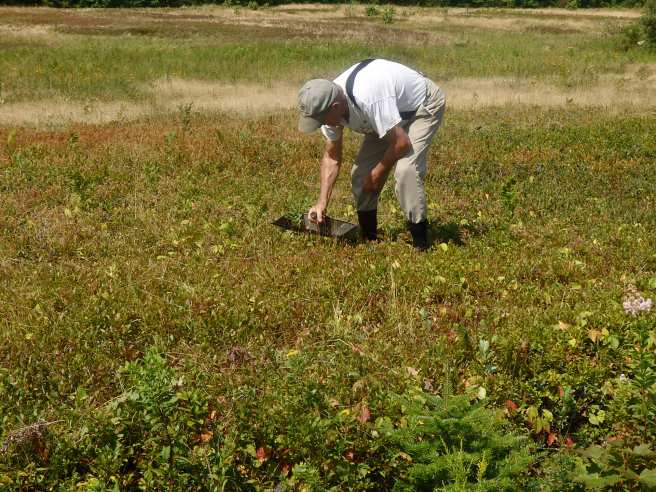
The handheld rake was invented in 1910. I can’t imagine trying to pick large quantities of blueberries without it.
What’s harvested by the ton in Washington County is not just blueberries, but wild blueberries – lowbush, laced with small pellets of complex, concentrated flavor, rather than the big, juicy, cultivated highbush kind.
What grows here, I’ll argue, is tastier and richer than the more coddled kind I had previously known and even grown.
As you can see, traditional picking can be backbreaking work. But old-timers tell you it delivers better berries than the newer mechanized harvesters do.
Maine has a near monopoly in the production of the wild lowbush berries in the United States. Neighboring parts of Canada are also of note. Still, the output is only a fraction of what’s harvested from the domesticated highbush farmers in other states.
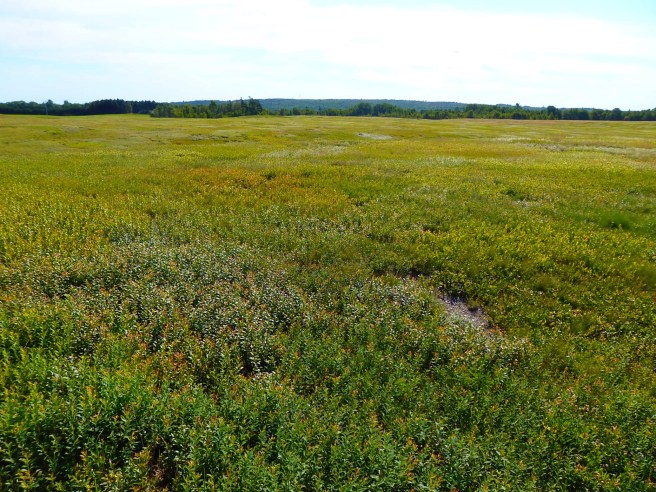
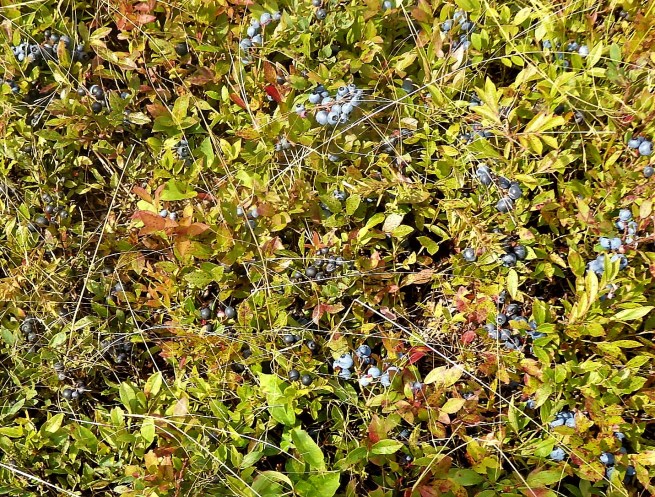
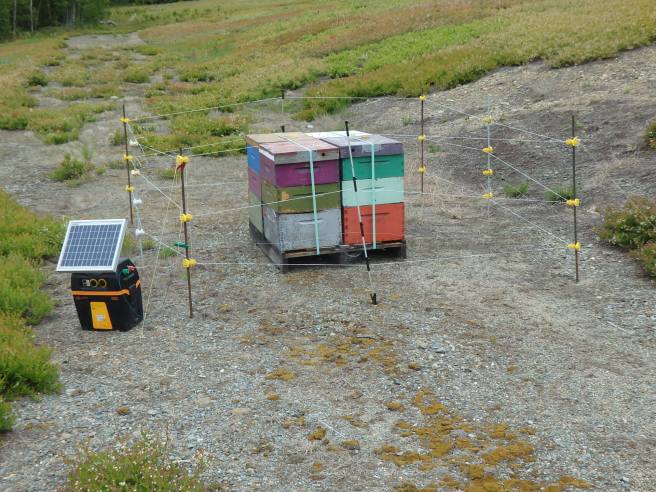
You can drive right past a blueberry barren like this and not know it’s loaded with ripe fruit.Here’s what a stop to look reveals.For a few weeks each spring, clusters of commercial honeybee hives are placed by the hundreds throughout the barrens. The electrical fencing is intended to keep bears out.
Just so you know.
What’s your favorite kind of berry? And your favorite way to eat (or drink) them?
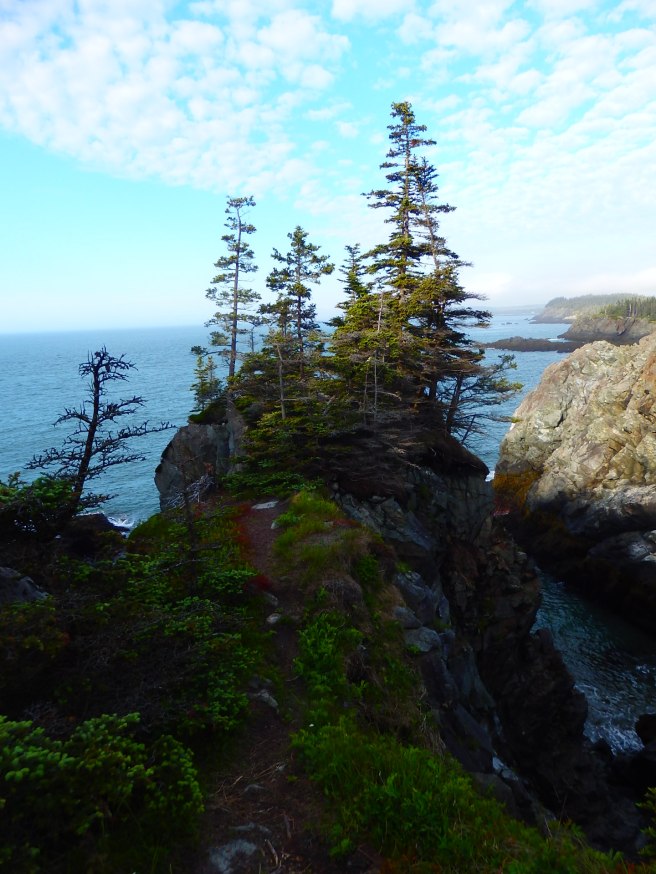
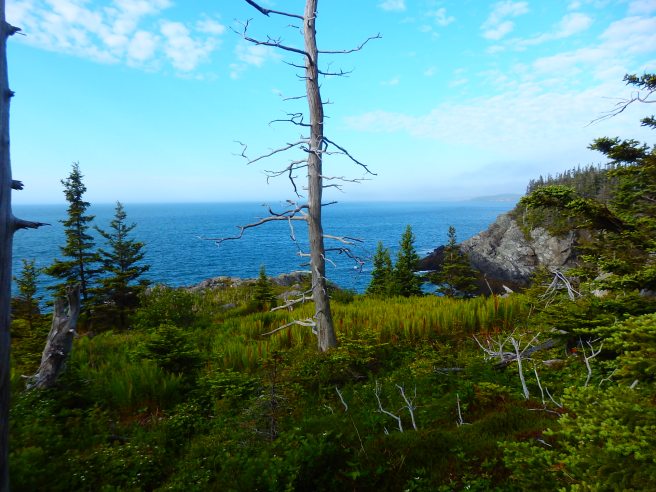
The day I shot these, I encountered only one other person in two hours … and that was just as I was leaving. Admittedly, I arrived around 7 as a foggy dawn lifted and then listened to a mournful foghorn in the neighboring Bailey’s Mistake cove much of the morning. How could I not be elated?
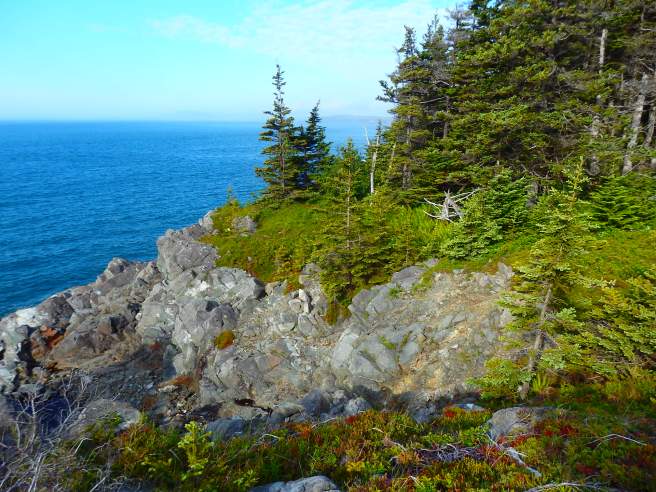
In 1988, the Maine Coastal Heritage Trust secured the property now known as Boot Head Preserve, saving it from a planned 35-lot subdivision and instead opening it to public enjoyment. It’s a gem that includes coastal hiking, a cove with a cobble beach, and an arctic peat bog.
Promise me you won’t tell anyone else.
Just six-tenths of a mile from the parking lot, the trail opens out on this.
And this.
And passes beside wild iris.
To this.
And this.
And then this.
It really does need a soundtrack of the ocean’s endless crests striking the rocks below.
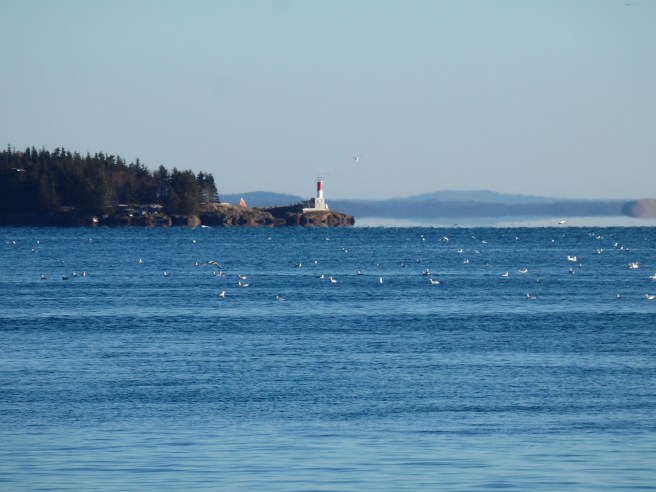
Unlike the two most photographed and visited lighthouses around here – East Quoddy on Campobello Island, New Brunswick, and West Quoddy in Lubec, Maine, both of which have been featured here at the Barn – the remaining lighthouses I encounter locally are small-scale. They’re beacons, all right, but to call them houses may push the definition.
You be the judge. Here they are.
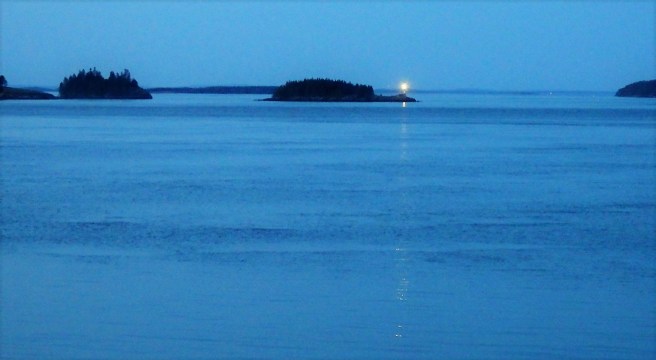
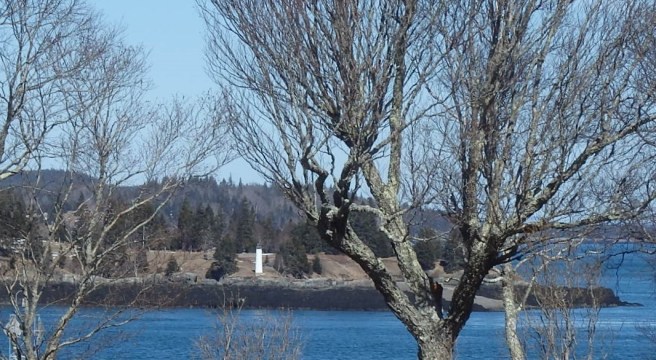
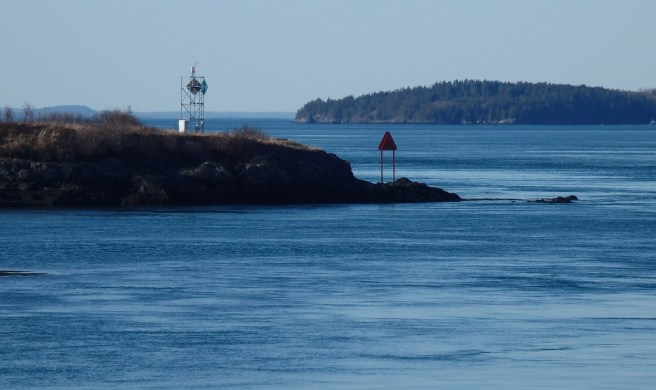
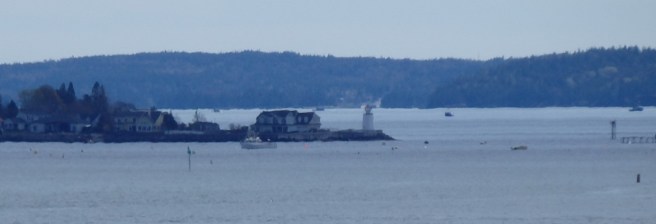
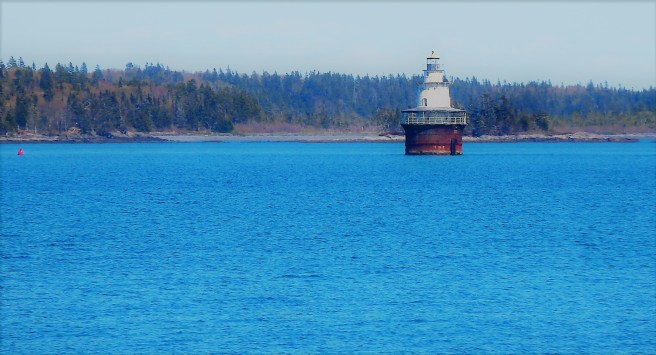
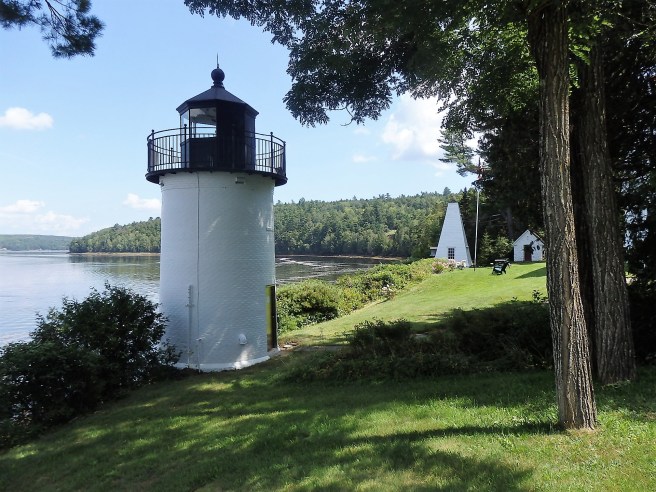
Cherry Island Light, New Brunswick, is the one we see most clearly. It’s an 18-foot-tall tower with a white flash every five seconds. As a lighthouse, it was first built in 1824.And at night it does this.Deer Point, New Brunswick, is a 20-foot tall tower with a two-second red flash every 10 seconds. The famed Old Sow, the largest whirlpool in the Western Hemisphere and second largest in the world, is just off its shore.Facing Deer Island, the Dog Island Light in Eastport flashes white/red every five seconds. As you can see, it’s no longer a house, much less manned.The Pendleberry Lighthouse, or St. Andrews North Point Light, in New Brunswick is glimpsed here from Robbinston, just up the Maine shoreline from Eastport.A “sparkplug” or “wedding cake” design, the Lubec Channel Light can be seen framed by the bridge from Lubec to Campobello Island from points in Eastport, though never this distinctly. I shot this in South Lubec, where it stands 53 feet above Mean High Tide and emits a flashing white signal every six seconds.Whitlock Mills Light on the St. Croix River in Calais is the northernmost light in Maine. It’s on private property, and I’m grateful to the owner who allowed me access. The second tower has both a bell and a foghorn. I find this 25-foot tower, despite its small size, particularly charming.
Though Eastport was settled relatively late – that is, toward the end of the Revolutionary War – it was instilled with a Colonial flavor by prominent early residents who were resolute veterans.
A continuing spirit of Tea Party and Minutemen makes Independence Day in New England feel different than those elsewhere. It’s not just the place of the Shot Heard ‘Round the World. It’s the region where thickheaded Yankees have always doodled.
Quite simply, history is palpably alive everywhere across New England.
Boston, of course, is the epicenter, but across the six most northeasterly states, local observations uphold distinctive traditions. Think of musketeers firing a round ever so often along the town parade route, along with fifes and drums.
As an independently enterprising oceanside village, Eastport soon had a reputation as a hive of privateering – that is, legalized piracy – and not-so-legal smuggling. That independent streak gets its own attention in the city’s annual Pirate Festival a week after Labor Day.
How joyous!
Unlike much of America, the city had frontline experience of the War of 1812. Fort Sullivan atop the bluffs surrendered to the British Navy in 1814, and Eastport then remained under the royal thumb until 1818.
Two years after its reunification with the United States, Maine became liberated from Massachusetts for the first time since 1653 and began to breathe into its own unique character.
For its part, Eastport rocketed as a center of shipping, shipbuilding, fishing, and sardine canning before the big decline of the 1900s set in.
Today, the tiny city’s locals remember a vibrant past and close-knit community, one that spanned the shorelines on both the American and Canadian sides of the watery border.
Is a renaissance on the horizon? There are signs for hope.
All of these strands infuse the holiday here.
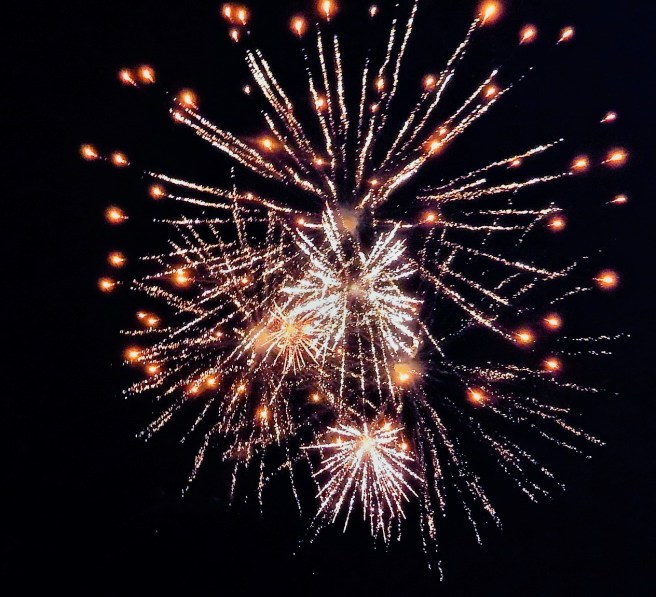
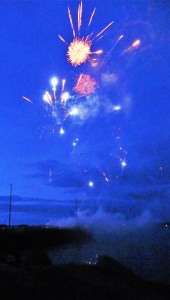
Here’s a taste of last year’s pyrotechnics fired off from the fish pier downtown.Yes, fireworks can be visually composed, leading your eyes around the sky.
The national holiday also marks the opening of New England’s short summer season. After a cold, dark, long winter, Eastport’s small year-’round populace can actually come out into the open air for long times together. The ocean and lakes are finally warming, to the extent that they do, and that attracts vacationers to join in.
After months when only a stray New Hampshire or Massachusetts auto plate is seen around here, I’ve now seen those of every state but Alabama, Hawaii, and North Dakota (not all at the same time), some seeming rather exotic.
And the Fourth includes the city’s Old Home Week, with high school reunions and the return of many summer residents.
A lot happens over a four-day span. There’s a doll carriage and wagon parade. A torchlight parade. Car shows, bike races, water games, pet show, rubber ducky race, festive all-you-can-eat blueberry pancake breakfast, free outdoor movie, contests, live music, and a street dance, all with a small-town flavor.
A traditional visit by a large U.S. Navy vessel failed to materialize, a consequence of being on Ukraine-related alert. Three different ships had expressed interest in landing at the Breakwater before the turn in world events.
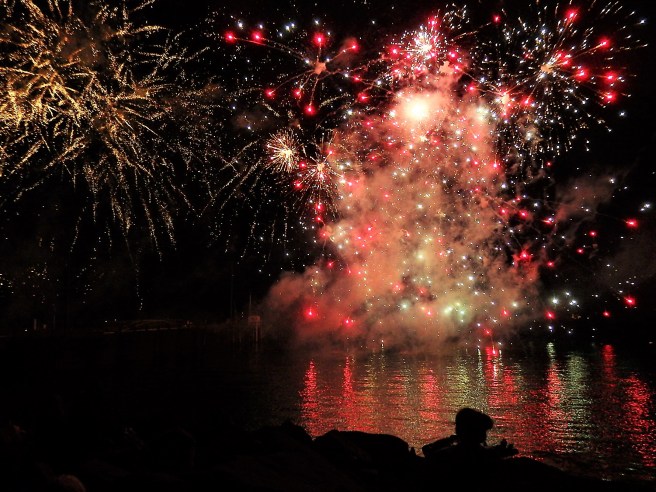
While fireworks were displayed off over the harbor on the Fourth, America’s Independence Day (the beautifully designed and executed big show fired from the town’s Fish Pier was followed by a joyously rowdy encore from a diner’s smaller private pier), the companion July 1 presentation for Canada Day, in honor of our neighbors in New Brunswick, was still a victim of Covid cutbacks. Some residents, though, could view shows happening on Deer Island across the water.
Seems ever so fitting to shoot the works twice, considering Eastport’s dual connections.






 Jnana's Red Barn