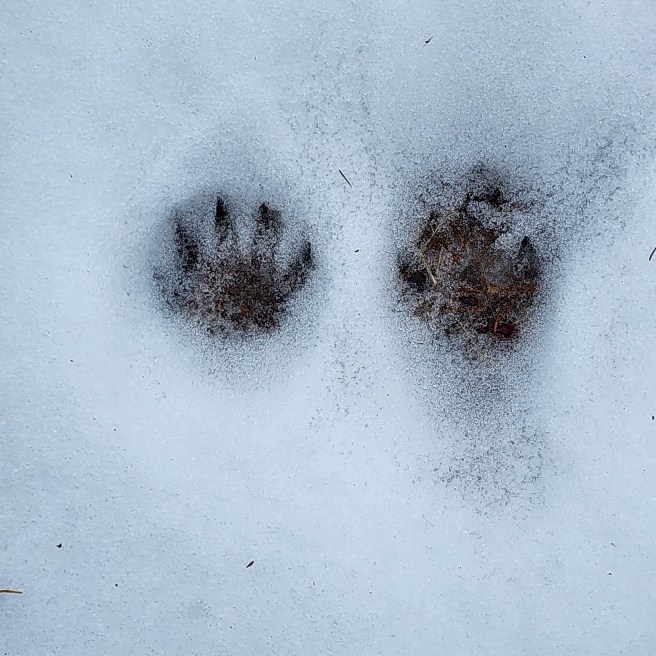
They haven’t quite matched anything I’m finding in my field-guide books.
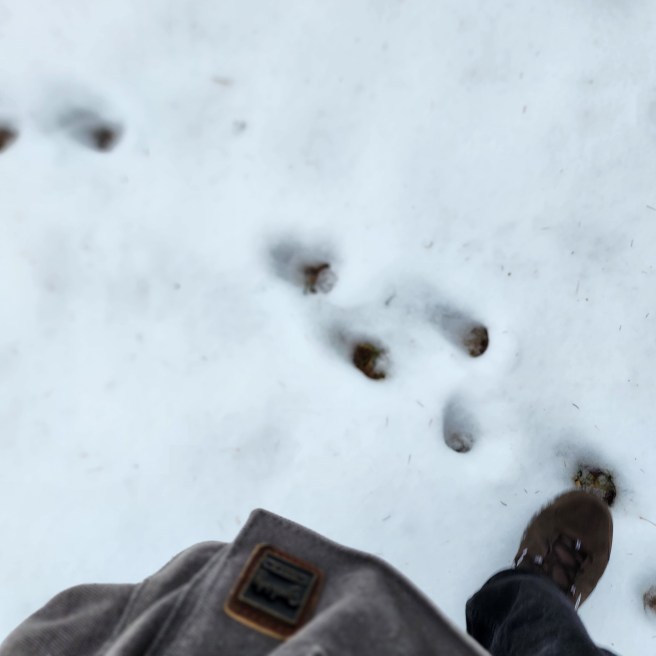
You never know what we'll churn up in cleaning a stall
They haven’t quite matched anything I’m finding in my field-guide books.
Some people sit down in the depth of winter to peruse seed catalogs and dream of harvests. We’ll be doing some of that in our household, and you’ll no doubt sample some of the results here.
Some find it a good time to revisit highlights from the previous year or further back. Yup, that too.
The snowy months also offer delightful travel opportunities, and not just to warmer climes. Even if you stay close to a wood fire or the equivalent, taking time to sift through brochures can stimulate plans for trips long or short later in the year. Consider my upcoming posts based on my week on the waters of Penobscot Bay at the beginning of autumn in that vein.
Quite simply, retirement and winters aren’t a blank stretch in my life.
~*~
One movie I viewed as a kid in the Dayton Art Institute’s tapestry-walled auditorium left a lasting impression on me. I think the film was scheduled to be shown outdoors but this was the rain site. What I do recall is its presentations of windjammers racing along under full sails. I was still far from any actual encounter with the ocean or sailing, but from that point on I did realize I had no interest in a traditional cruise, or what I’ve seen as a floating nightclub. No, if I went out on a cruise, it would be under sail. Not that the option quite came in front of me.
Instead, the closest over the years were jaunts on ferryboats in the Pacific Northwest and then the Northeast, along with whale watch daytrips and, especially, my boss’ 32-foot sailboat in the Gulf of Maine.
One impression I gleaned from those outings is how differently a geography fits together when it’s experienced from its waters rather than its land. That awareness certainly came into play in my history research for Quaking Dover.
Being on the water filled in some blanks.
~*~
As a lover of maps, from childhood on, I’ve also learned how the mere fact of being in a place transforms the charts. A location becomes real when I’ve walked around in it. Or, as I learned in my time on Penobscot Bay, if I’ve walked around in a boat just offshore.
Listening to new friends in Maine presented a series of towns I could place only vaguely – Castine, Stonington, Brooklin, Islesboro, Southwest Harbor – along with related locations like Vinalhaven, Isle au Haut, Blue Hill, Swan’s Island (not to be confused with Swan Island in the Kennebec River), or Little Cranberry. I could nod along with a blank look. My week on the water filled in more of that comprehension.
Now, let me fill in the name of the ship in question here – the Lewis R. French – and the fact she was a schooner, a very special distinction, as I would learn.
And as you’ll see.
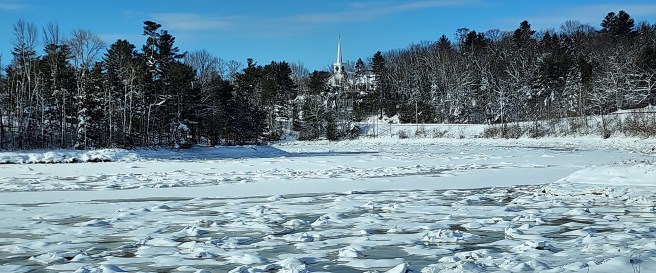
Tide and deep cold ruffle the ice.

How quickly a year passes. I loved this arrangement at a Tides Institute gathering last summer.
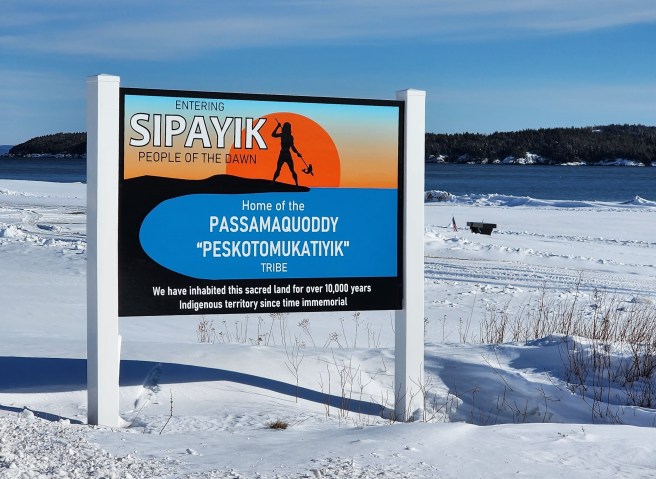
The name of the reservation, I mean. The opening S is supposed to sound more like a Z.
As for the tribe? The anglicized version demonstrates how tin-eared most Americans have been throughout history. Makes me wonder what else has been lost in translation.
JANUARY: Scalloping
FEBRUARY: Snow shoveling
MARCH: Maple syrup tapping and boiling
APRIL: Mud
MAY: Clamming
JUNE: Black flies
JULY: Tourists and lobsters
AUGUST: Blueberry raking
SEPTEMBER: Potato run to Aroostook county
OCTOBER: Foliage
NOVEMBER: Fir tipping and wreath making
DECEMBER: Here we are, shivering
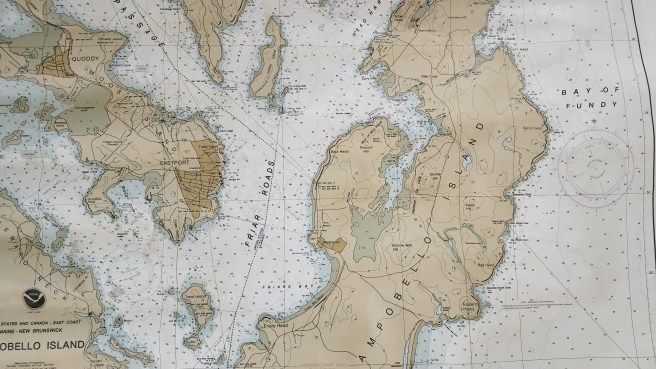
Eastport’s on the island to the left. Keep an eye out for gale warnings, too.

Incredibly tender and tasty, served here with rice, a carrot salad, and fresh parsley. In case you’re looking for a dependable holiday hit.
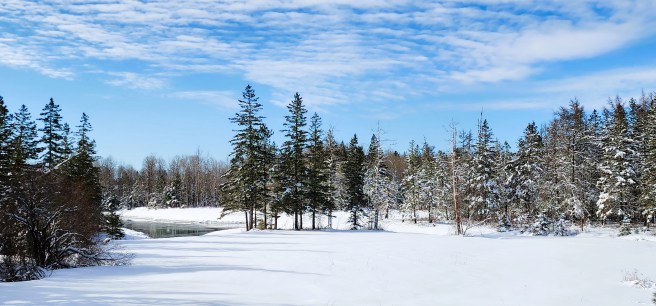
And on the ground, too
The crews are out in our deep cold and often nasty winter weather, not just fishing but also shucking before landing their haul. Most of them head out before sunrise, as I hear from my home.
Are they crazy, as some of them contend, or just dumb, as others jest? Even both? It’s more than honest work, no question.
In our zone, boats are limited to a crew of three and a maximum harvest of two buckets of shucked scallops a day. That’s ten gallons, or nine to ten pounds total. Doesn’t look like much for a day’s haul, especially when you factor in paying for their labor, the boat, gear, fuel, insurance, and the fact it’s seasonal and very cold work, even before the regulations that hold draggers to three days a week. Try making a living on a three-day, limited season, income. Good luck!
Officially, ours is a 50-day run spread over four months, but in reality, an earlier cutoff kicks in on short notice to preserve the stock from depletion. In effect, “It’s over, guys,” arrives in the captain’s email, post haste. Last year, that eliminated 17 fishing days, a third of the season. More than an entire month, actually. By dumb luck, my daughter and I were at the docks just in time to stock up a gallon in our freezers.
At least we’re not managing a restaurant.
As this season? We’re holding our proverbial breath. My, those morsels do taste unbelievable.
(Divers have a different schedule, even more limited.)
Think of that when you wonder about the seemingly high price of heavenly shellfish.
 Jnana's Red Barn