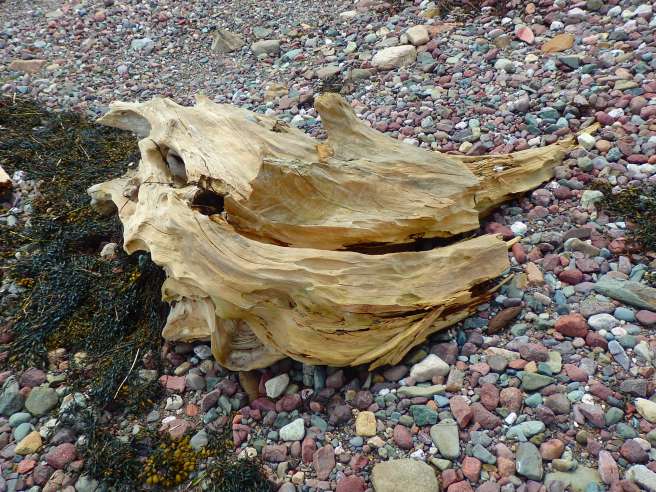
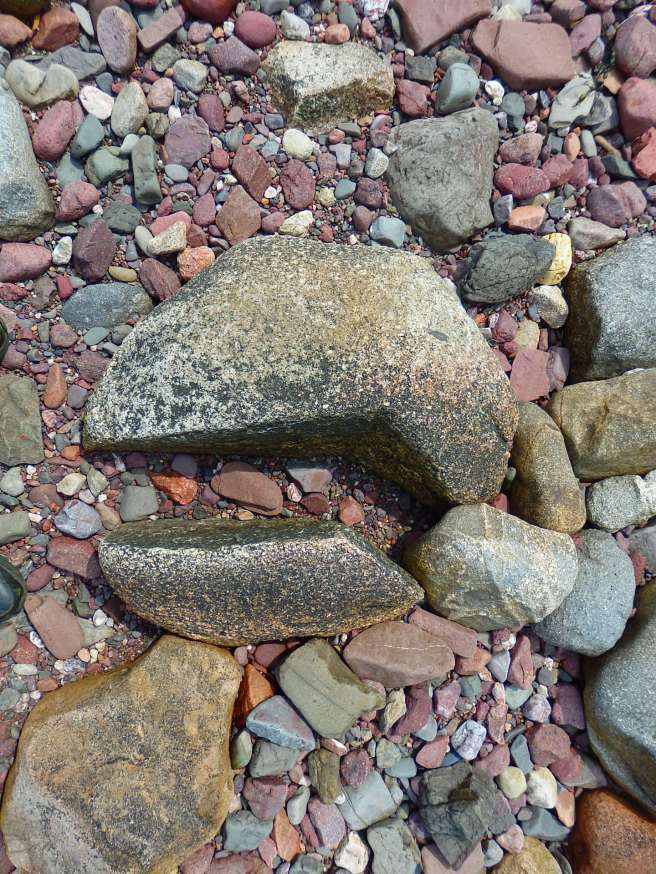
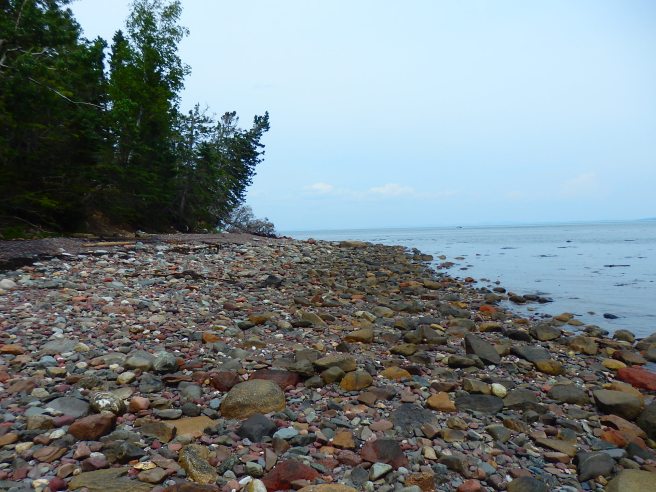
You never know what we'll churn up in cleaning a stall
Don’t know about where you live, but in New England, the front door typically is rarely used.
That insight was confirmed when I was canvassing for the Census and we had to leave a notice behind when nobody was home. Often, the real door is the one at the rear of the house.
It’s a curiosity that reminds me of something I once read about Zen temples in Japan, which were initially copies of ones in China.
The Chinese loved symmetry, which the Japanese detested, and so when the imported designs were expanded, they grew to one side or the other. Many old New England houses also have many additions, most famously the connecting barn.
Well, for the record, our back door is where the action is, and it runs through a mud room addition from the kitchen.
Now I’m starting to think about trying to enter by the right door as a metaphor for life. Like maybe there’s a hidden key, even. The one others know about, but not you or me?
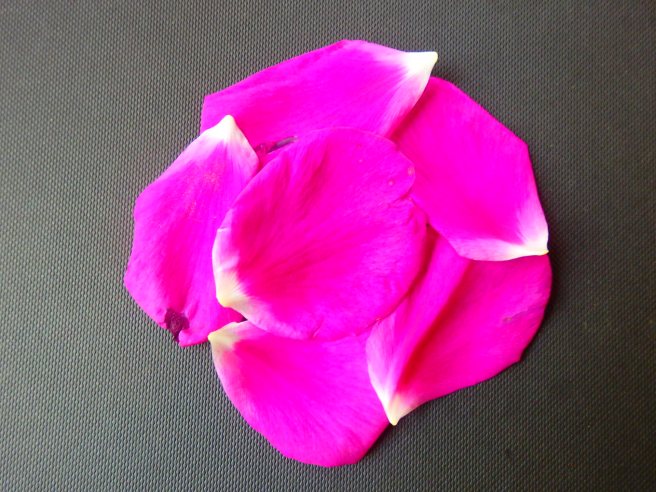
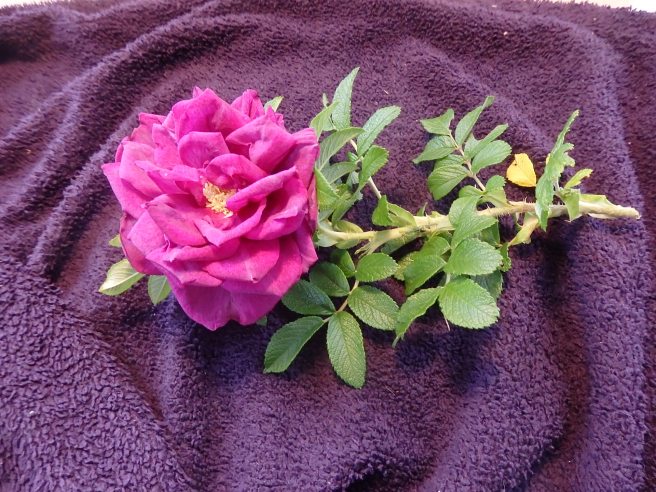
The petals had fallen from a vase and got me thinking.
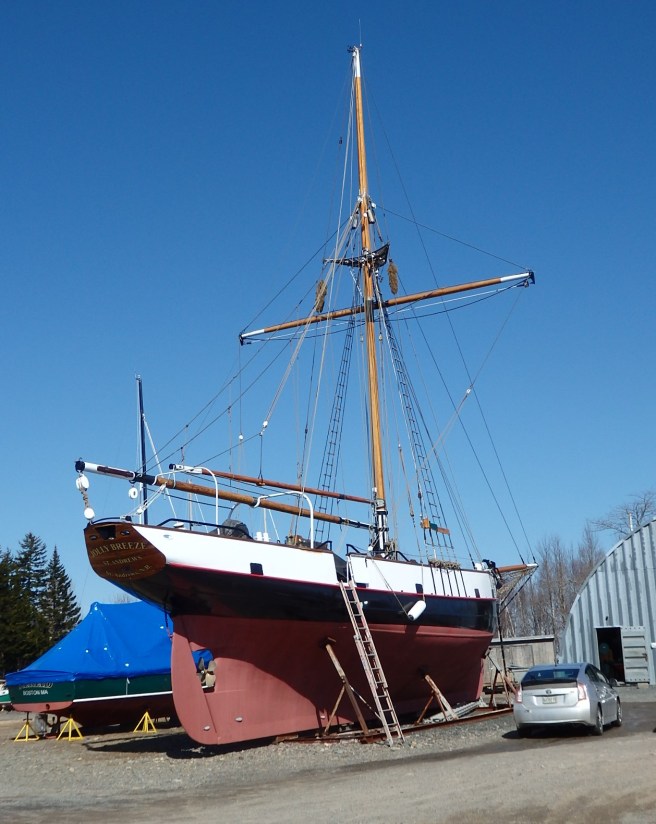
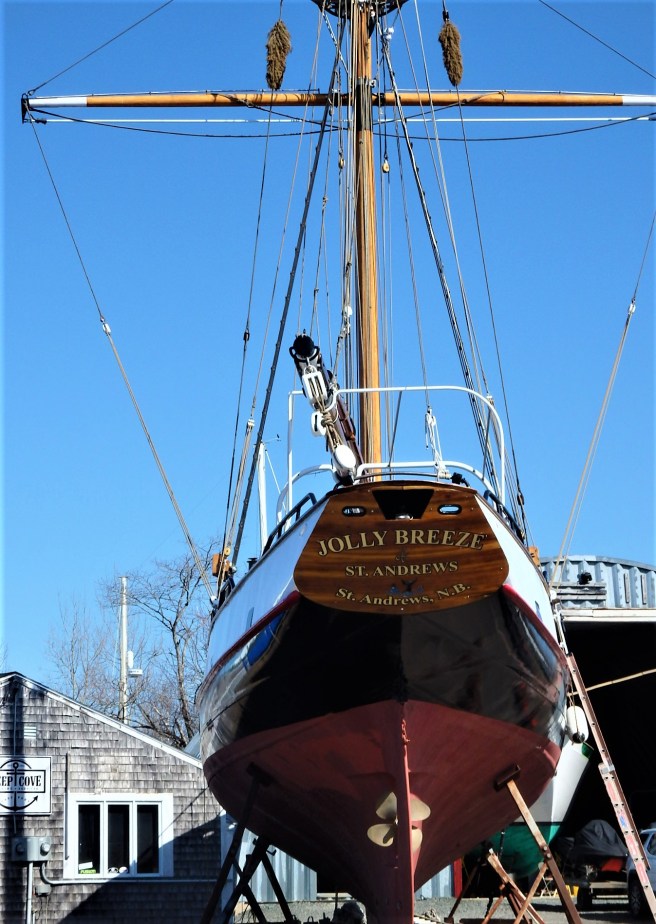
I was driving down this little dead-end road and this popped up dead ahead. Not that I was expecting a shipyard.
Comedians Bob and Ray had a regular schtick involving a radio advertisement for Monongahela steel ingots as home décor. You know, “Hey, ladies, are yours getting rusty,” sort of spiel. Usually, it was sitting in the living room.
Having lived in the Rust Belt not far from the Monongahela River, I knew about the massive pig-iron ingots riding flatbed trailers from one part of town to another. Who knows how much they weighed – the trucks carried no more than two at a time – the beasts looked deadly foreboding.
Our equivalent was in the kitchen, though better dressed and somewhat smaller.
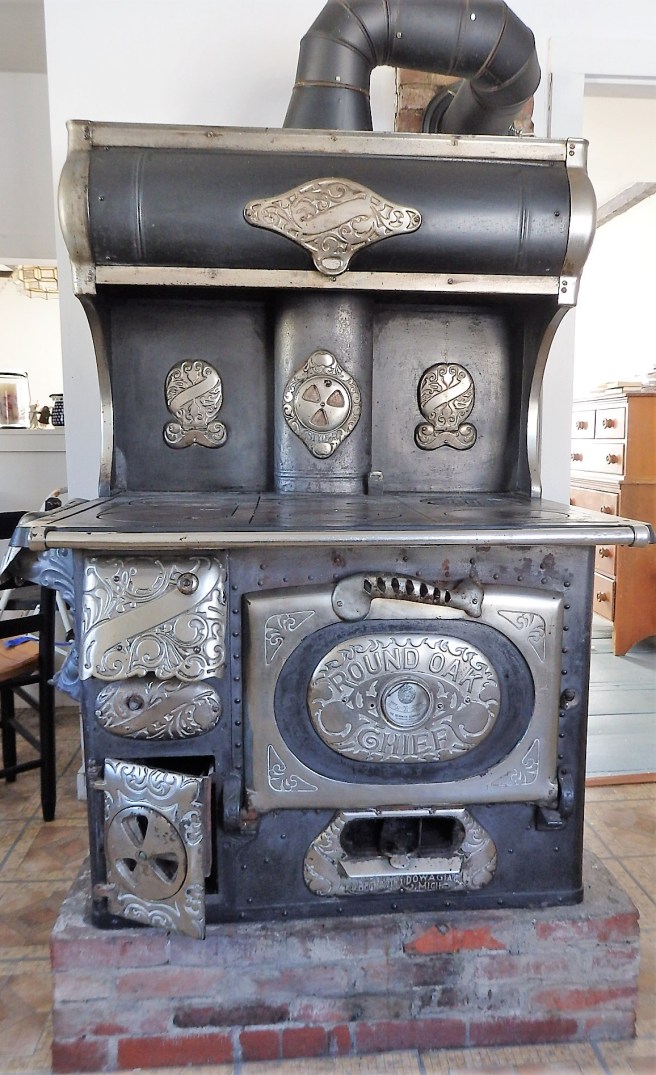
I’ve used wood cooking stoves, back in the ashram, but I wasn’t so sure about this one. I didn’t like the way the stovepipe ran somewhat downhill – smoke rises, after all – or the way it vented into the same chimney the furnace uses, something that’s against building code today.
Besides, the weight of this one was definitely stressing the house structure.
Worse yet, it occupied the center of the small kitchen, and in our life focus, we need more space there – as well as a working oven, year-‘round.
Quite simply, it had to go. And it did.
We’re happy it found a new home – one being built, as it turned out – as well as a crew that knew expertly how to get it apart and out the door.
As for wood heat, which we truly enjoy, we’re planning on a Jotul in the front parlor and a new chimney or pipe to vent it.

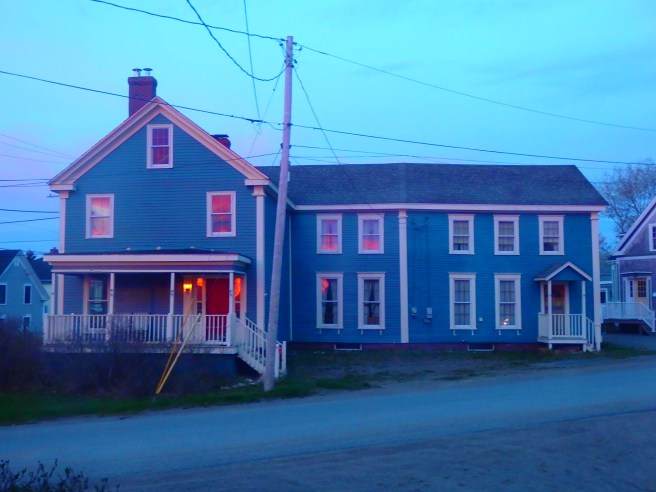
But I knew nobody was home. Instead, the illumination was only the reflection of another brilliant dawn and blazing sunrise.
For several months now, you’ve been getting tastes of my upcoming book, but I have kept much of project under wraps, including the title.
The curtain goes up on that right now.
So roll the drums, please, and take a deep breath of anticipation. Here’s what I’m rolling out:

Do the title and image intrigue you? Pique your curiosity? Hold you for more than a split-second?
As I’ve discussed in previous posts, book covers – and magazines, too – are a specialized design challenge.
The ebook version has to work as a postage stamp, sizewise.
Print editions often get cluttered with pitches of all sorts, just in case one hooks a reader.
An effective title, of course, is a huge consideration, but not the only one.
~*~
Creating a compelling image that matches the content has been especially difficult in this case. The book spans more than 400 years, and I couldn’t find anything that quite reflected the place or its people, now or then, or that extended an appropriate emotional appeal.
A seismograph didn’t do it, though several geometric zig-zag patterns looked cool.
One design that excited me featured a portrait of John Greenleaf Whittier’s mother, but others saw her as forbidding. What I saw calm and collected they viewed as sorrowful and inhibited. Oh, well.
But then, while going through my own photos, I came across a late-autumn photo of the Cochecho River, scene of much of the action. I loved its timeless mystery and beauty and the fact it didn’t look generic to just about anywhere else in the world.
One of my earlier posts pointed out that the cover should promise the reader something rather than mirror the story. It’s a matter of eliciting a gut-level attraction.
Somehow, I hope you feel this cover leads backward into time, with the drama of a storm on the way. Just what is around that bend, anyway?
~*~
Please stay tuned for the release details in the days ahead.
 Jnana's Red Barn