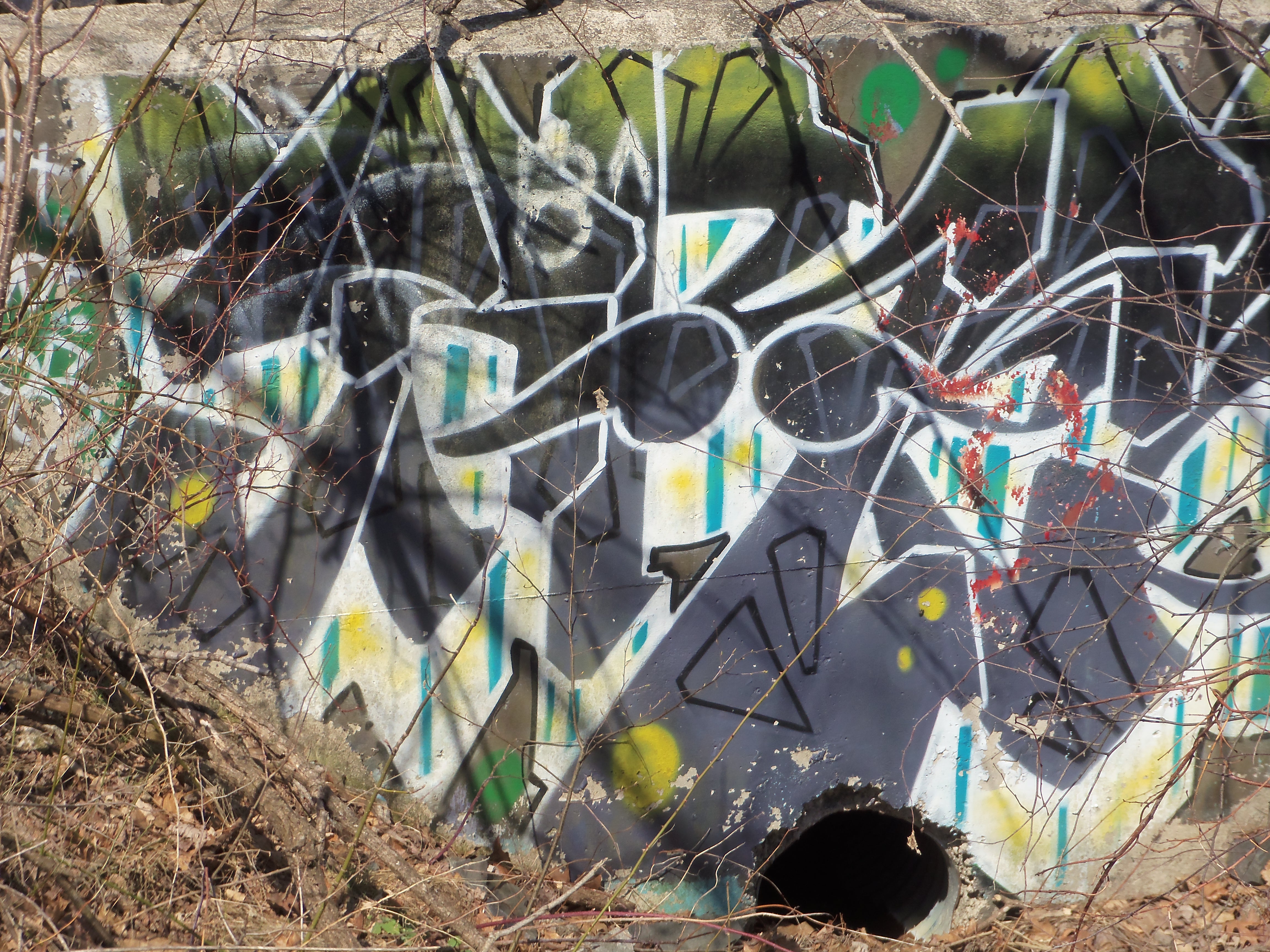
WILD CULVERT
You never know what we'll churn up in cleaning a stall
Certain select artists seem to elicit a universal reaction from the public. It’s meant as a compliment, except that it somehow short-circuits itself. For example, a certain select actress is so good at getting into the character she’s portraying – and getting so far away from the way we know she normally looks or speaks – that audience members find themselves saying, “I can’t believe that’s Meryl Streep!”
We can name others, of course. Dustin Hoffman has long earned similar kudos.
Of course, it is intended as the ultimate accolade for a theatrical professional to be so incredibly flexible and insightful, in contrast to the TV or movie star who plays only himself. Think of John Wayne, for instance, who was always John Wayne, no matter the name he was given in the latest round.
The dilemma, of course, is that Meryl and Dustin are still being viewed through two separate perspectives that keep them from being completely merged into the character. We begin viewing their impeccable technique, then, at the cost of being thoroughly enmeshed in the story that’s unfolding. In effect, we become aware of being voyeurs.
I suspect something similar can occur in any of the arts. Classical music, for instance, is too frequently measured on the technical brilliance of a soloist or ensemble at the expense of the emotional and intellectual content of the work being performed. Add your own names for visual arts, literature, pop music, dance, and so on.
For now, we’ll simply call it the Meryl Streep Syndrome.
And, oh my, how really good she is at it.
Care to name others worthy of consideration?
Playing with my entry-level Kodak digital camera, I’ll have to admit, has been a lot of fun. And I hope you’ve been enjoying the results I keep posting here at the Barn.
But I’d never consider myself a photographer, especially after working with some of the best in the news business. After watching them cope with so many of the nuances of light- and shutter-speed adjustments in the days of negatives and film-processing, I can’t shake the awareness that this digital stuff is just too easy. (Well, I’ve written about feeling the same way about desktop publishing in comparison to the old Linotype craftsmanship back I started my journalism career.)
Yes, the real photographers today are still meticulous about getting everything right. They use tripods, slow-speed exposure, lens adjustments for depth and focus, and so much more. Whether to Photoshop an image later is a whole other discussion.
Maybe it’s in homage to their high standards that I’ve chosen (with rare exceptions) to compose or crop my pictures in the camera itself, using only the 5x zoom. Yes, sometimes the camera “sees” quite differently than I do at the time – color and light, especially, but I’ve chosen to stick with that rather than trying to “correct” it later. Art and crafts, after all, function best within limitations. Yes, too, my work is taken “on the fly,” rather than waiting hours for perfect conditions, the way a real photographer would do.
The bottom line? I’m getting fond of the funky results, even if some of the work of my former colleagues is so incredibly exquisite it often brings tears to my eyes. Never, ever, forget the gap between what they’re doing and what the rest of us are attempting with our cellphones and cameras these days.
~*~
Now, for an update: Our latest round of Christmas gifts brought me a new camera, a huge improvement, I must add, and one my elder daughter, in giving it a test run, almost didn’t return. I’ll admit, the Olympus is a lot of fun, even as I’m just starting to play with it.
But I must also confess, it still doesn’t change my perspective on the Real Photographers and the rest of us. Humility, then, in the face of brilliance.
Originally it was three lines, but this is what I read:
Now hiring fried clam strips chicken tenders.
(Well, I always wondered about their scallops. But now we know who tenders those chickens. Or is it strips those clams?)
Yes, this definitely puts chicken tenders in a new category.
Maybe it was one of those equations on the blackboard in an episode of Big Bang Theory, but suddenly I perceived that grammar could be tackled as mathematical equations.
What finally hooked me on grammar – and the art of writing – was a very patient and very demanding English teacher my sophomore year of high school. We spent far more time than we were officially allotted mastering the rules of grammar, and looking back, I see a close similarity to what we were also doing in geometry.
The turning point came in our diagramming of some very long sentences – 250 to 300 words or so – and then realizing the lines and forking could be arranged in various manners, depending on our application of the rules.
Put another way, those lines on the blackboard were also equations that might also reveal errors in thought and observation or even allow new ways of balancing what was at hand.
A few years ago, though, when my elder one delved deeply into sentence diagramming as part of her linguistics training, I hoped we’d soon be swapping insights. Didn’t happen. Didn’t work, either. The newer approaches she was being taught – and a completely different terminology – were so far from the classic approach in my discipline that we simply had no common ground.
Anyone active in the math and sciences world have similar experiences?
In many Quaker meetings, we have little idea of what other Friends do outside of the meetinghouse. Maybe it’s simply an unfortunate consequence of contemporary life as we live and work at distances from one another and find our schedules anything but simple.
Bridging that gap remains a challenge, especially if we intend, in the words of George Fox, to “know one another in that which is eternal.”
At Dover Monthly Meeting in New Hampshire, we’ve chanced upon what has become an annual event that other members of the Fellowship of Quaker Artists might want to expand on. For four years now, we’ve had an annual Arts and Letters Night – an opportunity for individuals of all ages to share something of their creative lives with the larger faith community. For us, it’s usually come on a Friday or Saturday night in March – a time when we in snowy winter landscapes are ready to start stirring again. (Hopefully, when the worst of the winter weather is behind us.)
While Dover Meeting is large enough to have a number of serious artists of various stripes within its community, other Friends might find the idea to be something more suitable for Quarterly Meeting or a similar occasion. Like Meeting for Worship itself, each gathering has been unique.
Visual artists bring their work into the meetinghouse beforehand. Much of it goes up behind the facing bench (in the “elders’ gallery”), but other pieces have been displayed on easels or even been passed around the gathered circle. Work has ranged from painting to prints to weaving and textile crafts to photography to furniture-making and sculpture – including one child’s Sculpee creations. One year, an attender ran home to bring back examples of commercial designs she was doing for paying customers – and her work was indeed impressive.
We’ve encouraged these pieces to be kept on display through Meeting for Worship the following First-day, so that everyone may have an opportunity to view them – or even revisit them.
The “letters” part of the equation has had Friends reading publicly from their original poems, short stories, or journals – or from pieces they’ve found especially moving.
We’ve also had music – ranging from one violinist’s performance of the “Meditation” from Thais to original songs – as well as children demonstrating their Tae-Kwon-Do martial arts patterns. Lately, we’ve had videos, including one a Friend had made for Public Television showing another Friend doing sculpture – three decades earlier.
Depending on the length of the readings and performances, there may be time to go around the circle, discussing what inspires and motivates us in the work we pursue. Questions seem to arise spontaneously.
And afterward, we’ve enjoyed repairing to the “culinary arts” – a dessert potluck with tea or coffee.
So it’s one idea. An easy program. One Dover Friend has taken on the responsibility for signing others up – and I’ve the pleasure of being emcee and reading a few of my own poems at the end. We arrange it all through our Ministry and Worship Committee, though it could fit under Pastoral Care as well. (We split our Ministry and Counsel several years ago, to lighten the load.) In any event, do what you want with this proposal. As I said, it’s an easy program.
Invite the public. Invite the news media. And then have fun.
Originally published in Types & Shadows:
Journal of the Fellowship of Quakers in the Arts,
No. 34 Fall 2004/Winter 2005
As I said at the time …
The image is simple enough, and direct: a sunfish transferred to paper, a child’s project in dull red poster paint. The specimen, found on a beach, measures fourteen by seven inches – larger than most of the fish caught back where I’m from, but nothing remarkable here. It has long, prominent spiny dorsal and pelvic fins (the anal fin’s much smaller), and a rather compact caudal, or tail, fin. While much of the scale pattern is apparent, it’s difficult to tell about pectoral fins. The gills and eye, however, are thick paint, and a band of dots runs most of the length of the body to the tail. The mouth, of course, is agape with a small, receding lower jaw. It’s the roundness of the profile that kindles my imagination – at least rounder than the way I would draw a fish or design a machine for the water. As soon as I acknowledge the underlying circle, it becomes drawn out, like a balloon pinched apart by two fingers.
Sometimes I picture a fish encased in a suit of mail armor, though I know that’s hardly the case. Rather, the intricacy of the interlocking exterior – like shingles on a house, rather than brick or stonework – fascinates my landlubber sensibilities. As I stare, the image becomes concave – the fattest part of the body, because of the scales, has the most openness, the least paint. Still, there’s no anticipation the fish will suddenly turn, either in attack or in flight.
I suppose that roasted over open flames or fried in a skillet, a meal might emerge. It’s larger than a typical trout, after all. The child behind the painting, however, now refuses to eat seafood of almost any variety.
The nature of fish is as mysterious to me as the array of the night sky, and to my mind far less mechanical than the knowledge of hooks, bait, spinners, and water depths prized by devoted fishermen. Jesus promised, of course, to make us fish for people, a far more elusive objective than any school underwater.
The paper itself has yellowed and crinkled, as I have.
By now you’re no doubt aware of my belief that local newspapers need a strong local voice, the kind that’s manifested in a talented general columnist or two. The New York Herald-Tribune, for instance, at one point had both Jimmy Breslin and Tom Wolfe in that role. Think, too, of Mike Royko in Chicago or Herb Caen in San Francisco. In Dayton, we had Marj Heyduck holding forth from the Journal Herald’s Modern Living section – but everybody had to read her daily four or five vignettes, especially when they had a humorous edge.
These are the kind of writers who speak personally from the places regular people live, rather than the council meetings and police blotter events that fill the news pages. Unfortunately, they’ve largely vanished in the cost-cutting rounds at newspapers large and small, and communities and subscribers are impoverished as a consequence.
At their best, they get out and report stories that wouldn’t otherwise appear – or at least the aspects they dig up along the way are fresh and insightful. At the Herald-Trib, for example, Breslin would go to the city desk and rifle through assignments for ones he wanted to cover from the street – that’s how he wound up in Selma, Alabama, with dispatches from the front line of the civil rights movement.
Within the newsroom, however, they were generally viewed with disdain or even contempt, even when they scooped the beat reporters, as Caen often did to his colleagues at the Chronicle. Part of the gulf originated, I suspect, in the professional wall between third-person and first-person singular writing, and the fact that reporters are supposed to be neutral observers while a good columnist is permitted to be actively present and even emotionally involved in the story. Ideally, too, reporters are to be invisible agents, unlike the star billing given to a columnist.
All of the snow we’ve been getting has me reflecting on the first newspaper I served after graduating from college – and my frustration with its resident Scribe. There were, for starters, his affectations of a thwarted wannabe novelist – the tweed jackets with elbow patches, the scarf, the half-moon eyeglasses, and, yes, the fragile ego that demanded deference if not worship. There was also an over-the-top serving of purple prose but little substance that cut to the bone. Ultimately, what he served up was inoffensive and bland, but he did have a following.
His one redeeming quality, though, was an eagerness to jump into covering two kinds of stories no one else in the newsroom really wanted to do – weather storms and the deaths of prominent local figures. And there he excelled. Looking back, I can see where a first-person voice can enhance the story – we’re all in this together, after all – even when he was weaving in rewrites of breaking news fed to him by reporters and correspondents, as I vaguely think he was. The deaths, meanwhile, lend themselves to an “we recall when” transition from one detail to the next. Moreover, as a minor celebrity himself, his presence probably got many sources to say more than they might have otherwise. Hmm, my memory is that he leaned toward the editorial “we” rather than the more direct and contemporary “I.”
Outstanding local columnists, I should add, have never been confined to the big metro papers.
A few leaps later in my career, launching Jim Gosney’s daily profiles in Yakima, Washington, demonstrated that. He gave us a parade of characters who made a difference in the community without themselves being considered the kind of movers and shakers who normally got quoted.
And then, in Manchester, New Hampshire, John Clayton began doing something similar.
Both, I should add, were top-notch reporters when it came to questioning a source and digging up facts – and both could turn a phrase in their engaging storytelling and flawless prose. (That combination is rarely a given.) What they offered was the kind of local color and connection too often missing from today’s standard and shallow coverage.
Perhaps you know of others who deserve recognition. Maybe they could even serve as models in a rebirth of the tradition.
While I wrote this for a Quaker audience, I’m hearing it’s true in many other faith traditions.
~*~
It’s not just teenagers, first, and then small children. Where are the men? Looking at attendance patterns across denominations, one might ask if religion’s becoming a “women’s concern.” (We might contrast this to some Orthodox Jewish traditions, where the women stay home, figuring men need to do the heavy spiritual work or at least some soul-searching, so everyone will benefit; pardon me if I oversimplify in reaching for a point.) It’s bad enough we Friends now expect the teens to disappear, as well as the college-age youths. There are mornings in our worship when women outnumber men three-to-one, or more. I’m calling for some equality here, or we’ll all suffer. (I recall one researcher who pinned the decline of the Shakers to four decades before the actual collapse became apparent; the point came when the number of men joining the movement fell off sharply.)
Admittedly, there are some pretty powerful countercurrents running through American society. Many of the men are working six-day weeks to make ends meet, and Sunday’s the only day for rest – if not a second job itself. Sports has replaced religion and even politics as the male topic of discussion. Some church planners have gone as far as to suggest stadium seating in response, and Starbucks during the sermon is already customary in the trendiest congregations – especially those gathering in rented movie theaters. This doesn’t even begin to address single-parent or two-worker families, soccer leagues, the claustrophobia-inducing Saturday rounds of shopping, parties, or entertainment venues. Something’s deeply out of balance.
Don’t misunderstand me. I’m not calling for any return to patriarchy, and I’m grateful for many of the ways feminist theology has liberated our understanding of Scripture and early church practice. I’m even concerned that women pastors are largely confined to the smaller, lower-paying parishes – or excluded from others. I’m proud of the leadership women have provided in our Quaker Meetings.
I’m simply lamenting the fact that we’re not as diverse and vibrant as we might be. Any suggestions?
Few Friends in unprogrammed (or “silent”) Meetings of our size would admit that we need a pastor. Not for a sermon or vocal prayers, mind you, but simply to provide all the behind-the-scenes counseling and comfort, as well as some administrative oversight. But it’s true.
The job of clerk as envisioned is one of a chairman/moderator. As it turns out is something altogether different. We have no chief administrative executive, and that creates a vacuum, especially if Friends in the meeting fail to step up to do their share of community service.
As one former pastor from another denomination quipped, watching our clerk be besieged by questions in the few minutes before we settled in for worship, “You need an office manager.”
Point noted. That would be a step in a useful direction.
 Jnana's Red Barn