Farewell, Dover … in a way

It’s not like I won’t be back. My next book is a unique history of the town’s Quakers, for one thing, and I’ll be promoting it. And I’ll still be connecting with Dover Friends, especially through New England Yearly Meeting. Yes, Downeast Maine is still part of New England, thank God.

Will I miss people? Definitely. Some great neighbors, the Greek Orthodox circle, the lifeguards and fellow swimmers at the city’s indoor pool would be high on that list. My fellow musicians, on the other hand, were down in Boston, and I haven’t seen them since before Covid. Our beloved conductor even stepped down in the face of its digital demands. The local writing circle, meanwhile, adds some valued faces to the list, though I can’t say we were close or even much on the same page. But that’s where I did learn about Smashwords, where all my novels quickly appeared.

Which brings up another point. This new move would be much harder if we were leaving extended family behind or, more crucially, that rare friend who connects intimately on a range of shared interests – those things that fit one’s life mission or identity. For me, that would be a nexus of Quaker spirituality, off-beat literature, classical music, natural wonder and wilderness, back-to-the-earth awareness, even folk dancing. Things like gardening and foody smarts would be more on my wife’s side of the equation.

What, you think there are tons of people who match my varied interests? Surely, you jest.

Death has already taken a toll there, as has spiraling illness, their moving away to a distance, or even insurmountable conflict. But in my new setting, I am meeting some fascinating eccentrics. More later, I’m sure.

I do wish we had more words to describe friendships, though I’m afraid any subtlety would quickly be eroded. The fact is there are few of those soul-mate connections, especially among males of our civilized species. Women seem to be naturally inclined toward that one-special-friend connection, the kind of person you have to phone (or text) every day. Or every-other hour. Not so guys, to our own detriment. Mea culpa.

Let’s also note that Covid precautions have also already detached us. We’re rarely in physical contact, no matter how much Zoom and other platforms allow me to catch up with buddies even when I’m way up Downeast Maine. And, from everything I’m seeing, that’s likely to continue into the foreseeable future.

~*~

My wife and I have both been surprised how quickly I’ve switched into my new center. Once my workstation and files were set up in our new address, that’s where my heart was. Dover is undergoing what I expect to be an amazing rebirth, but I won’t be part of it, and I’m aware of that.

Quite simply, it’s become a great place for me to visit, but no longer home. All of my goods have ether been moved to the new address or are in the storage unit we’ve rented.

In other words, the dream has stepped on.

~*~

As I look back on my years in Dover, I realize I see I hadn’t spent as much time in neighboring Portsmouth as I’d expected or at the University of New Hampshire just a town away. Even once I’d retired from the newsroom, I was largely hunkered down in writing, revising, and publishing. So much for the writer’s life!

I can say I feel comfortable in leaving Friends Meeting in good hands and wish the best for the new owners of our old house, barn, and precious gardens.

I can say Dover’s been the best years of my life. So far. You will be seeing more from that through the coming year, here at the barn.

What would you miss most if you uprooted?

 

Family honor means something

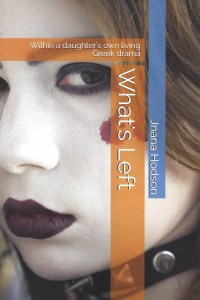
In my novel What’s Left the family-owned restaurant is a local institution, one set at the edge of campus even before her grandparents and their siblings took over and made it distinctly their own. Everybody in town seems to know them.

Have you ever been recognized because of something your parents or grandparents did?

~*~

My novel’s available at the Apple Store, Barnes & Noble’s Nook, Scribd, Smashwords, Sony’s Kobo, and other fine ebook distributors and at Amazon in both Kindle and paperback.

The paperback cover …

Retreat and regrouping led me into poetry and fiction

There was no Nita for me during college or immediately after. Had she existed, my route would have been much less conflicted. Somehow, though, I managed to figure out enough on my own, often through seemingly chance introductions, to survive in an alien milieu.

After college I landed in a place where I knew nobody except a few people from my previous summer as a newspaper copy desk intern. I was a Midwesterner trying to comprehend the East Coast, a hippie working in a low-paid newsroom. Single and lonely.

The locale I create in Pit-a-Pat High Jinks is situated vaguely somewhere north of New York City. It could be in the Berkshires of Massachusetts or in southern Vermont or places like Oneonta or Cortland, New York, perhaps even Utica.

The paperback cover …

I paint it as smaller than Binghamton, the strange place where I was living and working. The Tri-Cities, as it was referred to locally, was flailing to recover from collapsing industry, especially its shoe-manufacturing ruins, as well as a deteriorating but expensive housing supply. The new state university attracted socially awkward straight-A geeks and nerds. My first year I resided in a neighborhood that was Italian by day and Black, as in ghetto, by night. And then there was the summer and autumn on the farm we shared up in the hills. My work schedule was crazy like Kenzie’s, except for the three-day weekend once a month, which I really wish had been in place – I took that from a newspaper where I worked a dozen years later.

Strangely, I also soon came to love the region. There’s something distinctive about Upstate New York, with its hills and forests and lakes, and almost all of my friends were from The City, meaning the Big Apple aka Gotham. Few of them confined their definition to Manhattan, I should note. Through them I got to know Brooklyn, the Queens, Staten Island, Long Island, and northern suburbs as much as the sliver between the Hudson and East rivers.

I initially addressed this fertile period in my life as two parallel novels – one where the hippie boy largely fails to connect with free love; the other, X rated, where his fantasies come to fruition. Either way, the plots arrived at the same finale. Later, in light of Cassia’s perspectives in What’s Left as well as a few of the early reviews, I returned to these two versions and blended them into a much more cohesive, and I hope more engaging tale, “Pit-a-Pat High Jinks.” Well, that is one of the advantages of ebook editions – you can always update them.

There’s still so much that baffles me about the time and place. How one housemate would come home with a different lover each night, all of them gorgeous to my famished gaze. What was his trick, other than that twinkle in his eye?

In the revised rendering, Kenzie encounters a sequence of hippie chicks, goddesses, lovers, each of them leading him to fresh understandings. Still, I’m left wondering how each of these interludes would sound from the woman’s point of view. I suspect Kenzie wouldn’t fare so well.

Also, for me, it was yoga rather than Buddhism as a new spiritual practice, but that’s told in Yoga Bootcamp.

More lingering are the questions of what’s happened to so many I’ve met in the broader Bohemian spectrum. I can’t even remember many of their names, but I have learned that some went on to become OBGYN physicians, United Way executives, federal attorneys, United Nations officials, photocopier technicians. Hardly what you’d expect of hippies, right?

Well, I’ve tried to record and reflect on what happened, seen mostly on the run. Can you experience something – live it – and still step back enough to record it? In my novels, that’s what the photographer tries to do, similar in its own way to my own struggle. And now you can see how much that role’s changed, too, in the shift from film and darkrooms to the digital ease of today.

Letting go and moving on

It’s official. We’re selling our home of the past 21 years, including the red barn and my asparagus and fern beds.

It all happened much faster than I had anticipated. In truth, I didn’t expect our dream of relocating to a remote fishing village at the other end of Maine to go into action for another two years. Even when we made our pitch for the house we landed, I didn’t allow myself to get my hopes up – they’d been dashed too many times the previous time we were looking before we anchored in Dover.

But here we are, with any luck beating the crowd on that rising housing market. The trend of moving out from the big-city suburbs into smaller, more viable, pedestrian-friendly towns hasn’t yet reached fever levels in Sunrise County. It is, after all, an eight-hour drive from Boston.

And no, I’m not changing the name of this blog – the barn will live on in my memory and as a metaphor. Guess we’ll just have to get a garden shed, paint it red, and call it our new barn.

~*~

Still, the uprooting and transplanting have stirred up a lot within me.

I’m recalling one neighbor’s comment back in Manchester. “I don’t think anybody can afford to live in New Hampshire for under,” and he named a figure that would have gone up a lot under the inflation in the years since. At the time, I looked at him and replied, “But I do.”

He was shocked and maybe a tad embarrassed.

I still don’t know how most people are affording the prices of homes in much of New England or other hot spots, but they’re also being pressed by outrageous rental costs.

~*~

Reflecting on previous moves, I admit most of them were daring leaps to new jobs and dots on the map where I knew no one. This doesn’t feel so draconian. I’ve visited, after all, and have acquaintances, mostly through Quaker circles.

So now I flip between memories of places I was fond of and of others, well, there were some mean towns and economic struggles. Satellite photos reveal that a handful of the units I occupied have been demolished in the intervening years. Let’s just say that luxury rentals were beyond my means, but a few others had their funky charms or at least memories.

The Dover property was only the second I’d owned. The other was a marvelous 1920s bungalow in a Rust Belt town. (See my novel Hometown News for that one.) When that house was emptied, I sat down and wept in the aftermath of a divorce and the confusing developments with my fiancée.

This time, I’ve found myself anxious to move on. Both of us are finally admitting the shortfalls of our home of the past two decades – not just the short treads on the staircase but also the arrangement of the rooms and the fact it just wasn’t designed for our needs. We adapted to the space, and now that there were just two of us, the faults became inescapable.

On top of that, I keep seeing more repairs that are needed – some of them big ones the second time around. I’ve run out of energy. The responsibility – and expense – are simply too much.

But I’m also remembering guests who’ve stayed with us as well as our dinners and parties, not that we ever had as many as we would have liked.

~*~

One thing I have to acknowledge is the emotional weight of things I feel a responsibility for maintaining. As I shed more of them, I’m feel freer and more capable of opening to new experiences. The flip side is the question of just how much and what I might need to sustain that.

So here we go.

Join us in a free concert for Sanctuary

Dover Friends Meeting is presenting a free evening of song, scripture, and reflection on the essence and intention of Sanctuary as we seek to build and sustain unity in our leading to offer mercy and love to those in need.

The hour-and-a-half celebration takes place Saturday, March 13, from 7:30 to 9 p.m., and you are welcome to join with us via Zoom.

For years, our community of faith has enjoyed an annual Arts & Letters gathering around this time each winter, an event where we could enjoy the wide range of artistic abilities among us, both amateur and professional, by Friends of all ages. Visual arts and crafts, dramatic readings, original poetry and prose, dance, video productions, gymnastics, even self-defense, and of course music have all been abundant. And this year, as a consequence of Covid, the occasion is taking yet another turn, one with a theme and a venue that will allow folks from all around the world to meet with us in our little corner of seacoast New Hampshire. I already know of one song written especially for this occasion.

Welcome to Dover Friends …

Remember, it’s free, but registration is required. Click here!

Maybe it’s not really news but it counts

Heyduck

In my novel What’s Left, Cassia’s aunt Nita writes a daily newspaper column focusing on local people and their real interests. It’s not all that different from CeCe Cobb’s in my earlier novel Hometown News, but Nita’s is far less corny and far newsier.

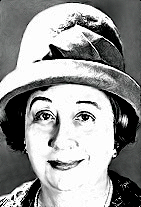
In Dayton, where I grew up, it was Marj Heyduck of the Journal Herald. Her mug shot on her daily column featured a new hat each week as a signature touch. And in Cincinnati, it was TV host Sally Flowers.

But I can think of others who just seem to know everybody.

Does your community have a local voice? A minor celebrity or just a naturally curious friend of all?

Best hippie towns in Midwest

The vibe lives on. Here are some hot spots in the American heartland:

  1. Ann Arbor, Michigan
  2. Bloomington, Indiana
  3. Decorah, Iowa
  4. Duluth, Minnesota
  5. Eau Claire, Wisconsin
  6. Lawrence, Kansas
  7. Lincoln, Nebraska
  8. Madison, Wisconsin
  9. Makanda, Illinois
  10. Yellow Springs, Ohio

(Disclaimer: I’m relying largely on Thrillist and have been to slightly fewer than half of these.)

~*~

Looking across the country, we’d add Athens. Georgia; Austin, Texas; Berkeley, natch; Port Townsend, Washington; Cambridge and Northampton, Massachusetts; and Burlington, up in Vermont. Again, half of these are by reputation, not direct experience.

What other towns should be noted, anywhere in the world?

Enumerator insights

After 7½ years of retirement, I returned to the workplace part-time for two months this year.

The job was supposed to begin in May and run through the summer but got pushed back to August and then abruptly cut off at the end of September.

I was a federal agent.

The private identifying details we recorded are sworn to secrecy – or the equivalent, for those of us who follow Scripture and refuse to take oaths. But I’m still trying to put the experience into perspective.

For nearly 40 years, I’ve worked through the available Census files in my genealogical research, as you’ll see in the posts on my Orphan George blog. It’s become something of a specialty for me, along with the Quaker minutes. I mean, it’s how I learned that Grandpa married the girl next door. There’s also one set of ancestors who were recorded twice in 1860 but with enough differences to make me suspect there were two Jacob Ehrstines closely related – one detail in the 1870 Census cleared that up. And I have one ancestor who shaved another year or two off her age every decade, though I have no idea whether it was intentional or out of ignorance, considering that Quakers didn’t celebrate birthdays.

So I set forth in part out of gratitude for those earlier enumerators. The first ones, incidentally, were federal marshals. This was that important.

What surprised me as I hit the streets and knocked on doors on behalf of the Census Bureau was how physically hard it becomes – bending over an iPhone placed on a clipboard to input data quickly had my back aching, especially. For a dozen years, I managed to work a double shift every Saturday as a newspaper editor, yet here I was pushing my limits when it got close to five hours a day. (Wimp!) Six really maxed it. An article in the Washington Post enlightened me that I wasn’t alone here, so I couldn’t blame it all on age.

I am surprised by how many Americans don’t know what a census is or that it’s required every ten years or that they don’t want to be recorded.

Well, I now also have a clearer understanding of why one household might disappear ten years later but reappear again in a subsequent Census. You know, be there in 1800 and 1820 but not 1810.

I am also surprised how much of my brain space got wrapped in a job again. You know, replaying cases and wondering how I might have done them differently. This was supposed to be something I could let go of at quitting time. Not so, though.

Inputting data in an app on an iPhone still strikes me as tedious. You might have guessed I pretty much hate texting, except as an alternative to an actual phone call. (Emails seem to be my preferred form of communicating these days.) How do kids do it, texting with their thumbs? Or are their exchanges all typos?

Oh, yes, another confession. I’ve typed for nearly six decades now. Self-taught, earned my livelihood with it. Written whole books, even. But ask me to re-create a keyboard from memory, and I have no clue where the individual letters of the alphabet are. The memory is all in my fingers, not my head. Seriously.

So I can’t imagine keyboarding with my thumbs. As I was saying about the kids? Besides, thumbs are awfully fat for those tiny screens. My dry fingers had enough trouble connecting, even before getting to any issue of accuracy.

In my rounds, I had a few near falls (including one wooden step that wasn’t nailed down anymore), a couple of dogs who could have turned nasty, some close calls in traffic, but emerged unscathed.

Some of the most enjoyable interviews turned out to be those where I could put my very limited Spanish to work. Other enumerators had backed off, so I guessed it was up to me, and somehow, we got the required data, often with a lot of laughter. Yes, I made some funnies.

The best part of the job, though, was meeting people who, for the most part, were warm, friendly, helpful. I have a much clearer understanding of the neighborhoods around me.

Would I do it again?

No, I’ll be too feeble – or feebleminded – in another decade.

But maybe you’d want to give it a crack.