As glimpsed at the mostly takeout Vietnamese restaurant in Bangor, Maine, the token offerings to Buddha and his buddies are a reassuring nod in many Asian food retailers.
Jesus and all the saints, on the other hand, are typically left in fasting mode, East or West.
The clock’s winding down on my offer of a free ride on my novel, Subway Visions. Who knows when, if ever, you’ll have another opportunity on such a deal.
The surrealistic story presents an adventurous ride in its flashes through underground culture. Some of it even erupts into verbal graffiti.
It’s one of five novels I’m making to you for free during Smashword’s annual end-of-the-year sale, which ends just a few hours from now on January First. Remember, the ebook comes in the digital platform of your choice.
Step aboard promptly, then, before the door closes. There are good reasons I see these mass transit rails as an urban amusement park. Check out the ebook and you’ll discover why.
Cassia would have to say she’s in a big happy extended family, but she would disagree with
Tolstoy on his other point. Hers is not the same as any other. As for the unhappy part, she carries a world of grief after the disappearance of her father in a mountain avalanche.
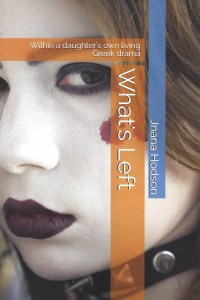
My novel What’s Left follows the bereft daughter in her quest for identity and meaning over the decades that follow. Bit by bit, she discovers that he’s left her far more than she ever would have imagined, in effect guiding her to some pivotal choices.
The ebook is one of five novels I’m making available for FREE during Smashword’s annual end-of-the-year sale. Pick up yours in the digital platform of preference.
Think of this as my Christmas present to you. How can you not be interested in insights about family, especially at this time of year? Even if this one does have some Goth twists, probably unlike yours.
Some things are timeless, and subway trains and their tunnels and elevated lines are that for me. They do get my imagination rolling.
That’s how I came to write Subway Visions, my surrealistic novel of adventurous rides through underground culture. Some of it even erupts into verbal graffiti.
The ebook is one of five novels I’m making available for FREE during Smashword’s annual end-of-the-year sale. You can obtain yours in the digital platform of your choice.
Think of this as my Christmas present to you. Now, get rolling and enjoy the trip!
My novel What’s Left, was in no rush for completion, contrary to my own desires. Still, I wasn’t going to artificially pressure this one.
As for my personal surprises this time? Some of my favorite lines popped up while swimming my daily laps in the city’s indoor pool.
Here’s one of Cassia’s outbursts that almost prompted me to change the name of the novel itself:
Oh, my, am I torn! I’ll tell you this, though. Buddhism comes in very handy when other kids are giving you so much grief you threaten to cast a spell on them and break out chanting Su To Ka Yo Me Bha Wa repeatedly and then just watch them back away. Oh, I tell you, it’s so satisfying!
What’s that do?
You’ll find out. You better be good to toads.
You get lots of respect for doing that.
~*~
Which title Do you think’s better — “What’s Left” or “You Better Be Good to Toads”? Or have I overlooked something even better?
~*~
Think of it as a cool Christmas present for somebody really special. Available at the Apple Store, Barnes & Noble’s Nook, Scribd, Smashwords, Sony’s Kobo, and other fine ebook distributors and at Amazon in both Kindle and paperback.
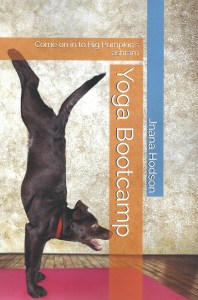
Answers to some of the questions about Cassia’s father’s reasons for intensely pursuing Tibetan Buddhism, first encountered in my Freakin’ Free Spirits novels, can be found in Yoga Bootcamp, my story about eight young American yogis living on a former farm in the mountains. While each student is at a different stage of discovery, their widely divergent motivations still lead to common struggles and victories. Nothing is easy, but the lessons are priceless.
Do you practice meditation? How about yoga exercises, chanting, or Zen? Any other spiritual exercises you care to discuss?
Cassia’s conversations with Rinpoche lead her to crucial new understandings of her father.
In earlier drafts of my novel What’s Left, I considered these possibilities, but rejected them as, well, too wordy, esoteric, or preachy:
Your Baba was on the cusp of some original thinking about Christ as Light, Rinpoche tells me. He was connecting that with an ancient line of Greek philosophy about a term known as Logos. It was all very, very exciting. He was seeing Christ as much more than the historic person of Jesus, much as we see Buddha as something much more than a historic person — you know, Gautama — too.
Well, that happens to be a hobbyhorse I ride. Let’s give her father a break!
Rimpoche continues. Your Baba had scorn for those who claim a personal spirituality without any disciplined tradition. He wanted to encourage people to delve into a practice — not that they’re all equal, but they have their own unique wisdom to impart — and that led to his organizing some fascinating ecumenical dialogues, ones that included your Orthodox priest, plus a rabbi, a Sufi or yogi, an evangelical, and so on.
Maybe we’d better leave all that for a later discussion? Cassia has more pressing questions, many of them regarding his photographs and family.
Throughout his monastic studies and labors, he’s pressed to concentrate totally on what’s happening in the moment. Even while sleeping. Looking through a lens would, according to Manoula, place a filter between full experience of that timeless breath and himself. It would place a mask across his face when he most needs to be fully naked, as it were. Who knows what he wears in the monastery, for that matter. We can guess from the photos he took later, on his return visits — and his portraits of his teacher and fellow practitioners. For now, he needs to see not just with his eyes — and his Third Eye — but also with his nose, tongue, lips, ears, and especially his fingers and extended skin. And from there, to embrace the eternal realities rather than the ephemeral illusions flickering and dashing around him. Through this stretch, he heeds fellow monks who create beautiful colored-sand mandalas and then scatter them to the wind rather than preserve their work. This emphasis on the present while pursuing eternal truth may seem to be a paradox, but he submits to the instruction and its flowing current.
So that, too, was filtered out of the final revisions. As was this:
Baba and Rinpoche had grown close when they were both residents in the monastery. Rinpoche was then just another of the aspirants, albeit a Tibetan refuge with a lineage. Their teacher blessed their venturing into the Heartland to establish the institute here, and Rinpoche, with his mastery of Himalayan languages, took up an offer to teach academic courses at the university while leading a spiritual community from the house.
~*~
Like Rinpoche, Cassia’s father was in many ways a teacher. In their case, they were dealing with ancient Buddhist lore. Good teachers, as you know, are rare.
Tell us about your favorite teacher.
~*~
Orthodox Christian iconography can be out of this world. Just look at this church ceiling!
Many days when I enter the Red Barn, I find myself amazed at the amount of work I’ve created. I can get dizzy just touching on the places I’ve lived and loved, or the friendships that have blessed me in those many moves. Or all of the painful losses as well.
Even though I was employed full-time in other pursuits, I set aside time for writing, revising, and submission to literary journals and publishers. These days I keep asking, How did I do it? Or more accurately, just what else did I fail to do?
Still, for perspective, a new poem a week for 50 years comes out to 2,500 pieces. And some poets consider themselves satisfied with a lifetime collection of 400 to 500 poems. Perhaps they’ve lived a more fruitful and balanced life than I have. You’d have to ask the people around them, though, for their perspective.
~*~
On a related note, I’m wondering if those who invaded my journals and expressed disappointment were expecting juicy gossip. In all of the upheaval and daily scheduling, I was usually pressed simply trying to record a trail of where I’d been and what had been happening. Without that, forget the emotions or gossip. Those just might fall into place later, perhaps prompted by the notation that the event had even happened.
My, it’s been a long trail!
~*~
So here we are. My novels are available at the Apple Store, Barnes & Noble’s Nook, Scribd, Smashwords, Sony’s Kobo, and other fine ebook distributors and at Amazon in both Kindle and paperback. Let me suggest starting with Cassia.
In my novel What’s Left, there are hints that Cassia’s father was becoming interested in similarities between his line of Buddhism and the Greek traditions of his wife’s religious roots.
Here are ten things he might have observed.
Both have a funny alphabet.
Both are quite elaborate and ornate compared to other traditions.
Esoteric teachings often based on teacher-student transmission and interpretation.
They’re both viscerally rich. Heavy incense, for starters, and candles, with their wax dripping on fingers, for the Orthodox, while the Tibetans touch prayer wheels or mala beads.
External visualization. Icons, for the Orthodox. Tankas, for Tibetans. Plus robes and processions and gold and deep red color everywhere.
Death obsession.
Chanting and ritual, including the liturgy for the Orthodox and mantra for the Tibetans.
Monastic backbone. It’s a lifetime commitment.
Both are rich in cultural context. Greeks are Greek and Tibetans live at the top of the world.
Quakers (aka the Religious Society of Friends) stand at one end of the Christian spectrum, while Zen Buddhists also stand at one end of the Buddhist spectrum.
As I’ve been discovering, Greek Orthodox (and the other Eastern Orthodox churches) stand at the other end of the Christian spectrum, much as Tibetans do in the Buddhist world.
Has me recalling a comment by Gary Snyder when he noted, arms outstretched, how one branch starts at one end and, as a practitioner advances – raising his arms in an arch overhead – they eventually pass each other to end up at the opposite end.
That said, let’s look at the Quaker/Zen starting point and what they have in common.
An ethereal ascetic. Strip away distractions, down to a stark black-white dichotomy. Maybe with distinctive Quaker dove gray.
They’re both minimalist.
Use of questions to guide aspirants. Queries, for Friends. Koans, in one branch of Zen. No easy answers, in either.
Worship as “just sitting.” OK, few Quakers focus on their breathing and most are sloppier in the posture. Even so …
Emphasis on the here-and-now, rather than the afterlife.
Concentration on daily practice and awareness.
A practical outlook. As they teach in Zen, “Before enlightenment, chop firewood, carry water. After enlightenment, chop firewood, carry water.”
Direct personal experience focusing on the inner self. As in experimental, by trial and error.
Sin is not discussed. Well, among Quakers, rarely, as in “missing the mark” rather than a human defect.
Both originated as reform movements and are open-ended.





 Jnana's Red Barn