The doors on this train are about to close

The clock’s winding down on my offer of a free ride on my novel, Subway Visions. Who knows when, if ever, you’ll have another opportunity on such a deal.

The surrealistic story presents an adventurous ride in its flashes through underground culture. Some of it even erupts into verbal graffiti.

It’s one of five novels I’m making to you for free during Smashword’s annual end-of-the-year sale, which ends just a few hours from now on January First. Remember, the ebook comes in the digital platform of your choice.

Step aboard promptly, then, before the door closes. There are good reasons I see these mass transit rails as an urban amusement park. Check out the ebook and you’ll discover why.

For details, go to the book at Smashwords.com.

Along the tubes to nirvana


Accept my free token for an eye-opening ride

Some things are timeless, and subway trains and their tunnels and elevated lines are that for me. They do get my imagination rolling.

That’s how I came to write Subway Visions, my surrealistic novel of adventurous rides through underground culture. Some of it even erupts into verbal graffiti.

The ebook is one of five novels I’m making available for FREE during Smashword’s annual end-of-the-year sale. You can obtain yours in the digital platform of your choice.

Think of this as my Christmas present to you. Now, get rolling and enjoy the trip!

For details, go to the book at Smashwords.com.

Along the tubes to nirvana

Acid test poet and essayist: Gary Snyder (1930- )

It’s pure coincidence that he should appear in this series on Earth Day, but it’s totally fitting.

The tumultuous spring of 1970, when the first Earth Day was observed, was also when I first saw someone sitting in deep meditation. The figure was in lotus position under a beech tree totally motionless for perhaps a half hour while I waited for my girlfriend at the street corner nearby. My inner reaction was hostile, wondering how anybody could withdraw from the world amid all of the conflict around us at the time. Only later did I put the events together – Gary Snyder, just back from years of Zen practice in Japan, was giving a reading on campus. I even admired some of his calligraphy in a display in the Student Union. And, as I would discover, he was a leading activist on progressive fronts.

About a year later, when I took up yoga and its meditation, I had already begun reading his poetry and was struck by what seemed wild construction. What I eventually detected was how precisely it fit an American voice yet moved on Asian meters with utmost economy and, in his case, clarity.

About a year later, I was living in a yoga ashram, a monastic community not that different from the Zen monasteries he had known in Japan. In addition, one of his essays told of visiting the ashram of our teacher’s teacher in India. It was perhaps the best portrayal of Sivananda I’ve yet read, free of the usual guru adoration.

Similar flashes continued as I returned to Indiana, where he had done graduate studies, and then on to his native Washington state, where he had long been a much better mountaineer than I ever would be. Still, the high country he celebrated was both real and transcendental, even in my briefer experiences. His familiarity with Indigenous tribes also informed my own encounters while living at the edge of the Yakama reservation.

I relate more of this in a poem in my Elders Hold chapbook, should you be interested.

Or, for a thinly veiled biography of him before he left for Japan, there’s Japhy Ryder in Jack Kerouac’s Dharma Bums.

Much of my writing, poetry and fiction, has concentrated on place itself, and that’s been something Snyder, too, has done. While I have moved independently of his example, I have been indebted and inspired.

Hari Om Tat Sat!

It’s not really taboo, is it?

Is a writer really expected to explore deep matters without including the hot subjects of religion and politics? Here I’ve been writing about the hippie movement, which had a strong anti-materialism streak, at least on the surface, as well as a strong anti-war stand, though I’m sensing it wasn’t quite as anti-violence as well. Early drug use was often described in religious terms pointing toward a union with the divine or transcendental wisdom.

For some of us, at least, spirituality and religion (shorn of religiosity) were a big part of the era. Not that that many others wound up there by now, from what I see.

As for politics? What a disaster.

~*~

In my journey, the time in the ashram was the ultimate of hippie. We were a tight-knit community (think of the ideal of tribe), vegetarian, back-to-the-earth (though not off the grid), sitting in meditation twice a day (the best way of getting high). The celibacy ran counter to the broader movement, but we did have a better balance of the sexes than elsewhere. We were focused, after all, on changing ourselves first before trying to change society.

So that’s the basis of my novel Yoga Bootcamp, humor and all.

I tried to walk a line between guru adulation, which I saw in books about various religious leaders of all stripes, and an expose about their shortcomings, mostly sexual and financial. While there were problems after I moved on, I had learned and grown much during my residency. To turn on that for larger readership would have been a betrayal.

~*~

I wasn’t so considerate with the churches in Hometown News. What I saw in the industrial city that modeled Rehoboth was rivalry, and I never got to know the ministers. I was worshiping with Quakers an hour to the south.

~*~

The subject became more nuanced in Nearly Canaan, where Jaya ventures forth to spread yoga-based spirituality along with her progressive social service. Having her become close friends with an evangelical pastor’s wife, which evolved in the final revision, is one of my favorite strands in my fiction, along with the middle novella in the Secret Side of Jaya, with its more primitive Baptists.

~*~

Let’s return to my first book, where a third leg of the original saga was Tibetan Buddhism. Memories of a documentary I’d seen in childhood about the flight of the Dalai Lama had taken root in my psyche, and my yoga ashram residency included teachings about karma and reincarnation. Even my fundamentalist mother had been impressed by some of that. Well, and maybe the fact that they were fighting the evil Communists.

Once the seemingly absurd premise of a lama being reincarnated in Iowa, I was off running. And then, a few years after publishing the book as Subway Hitchhikers, news stories presented claims about such an occurrence actually happening. For me, though, the prompt fit a personal sense of being born into the wrong place and time.

After the book was drafted, I returned to Indiana as a research associate and found myself taking the bus to work some days with the Dalai Lama’s brother as one of the passengers. I was too abashed to try to converse with him, but he was on the university’s faculty and, as another coincidence, a Tibetan Buddhist center took root in Bloomington, something I was already anticipating in the story line that finally jelled as What’s Left, springing from the ending of the subway story.

Drafted a quarter century after Hitchhikers was published, What’s Left picked up with the Greek-American family the lama married into, except that I felt I needed to tone down the reincarnation possibility. Besides, I was exploring dimensions of Greek-American culture and Orthodox faith, which I’ve presented here at the Barn.

This has me thinking about the original scope of my subway novel. What if I had envisioned it as a graphic novel sans the graphics but one where each encounter somehow builds toward his establishing a temple somewhere in the Catskills or Berkshires or other high point near the big city? Instead, I intuitively had him zoom back to Indiana, a reflection, I thought, of how far Manhattan’s tentacles reach.

Tibetan Buddhism was a way of abstracting my Hindu-based yoga training, and my Buddhist tastes leaned toward Zen.

After moving to Dover, though, I got to know a deeply committed woman who was on her way to becoming a Tibetan Buddhist nun slash teacher. Some of her insights have been woven into the revised story as it stands today in Subway Visions.

An orange is an orange is an orange orange

The mystics and traditions I’ve encountered are anything but airy-fairy. In fact, they can be pretty down-to-earth and practical, based on personal experience and testing rather than empty speculation or dogma.

As George Fox said at the beginning of the Quaker movement, “This I knew experimentally.” That is, by first-hand experience including trial and error. Or as was said a few years later, “Some of the best barns in Rhode Island were designed during Quaker Meeting,” during quiet meditation.

Never underestimate the importance of the disciplined circle of fellow practitioners, either. Anyone who says “I’m spiritual, not religious,” but lacks that communal base is headed for trouble.

I learned that 50 years ago in a yoga ashram – see my novel Yoga Bootcamp for unorthodox examples of how it works – and have seen it in other traditions since, especially my Quaker circles.

One of my favorite stories comes via fellow blogger Tru-Queer, who relayed the incident this way:

A Tibetan lama and a famous Korean Zen master in the Rinzai school were to have a debate.

The Tibetan lama sat meditating, counting his mala. The Zen master produced an orange from his robes and asked the lama, “What is this?” It was a famous koan. Waiting for a response, the lama continued meditating. The Zen master asked again, “What is this?”

The Tibetan lama spoke with his translator for a moment, who said, “Do they not have oranges where he is from?”

~*~

I suppose I should explain that a koan is a kind of mental puzzle intended to push a student beyond rational thought. Zen is essentially black-and-white ascetic, while Tibetan Buddhism is full of colorful esoteric teaching and drama. Yet here the roles are reversed, in a great joke.

But it doesn’t end there. When’s the last time you really looked at an orange? How many varieties can you identify, much less their differences in uses or subtle flavors? Does your recognition that it’s “an orange” put a stop to regarding it fully? That is, when’s the last time you had an “OH WOW!” moment with something so seemingly commonplace.

Gertrude Stein was aiming at something similar with her “A rose is a rose is a rose,” which blows open when you learn she was also speaking of a friend named Rose and not just the metaphors associated with a specific flower that somehow too often gets lost in the entire equation.

So just how do we live full of wonder – a state a Friend hailed as the Holy Now?

I’d say having dear ones who share it with you does help. Even if they’re Zen Buddhists.

The act of tedious revision can lead to some favorite lines

My novel What’s Left, was in no rush for completion, contrary to my own desires. Still, I wasn’t going to artificially pressure this one.

As for my personal surprises this time? Some of my favorite lines popped up while swimming my daily laps in the city’s indoor pool.

Here’s one of Cassia’s outbursts that almost prompted me to change the name of the novel itself:

Oh, my, am I torn! I’ll tell you this, though. Buddhism comes in very handy when other kids are giving you so much grief you threaten to cast a spell on them and break out chanting Su To Ka Yo Me Bha Wa repeatedly and then just watch them back away. Oh, I tell you, it’s so satisfying!

What’s that do?

You’ll find out. You better be good to toads.

You get lots of respect for doing that.

~*~

Which title Do you think’s better — “What’s Left” or “You Better Be Good to Toads”? Or have I overlooked something even better?

~*~

Think of it as a cool Christmas present for somebody really special. Available at the Apple Store, Barnes & Noble’s Nook, Scribd, Smashwords, Sony’s Kobo, and other fine ebook distributors and at Amazon in both Kindle and paperback.

Within a daughter’s own living Greek drama

About the practice of intense meditation

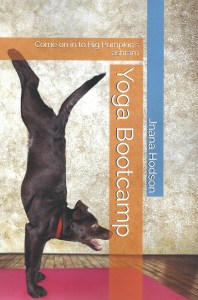
Answers to some of the questions about Cassia’s father’s reasons for intensely pursuing Tibetan Buddhism, first encountered in my Freakin’ Free Spirits novels, can be found in Yoga Bootcamp, my story about eight young American yogis living on a former farm in the mountains. While each student is at a different stage of discovery, their widely divergent motivations still lead to common struggles and victories. Nothing is easy, but the lessons are priceless.

Do you practice meditation? How about yoga exercises, chanting, or Zen? Any other spiritual exercises you care to discuss?

~*~

The paperback cover …

Like brother monks on the road to nirvana

Cassia’s conversations with Rinpoche lead her to crucial new understandings of her father.

In earlier drafts of my novel What’s Left, I considered these possibilities, but rejected them as, well, too wordy, esoteric, or preachy:

Your Baba was on the cusp of some original thinking about Christ as Light, Rinpoche tells me. He was connecting that with an ancient line of Greek philosophy about a term known as Logos. It was all very, very exciting. He was seeing Christ as much more than the historic person of Jesus, much as we see Buddha as something much more than a historic person — you know, Gautama — too.

Well, that happens to be a hobbyhorse I ride. Let’s give her father a break!

Rimpoche continues. Your Baba had scorn for those who claim a personal spirituality without any disciplined tradition. He wanted to encourage people to delve into a practice — not that they’re all equal, but they have their own unique wisdom to impart — and that led to his organizing some fascinating ecumenical dialogues, ones that included your Orthodox priest, plus a rabbi, a Sufi or yogi, an evangelical, and so on.

Maybe we’d better leave all that for a later discussion? Cassia has more pressing questions, many of them regarding his photographs and family.

Throughout his monastic studies and labors, he’s pressed to concentrate totally on what’s happening in the moment. Even while sleeping. Looking through a lens would, according to Manoula, place a filter between full experience of that timeless breath and himself. It would place a mask across his face when he most needs to be fully naked, as it were. Who knows what he wears in the monastery, for that matter. We can guess from the photos he took later, on his return visits — and his portraits of his teacher and fellow practitioners. For now, he needs to see not just with his eyes — and his Third Eye — but also with his nose, tongue, lips, ears, and especially his fingers and extended skin. And from there, to embrace the eternal realities rather than the ephemeral illusions flickering and dashing around him. Through this stretch, he heeds fellow monks who create beautiful colored-sand mandalas and then scatter them to the wind rather than preserve their work. This emphasis on the present while pursuing eternal truth may seem to be a paradox, but he submits to the instruction and its flowing current.

So that, too, was filtered out of the final revisions. As was this:

Baba and Rinpoche had grown close when they were both residents in the monastery. Rinpoche was then just another of the aspirants, albeit a Tibetan refuge with a lineage. Their teacher blessed their venturing into the Heartland to establish the institute here, and Rinpoche, with his mastery of Himalayan languages, took up an offer to teach academic courses at the university while leading a spiritual community from the house.

~*~

Like Rinpoche, Cassia’s father was in many ways a teacher. In their case, they were dealing with ancient Buddhist lore. Good teachers, as you know, are rare.

Tell us about your favorite teacher.

~*~

Orthodox Christian iconography can be out of this world. Just look at this church ceiling!