Sometimes as I listen during an open mic, especially (and oh how I hate that spelling!), I find myself focusing on a particular reader’s moralizing and editorializing or cliche or heavy reliance on simile rather than metaphor, and that soon sends me into a disturbing zone.
What happens is that I begin editing heavily with an imaginary thick black marker, striking through all of the offending words and phrases, and pretty soon I’m tuning into only to the blackened blocks in the air and tuning out everything else.
Admittedly, I edit myself heavily, and this is a central step in the creation of many of my own works. Admittedly, too, I’m projecting myself onto the poor writer onstage. Admittedly, in particular, I’m forgetting to be humble and open here, star that I might imagine myself to be.
In drawing on the hippie era, I realize how many different strands there were to the movement. Mine happened to lead into a yoga ashram, and though we were drug-free and celibate, we were also at the crossroads of a lot of the hippie action.
As I ponder the era, I also realize DL’s journey in those pages could just as easily turned toward underground violence, had he joined one of the cells of bombers targeting military research operations in frustration, and that version of the story probably would have had commercial publishing cachet. But to me, it would have been dishonest.
More meaningful to my vision is the comment by Mari (River Mama 5) to an earlier posting here:
Amazing how many different views there are. … Hippies to me were quite different. To me, it gave birth to great changes in our society. … I am quite thankful for … the back to the land movement and the Calvary Chapels churches that came to exist during this time. I came to know Jesus Christ in one of them.
They also pioneered living a simpler life … showing compassion to others. Taking care of this gift that is our planet. The “hippies” in America, were great artisans. As a weaver, quilter, and knitter, I look back at this time and find myself inspired by the way creativity roamed free among this way of living.
This is the side I wish to nourish and celebrate. And thank you, Mari and all the others, for sharing.
A central problem for newspapers in the past half century is that they became increasingly homogenized and thus lost their distinctive, individual identities. Admittedly, that was always a problem when people saw it as “the paper” rather than the Times or Post or Chronicle or Herald and so on. But in the days when a city would have two or more daily newspapers, each one needed to have some unique identity to set it apart in the marketplace. Sometimes it was along party lines – Republican or Democrat – or social identities, such as blue-collar or proper society, but often it also meant the kind of news that was emphasized: national and international, for instance, versus local. And hometown columnists were always a voice that readers could count on. Think Herb Caen in San Francisco, Mike Royko in Chicago, or Jimmy Breslin in New York – or any of the great sportswriters.
In those days, newspapers were thinner than they became in the last decades of the 20th century – often just two sections – rather than the four to eight that followed in the great mergers and closures that led most cities to have only one daily journal. Much of that problem, we should note, could be blamed on the “unduplicated readership” that ad-space buyers relied on in allocating their budgets. No matter how marvelous the Washington Star was in its final days, or the suburban Journal papers were in the counties around the city, they couldn’t overcome that hurdle – when it came to outright readership, the Washington Post had the monopoly. Since everybody had to read it, there was no point in advertising elsewhere.
With few exceptions – New York, Boston, Chicago, Philadelphia – we’re left with single-paper markets where the product looks and reads like those everywhere else, except that the stories take place there than elsewhere.
As the local newspaper more and more became a one-size-fits-all model, what I no longer heard was the feeling that it “speaks for me” or my section of the wider community. And now, even those special voices within its pages are no longer there – one by one, the columnists were never replaced.
The newspaper I longed to create had little resemblance to that bland crime-and-crashes emphasis that too often prevails these days, in place of more difficult and costly investigative reporting or a bigger view that critically examines education, the fine arts, social justice, the environment, and so on.
It’s hard to get excited by what’s there. And we wonder why circulation kept declining even before the Internet?
This is, I should note, a contrarian viewpoint, since the publishers kept proclaiming the “improved service” each time they merged two papers into one. So here we are, online and blogging.
~*~
Hometown News
To find out more about Hometown News or to obtain your own copy, go to my page at Smashwords.com.
It’s tune in, turn on, and take action in this tale of campus intrigue. Little does a small band in a remote college town realize its opposition to small-ante bureaucracy goes straight to the state capital. And then Washington and the Mekong Delta are another matter as the hippie movement hits tranquil Daffodil. Nothing will remain quite the same.
As the headline said:
BOTCHED DRUG BUST BACKFIRES.
When narcotics agents made an early morning knock-down-the-doors raid on the twelfth-floor of one of the high-rise dormitory towers, they turned up nothing – and were surrounded by irate residents before they could frame anyone, either.
“If you think the slaying of innocent students at Jackson State University was merely a racial atrocity,” Lakasha proclaimed, “you’re not seeing the big picture. It’s about an attack on civil rights – freedoms that belong to all of us. You don’t have to live in a big city to live in ghetto housing. Every student in Daffodil lives in a ghetto. Where I come from, we have a word for high-rise housing like these big dorms – the Projects. And the pigs who come charging into the Projects act just like those who busted in on the twelfth floor the other night. Never mind whether they find anything or not. Look, the university’s demanding that the students pay for the busted doors and busted furniture and busted walls. That’s why they call it a bust in the first place. Wake up, America! Demand the names of the ‘unnamed informants,’ the ones who were so wrong about the presence of illicit substances in those rooms. Wake up, I say! Mississippi’s closer to Daffodil than you think!”
~*~
To learn more about my novel, go to my page at Smashwords.com.
I read – and write – not to escape the world but rather to more fully engage it. So literature for me hardly falls into the Entertainment category, even when it’s entertaining.
Likewise, my goal in the written word is to perceive some basic or essential connection with new clarity, understanding, and compassion.
This makes a world of difference, page by page. Maybe I’m just looking for holy scripture, even of a secular sort. Or at least the Holy One along with the mundane.
Often, my approach to writing and other fine arts resembles the essence of a dream – one foot in the present, the other in the past. Or, in another way, one foot in concrete reality, the other in fantasy of some sort, such as surrealism, as a way to engage more than I’d otherwise apprehend.
Even as a cub reporter, I loved writing long pieces. It’s what I prefer to read, really read, when I have time. By long, I don’t mean pointless minutia or the trivia of, say, a public hearing, but rather the probing look at how and why a thing has happened and maybe even what to expect as a consequence. Add to that the human dimension, especially from the point of view of those most impacted by the action rather than those at the top of the pyramid.
One model of this style of news writing came in the three stories on the front page of the Wall Street Journal each day – what they called their “leaders,” back in the era before Murdoch. If you looked closely, you’d see how each one was composed of several smaller stories, each one telescoping into the next. The reporters could joke that their work was so heavily edited they no longer recognized the finished version, but for those of us reading, the result was rewarding, the way a good meal is.
As a journalist, the irony has been that I spent much of my career crafting headlines and photo captions … short, short, short … and that was even before I relied more and more on news briefing columns to get the day’s world and nation reports into the paper at all.
Not that I lost my love of long writing. My “shelf” of ebook novels is proof of that, including my most recent, which delves into the news business itself.
As a blogger, though, I’m also admitting pleasure in composing shorter postings like the ones that appear here at Jnana’s Red Barn. Apparently, from the stats, they must be connecting.
My other four blogs provide venues for the longer writing, and the results to date are mixed.
To my surprise, my genealogy blog, The Orphan George Chronicles, has drawn far more hits than I’d anticipated. I figured its appeal would be to a few dozen fellow researchers, and having the results online would be much easier to find than if the files were archived in a few libraries somewhere. As for publishing them in paper editions, the likely audience would never cover the expenses.
My Quaker blog, As Light Is Sown, has shifted from the two book-length presentations that appear as the initial postings to a year-long Daybook of short postings, so I must admit that trying to analyze the results there can be inconclusive.
Thistle/Flinch exists to present book-length PDF editions of poetry and fiction, so I guess you can say that’s writing long.
And the remaining blog, Chicken Farmer I Still Love You, is still taking shape, as the numbers show. The first part, Talking Money, presents essential material for addressing the material sides of life … income, spending, wealth, possessions, labor, time, goals, and the like … followed by a close look at New England’s famed foliage. These days, it’s taken on a new focus in reconsidering the hippie outbreak and its renewal. Again, many of its postings are chapters for book-length presentation.
What I am finding in general is that even without the demands of daily employment, time is still the most precious commodity in my life. There just ain’t enough of it for what I hope to accomplish these days – including reading or writing, much less in any length.
So I guess that’s the short of it, for now.
~*~
Hometown News
To find out more about Hometown News or to obtain your own copy, go to my page at Smashwords.com.
Everything that’s transpired in the 28 years since I first drafted my novel Hometown News has made me feel prophetic.
Now, of course, you have an opportunity to judge for yourself. I just wish it hadn’t taken this many years to become public.
One thing I’d like to point out involves the initial experiment I used in constructing the novel. Quite simply, I wondered if I could build a computer-generated story – no matter how distasteful the premise itself strikes me in my self-identity as a neo-Luddite and fussy literary type. Maybe it was just some of the vestige of the scientist wannabe in me?
So I created a master day-in-the-life chapter, made multiple copies to repeat throughout the story, and included up to 120 variables for search-and-replace functions. And away I went, allowing the S&R efforts to produce their own pace and variations. Not that it quite worked as I’d hoped. I found myself going back over those pages and adding new layers, softening some of the edges, adding shadows and highlights. As they say in the visuals arts, it’s quite “painterly.”
Be that as it may, one thing I’ve observed over the years is how little we typically know of many of our coworkers. There might be a favorite phrase they repeat or a piece of clothing or a distinctive quirk. And that’s it, sometimes year after year. So that part was agreeable to the S&R structuring.
As a technique, though, I’m afraid to report – or maybe more relieved – that the S&R by itself was insufficient. It did provide the core “bones” for the novel, but I did have to paint over much of it to make it more pliant and, well, human.
All the same, I’m feeling vindicated. Maybe it’s a high tech revenge for what high tech is wreaking on the workplace and surrounding community.
To check out my Smashwords ebook story, go to Hometown News.
Longtime visitors to the Red Barn are likely aware that I spent four decades as a newspaper editor – experiences that feed into my latest novel, Hometown News.
It’s meant working nights, holidays, and weekends – rarely on a schedule matching the general public’s. And it’s always meant “working under deadline,” where an internal clock is always racing to finish the task on time (or else!). In addition, it’s also given me some insider looks at the surrounding world itself: having a celebrity standing a dozen feet behind your back is just another regular occurrence. (For the record, they often look quite different than they do on television.) Even as a cub reporter, I saw dead bodies, got inside the county morgue, checked out small plane crashes, met ex-movie stars, faced some stiff competition from the pros on the rival paper. Looking back, I sense how often I was in over my head and wonder how I ever survived.
These experiences have also fed into the Red Barn’s category of Newspaper Traditions, where I’ve written about:
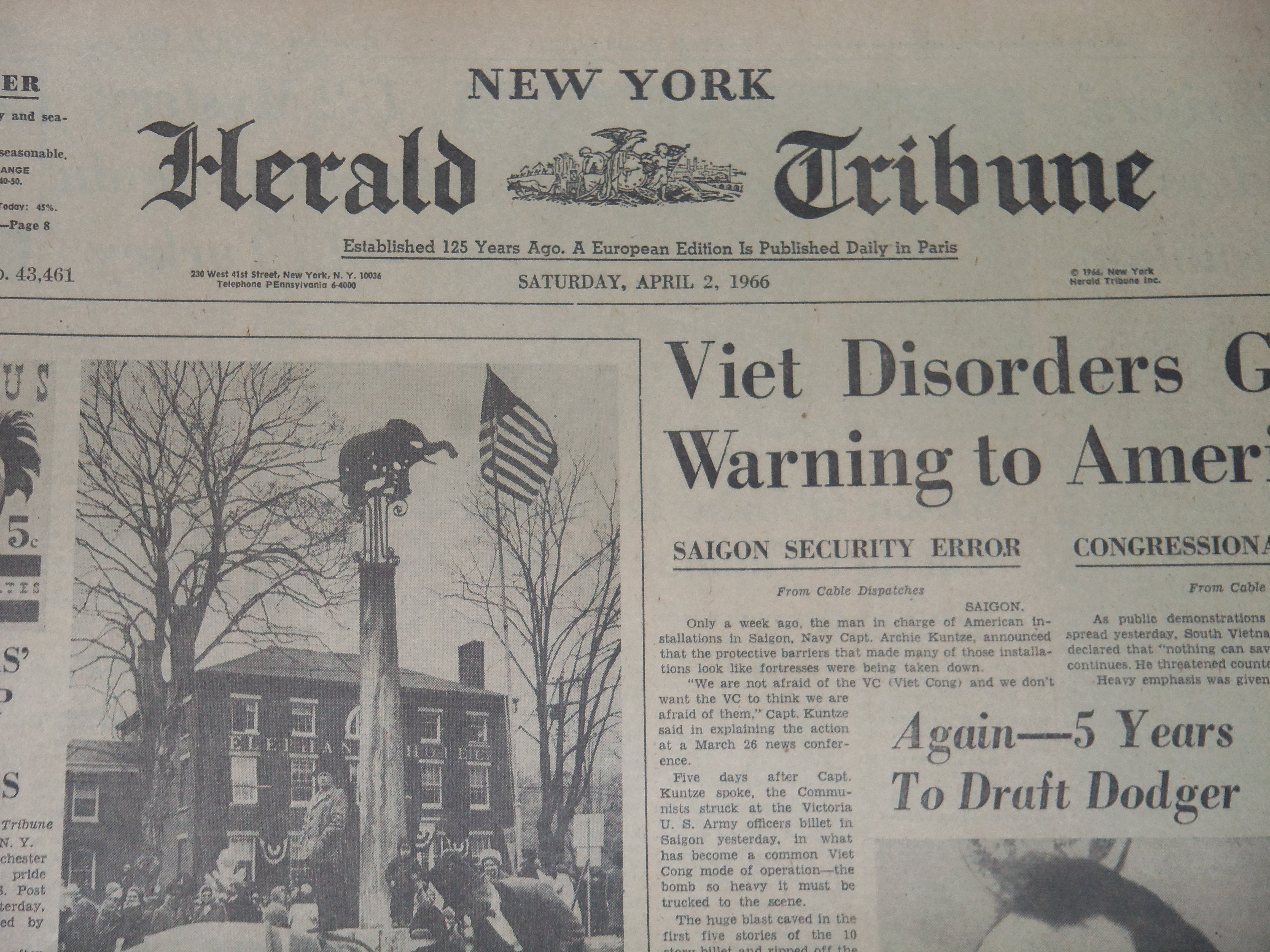
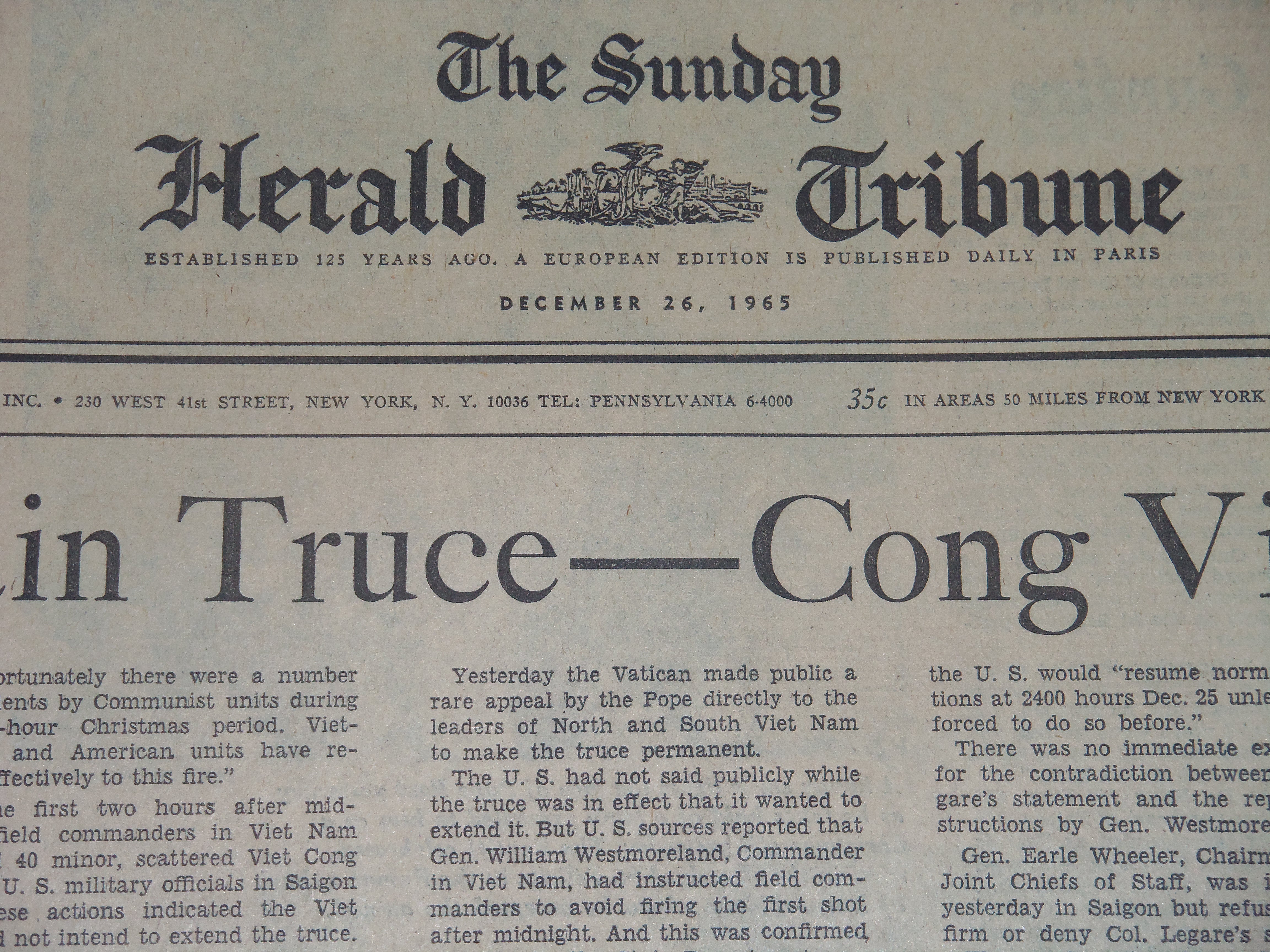
The best newspaper ever” The glorious final days of the New York Herald Tribune were like no other newspaper. Nothing like fighting hard to the bitter end.
Chancing Upon a Profession: Glenn Thompson’s influence hit me, among many others, in one medium-sized city. He had a knack for finding talent.
Hot Type: In the days before phototypesetting and then digital publishing, newspaper production was a highly skilled craft. Here’s an admiration for the long gone masters.
Living Under Deadline: When your career hangs on meeting deadline after deadline, with no room to spare, you begin to live differently from other people.
The Art of Writing a Headline: Trying to steer readers to a given news report with just four words can be a real challenge. Take it from a pro.
Editing Obituaries: Announcing someone’s death and funeral arrangements can be more precarious than you’d imagine. This post, one of the most popular at the Red Barn, became a WordPress Freshly Pressed selection.
Four Measures: Just what makes “news,” anyone? Here’s one take.
Police Calls, 10 P.M.: Well, there is some behind-the-scenes banter, even when calling the cops.
One Phone Call Too Many: And then sometimes the facts get in the way of what looked like a great story.
Local, Local: How you define “local” news can backfire when it comes to your readers. Especially when it’s boring.
Bias: Sometimes those who accuse journalists of being biased should first look at themselves in the mirror.
The Shrinking Page: Like many other products, the newspaper page has been shrinking. It’s about half as wide as it was when I entered the trade.
The Human Imprint: Not too long ago, the editors and publishers were well-known public figures.
Objectivity, for Starters: There really were some strict standards and practices.
Windy City Perspectives: The tower of the Chicago Tribune holds some special memories for me.
Painful Neutrality: Again, maintaining a discipline of objectivity comes at a personal price.
Free of the Entourage: David Broder was the best of the breed. I wish I’d said hi.
End of the Line: One of the last editors who put a personal stamp on a paper was David Burgin. Maybe that’s why he was always getting fired.
Get Out of the Way: Real reporters are invisible observers. TV’s imitation inserts itself on the story.
You Read It Here First: Plagiarism has always been a dirty practice. Here are a few examples.
Reality Check: When it comes to seeing “liberal media,” some people fall off the far right of the world. The one that’s still flat.
A Logical Conclusion: The more conservative the nation’s editorial pages become, the more circulation declines. Think about that.
Death in the Afternoon: The newspapers published in the afternoon once had the blockbuster circulation. Here’s why they vanished.
Beware of Unintended Consequences: There are times embarrassing things slip into print. Lewd expressions, especially.
Beware of Survey Conclusions: Marketing research can lead to bad choices. It helps to put the findings in perspective before taking action.
So Much for Romance: And then there was the reporter’s lament as he returned from covering a large singles’ mixer.
I invite you to visit or revisit the postings, especially if you’re new here. And I promise there are more ahead.
~*~
While we’re at it, here are some pages from the New York Herald Tribune’s final years, when it established itself in my mind as the most elegant and exciting newspaper ever. (Remember, I was still a teen and a budding journalist.)
The daily edition.And Sunday.
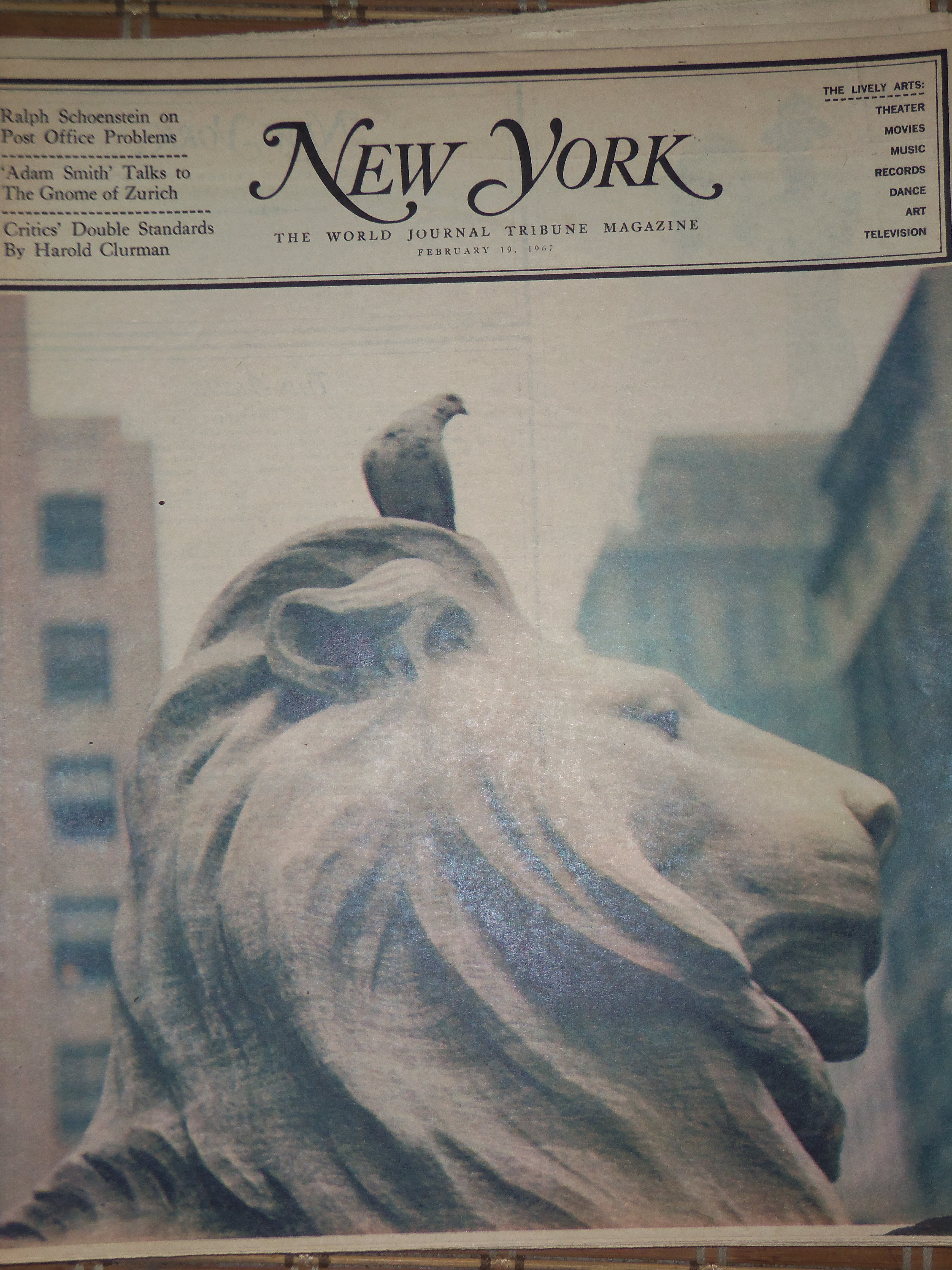
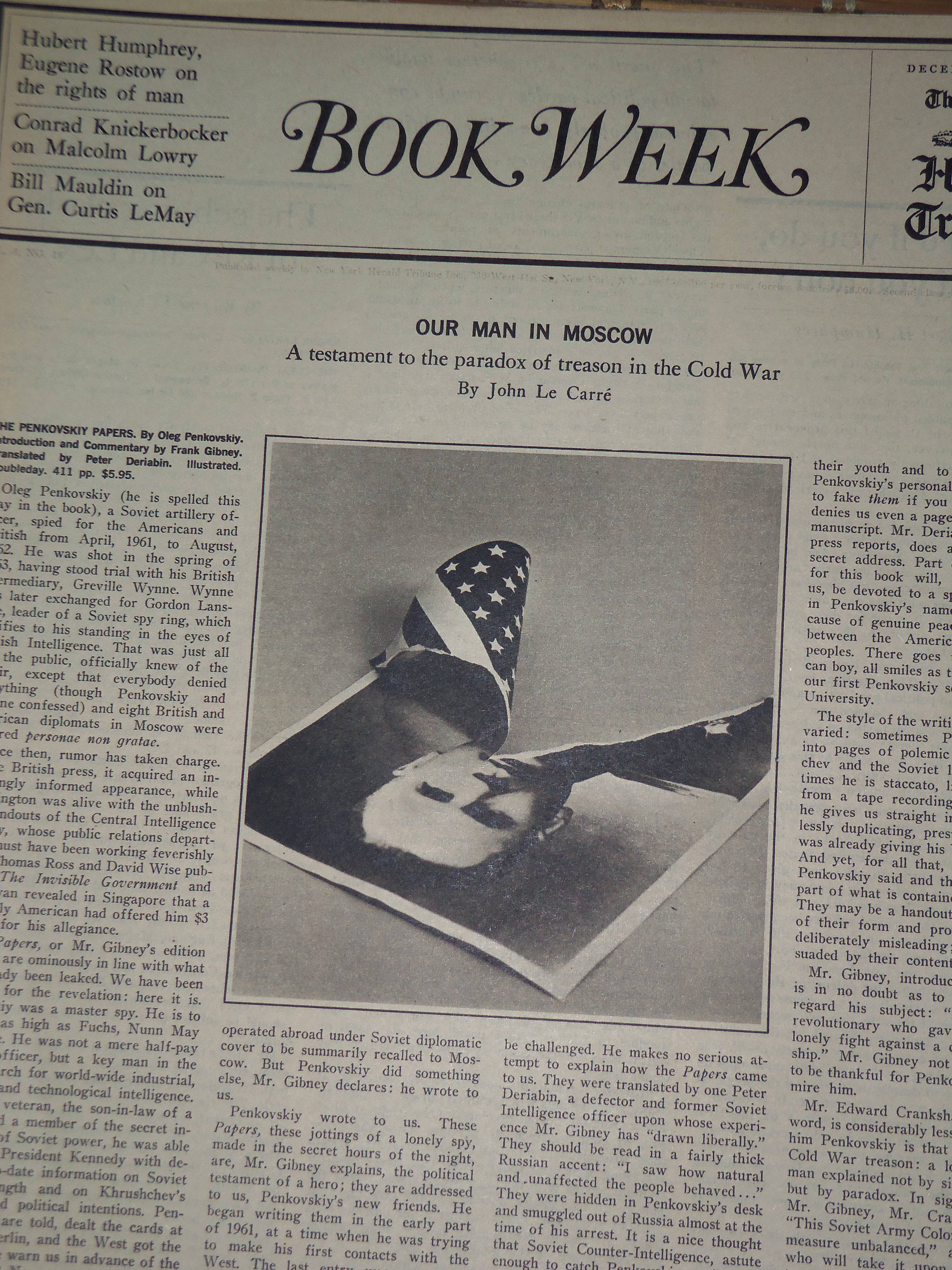
Among the Trib’s legacy was New York Magazine, which originated as the Trib’s Sunday glossy magazine. It was classic. And Book Week reflects a time when books were really important, at least in the eyes of the informed public.
The Sunday mag.And the books review section.
~*~
Not all of the exciting journalistic action took place in Gotham or Fleet Street or Chicago’s competitive shootouts, though.
Much of the most dedicated and innovative work emerged in small communities in the heartland where a few individuals could make an obvious difference. That’s the story I explore in my latest novel. In some ways, it’s Tom Peters’ Pursuit of Excellence meets Dilbert on steroids. It might even resemble some places you’ve labored.
~*~
To find out more about Hometown News or to obtain your own copy, go to my page at Smashwords.com.
Back in the late ’70s I attended a weeklong interdisciplinary conference at Fort Warden State Park on Washington’s Olympic Peninsula, an event that remains a potent influence on my work and thinking. Organized by Sam Hamill, then of Copper Canyon Press, the Power of Animals seminar spanned biology, literature, anthropology, mythology, and more. Presenters included the writers Barry Lopez, Gary Snyder, Howard Norman (then just the author of a chapbook of poems called Born Tying Knots), David Lee, and an equally impressive slate of zoologists and botanists in an interdisciplinary examination of the dimensions of the animal kingdom. One highlight was a stage production from Reed College that relived some of the glorious Coyote tales of the Pacific Northwest.
Now, with the release of my chapbook In a Heartbeat from Barometric Pressures at Kind of a Hurricane Press, I hope to return the favor. This set of poems runs playfully with wild and domestic animals of all sizes and influences as they impact our lives in real and imaginary ways.
To join in, simply click here. And remember, it’s free.



 Jnana's Red Barn