ESTABLISHING MY CREDS

Longtime visitors to the Red Barn are likely aware that I spent four decades as a newspaper editor – experiences that feed into my latest novel, Hometown News.

It’s meant working nights, holidays, and weekends – rarely on a schedule matching the general public’s. And it’s always meant “working under deadline,” where an internal clock is always racing to finish the task on time (or else!). In addition, it’s also given me some insider looks at the surrounding world itself: having a celebrity standing a dozen feet behind your back is just another regular occurrence. (For the record, they often look quite different than they do on television.) Even as a cub reporter, I saw dead bodies, got inside the county morgue, checked out small plane crashes, met ex-movie stars, faced some stiff competition from the pros on the rival paper. Looking back, I sense how often I was in over my head and wonder how I ever survived.

These experiences have also fed into the Red Barn’s category of Newspaper Traditions, where I’ve written about:

  • The best newspaper ever” The glorious final days of the New York Herald Tribune were like no other newspaper. Nothing like fighting hard to the bitter end.
  • Chancing Upon a Profession: Glenn Thompson’s influence hit me, among many others, in one medium-sized city. He had a knack for finding talent.
  • Hot Type: In the days before phototypesetting and then digital publishing, newspaper production was a highly skilled craft. Here’s an admiration for the long gone masters.
  • Living Under Deadline: When your career hangs on meeting deadline after deadline, with no room to spare, you begin to live differently from other people.
  • The Art of Writing a Headline: Trying to steer readers to a given news report with just four words can be a real challenge. Take it from a pro.
  • Editing Obituaries: Announcing someone’s death and funeral arrangements can be more precarious than you’d imagine. This post, one of the most popular at the Red Barn, became a WordPress Freshly Pressed selection.
  • Four Measures: Just what makes “news,” anyone? Here’s one take.
  • Police Calls, 10 P.M.: Well, there is some behind-the-scenes banter, even when calling the cops.
  • One Phone Call Too Many: And then sometimes the facts get in the way of what looked like a great story.
  • Local, Local: How you define “local” news can backfire when it comes to your readers. Especially when it’s boring.
  • Bias: Sometimes those who accuse journalists of being biased should first look at themselves in the mirror.
  • The Shrinking Page: Like many other products, the newspaper page has been shrinking. It’s about half as wide as it was when I entered the trade.
  • The Human Imprint: Not too long ago, the editors and publishers were well-known public figures.
  • Objectivity, for Starters: There really were some strict standards and practices.
  • Windy City Perspectives: The tower of the Chicago Tribune holds some special memories for me.
  • Painful Neutrality: Again, maintaining a discipline of objectivity comes at a personal price.
  • Free of the Entourage: David Broder was the best of the breed. I wish I’d said hi.
  • End of the Line: One of the last editors who put a personal stamp on a paper was David Burgin. Maybe that’s why he was always getting fired.
  • Get Out of the Way: Real reporters are invisible observers. TV’s imitation inserts itself on the story.
  • You Read It Here First: Plagiarism has always been a dirty practice. Here are a few examples.
  • Reality Check: When it comes to seeing “liberal media,” some people fall off the far right of the world. The one that’s still flat.
  • A Logical Conclusion: The more conservative the nation’s editorial pages become, the more circulation declines. Think about that.
  • Death in the Afternoon: The newspapers published in the afternoon once had the blockbuster circulation. Here’s why they vanished.
  • Beware of Unintended Consequences: There are times embarrassing things slip into print. Lewd expressions, especially.
  • Beware of Survey Conclusions: Marketing research can lead to bad choices. It helps to put the findings in perspective before taking action.
  • So Much for Romance: And then there was the reporter’s lament as he returned from covering a large singles’ mixer.

I invite you to visit or revisit the postings, especially if you’re new here. And I promise there are more ahead.

~*~

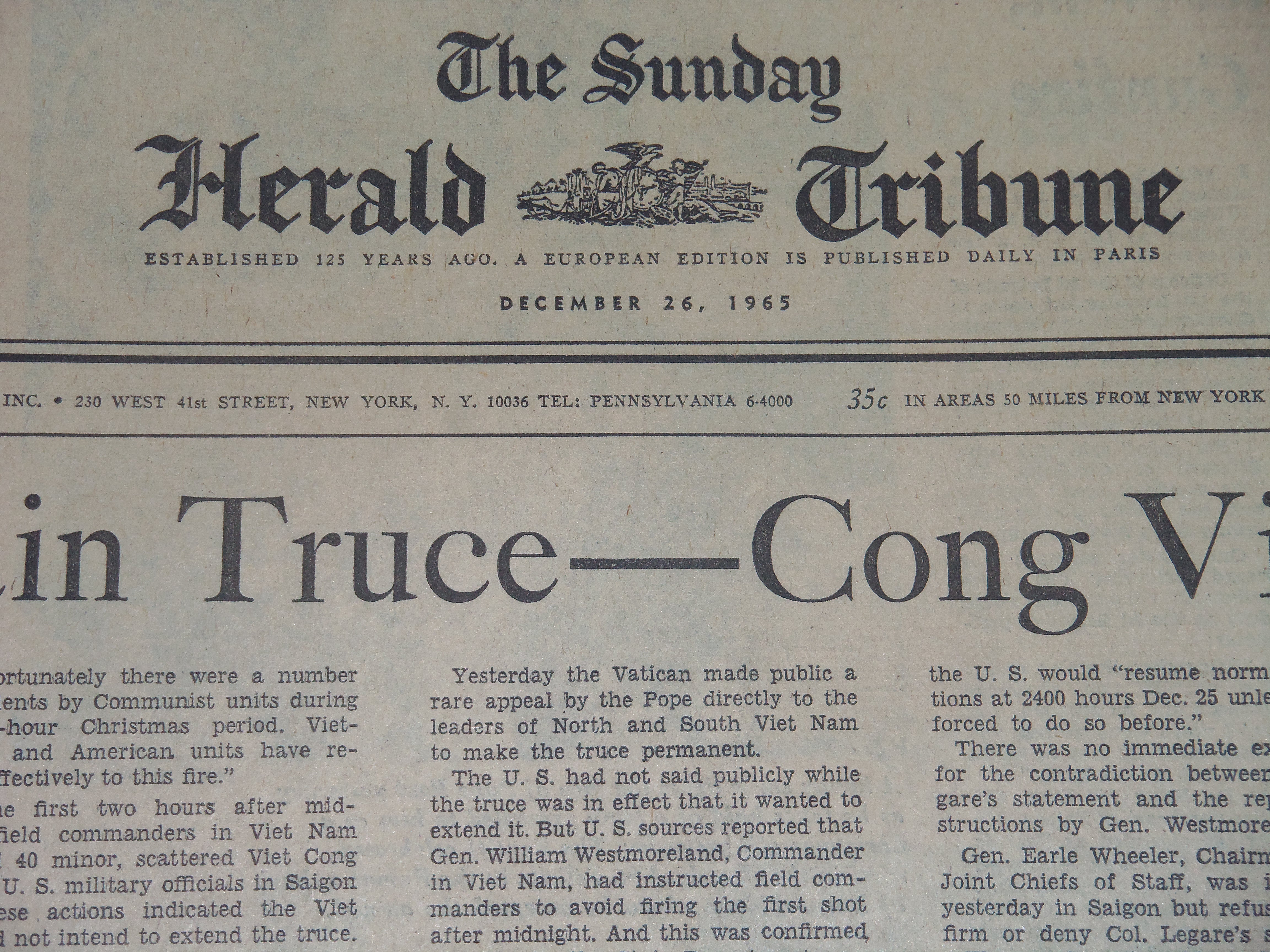
While we’re at it, here are some pages from the New York Herald Tribune’s final years, when it established itself in my mind as the most elegant and exciting newspaper ever. (Remember, I was still a teen and a budding journalist.)
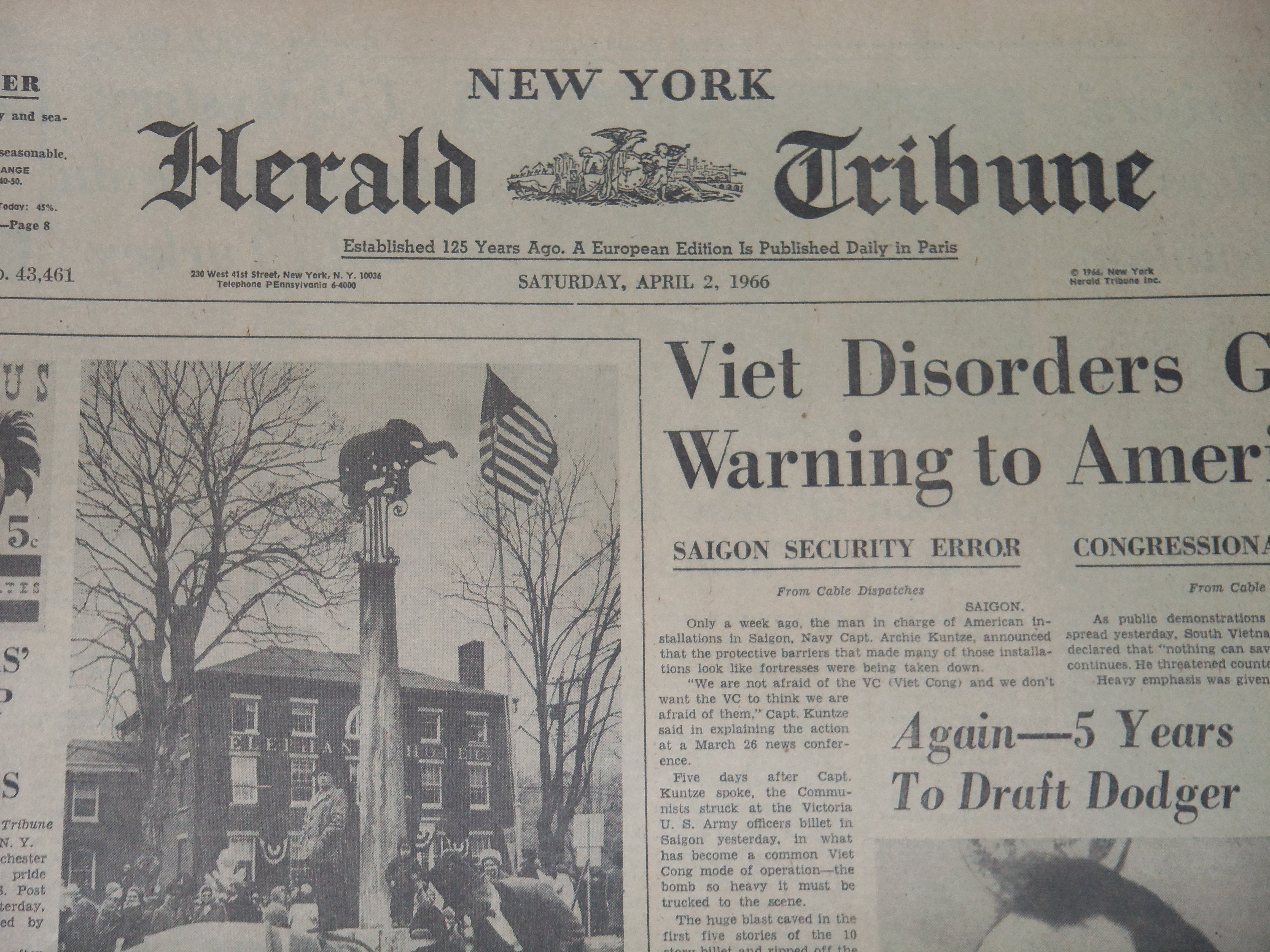
The daily edition.
The daily edition.
And Sunday.
And Sunday.

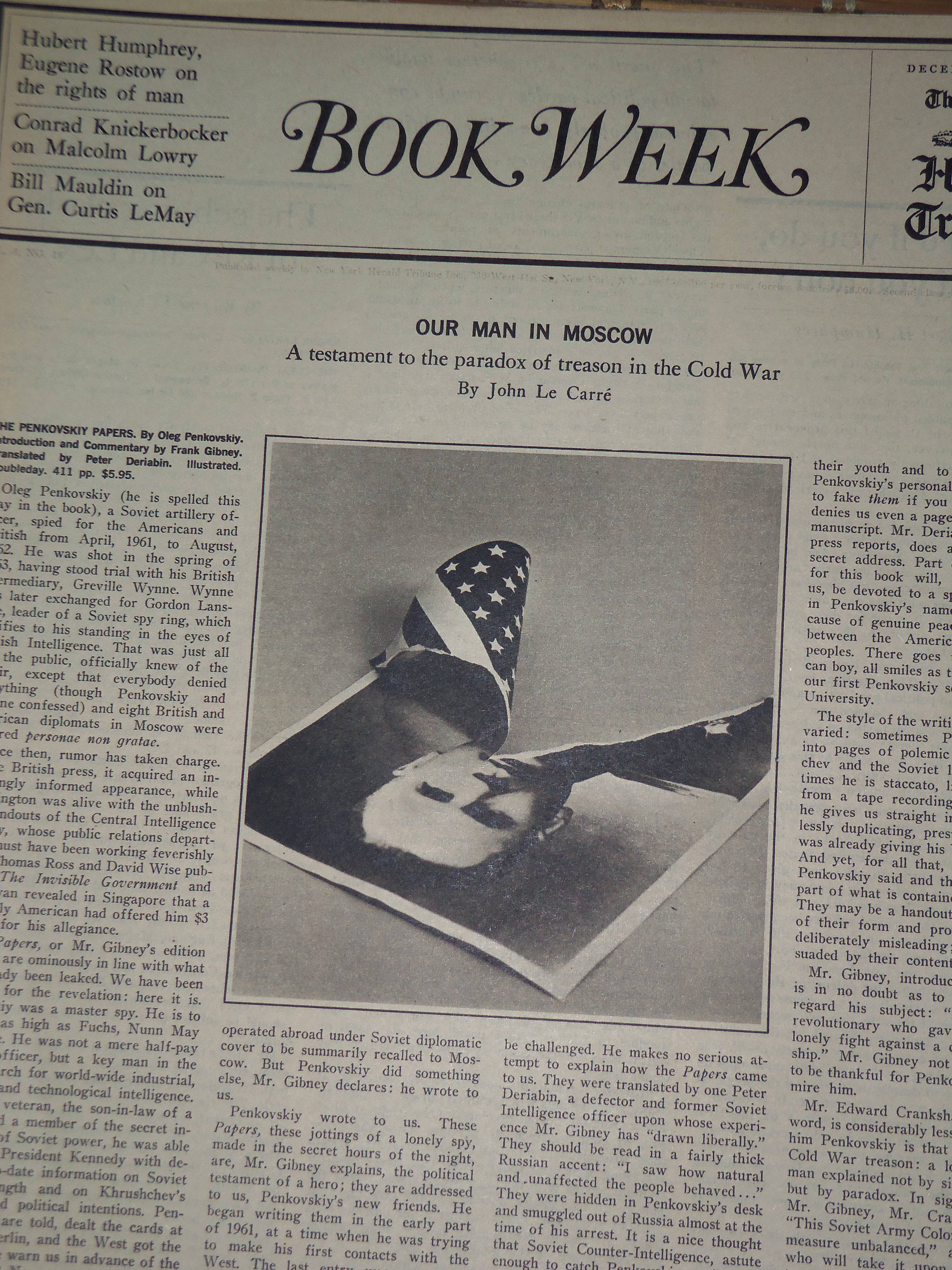
Among the Trib’s legacy was New York Magazine, which originated as the Trib’s Sunday glossy magazine. It was classic. And Book Week reflects a time when books were really important, at least in the eyes of the informed public.
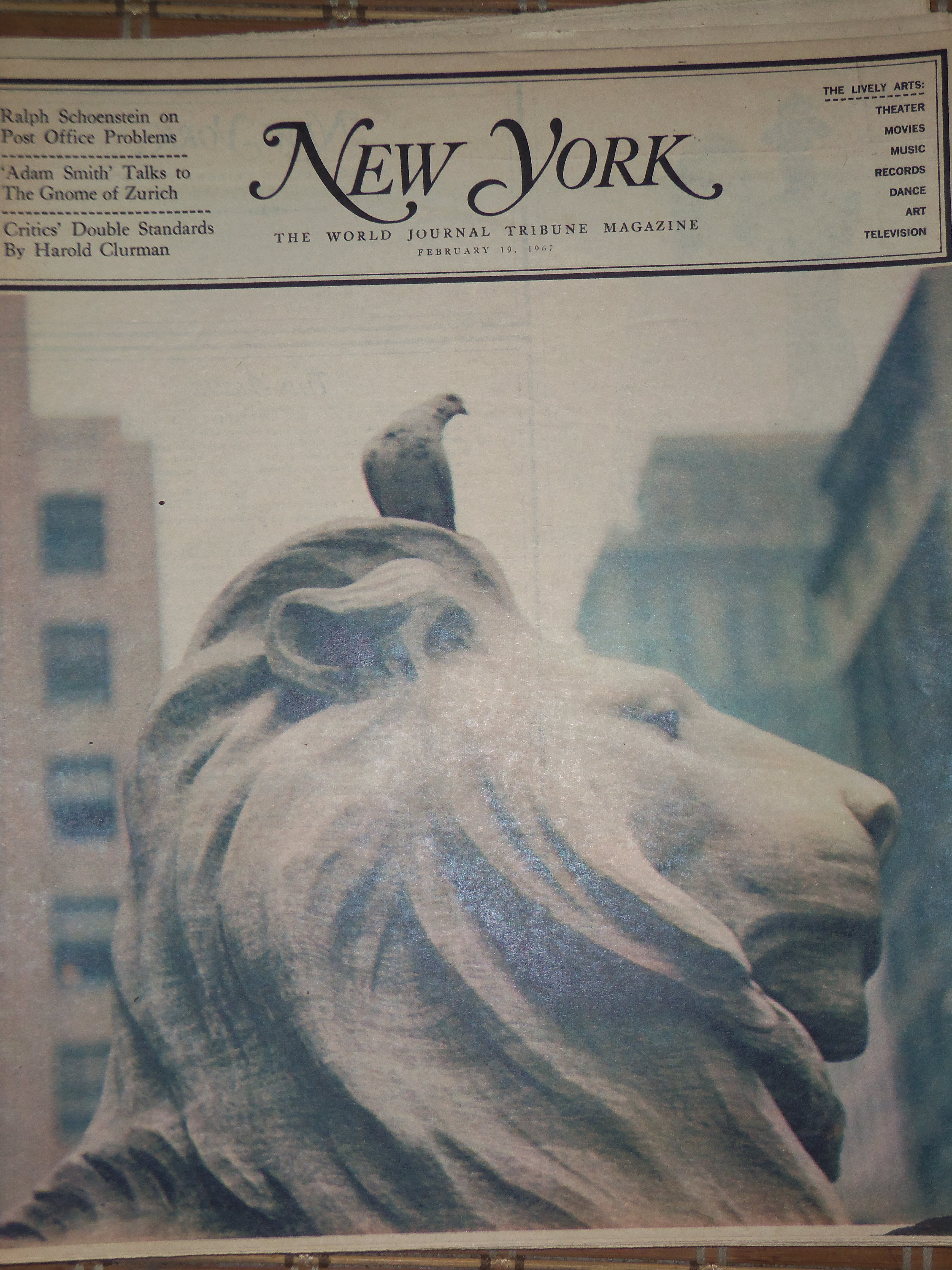
The Sunday mag.
The Sunday mag.
And the books review section.

~*~

Not all of the exciting journalistic action took place in Gotham or Fleet Street or Chicago’s competitive shootouts, though.

Much of the most dedicated and innovative work emerged in small communities in the heartland where a few individuals could make an obvious difference. That’s the story I explore in my latest novel. In some ways, it’s Tom Peters’ Pursuit of Excellence meets Dilbert on steroids. It might even resemble some places you’ve labored.

 ~*~

To find out more about Hometown News or to obtain your own copy, go to my page at Smashwords.com.

ATTUNED TO THE PULSING

Back in the late ’70s I attended a weeklong interdisciplinary conference at Fort Warden State Park on Washington’s Olympic Peninsula, an event that remains a potent influence on my work and thinking. Organized by Sam Hamill, then of Copper Canyon Press, the Power of Animals seminar spanned biology, literature, anthropology, mythology, and more. Presenters included the writers Barry Lopez, Gary Snyder, Howard Norman (then just the author of a chapbook of poems called Born Tying Knots), David Lee, and an equally impressive slate of zoologists and botanists in an interdisciplinary examination of the dimensions of the animal kingdom. One highlight was a stage production from Reed College that relived some of the glorious Coyote tales of the Pacific Northwest.

In a Heartbeat

Now, with the release of my chapbook In a Heartbeat from Barometric Pressures at Kind of a Hurricane Press, I hope to return the favor. This set of poems runs playfully with wild and domestic animals of all sizes and influences as they impact our lives in real and imaginary ways.

To join in, simply click here. And remember, it’s free.

ONE LIBRARIAN’S TAKE

Perhaps you’ve heard someone tell another, “You should write a book about that,” relating to some personal experience they think would become a bestseller.

Neither of them, however, actually reads books, even if they expect others to do so.

Sometimes one of these individuals actually does crank out the manuscript and even self-publishes it (not that self-publishing is intrinsically wrong, mind you – just that one needs to be aware of the perils that route takes, whether it’s in the traditional bound paper editions or in the newer digital ebooks).

A neighbor came across one of these paper versions a few months back and decided to ask a librarian acquaintance for her reaction. After reading a page or two (often that’s all it takes), she sniffed: “This reads like somebody who doesn’t read books.”

How telling. How telling, indeed, even before we get to the swollen ego.


NATURALLY, AT LAST

The Barometric Pressures author series at Kind of a Hurricane Press has just published In a Heartbeat, a set of 20 of my poems arising in the animal kingdom. As you can imagine, I’m delighted. Let me roar and crow, if you will.

The set occupies a much different tone and style of my writing from what you’ve previously seen. It ranges from television cartoon characters to ancient mythology as it traces our interplay with our fellow animals across the earth, under the sea, into the air, and throughout our imaginations.

Here's the cover.
Here’s the cover.

This 35-page echapbook is available free from the Barometric Pressures author series at Kind of a Hurricane Press.

If you decide to print yours out, you might even want to select a fancy paper to make your copy unique.

Let me add, that way I’ll be even happier to autograph yours when we meet. But first, for your copy, click here.

NOTHING NOSTALGIC ABOUT IT

One thing I strive to avoid in my Hippie Trails series of novels in a sense of nostalgia. Admittedly, the music, especially, can bring back groovy feelings. (The close reader will notice how little of it I touch on directly, but rather I try to look at other facets of the experience.) And, yes, it is easy to get wistful with some of the memories – Woodstock, for example, while conveniently overlooking all of the physical discomfort, or for some of the lost social life and friendships – but there are good reasons we can’t and don’t go back. Our youth, obviously, has turned to aging, and our freedom turned to responsibilities, many of them ones we’ve chosen.

We need to emphasize that much was not happy. There was desperation, in fact.

The period and the movement were far from perfect, but we also had glimpses – epiphanies, for some – and their influence is far from completed.

If we wholesale deny the dreams and prophetic directions we experienced in that youthful outburst, we cut ourselves off from our higher nature – and both we and our largely society are impoverished as a consequence.

As I look at the array of problems facing America and the world today, I sense that the more serious currents under the surface of the hippie outbreak may finally provide some much needed direction, if we can be honest with ourselves and our history.

That’s definitely not nostalgia, no matter the anthems and hymns in the music of the era.

~*~

To learn more about my novels, go to my page at Smashwords.com.

CHANGING STYLE, CHANGING TASTE, CHANGING DIRECTION

Driving any of my back routes to the beach, I pass impressive houses that have views of the water. Often, they’re old estates reflecting established money. Some are infused with history. Some are large, with four or more chimneys. Others are cozy cottages with four-season porches.

For much of my life, I would have dreamed of owning such a place.

Lately, though, there’s been a sea-change in my perspective. Part of it is no doubt my arrival at a point in life called retirement, although for me it’s been more a matter of culminating focus on the Real Work, as the poet Gary Snyder calls it. Another part of it has to do with stripping away all of the competing visions of where I thought my life might have been heading. The two dovetail, actually.

When I was starting out, I held often contradictory goals. As one date once admitted, she couldn’t decide whether I’d been in a corner office in a Manhattan tower or in an artist’s garret 10 years hence, and she wasn’t far off the mark, even before the ashram intervened.

Of course, the corner office and the house overlooking the water both assume a sizable income, and that was never in the offing for a journalist unless I somehow became publisher at a young age. Unlikely from the outset, but all the more so once the hippie movement kicked in.

Even so, as a writer, there was always the dream of the blockbuster novel that became a hot movie, but my work kept veering more and more toward the experimental while the publishing industry kept constricting. You get the picture.

You could add to that the possibility of a wealthy girlfriend or the talented one whose career took off big time, but both of those went up in smoke. Or whatever.

Come to think of it, the dream wasn’t just about houses. You could figure in the shiny cars, too, or a sailboat or global travel.

The vision, as it turned out, included an entire lifestyle. An exteneded family with a handful of my own kids, at the least, running around. Many friends and business acquaintances, along with political connections, all coming to stay in the guestroom or guesthouse. A fully stocked library with an impressive collection. An art collection, too.

What it didn’t include was the life I’ve wound up living. Much smaller scale. As a writer, what I really require is blocks of uninterrupted time and solitude. Let’s be honest. A studio can be not much larger than a closet, for that matter.

As for the big place? It would need household staff, for one thing. And a long list of handymen.

What I have instead is an old house and its barn in a small city, along with a common car with 250k on the speedometer. It’s more than enough to handle, even before adding the family.

On top of it all, I also have a shelf of books with my name as author.

ESCAPE? OR ENCOUNTER?

A comment by Aaron James a few days back in response to my post “The Novel as a Time Machine” has prompted me to rethink my own expectations of literature, both as a reader and a writer. It was one of those elephant-in-the-room moments, actually, in which the most obvious thing can sometimes be the hardest to see.

Quite simply, when he said “a lot of people like to read as a form of escapism,” an alarm was triggered, based on a deeply engrained value from my formative years, the one that derided escapism as, well, unhealthy at its core and essentially fluffy. Looking back, I suspect the message was that escapism had the social relevance of sugar overload or a wild drunken night on the town. You know, it just wasn’t serious enough.

At a deeper level, I suspect the reaction also touches on the lingering historic distrust of the arts from my dad’s Quaker and Dunker roots, perhaps even some from my mother’s mix of Calvinist traditions (never mind Sir Walter Scott), and that’s even before we get to Tertullian and his critique of the “pagan” arts during the formation of the early church itself. You know, it all begins with assuming a role of another’s identity, something that’s simply counterfeit and a lie. (My apologies for way oversimplifying a marvelous line of reasoning. And, for the record, many modern Quakers are fine writers, actors, and artists.)

Still, as I was reflecting on Aaron’s comment, I had to admit how much I enjoy work that crosses from “reality” into a magical realm, one of fantasy or surrealism. I like to be taken places – or, as he hints, be given a sense of travel where exploring and learning are part of the sensation of the trip.

Is that escapism? Or is it encounter?

My inclination is to argue the latter. But does that make for a more rugged route? It even has me thinking about the “diet” we allow ourselves when it comes to literature – do we go vegan, for instance, or kosher, or out-and-out hedonistic? What’s “good” and what’s “bad”? And what’s simply another guilty pleasure?

AMPLIFYING THE LIST

When we were considering literature arising from the hippie experience a while back, one of the surprises came in the reader comments as we recognized the predominance of non-fiction rather than novels. (Who says literature must be exclusively fiction, anyway?)

Still, there are four novelists who recently resurfaced in my memory, and I think they deserve consideration for their efforts from the time:

  • Edward Abbey: The Monkey Wrench Gang, etc.
  • Ernest Callenbach: Ecotopia
  • John Nichols: The Milagro Beanfield War, etc.
  • Tom Robbins: Even Cowgirls Get the Blues, Still Life with Woodpecker, etc.

Noticing that these are all male, and that three focus heavily on the socio-political aspects of the movement, I have a nagging suspicion that we’re overlooking a range of female authors weighing in on their side of the experience. Any more nominations?

THE NOVEL AS A TIME MACHINE

Anyone else wonder about the appeal of stories set in another century? Just what’s the attraction?

The future, of course, is one direction, a whole set of “what if” projections that for now cannot be tested against historical development. (Admittedly, Orwell’s 1984 certainly has become an exception in the years since I first read it, gee, was it ’64? As has the movie 2001.)

The past, however, seems to be the more romantic option, beginning with historic period romances and Westerns. I suppose it’s not that far removed from those who inquire of astrologers or palmists or mediums about their past lives, although what I’ve always found most fascinating there is how many people who do so claim to have been Cleopatra or Anne Boleyn or Helen of Troy or the like, rather than one of the common, suffering, exploited populace. No, the stories tilt toward royalty, court intrigue, the power struggles of the rich and mighty – the glittering elite far removed from everyday life. (Maybe that’s our fascination with celebrities, too, as if wealth and beauty leads to true love and happiness, not that it ever seems to hold over the long haul. In pure weight, tragedies trump over comedies.)

My wife sometimes jests that I would have been more at home in 18th or 19th century America, especially in a context of the Enlightenment, scientific advancement, and perhaps opera, along with a flourishing Quaker culture. (Never mind that the Quaker discipline of the time banned music and fiction as superfluous, vain, and untrue.) Again, though, the projection is toward a place of refinement, culture, and ease rather than the long, hard, physical labor of the masses.

So what, ultimately, is the attraction of historical fiction? Is there some time or place you’d willingly be relocated to, if it were possible, even if you could never come back? And, while we’re at it, what about the importance of location, even over time itself? Who and where would you like to be? Just what is it about other eras? Ah, the intrigue! To say nothing of the underlying connection.

AN EXTENDED VIEW OF MY OWN VOLUMES

It’s now been 12 months since my first ebook appeared at Smashwords – a list that now presents six of my novels and a full-length poetry collection. That’s in addition to my poetry chapbooks appearing at other presses.

First, I want to thank all of you for your support and encouragement. What you’re seeing is the fruition of a lifetime of writing that’s now, finally, coming to light. I cannot imagine trying to write seriously without a desire to share it with others – especially when I hear you tell of ways it speaks of your own experiences or sparks related memories.

I also want to acknowledge the fact that these are not works I could write today, not for a decline in ability but rather because each of us evolves and changes over time. My energies, inspirations, perspectives, and focus are different now than they were 10, 20, 30, or 40 years ago. I look at these works and find much that is wonderfully baroque or surreal or passionately intense and realize I’m in a much different sensibility today – yes, I’m happy to have these souvenirs from the journey, these touchstones and treasures, but they come from my younger years and their visions and even the different companions who shared my life back then, in contrast to the household I cherish now. More than ever, I’m ever-so-grateful I set aside the time over the years to draft and revise then, rather than waiting for my retirement years as so many wannabe writers do.

Let me just say there’s much more coming in the next 12 months.

And thank you.