I’VE COME TO ENVY HER OUTSPOKENNESS

As Cassia took on her own voice in the later revisions of What’s Left, she seemed to be dictating her lines, leaving me with the task of taking dictation. There were many times I could barely keep up.

It was a weird sensation. Wasn’t I supposed to be in charge here? It was like I was channeling her from somewhere in the spirit world.

Weirder yet was my envy for her ability to speak as openly and directly as she does. As caustically, too.

Well, she does bear a resemblance to an older woman I know of in the next town, one fondly called simply as Auntie with an outrageous fearlessness in speaking that way.

In contrast, here I am usually censoring myself or at least editing my utterances.

Of course, I also envy Cassia her close-knit family with its well-defined purpose and supportive network. Her Squad, especially, and the way it, too, evolved in the revisions.

And I am grateful for the ways she’s helped me recast the earlier novels leading up to her appearance. That, too, has felt weird, having her sit beside me, in effect, while we thoroughly reworked them. She trashed a lot of material, I’ll admit, and then added a lot more new stuff of her own.

This time, I was all ears.

Authors are advised to know their readers – their target audience – but this takes it one step further.

Any of you have a similar experience?

I GOT BLOWN AWAY, FOR A WIDER ADVENTURE

My plan for this year has gone far off course. How about yours?

No, I’m not talking about New Year’s resolutions. I gave up on those decades ago. I’m talking about real business.

My goal had been to spend much of my time pushing the visibility of my new novel, What’s Left, first as an Advanced Reading Copy (available for free) and then as the First Edition.

Days after posting the ARC, though, I was sidelined by a cardiac event. That led to down time during recovery and rounds of testing and seeing doctors, plus getting adjusted to the new meds and undergoing nearly three months of cardio-rehab exercises three days a week at the local hospital.

Oh, yes, let’s not overlook the Healthy Heart diet, a kind of perpetual Lent. My favorite fallback foods – cheese, eggs, and butter – are now essentially off-limits, except as stealth ingredients. (I’ll admit looking at that egg yolk in the book cover photo with a degree of longing. The whites just don’t carry any rich flavor. I really miss my cheese omelets.) Let’s say still trying to find a way to eat sufficiently is proving elusive.

I was already intending to do a light reworking of the four novels that formed the back story for What’s Left, but a Christmas-present biography of Richard Avedon fed into a sense that I needed to have a clearer sense of Cassia’s father as a photographer in those volumes. Even though I’d worked with some of the best photojournalists in the business, newspaper work is only one corner of the larger photography field.

As I set about what I thought would be a simple retouching of those works, Cassia, the central figure in What’s Left, took over. Quite simply, she had me examining the earlier works through her critical eyes and sarcastic perspectives. She can be bossy, and she insisted on major revisions that required far more hours than I’d expected. She really wanted them updated, and I’ve tried to comply.

As I began recasting him in line with her dictates, I had that sensation of pulling a loose thread or opening Pandora’s box or that notorious can of worms. The changes at hand required major surgery to form a better fit with the newest book.

I promise to relate just what happened in future posts, but the labor did plunge me into something resembling seclusion.

On top of that, though, some early reactions to the ARC led to another reworking of the new novel to make it easier to read. Sentences got shortened, contrary to my own love of long lines, and as much as I liked not having any quotation marks in the story, I yielded and inserted some for greater clarity. Again, time-consuming but hopefully worthwhile in the end.

Then it was back to drastically slashing and reworking the remaining earlier tales. In the end, the pruning led to substantial new growth. Can I confess to being very proud of the results? They’re much different and more substantial now.

And then, at this point, I briefly thought I was finally back on my intended track. I was wrong.

Temptation led me to pick up the draft of one secretive unpublished novel, and it nagged at me. Based on one of Cassia’s future father’s troubled girlfriends who appears in one of those older novels, it dealt with issues I need to understand more fully. That, in turn, prompted two months of obsessive work that still demands extensive tweaking, even if I never show the manuscript to anyone else. Let’s just say it’s personal, even embarrassing. For now, I’m hoping to put it aside so I can get down to where I wanted to be in February. Maybe now I can get back on mission?

Anyone else feeling way behind schedule?

I’d still like to hear how others manage their time. Any tips?

AS A FOOTNOTE AT THE TABLE

I wonder if the longstanding tradition of morning cleansing of marble steps at the front door in many inner city neighborhoods of Baltimore has survived the stresses of two-income families or single-parent households? Who knows when it started or in how many other locales it’s also practiced. This has been a custom of row houses, connected to each other – blue-collar communities, in fact – and not of detached suburban housing. And that makes the foremost difference.

These poems consider what women do and preserve – though not always exclusively. Yes, I’ve known women who bale hay or decipher monastic manuscripts, and I’ll also admit men can know nothing of bearing children or nursing. Yet, somehow, many women seem most at home around the kitchen, even if it’s nothing more than a teacup or a picnic. Even her garden, should she be so inclined, seems to extend from that table or the alchemy of her oven. And that goes for flowers, as well as vegetables and berries. (Remember, though: not all mothers and daughters can stand to be in the same kitchen at the same time, though they both be masterful cooks.)

Looking back on Baltimore, I remember my next-door neighbor, each morning in season watering the black locusts between our houses and the street. Maybe she did her stoop, as well. But the trees, which seemed to have always been there, were beautiful and timeless, as if spreading their own table.

Returning 1

~*~

For the poems, click here.

HOW ACCURATE ARE THOSE QUOTATIONS?

In my new novel, What’s Left, she’s retelling much she’s heard from others.

As Cassia might say, while describing the story she’s telling:

Look, if I’m telling you something, it’s happening now. I don’t care if the event took place a hundred years ago, when I evoke it, it’s all happening now, right in front of us. Anyone mind if it’s for the umpteenth time? Or if I’m quoting someone else in my own voice? It’s all coming through my mouth, so it’s me, too. Pay attention. OK? Now listen! Especially you, Baba.

~*~

As an author, I had to ask myself the question. Now it’s your turn for input.

Is it fair to put secondhand dialogue – even hearsay – in separate quotation marks? Or is it some other blending of voices?

~*~

Mock orange has a lovely scent, too.

ALWAYS ROOM FOR IMPROVEMENT

Earlier this year, I updated the cover and tweaked the contents of my novel Hometown News.

I liked the new image, of a house on fire rather than one of a girl in autumn leaves. The story is, after all, about a community in crisis rather than the delights of living in idyllic repose.

The new image, however, challenged the use of placing the book title and author. The colors jump all over the place, and I just couldn’t figure out a way to drop the words in effectively. Well, you can see what I did. Still, I felt ambivalent about the results.

And then, a few weeks ago, I was looking at my revised lineup at Smashwords and sensed this one just didn’t quite match the style or tone of the others. Time for a few tweaks.

So here’s what we have now:

Hometown News

After this:

Hometown News

Which replaced this one:

Hometown News

The covers of my Smashwords editions originally paid homage to Richard Brautigan’s classic books of the ’60s, each of which had a portrait of a pretty young woman.

Any reactions?

SOMETHING MORE COMPELLING

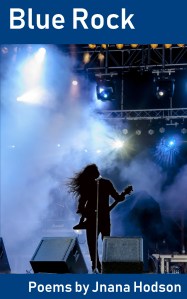
Looking at my new lineup at Smashwords, I felt one cover just didn’t match.

The first round of my editions there had covers that were an homage to Richard Brautigan’s classic books of the ’60s, each of which had a portrait of a pretty young woman.

As I looked at the cover image, though, it felt dated. Looking closer, I realized it also didn’t reflect the edginess of the contents. I wanted something more compelling than a woman in quiet reflection.

So here’s what we have now:

Blue Rock

Rather than this:

Blue Rock

Whaddya think? For more, go to Blue Rock.

GIVE THE DAUGHTER HER DUE

My latest round of revising my fiction has felt somehow different from my previous encounters.

Well, I would include the round with What’s Left last fall, so maybe I can blame Cassia for my new experience. That novel, however, was always envisioned as a much less experimental work than my previous efforts.

The latest efforts have included deep cuts, including major sections I was quite fond of, and changing the tone. But these also meant creating page after page of new material, especially details to develop side characters more fully. Not just what they’re thinking, either, but rather what they’re feeling.

Much of my personal writing has functioned as an exercise to counter the dumbing-down editing required in the newspaper work that provided my income. You know, tone it down to what used to be seen as sixth-grade reading level.

Not just newspapers, either. I see too much pedestrian prose posing as literature and know language can have much more vitality and depth than that, thank you. Harry Potter, at least, has proven that many sixth-graders can read at much more advanced levels than they’re given credit for.

One thing, though. Five years after leaving the newsroom, I no longer feel that dumbing-down struggle as I write and revise, nor do I have to work my own writing into small blocks of time between everything else.

What I am surprised to see, though, is how much of the journalism influence was at work in the just-the-facts approach to my stories. I’ve seen much of my work – both poetry and fiction – as a kind of on-the-run graffiti, jazzlike, with an improvisatory tone and jagged edge. Daily journalism, for that matter, is typically done under deadline. Essentially, I saw the flow of clashing events as the core of the tale.

The biggest change in the recent revision has been the focus on the characters – and especially their feelings. Remember, in journalism, the only feelings would be through direct quotes. Anything else would be editorializing, not that you’d know in what passes for broadcast journalism on most American television stations these days.

Again, I’m going to credit my character Cassia for much of my shift. She’s having me examine that earlier work through her eyes as well as her voice.

In recasting her father’s backstory, for example, I’ve been continuing the present-tense emphasis as much as possible, with a more conversational tone than the conventional literary past-tense would carry. How would she feel about this or that development?

Oh, yes, one more thing. With her, it shouldn’t sound literary. She’s talking, remember?

The emotional element, though, has engulfed me. Engaging the characters on this level has consumed much of my time and thought, including my nights abed or my time on the treadmill or stationary bike during cardio therapy. It’s made for much slower going on my part as far as the revisions progressed. But it’s also led to a much more complete comprehension of the evolving story.

In the end, I’m hoping these move readers in ways the earlier ones didn’t.

WHEN THE DAUGHTER TAKES OVER

When I wrote the four novels that formed my Hippie Trails series, Cassia was nowhere in sight.

But now that she’s taken center stage in What’s Left, she’s changed my perspective on those earlier novels. Quite simply, I’ve revised them to bring them more into line with her story. Drastically revised them, in fact – deep cuts, offset by new material.

Quite simply, they’re now her discovery of her father and his era rather than mine. Having a character take over a book is rather eerie, actually, especially when she’s livelier and more interesting and more critical than I’d be. Moreover, she wasn’t even present in those earlier works – they’re all before her birth. Before she was even conceived, as it were.

That hasn’t stopped her from pushing for more extensive revisions than I had anticipated. Not only are the novels all retitled – and two are even compressed into one – but many of the characters are renamed, a few new figures are introduced, and hefty cuts are offset by rich new detail and restructured storylines.

So what we have now is Daffodil Uprising, Pit-a-Pat High Jinks, and Subway Visions. And the series they form with What’s Left is no longer Hippie Trails but Freakin’ Free Spirits.

Well, quite simply, my wife hates the word “hippie,” says too often these days it translates as “loser” or “lame,” and I wanted something that might fit bohemians over time … in this case from Cassia’s Greek great-grandparents right down to today.

By the way, I’m still blaming Cassia for my putting so much else aside in the past five months. She just wouldn’t shut up, and she can be quite bossy. Admittedly, though, I’m much happier with the novels as they’ve evolved and finally emerged. Let’s hope she is, too.

As for you and other readers? That’s the real question.


TWO TWEAKS IN THE DESIGN

As I moved from the Advance Reading Copy to the First Edition of my new novel, I decided to make two tweaks in the cover design.

The photo itself remains unchanged. It’s the typeface that altered.

When I lined the original cover up beside the covers for the related books in the cycle of Cassia’s discoveries, I realized it’s serif typeface was out of step with the sans serif on the other three volumes. As much as I love serifs (they have more character, for one thing), I also saw that a sans would have more punch on the thumbnail size used to display most ebooks. OK, so that changed.

Again, as I considered the four books together, I saw something else happening. The next book in line, Daffodil Uprising, features a prominent daffodil bloom in a bright yellow antique-style drawing. The contrast between its artwork and the photo on What’s Left works, I think, but the white title somehow felt out of step.

That’s when the thought flashed, “You idiot! It has to be yellow! Like the yolk! Like the daffodil, too!”

Here’s the progression. First, the ARC:

What’s Left

Then the sans serif:

And finally color:

What’s Left

So here you have it. Any reactions?


AND NOW FOR THE FIRST EDITION

The cardio incident in January threw off my planned marketing campaign to support the Advanced Reading Copy availability of my new novel, What’s Left, but maybe that’s a good thing.

Instead, “laying low” meant I had time to read all of the frothy Richard Avedon bio I’d been given at Christmas, and that had me rethinking the particulars of the life of a photographer. Remember, in the novel, Cassia’s father is a famed photographer, though nothing like Dick. The negatives and glossy prints her Baba leaves behind establish the foundation for much of her own recovery and growth.

At the time, I was already planning to revise the four novels that form the backstory to What’s Left – my Hippie Trails series – but had no intention of becoming as immersed in that project as I did. Well, it’s one of the big reasons I’ve been AWOL or missing in action the past five months. I’ll leave that for an upcoming post.

One critical reaction to the new novel, however, sent me back through the story to make some crucial changes.

The Advance Reading Copy used no quotation marks. Not one. Since the story is being told by Cassia, who’s to say she’s quoting others exactly or is instead paraphrasing what she remembers hearing them say? That is, filtering them into her own voice? The quotation-mark-free approach, I hoped, would present the tale as her own rich interior experience, but it was unconventional and apparently a challenge for some readers to follow. Since engaging everyone in this story is far more important to me than my personal pursuit of a literary technique, I yielded in preparing the first edition. Yes, I have to admit, judiciously adding quotation marks here and there does clarify the flow.

The revision also had me simplifying much of the grammar and syntax. As much as I love long, complex sentences, not everyone is comfortable reading, say 17th century literature. Besides, this novel is being told by Cassia, not me.

Well, this official version, the first edition, is now available. I think the tweaks make a huge difference, and I’m grateful for those who’ve given me feedback.

Hope you enjoy it.