How does one present, say, eleven generations without turning into a (heaven forbid!) James Michener?
Even Gabriel Garcia Marquez quits after a hundred years!
You never know what we'll churn up in cleaning a stall
How does one present, say, eleven generations without turning into a (heaven forbid!) James Michener?
Even Gabriel Garcia Marquez quits after a hundred years!
Time’s running out. The one-month-only sale where three of my novels are available for free is coming to a close. Remember, that’s FREE. And two more titles are half-price.
They’re designed for Kindle, Nook, laptop, tablet, or smartphone – any digital device where you’re reading.
All you need to do is hop on down to Jnana Hodson at Smashwords.com.
I think you’ll be happy you did.
In the expansion of the family restaurant in my novel, What’s Left, her father proposes an office for her uncle Barney that includes a wall-length bookshelf for his cookbooks.
At this point, of course, I could have been led to page after page of a bibliography! My wife would have Anthony Pellegrini’s pioneering volumes right up there. And I’d go for Julia Child, not that I’ve ever followed one of her recipes to a T. I just love her descriptions.
Now let me ask, what food books would you put on Barney’s shelves? And why?
~*~

In my novel, the family restaurant could have been like this.
In addition to my own novels and a poetry collection, my page at Jnana Hodson at Smashwords includes brief reviews of other books by authors touching on many of the themes in my own work. Some of their works are really fine reading – and some of them are even free.
If you haven’t already picked up my novels at this online one-month-only sale, don’t delay. You can’t beat the price – mine are free or else half-price.
They should fit your Kindle, Nook, laptop, tablet, or smartphone – any digital device where you’re reading.
All you need to do is hop on down to my booth at Jnana Hodson at Smashwords.com and download them. Take just one or all five novels plus the Blue Rock poems.
I think you’ll be happy you did.
Every July, Smashwords has a huge online sale of thousands of books, and many of its authors join in by discounting their prices.
Better yet, this year I’ve decided to go one better and make all but two of mine available for free. Yes, free. Three novels as well as my Blue Rock collected poems. And the other two novels are going for 50 percent off.
Quite simply, I want to encourage more readers to take a chance on a largely unknown author by downloading these books to their Kindle, Nook, laptop, tablet, or smartphone – any digital device where they’re reading. Nothing beats word of mouth or an online review by a real reader who likes it.
As I’ve been finding in my own perusal of books lately, it’s hard to pass up a promising ebook when it’s free – and there’s some fantastic reading available that way.
So hop on down to my booth at Jnana Hodson at Smashwords.com, will you. Please?
I think you’ll be happy you did.
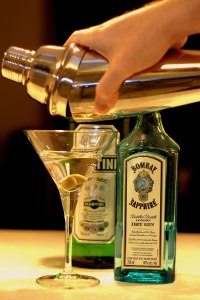
What, me as a Mixmaster?
Just look at the topics percolating in Subway Visions.
Here are ten:
Be among the first to read my newest novel.

My new novel Subway Visions comes a long way from its earlier incarnation as Subway Hitchhikers.
Here are ten ways it’s new and improved.
Be among the first to read my newest novel.
Today marks the publication of my newest novel, Subway Visions. It’s an ebook at Smashwords.com.
It’s a thorough reworking of my earlier Subway Hitchhikers, a work I first drafted back when the hippie movement seemed torn between heading in two directions.
One was out into the countryside, where you could hitchhike with ease in most places.
The other was back into the cosmopolitan center city, where you could get around on an underground subway network. (I loved the double meaning of underground, by the way – the idea of counterculture going back to, what, Dostoevsky?)
I wanted to bridge that gap.
Nearly a half-century has passed since that early manuscript took shape. It was eventually published in 1990. A lot has transpired since then.
There’s not a lot about hippies in the new book, for one thing. And there’s no longer a need to sketch out other facets of the broader narrative, now that Daffodil Uprising and Pit-a-Pat High Jinks are available.
The revised story now focuses on Kenzie’s monthly three-day forays into the Big Apple from his perch in the hinterlands to the north. These trips soon center on his jaunts to study with his Tibetan Buddhist guru in a derelict tenement in Manhattan’s SoHo district.
Getting there, of course, means taking the subway, and each venture takes him further and further into surreal realms – many of them rarely seen by the average commuter.
The revised story also builds on Kenzie’s new friends, especially Holly as a fellow Buddhist and, later, T-Rex as a legendary tagger.
The book – like the others in my Freakin’ Free Spirits cycle – is meant to stand alone, though the novels altogether form a larger, overarching narrative.
Let’s just say it’s a wild, comic ride.
Be among the first to read my newest novel.
As Quakers, we’re not confined to a liturgical calendar or its requirements. Even so, through much of our history, members of the Society of Friends lived within the limitations of strict discipline, which included plain dress like the Amish and plain speech of the “thee” and “thou” sort.
These have greatly loosened up over the past century, which is not to say we don’t live out a distinct set of values – we’re just more flexible or forgiving. Non-violence and pacifism, equality, simplicity, social justice, and truthfulness remain forefront in our daily lives. Few Friends I know smoke, and in our circles, I suspect the majority now drive Priuses as a consequence of faith. Many, but by no means all, participate in vigils or social witness demonstrations.
But being Quaker doesn’t preclude us from what Douglas Steere coined “mutual irradiation,” acknowledging that we can learn from others’ religious practices and experiences and encourage them in their own. It’s not the same as a lowest-common-denominator ecumenism, but rather a willingness to be inspired and enlightened by our differences. It’s something I’ve been enjoying among the Greek-Orthodox where I live, and found with Mennonites and Brethren earlier. It’s also a principal reason I participate in the Dover Area Religious Leaders’ Association and our joint services.
Of course, remarrying has changed some of my perspectives. With children, especially, there was no way of downplaying Christmas, not in contemporary American society. (Historically, Friends were among those who considered it a pagan import.) I’ve previously posted about the revolutionary ways observing Advent has helped me cope with the commercial assault of that holiday.
~*~
Eliminating a liturgical calendar also meant we also didn’t observe Easter. (Every day was to be holy.) And without Christmas or Easter, there would be no Advent or Lent.
Leap ahead.
There’s no way to totally ignore these, not when no longer live in close communities of our own and are often the only Quaker in our workplace. On top of that, many of us come from other faith traditions and carry within us many of those teachings and traditions, one way or another.
~*~
All of this leads up to to a desire in our household to use Advent and Lent as times of renewal and rededication. We try to do a special reading together, at the least, and usually give up alcohol.
For the record, by the late 19th century, most Quakers had banned alcohol altogether – it’s not uncommon to meet Friends who have never had a drink in their life. On the other hand, when I admitted to enjoying a glass of beer or wine, one old Friend replied, “Jnana, in thy occupation, we’d be surprised if thee didn’t.” Remember, I was a newspaper editor.
So, here we are in what the Eastern Orthodox call Great Lent, and I’m surviving without my daily martini or a glass of wine with dinner. Abstaining reminds me of just how habitual these things become. Besides, I believe saying “no” for a season can be strengthen one’s willpower for other decisions, too.
~*~
One year, my wife and I went largely vegan for Advent. She had reviewed all of the Eastern Orthodox dietary rules for that observance and concluded they were essentially vegan with the additional elimination of olive oil and alcohol. Oh, and when she concluded that since olive oil would have been the only oil in the eastern Mediterrean, she extended the ban to all cooking oils.
It was a tough period, as I posted at the time. She did come up with some marvelous dishes all the same, but rather than being freed from considerations of food, she was spending more time trying to find ways to manage.
This year, for the period of Great Lent, we’re taking a slightly different approach. Remember, we’re not confined to the ancient regulations, we’re doing this voluntarily. (And, as I’ve learned, the Orthodox rules are only suggested, not required, of the faithful.) What we’re doing is inspired by food guru Mark Bittman’s book Eat Vegan Before 6:00. In short, we have more options when it comes to the evening meal – especially, as we’re applying this, on the weekends.
Since I’m already trying to observe a Healthy Heart diet, I’m not seeing a lot of change. The biggest challenge has involved my morning coffee, which is already down to a single cup a day, thanks to another medical restriction.
No, alas, there are no wonder substitutes for dairy.
Homemade almond milk comes closest – we find much of the commercial variety to be vile. But almonds are comparatively expensive, and soaking the nuts and grinding and straining take time.
Oat milk, made from oatmeal, starts cooking in hot liquid, leaving an unpleasant layer of sludge in the bottom of the mug.
Coconut milk tastes like coconut, which I find disconcerting.
Black coffee seems harsh on an empty stomach – a sliver of lemon helps a little, somehow.
~*~
So I’m counting the days till Easter – the Orthodox version, which comes at the end of Passover, a full week later than the Western celebration.

