In my novel What’s Left, Diana is an accomplished violinist. Her daughter, Cassia, isn’t.
In what key ways do you differ from your parents? (Or your children?)
You never know what we'll churn up in cleaning a stall
In my novel What’s Left, Diana is an accomplished violinist. Her daughter, Cassia, isn’t.
In what key ways do you differ from your parents? (Or your children?)
There was no Nita for me during college or immediately after. Had she existed, my route would have been much less conflicted. Somehow, though, I managed to figure out enough on my own, often through seemingly chance introductions, to survive in an alien milieu.
After college I landed in a place where I knew nobody except a few people from my previous summer as a newspaper copy desk intern. I was a Midwesterner trying to comprehend the East Coast, a hippie working in a low-paid newsroom. Single and lonely.
The locale I create in Pit-a-Pat High Jinks is situated vaguely somewhere north of New York City. It could be in the Berkshires of Massachusetts or in southern Vermont or places like Oneonta or Cortland, New York, perhaps even Utica.

I paint it as smaller than Binghamton, the strange place where I was living and working. The Tri-Cities, as it was referred to locally, was flailing to recover from collapsing industry, especially its shoe-manufacturing ruins, as well as a deteriorating but expensive housing supply. The new state university attracted socially awkward straight-A geeks and nerds. My first year I resided in a neighborhood that was Italian by day and Black, as in ghetto, by night. And then there was the summer and autumn on the farm we shared up in the hills. My work schedule was crazy like Kenzie’s, except for the three-day weekend once a month, which I really wish had been in place – I took that from a newspaper where I worked a dozen years later.
Strangely, I also soon came to love the region. There’s something distinctive about Upstate New York, with its hills and forests and lakes, and almost all of my friends were from The City, meaning the Big Apple aka Gotham. Few of them confined their definition to Manhattan, I should note. Through them I got to know Brooklyn, the Queens, Staten Island, Long Island, and northern suburbs as much as the sliver between the Hudson and East rivers.
I initially addressed this fertile period in my life as two parallel novels – one where the hippie boy largely fails to connect with free love; the other, X rated, where his fantasies come to fruition. Either way, the plots arrived at the same finale. Later, in light of Cassia’s perspectives in What’s Left as well as a few of the early reviews, I returned to these two versions and blended them into a much more cohesive, and I hope more engaging tale, “Pit-a-Pat High Jinks.” Well, that is one of the advantages of ebook editions – you can always update them.
There’s still so much that baffles me about the time and place. How one housemate would come home with a different lover each night, all of them gorgeous to my famished gaze. What was his trick, other than that twinkle in his eye?
In the revised rendering, Kenzie encounters a sequence of hippie chicks, goddesses, lovers, each of them leading him to fresh understandings. Still, I’m left wondering how each of these interludes would sound from the woman’s point of view. I suspect Kenzie wouldn’t fare so well.
Also, for me, it was yoga rather than Buddhism as a new spiritual practice, but that’s told in Yoga Bootcamp.
More lingering are the questions of what’s happened to so many I’ve met in the broader Bohemian spectrum. I can’t even remember many of their names, but I have learned that some went on to become OBGYN physicians, United Way executives, federal attorneys, United Nations officials, photocopier technicians. Hardly what you’d expect of hippies, right?
Well, I’ve tried to record and reflect on what happened, seen mostly on the run. Can you experience something – live it – and still step back enough to record it? In my novels, that’s what the photographer tries to do, similar in its own way to my own struggle. And now you can see how much that role’s changed, too, in the shift from film and darkrooms to the digital ease of today.
Here’s something I’ve pondered in revising my big novel What’s Left:
Does the restaurant business essentially operate at the fringe of normal society? Or do weird characters naturally gravitate toward jobs there?
If you’ve ever worked in a commercial food operation, what’s you most telling impression?
~*~

Cassia’s future father marries into a family that owns a popular restaurant. So that’s one additional connection for the members.
Considering his wife’s sister and three brothers, all with potential partners of their own, he’s not the only spouse thrown into the mix. And that’s before getting to those who want careers elsewhere.
What holds your extended family together? Or are you widely scattered?
~*~

Among the fascinating voices who show up regularly in my WordPress Reader is Willow Croft, “Bringer of Nightmares and Storms,” a writer included in an anthology of “ladies of horror fiction.”
Not to worry, her blog is gentle and warm as her she surveys the alt-indie world of literature and related arts, and from her shelf at Goodreads, it’s hard to imagine a more adventurous or prodigious reader. Better yet, she generously shares her discoveries with the wider world, often through their own voices.
One of her ongoing features is “Five Things Friday,” a handful of deep questions posed to the day’s selected writer. I was so honored yesterday, and I’d love for you to hop over to Willow’s blog to see the results.
There’s nothing generic in her five inquiries. They’re tailored to the day’s guest, and she does her research. Somehow, she homed in on the essence of what I do while also making me think about it in a fresh light. One of her points indulges in special interest of hers – food – but even there, she makes it personal to her guest, as you’ll see.
I’ll apologize for the length of my answers, but the questions were multifaceted and stirred up much more than I could possibly include. She was free to cut or condense, of course, but didn’t.
~*~
Willow herself is also a fellow poet, and that feeds into her compassionate curiosity.
Still, she’s surprisingly elusive in a digital age, even while being a comforting presence. Her blog, for instance, has no About page.
From the bits I’ve gathered, she grew up somewhere in the South, where she quickly resisted the enforced conformity, and recently relocated from New Mexico to Kansas, even though she dreams of someday settling in Scotland. Oh, yes, she also favors British spellings over American, as in “colour.”
I’m supposing she’s a water sign – Cancer, Pisces, or Scorpio. She claims to be middle-age, though I would have guessed a very wise late twenties to mid-thirties, based on her uninhibited tastes, and a cat lover.
A croft, by the way, is a small enclosed pasture, often with a cottage – and a resident known as a crofter. As for willows? How evocative – there’s water, after all, and resiliency.
A clue to her name and outlook may be this, from a piece she wrote for MookyChick: “Transform your backyard from a one-note turf lawn to a meadow-like garden that has a little something for every visitor; be it birds or flying insects and bugs. Avoid the use of leaf blowers, weed whackers, and pesticides in order to give nature the chance to tend to itself.”
Actually, that’s not a bad description for what you’ll see in her own work and life as well.
While still living in the Midwest, I came under the sway of the margins of the literary world more than the more influential institutions and best-selling or most critically acclaimed voices at its core.
In high school, I came across the weekly Village Voice tabloid amid the out-of-town newspapers at Willkie’s downtown and devoured its tales of sides of Manhattan (and the world) the established dailies ignored, mostly of a progressive slant. By college, it was augmented by New York Magazine, which originated under Clay Felkner as the Sunday supplement to the now defunct Herald Tribune; glossy Esquire, with its New Journalism stars; and Evergreen, alive with muckraking politics.
Concurrently, my advanced writing class my sophomore year opened my eyes to the importance of small literary reviews, some with institutional support and others fully independent, most of them published quarterly. Some were student run, others had professional staff; more likely they were a labor of love in the wee hours. Many of them were mimeographed and stapled, before photocopying took over. Now they’re mostly online.
I was already putting out a sporadic mimeo broadside, Dr. Samuel Johnson’s Rambler, on my commuter college campus, which also had a fine student-run review of its own, Nexus (35 cents!).
My next campus didn’t have such an active literary scene, especially of an experimental sort. As a student majoring in poly sci rather than English, though, I was able to sample some influential courses. Film history, for one, and Russian novels in translation in the Russian department, for another, and finally a current American novels class that examined Ishmael Reed, Tom Wolfe, Robert Coover, Thomas Pyncheon, and Ken Kesey. I was also reading a lot of Vonnegut and Hesse. On my return as a research associate in the mid-’70s, I became involved in a lively off-campus poetry circle led by Richard Pflum, Roger Pfingston, and David Wade, along with their annual Stoney Lonesome. The novelists I most often cite as influences were all active in this period.
My favorite literary periodicals were the Paris Review and Kayak, as well as the book publishers New Directions and Black Sparrow.
And then I got serious about poetry and submitting promiscuously. In all, I’ve had more than a thousand works accepted for publication by editors around the globe. Each acceptance encouraged more work in a particular direction, and sometimes comments on rejections (quite rare, I must say – most are mere forms) provided valuable advice. Some of the correspondence got quite lively. And yes, 20 rejections per submission was par for the course, as I’d been advised in that advanced writing class.
Trying to get a chapbook published, however, was more difficult. My biggest near-miss was with Copper Canyon in Washington state.
These days I can see my blogging as continuing in the small-press arena, especially at my Thistle Finch site, which is offering free PDF editions of my poetry.
Remember, feedback is always welcome for a writer, unless it’s purely caustic. Publishing in a void is the bigger struggle. I’d say the small-press scene is ultimately more personal. One reader can make all the difference.
One approach I employed may help readers keep track of the spreading number of family members.
In drafting my novel What’s Left, I envisioned each chapter as a module that could stand alone from the rest of the book. Think of it as a short story. That way, the number of characters in each chapter is more focused.
And while first names are usually repeated frequently in a Greek-American family, I limited this to just one great-grandmother and one descendant, and used a nickname for the elder one. Neat, eh?
Yes, the family members do show up in other modules and there is continuity over the whole, but at least you don’t have everyone in your face at once.
When you go to a social event and are introduced to many new people, are you able to remember their names and faces? Or do you go into a blur? How do you cope with this challenge?
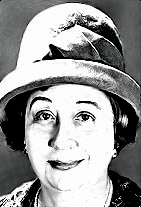
In my novel What’s Left, Cassia’s aunt Nita writes a daily newspaper column focusing on local people and their real interests. It’s not all that different from CeCe Cobb’s in my earlier novel Hometown News, but Nita’s is far less corny and far newsier.
In Dayton, where I grew up, it was Marj Heyduck of the Journal Herald. Her mug shot on her daily column featured a new hat each week as a signature touch. And in Cincinnati, it was TV host Sally Flowers.
But I can think of others who just seem to know everybody.
Does your community have a local voice? A minor celebrity or just a naturally curious friend of all?
By the end of ’68, the counterculture phenomenon was metastasizing from San Francisco’s Haight-Ashbury and nearby Berkeley into pockets across most of the country and even Europe. As August of ’69 proved, it was sufficiently established in the East to draw together the unanticipated throng at Woodstock.
Much of the transplanted activity existed at the fringes of college campuses, as I experienced in Bloomington, Indiana, and later Binghamton, New York. For me, growing up in Ohio, I would have rather attended hip, beat Antioch in Yellow Springs, but the finances were way out of our consideration. So a state school was my destination, and at the time, Indiana as an out-of-state student was nearly as reasonable as in-state for me in Ohio. And a bit later, to my surprise, how yesterday Antioch began to appear once I was near the East Coast.
The searing experiences shape what I describe in Daffodil Uprising and then Pit-a-Pat High Jinks. And as I continue to repeat, hippies came in all varieties – and still do. There was no standard-issue, card-carrying member, but each was one to some degree or another. Nobody completely fit the hippie image.
As someone who became addicted at the onset of adolescence to classical, opera, and folk music, I was already passionate about an alternative to commercial entertainment, which was what rock at the time really was. I was one who lamented deeply when Bob Dylan went electric. Sold out, so it seemed. I had the long hair and blue jeans and bell bottoms. I was against the war, tried a few hallucinations, loved sex when I could get it, which wasn’t often.
And then I encountered yoga, which led me to give up meat, alcohol and drugs, and sex for the life I detail in Yoga Bootcamp – and yet, curiously, this was when I felt the most hippie in all of my awareness.
 Jnana's Red Barn