Throughout my novel What’s Left, Cassia seeks to learn more about her father’s pilgrimage to the Himalayas.
If you could ask someone in your ancestry to answer a particular mystery about their life, who would it be – and what would you ask?
You never know what we'll churn up in cleaning a stall
Throughout my novel What’s Left, Cassia seeks to learn more about her father’s pilgrimage to the Himalayas.
If you could ask someone in your ancestry to answer a particular mystery about their life, who would it be – and what would you ask?
In my novel What’s Left, Cassia’s great-grandfather and his brother marry two sisters. One is named Diana. As is her granddaughter, Cassia’s mother.
How did your grandparents meet? Were they childhood neighbors?
My first published novel ends as the protagonist joins with five hippie siblings who run a restaurant they’ve just inherited.
My novel What’s Left returns to the scene, to find the family’s prospered under the alternative approach.
Do you know any “retired hippies” who did quite well professionally? Tell us about one.
~*~

Yes, I lean toward American contemporary.
The hippie movement redefined Cassia’s extended family. And then their dreams led them in redefining small-business practices.
What would you most like to see happen in the business world where you are?
Writing often feels like working in a vacuum. Believe me, feedback from real readers – positive or negative – makes a huge difference.
How can I not savor a review like this by Girlpower at Amazon:
You’ll enjoy reading all of Jnana’s books, you won’t be disappointed.
Her reaction to Daffodil Uprising continues:
Jnana draws me back into the counterculture past we have in common. The book flows and takes you back into everything hippie during the seventies where most of the baby boomers found themselves. It was an exciting time, a revolution, fueled by peace and love, we were very different than our fathers and mothers.
His characters are people who reminded me of friends during that time. We experimented with drugs, and had more than one partner but it was an empowering time for women. Our fathers were of the silent generation who kept their heads down, we were no longer. We allowed ourselves the time to have a little fun. [It was also] the birth of organic food, which is now coming to bear fruit. The progressive generation gave birth to many of the things today that started back during those days.”
She turns to Kenzie’s days at Daffodil University, where he finds his bearings and has more than a few relationships and that unique casual sex that lived for itself and asked for nothing more.
Jnana in his free-flowing style gets down to it, explaining relationships. Kenzie got caught up in an affair with a woman who’s cheating …It took me back in time on a magic carpet ride. … Many generations are interested in how the hippie generation lived back then.
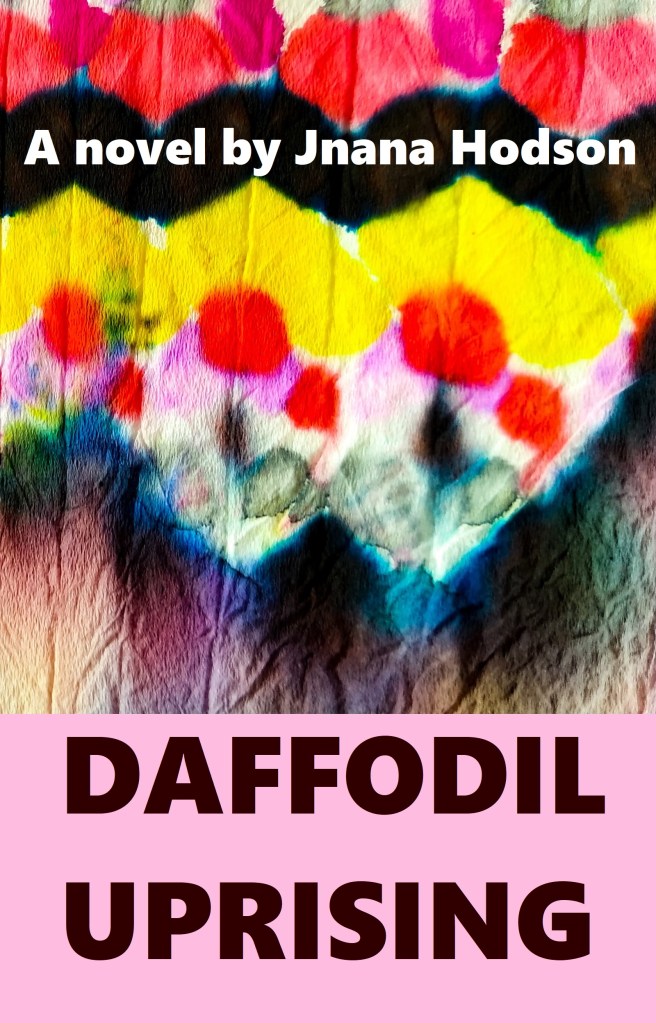
Available at the Apple Store, Barnes & Noble’s Nook, Scribd, Smashwords, Sony’s Kobo, and other fine ebook retailer and at Amazon in both Kindle and paperback.
The first draft is for yourself, as a writer. You want to see where this idea goes. And a book-length manuscript in just a month is a mental marathon, often through uncharted terrain.
The revisions are more for the reader. You really have to lead them through what had been tangles.
Sometimes that includes you. Just in case you were wondering what to do with your next 11 months.
In my novel What’s Left, Cassia’s grandmother and her sister marry two brothers. One is named Pericles.
Does the idea of siblings in one family marrying siblings in another bother you? Or does it seem like a natural possibility?
Removing Hippie Love from my shelf of available ebook offerings was a difficult decision.
From a writer’s point of view, having an alternative telling of Hippie Drum remained a fascinating experiment. Yes, it turned the story into erotica. But, with the release of What’s Left, I also realized it’s not something any daughter would want to know about her dad. And so, the two hippie books are gone, replaced by Pit-a-Pat High Jinks.
Quite simply, I believe Cassia’s story holds greater interest, at least for younger generations. After all, it’s really about today.
Cassia’s father grew up in a conventional middle-class family in the middle of the country. It was much, much different from her mother’s upbringing not that many miles away.
As they say, opposites attract. So, from your experience, how about an example?
~*~

 Jnana's Red Barn