There are things I’d do differently if I were starting this blog over, but we do learn as we go.
I’d keep the merry-go-round approach but definitely tweak it. Well, the focus of the Barn has evolved over the decade, as has my life.
One of the things I didn’t know much about at the start was Categories, so the definition of some has become, shall we say, rather elastic. American Affairs is one, especially when I’m using it for a microcosm like Dover or Eastport. Still, I don’t want to create more, which I feel would lead to clutter.
Tags were even more elusive. At first, I had no clue I’d find them so useful when I turn to the WordPress Reader or to the Smashwords catalogue. Posting is another matter, where the advice is not to exceed ten per entry. Five somehow seems to be optimal. And then I chanced upon the difference between those that are what I consider factual, like the name of a state, and others that are more emotive, like “happy” or “fun” – which are supposed to get more hits. Again, how do we keep the list manageable?
So what I’d like to know is just how you use Categories and Tags, both as a blogger and as a reader. Any advice?
And while we’re at it:
Does anyone else miss WP’s daily Fresh Pressed selection? Maybe that dates me as a blogger, but it really was a great way to be introduced to new voices.
As Dover gears up for its big 400th anniversary next year, folks need to be alerted to the fact the early history spills far beyond today’s city limits – and that includes both sides of the state line.
While much of the settlement is along Dover Neck and then grows around the Lower Falls of the Cochecho, the town itself sprawled across today’s Durham [but then Oyster River], Newington, Madbury, Lee, Barrington, Rochester, Somersworth, and Rollinsford. That’s a lot of geography.
It’s sparsely populated, at least by Europeans, as is reflected in the 42 signers of the Dover Combination, essentially all of the freemen in the town even if a number of them are soon living elsewhere in the watershed or even returned to the mother country.
When the itinerant Quaker troublemakers arrive two decades later, the town has maybe 60 households. There are perhaps no more than a thousand English total all in New Hampshire.
In 1679, when New Hampshire is separated from Massachusetts and becomes an independent provincial government, Dover has just 61 qualified voters; the remainder of the province, 148.
The picture magnifies when we look at the Piscataqua watershed.
The tiny outpost at Hilton Point becomes the center of settlement in 1630 when Captain Walter Neale arrives to settle Strawbery Banke, today’s Portsmouth, downstream on the Piscatauqua, the same year Newichawannock, a fortified trading post, was established at today’s South Berwick, Maine, upstream from the Hiltons. Some accounts have the parties arriving on the same boat. I’m not getting into those intricacies.
Besides, it leads to an argument over whether Newichawannock or an hermit who stayed the winter at York was Maine’s first permanent European settlement.
What is clear to me is that Hilton Point is the center of development, more than the other three towns in New Hampshire – Exeter, Hampton, and Portsmouth – by 1638. Yes, only four towns in the entire colony until New Castle is admitted, and nothing in New Hampshire’s Merrimack Valley until the next century.
As emphasis, a 1631 observer reports only three houses or settlements in the entire Piscataqua watershed: today’s Dover, meaning Hilton Point; Portsmouth; and South Berwick.
Sturgeon Creek in Maine, looking at Dover Neck, New Hampshire.
The history gets more interesting when there’s mention of Sturgeon Creek, which is straight across the Piscataqua River from Dover Neck and in today’s Eliot. We’ll get into that later.
At the time, all of the Maine side of the Piscataqua is considered Kittery – but as it turns out, the first settlement is Newichawannock, not Kittery Point on the Atlantic. That is, much further inland than folks assume today.
During many of the early years, settlements on both sides of the river are often called Piscataqua. Many of the legal cases from the Maine side wind up in the courts of provincial New Hampshire, and the other way around, adding further difficulty in determining exactly where certain activities occur.
That, too, indicates how closely both sides of the river interacted with each other, with the center of gravity for “upper Kittery” being Dover.
Maine, as seen from Dover Neck in New Hampshire. Not so far by boat as we’d think today.
Even more, it’s hard to envision a feudal society with Edward Hilton on Pomeroy Cove. Or even later, with Captain Wiggin’s troupe of Puritan settlers along Dover Neck. Not that we really know their names – there’s controversy when it comes to listing them.
The more I look at these early situations, the more I’m amazed that any of it actually survived.
Looking at my book purchases over the past few years, I’m finding that most of them are ebooks. The new paperbooks in my collection are mostly gifts, gratefully received, augmented by a few used volumes purchased online.
Cost is a factor, admittedly, but so is shelf space. We still have a thousand or more titles to cull from our collections before moving the remainder up here, and keeping them in storage ain’t cheap. My own practice of the past decade requires me to say adios to one copy every time I get a new one, and I find the swapping to be heart-rending. Books really are personal, and who ever wants to let go of a friend?
Among the harder aspects of putting our old house on the market was one we hadn’t anticipated. Our Realtor told us the bookshelves couldn’t be jammed, as ours were, but that buyers were entranced when shelves were only half full. We didn’t want to repulse them but, well, we had several walls to go through on that point.
That meant buying a lot of boxes from U-Haul to pack. Buy boxes? They stack better, for both transport and storage. Worth the price.
~*~
When it comes to how I’m now reading, I do find a distinction between ebooks and paper.
If it’s a page-turner being devoured quickly for pleasure or else an authority I’m using for background reference, I prefer digital. The digital search function’s very helpful, believe me – much better than relying on an index – and if I’m quoting something in a writing project, cut-and-paste beats keyboarding any day and is less likely to include typos. On the other hand, if the text requires slow reflection and digestion, traditional paper moves to the fore. Krista Tippett’s Becoming Wise: An Inquiry into the Mystery and Art of Living is a prime example, along with Robert Alter’s The Art of Biblical Poetry and The Art of Biblical Narrative.
Maybe the divide even comes down to whether it’s something I want to read hands-free or hands-on.
~*~
These also play into my considerations in my own publishing strategies.
As I looked to outlets for my big nonfiction project, Quaking Dover, I realized it was the kind of volume most readers would want to have in their hands or even wrap as a present.
It was one I’d want to place in bookstores and libraries, but that became a big hurdle.
If I put it the book up at Amazon’s KDP, the bookstores would back off. As for libraries? Dunno.
The alternatives I saw were prohibitively expensive for what would be a niche item, unless it magically took off on the charts, even as print-on-demand.
The plot thickened when my ebook haven, Smashwords, announced it was being absorbed by Draft2Digital. Yeah, the promises of no changes were there, but really?
Yet from what I’m seeing, maybe not. Maybe this is the big challenge to the Amazon juggernaut.
Upshot is, that’s where I’m planning to place my print version.
A history book seems like a natural for a print edition, but it can be a risky deal for a publisher.
After all, few titles are of the bestseller scope aimed at a nationwide readership.
My Quaking Dover is a prime example of the niche appeal that can arise when you zero in on a small community and then further refine it to a crucial minority. Even when it becomes a microcosm of a much bigger picture, as I believe mine does, the hard reality is that it’s hard to break even in traditionally publishing such a work.
~*~
Independently producing at Kindle Direct Publishing was one alternative, but it wouldn’t get copies into brick-and-mortar bookstores, which would have to buy the books at full price from Amazon and then add an additional fee, or into many public libraries – and I do see those as essential outlets for this work.
I looked into several other services but concluded that the costs to me would have been prohibitive, no matter how attractive the result.
Now, however, I have good news to share.
Quaking Dover is appearing as a print-on-demand edition from Draft2Digital, available through its affiliated traditional retailers, including Barnes & Noble.
D2D first came to my attention when it acquired Smashwords.com, the pioneering ebook enterprise that’s been my literary haven for nearly a decade now. The more I learned of it, the more I sensed that releasing my print editions there was no-brainer.
~*~
See what you think. Like the ebook edition I’ve previously announced, the paperbook is being offered at a reduced price in a pre-release – in this case up till its October 8 release.
You can help me prime the pump by requesting your own physical copy at your favorite bookstore or library.
Check out my author page at Books2Read for details.
As I ask just what made Dover so ripe for the Quaker message, I see how much earlier conflicts over the town’s official church open the way for an alternative congregation, once itinerant Friends visit town.
Dover’s first minister, solidly Puritan William Leveridge, arrives in 1633 and conducts the first religious service in New Hampshire, but he’s gone in 1635, leaving “for want of adequate support,” meaning salary, which he then finds around Boston and on in Long Island. His surviving scriptural notes are in Latin.
Perhaps two years later, maybe earlier, George Burdet shows up in the pulpit, while also taking over as “governor,” the proprietors’ agent, overseeing the northern half of the New Hampshire province. He feigns sympathy with the Puritans but secretly corresponds with Church of England Archbishop William Laud, who will eventually be executed by the Puritans. Before Burdet flees in adulterous disgrace in 1639 – or a year or two later – things get really interesting, though I’ll spare you the details now. Among other things, he gives the settlement the name Dover, not reflecting the famed English town with the white cliffs but rather an anti-Puritan wit and attorney who also founded the notorious Cotswold Olimpick Games, which included horse-racing, coursing with hounds, running, jumping, dancing, sledgehammer throwing, fighting with swords and cudgels, quarterstaff, wrestling, and gambling.
In contrast, the main sports New England Puritans accepted were hunting, fishing, and the mock battles the militias used for military training.
Dover’s first church probably resembled the one at Plimoth Plantation in Massachusetts. (Photo by Swampyank via Wikimedia)
How did Burdet become the pastor in Dover, in the first place? Specifics are often lacking or blurred in the available records.
The Puritans organized their churches on a congregational structure, where the members themselves managed the affairs, including the selection and dismissal of ministers. The concept also grew into the New England town meeting system for managing secular affairs. It’s about as democratic as you can get.
The Church of England, in contrast, relied on an episcopal hierarchy, where the Archbishop of Canterbury and subordinate bishops ruled.
The differences between the Puritans and the Anglicans go far beyond organization and polity. They include baptism, marriage (a civil contract for Puritans at the time), funerals and burial, prayer (the Anglican Book of Common Prayer versus extemporaneous), liturgy (hocus-pocus, as some Puritans would say) or none at all, rituals and genuflection (superstition to the Puritans), the Virgin Mary and saints (ignored by the Puritans), Christmas (no holiday for the Puritans), and, especially, eternal salvation or damnation (the Puritans being certain that at least some of their brotherhood will be among the Elect God had chosen at the time of Creation). I’ll venture that the Church of England offers more creaturely comforts to its faithful than do the Puritans.
Quite simply, there are tensions within Dover and beyond. The Massachusetts Bay colony has just banished Roger Williams, Anne Hutchinson, and Samuel Gorton, who all scoot off to the new refuge of Rhode Island – and Hutchinson’s brother-in-law, John Wheelwright, heads north to found Exeter, New Hampshire, near Dover. They’re all major figures in American dissident history.
Two mysterious figures then approach a newly arrived minister in Boston and lure him to Dover.
As a young Anglican priest in England, Hanserd Knollys had suffered a religious crisis that led him to resign from the pulpit and begin a quest that brings him to a Mr. Wheelwright, “a silenced minister,” near Lincoln, England. Yes, the same one who founds Exeter. Something in their discussions rekindles a flame within Knollys, liberating him to preach again but with such an intensity that he’s soon imprisoned in Boston, England, until he somehow escapes and sails in 1636 during a difficult voyage with his wife and only child, who dies en route, to Boston, Massachusetts. While living in impoverishment there, and prevented from preaching because of his antinomian theological views, he’s met by “two strangers coming to Boston from Piscattuah, hearing of me by a meer accident, [who] got me to go with them to that plantation, and to preach there, where I remained about four years.”
The only problem is that Burdet is still minister or at least physically present, but the governor’s role has been handed to John Underhill, himself in flight from Massachusetts after leading the militia in the Pequot massacre and running his mouth off.
Burdet forbids Knollys from preaching in Dover but is countered by Underhill.
Within this backdrop, Knollys is credited with formally organizing in 1638 the First Congregationalist Society, now known as First Parish, United Church of Christ (Congregational), and out of its longstanding worship together from 1633, it is regarded as the oldest church in the state.
If only it were that easy.
Hanserd Knollys
Adding to the conflict is Knollys’ evolving theology which will lead to his becoming a founding father of the Particular Baptist denomination, though he’s not yet quite there during his time in the Piscataqua parish. Otherwise, Dover might have been the first Baptist church in America, rather than the one in Providence, Rhode Island, founded in 1639.
From a later Baptist perspective, Knollys “preached with much acceptance upwards of three years. … However, his church in New Hampshire was split on the issue of infant baptism. This brought persecution on him by the Congregationalists. He, with others from his church, fled to New Jersey and eventually back to England.”
To put it mildly.
More directly, from a Baptist point of view, “America does not seem to have been a peaceful place for … Hanserd. While in New Hampshire, conflict arose between Hanserd and another minister, Thomas Larkham, who had arrived in New Hampshire in 1640. Larkham had wealth and influence, and had very lax standards for membership. This produced much division within the congregation, and Larkham at one point had Knollys removed from the pulpit. Many congregants then removed Larkham and restored Knollys as pastor. Larkham had armed men march up from nearby Portsmouth [still known as Strawbery Banke], conducted a trial which found Knollys guilty, fined him, and ordered him to leave. During his time reports circulated that Knollys was also censured for having a ‘filthy dalliance’ with some young females living in his house. Records indicate that this was a false report as other ministers spoke of Knollys with respect. There is also a record that Hanserd had filed suit with a claim of slander. It was never prosecuted, as the Knollys did not stay in the colonies.”
There were even reports of an armed skirmish between factions of the church.
But Larkham, too, suddenly departed from Dover in 1641 and returned to England.
There’s more, as Jeremy Belknap’s History of New Hampshire, reveals:
Larkham “came to Dover, and being a preacher of good talents, eclipsed Knollys, and raised a party who determined to remove him. He therefore gave way to the popular prejudice, and suffered Larkham to take his place; who soon discovered his licentious principles by receiving into the church persons of immoral characters, and assuming, like Burdet, the civil as well as ecclesiastical authority.” Except that Larkham was never “governor.”
Belknap continues: “The better sort of the people were displeased and restored Knollys to his office who excommunicated Larkham. This bred a riot in which Larkham laid hands on Knollys, taking away his hat on pretence that he had not paid for it; but he was civil enough afterward to return it. Some of the magistrates joined with Larkham, and forming a court, summoned Underhill, who was of Knollys’s party to appear before them, and answer to a new crime which they had to allege against him. Underhill collected his adherents; Knollys was armed with a pistol, and another had a bible mounted on an halbert for an ensign. In this ridiculous parade they marched against Larkham and his party, who prudently declined a combat, and sent down the river to Williams … at Portsmouth, for assistance.
“He came up in a boat with an armed party, beset Knollys’s house where Underhill was, guarded it night and day till a court was summoned, and then, Williams sitting as judge, Underhill and his company were found guilty of a riot, and after being fined, were banished from the plantation. The new crime which Larkham’s party alleged against Underhill was that he had been secretly endeavouring to persuade the inhabitants to offer themselves to the government of Massachusetts, whose favor he was desirous to purchase, by these means, as he knew that their view was to extend their jurisdiction as far as they imagined their limits reached, whenever they should find a favourable opportunity. The same policy led him with his party to send a petition to Boston, praying for the interposition of the government in their case: In consequence of which the governor and assistants commissioned Simon Bradstreet, Esq. with the famous Hugh Peters, then minister of Salem, and Timothy Dalton of Hampton, to enquire into the matter, and effect a reconciliation, or certify the state of things to them. These gentlemen travelled on foot to Dover, and finding both sides in fault, brought the matter to this issue, that the one party revoked the excommunication, and the other the fines and banishment.”
Yes, once again, religion and politics mixed.
George Wadleigh, reviewing the events, adds an extra element to the conflict. Larkham and Knollys “fell out about baptizing children.” Remember, Baptists would insist it was for consenting, informed adults only.
Let it not be said that Dover was a sedate fringe habitation.
Dover’s second meetinghouse was something like this, surrounded by a palisade. It was erected in 1654, before the Quakers further stirred things up.
And I’m certain these events all lead up to the faction that welcomes itinerant Quakers a decade later. After all, Dover would have a ready audience and prime examples for the Quaker criticism of “hireling priests” who saw the position as a rewarding salary more than as utter discipleship.
Until then, lingering tensions simmer.
~*~
Check out my new book, Quaking Dover, available in an iBook edition at the Apple Store.
Let me admit that hearing about Joe McQuaid’s recent book on Bill Loeb stirred a range of reactions in me.
The first was a yawning, “Who cares? Who cares now?”
The second was a recognition that most stories have short shelf lives, and Loeb was ancient history now, even in New Hampshire.
For background, you must understand that I spent the second half of my journalism career at the statewide newspaper Loeb had owned and notoriously thrust into the national spotlight from Manchester, New Hampshire. When I arrived, he had been dead six years and the paper was in transition from one known more for its vitriolic front-page editorials than for its reporting. The editorials had retreated mostly to the opinion page, and I was among the hires intent on improving the professional quality of the coverage. Or, as I overheard three figures accuse the managing editor my first week on the job, of already being “liberal media.” (That’s how far right much of the state was – and in some parts remains.)
McQuaid, under the wing of Loeb’s widow, Nackey, was a hometown boy on his ascent as executive editor and after her death, publisher. His father, Bernie, had been Bill Loeb’s righthand man in the newsroom – and Loeb kept a loaded revolver in his desk drawer, as I heard a few years before my move to the paper. In many ways, their arrangement was like family and a family business. I had worked for enough newspaper chains to appreciate the differences, as well as to appreciate Loeb’s determination to keep the paper independent of chain ownership.
There was always gossip, of course, which now gave me a sense that that if Joe could look hard and candidly at his subject, he might have enough inside dope to open fresh material for historians while also doing a bit of self-therapy in his retirement years. To me, his project looked something like my own attempt to better understand my grandfather and his legacy, pro and con – the man who labeled himself Dayton’s Leading Republican Plumber. What I had was mostly genealogy and local history, one where my remaining living sources could openly differ with each other and with what I had collected from those now passed.
Joe, on the other hand, was dealing with a once well-known rabid anti-communist archconservative who was credited with derailing more than one presidential candidate and leaving a long shadow over local and state politics. New Hampshire politicians still dare not speak of income or sales taxes as a funding option. People either adored him or hated him – reader and advertiser aversion to his approach had killed several other papers he owned – but he was largely a curiosity and enigma, one sometimes seen as a big joke with occasionally fatal consequences. Take Loeb seriously? For starters, Joe had to go beyond Kevin Cash’s 1975 Who the Hell IS William Loeb, a fat blast that nobody I’ve met ever finished reading, even during Loeb’s last years on the throne.
The result was William Loeb and His Times: Provocative Publisher, Private Paradox by Joseph W. McQuaid, published by New Hampshire-focused Plaidswede Publishing in Concord at the beginning of the year.
Joe’s tome faces several huge challenges.
Loeb died 41 years ago and few readers remember him or the era. Why should folks care about someone others have tagged a pipsqueak? Quite simply, he’s no longer news. Move on to today.
Newspapers are no longer the powerful institutions they were, diminished both by the right-wing attacks of Loeb’s ilk and by internet sapping of readership and advertising. Who’s interested in their internal operations? Or even of Loeb’s uneven track record in advancing his causes and candidates?
Politics itself has become toxic, a consequence of unchecked right-wing shenanigans. Informed folks are still shell-shocked by the daily scandals from the Trump White House.
Joe’s attempt to make sense of Loeb’s sordid personal life and financial dealings could be of importance, not so much as something that happened “back then” but rather in the ways it seems to foreshadow the emergence of Trump and his ilk and of Fox television’s slanted presentation of public affairs.
Not that Joe can quite make the connection from the late 1940s and ‘50s that gave Loeb his rise to today’s quagmire. He can’t honestly paint Loeb as a hero, though the publisher’s diatribes fit that role for many, so that omission costs Joe potential readers on the right. But his revelations about Loeb’s personal life make an already repulsive subject even less attractive to potential readers in the middle and left. Even morbid fascination has its limits. Besides, these days it fits a pattern. Clarence Thomas? Ted Cruz? Newt Gingerich? Mitch McConnell? As for New Hampshire? It’s still seen as too tiny to matter across much of the nation.
And as a footnote, Clem Costello, publisher of the newspaper just downstream in Lowell, Massachusetts, could provide a similar subject for the era, if only to round out the history.
The fur traders’ hot market for beaver pelts in colonial New England soon reduced beaver populations, and fewer beavers meant fewer beaver ponds, an important source of the local Native diet, including roots and waterfowl.
Beavers were only the first of many species afflicted by European settlement in the Piscataqua watershed.
That was followed by the construction of mills, which were powered by water, and that meant dams. Some impounded incoming tides for release a few hours later. These were tricky to operate, though, and changed speeds depending on the strength of the incoming tide or the level of the water during its release.
Dams at the waterfalls became more common.
Either way, dams impeded upstream migrations of fish trying to return from the sea to their spawning grounds. These included salmon, sturgeons, eels, and river herring. Their reduced stocks afflicted both the Natives and the English inland fishing industry.
The mills also produced copious amounts of sawdust that choked river bottoms, reducing and killing off additional species.
The demand for timber itself cleared land all the way back eight to ten miles from the riverbanks, further eliminating wild game. The wood was needed not only for the sawmills but also as fuel for brickmaking, domestic cooking, and warmth through winter. Heating a house commonly required 40 cords of wood a year – no small feat of labor.
And runoff muddied and silted the streams.
Let’s not get too sentimental about the bucolic nature of the era, OK?
If you’re a reader of ebooks and fascinated by history, I’d love for you to get an advance copy of my new book, Quaking Dover.
In fact, as a follower of this blog, you’re getting a limited-time invitation to pick up a copy of the book for free.
Check it out at Smashwords and its associated digital ebook retailers.
All you have to do is speak up in the comments section of this post, and assuming that your address includes an email (visible only to me) or other contact info, I’ll send you a coupon to download the book in the digital format of your choice within the next 30 days.
It’s one of the advantages of ebook publication at Smashwords.com.
In the world of commercial book publishing, a printed edition typically appears in an Advanced Reading Copy run that allows reviewers, bookstore dealers, and other insiders a chance to hop on before the official publication. In the meantime, the author and editor have time to make fixes and set the stage for an auspicious opening day, one boosted by the buzz of the ARC readers.
So what I’m doing is the equivalent for a digital edition.
The release date on this book isn’t until September 8, but folks who preorder now can get in the front of the line at half-price. That strategy is one step for boosting the book in the crucial first-week sales algorithm.
Today’s offer, however, gives you a chance to own a copy now. In a way, you’ll even be getting involved with the preparations for the tiny city’s upcoming 400th anniversary.
My hope, of course, is that you’ll be excited by my story and happily post a brief review or two in response. If you don’t like it, of course, you can tell me directly and we’ll still have time to rectify that. It won’t even change my perception of you (insert Smiley Face.) From your end, it’s a no-risk proposition.
One of the first thing the colonists typically built was a sawmill. From what I’ve seen to date, it always came before a gristmill. I would have thought food would have been the priority, but there are suggestions they imported their flour or even bread instead.
That raises questions of just exactly what their meals were. The Puritans were devoted to their beer and tobacco – and that extended to even their children.
For that matter, how early was Beantown a synonym for Boston?
More than a dozen years after the settling of Hilton Point just across the river, Alexander Shapleigh built the first of two tide mills at his Kittery House estate. Water from the incoming tide was impounded and released later in the day to power the mills. Here’s the site today.The mill pond remains in today’s Eliot, Maine.
So why sawmills? The early settlers along the Piscataqua apparently erected log cabins, along with fortifications. For that matter, the sole surviving garrison house, preserved at the Woodman Institute, was essentially a log cabin built around 1675.
But flat boards were needed for shipbuilding, wharf planking and bridges, and barrels – for shipping dried fish, especially. Perhaps lumber itself was also an export to Barbados, the Bahamas, and the West Indies.
Let’s remember, too, the construction of dams and mills and their operation required sophisticated skills.
I’m guessing that few of the early English settlers along the Piscataqua were menial day laborers.
For several months now, you’ve been getting tastes of my upcoming book, but I have kept much of project under wraps, including the title.
The curtain goes up on that right now.
So roll the drums, please, and take a deep breath of anticipation. Here’s what I’m rolling out:
Do the title and image intrigue you? Pique your curiosity? Hold you for more than a split-second?
As I’ve discussed in previous posts, book covers – and magazines, too – are a specialized design challenge.
The ebook version has to work as a postage stamp, sizewise.
Print editions often get cluttered with pitches of all sorts, just in case one hooks a reader.
An effective title, of course, is a huge consideration, but not the only one.
~*~
Creating a compelling image that matches the content has been especially difficult in this case. The book spans more than 400 years, and I couldn’t find anything that quite reflected the place or its people, now or then, or that extended an appropriate emotional appeal.
A seismograph didn’t do it, though several geometric zig-zag patterns looked cool.
One design that excited me featured a portrait of John Greenleaf Whittier’s mother, but others saw her as forbidding. What I saw calm and collected they viewed as sorrowful and inhibited. Oh, well.
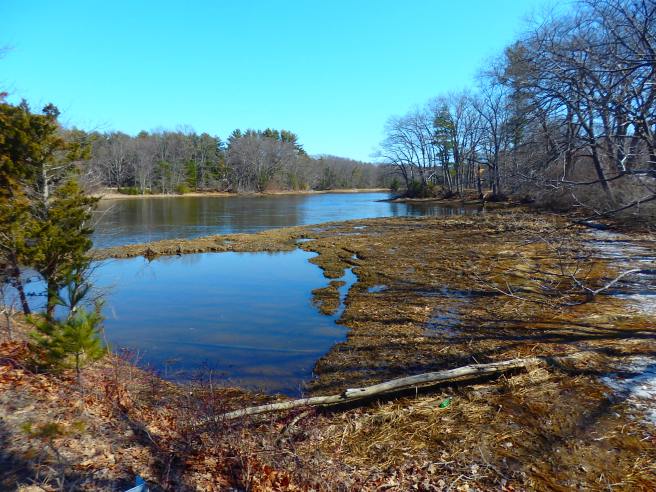
But then, while going through my own photos, I came across a late-autumn photo of the Cochecho River, scene of much of the action. I loved its timeless mystery and beauty and the fact it didn’t look generic to just about anywhere else in the world.
One of my earlier posts pointed out that the cover should promise the reader something rather than mirror the story. It’s a matter of eliciting a gut-level attraction.
Somehow, I hope you feel this cover leads backward into time, with the drama of a storm on the way. Just what is around that bend, anyway?
~*~
Please stay tuned for the release details in the days ahead.


 The result was William Loeb and His Times: Provocative Publisher, Private Paradox by Joseph W. McQuaid, published by New Hampshire-focused Plaidswede Publishing in Concord at the beginning of the year.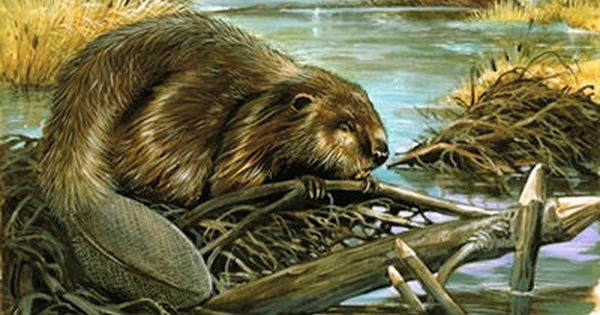


 Jnana's Red Barn