FLATBED

Returning to my native corner of Ohio, I’m astonished by its flatness; what had seemed to be large hills or significant valleys now appear embarrassingly horizontal.

On the other hand, as I’ve uncovered my ancestral roots in that land, I’m finding a lost and untold richness in what was essentially a Pennsylvania Dutch heritage continuing in western Ohio. Feel free to take a look at my findings at the Orphan George Chronicles.

CORKING THE STATE LIQUOR COMMISSION

For all of it reputation as the “tax-free state” and “live free or die,” New Hampshire has some pretty convoluted ways of making ends meet. True, we have no sales tax and no income tax, but that simply means finding a lot of nickel-and-dime ways of raising public revenues, starting with a hefty property tax rate. (Renters, of course, get no break on their federal taxes there, either – as I said, convoluted.) And if you dine out, even for breakfast, there’s another big hit, eight percent or so, one of many others. Eventually, it all adds up.

New Hampshire also has a reputation as the go-to state for cheaper liquor, compared to the rest of the Northeast. For all of the official conservative rhetoric of free enterprise, the state clutches its monopoly on the sale of hard liquor, unlike, say, neighboring Massachusetts, with its liberal tradition of neighborhood mom-and-pop “package” stores.

The conflict I see comes in the fact the state is both the regulator of alcoholic beverage sales, ranging from bars to groceries and wine stores and home consumption, and also the distributor. That is, the same agency, the State Liquor Commission, is both the policeman and an active dealer in what it is policing. It’s a situation rife with the potential for favors, favoritism, and outright bribery or corruption. As the Founding Fathers were well aware, whoever polices the police should not be the police. You separate them – the classic separation of powers, each keeping jealous watch over the other.

Not so here in New Hampshire. When it comes to alcohol, the only line of defense might be the Legislature or the Governor and Executive Council as the counterbalance, but that’s not the way it should be, especially when we factor in the possibilities of hefty campaign donations. The enforcer and distributor should be under separate agencies – then, if conflict arises, they appeal to higher authority. As it is, they’re likely to squelch any complainer … or else.

In addition, when it comes to wine, all the supermarkets, grocers, and independent wine shops face a double whammy. They’re required to buy their wine from the state (through the one and only licensed warehouse dealer), even though the state also sells directly against them. In fact, it’s the same agency they must apply to for their very permit to do business in this field. And then the agency adds its own percentage to the product, even if it’s from a winery the state wouldn’t otherwise stock except for the retailers’ order. As I said, convoluted and rife for abuse.

I first noticed this when I found a certain label for sale much cheaper in Massachusetts. Seems the Bay State has one less layer of middleman in the process. So much for the “Taxachusetts” tag we Granite Staters so often brush on our southern neighbor. Tain’t always so.

More recently, I found an example of the state’s monopoly bully at work when a local supermarket was out of several of its more popular varieties. Could it be someone had said something that miffed somebody in the state agency that was supposed to deliver the product, which now was just sitting in the warehouse? Who do you complain to, after all? You can’t switch to a different supplier, either. Where’s the free market free enterprise in this case? The official line may have been that the state was in the midst of shifting from one licensed warehouse operator, which had held the contract for decades, to a new one. But, as the old contractor miffed, the situation “is just the latest example of many where the the commission has cut a special deal” with the new licensee.

For years, I received the weekly release of which bars, restaurants, and convenience stores or supermarkets had their liquor licenses suspended by the State Liquor Commission, usually for underage sales of beverages. Not once did I see a State Liquor Store in that list. Not that they weren’t as prone to violations. As I said, who polices the police?

Yes, New Hampshire gets the revenue. As long as I’m not forced to go to Maine or Massachusetts to get the wine I want, where it’s available, maybe even more cheaply.

Any future MBAs interested in doing a case study? This one could be a doozy.

EVERYONE’S FROM SOMEWHERE

In the aftermath of major disasters, the wire services run a list of victims, something I used to think was to inform the editors of local newspapers of potential links to their own circulation area. But then my boss told me to run them.

“Why?” I asked. “We don’t have that much space for wire news.” Meaning national and international stories.

“Everybody’s from somewhere,” he answered. And I soon learned how true that was.

In fact, here in New Hampshire, we’ve come to expect a Granite State angle in almost every breaking story.

Small world, indeed.

ESTABLISHING MY CREDS

Longtime visitors to the Red Barn are likely aware that I spent four decades as a newspaper editor – experiences that feed into my latest novel, Hometown News.

It’s meant working nights, holidays, and weekends – rarely on a schedule matching the general public’s. And it’s always meant “working under deadline,” where an internal clock is always racing to finish the task on time (or else!). In addition, it’s also given me some insider looks at the surrounding world itself: having a celebrity standing a dozen feet behind your back is just another regular occurrence. (For the record, they often look quite different than they do on television.) Even as a cub reporter, I saw dead bodies, got inside the county morgue, checked out small plane crashes, met ex-movie stars, faced some stiff competition from the pros on the rival paper. Looking back, I sense how often I was in over my head and wonder how I ever survived.

These experiences have also fed into the Red Barn’s category of Newspaper Traditions, where I’ve written about:

  • The best newspaper ever” The glorious final days of the New York Herald Tribune were like no other newspaper. Nothing like fighting hard to the bitter end.
  • Chancing Upon a Profession: Glenn Thompson’s influence hit me, among many others, in one medium-sized city. He had a knack for finding talent.
  • Hot Type: In the days before phototypesetting and then digital publishing, newspaper production was a highly skilled craft. Here’s an admiration for the long gone masters.
  • Living Under Deadline: When your career hangs on meeting deadline after deadline, with no room to spare, you begin to live differently from other people.
  • The Art of Writing a Headline: Trying to steer readers to a given news report with just four words can be a real challenge. Take it from a pro.
  • Editing Obituaries: Announcing someone’s death and funeral arrangements can be more precarious than you’d imagine. This post, one of the most popular at the Red Barn, became a WordPress Freshly Pressed selection.
  • Four Measures: Just what makes “news,” anyone? Here’s one take.
  • Police Calls, 10 P.M.: Well, there is some behind-the-scenes banter, even when calling the cops.
  • One Phone Call Too Many: And then sometimes the facts get in the way of what looked like a great story.
  • Local, Local: How you define “local” news can backfire when it comes to your readers. Especially when it’s boring.
  • Bias: Sometimes those who accuse journalists of being biased should first look at themselves in the mirror.
  • The Shrinking Page: Like many other products, the newspaper page has been shrinking. It’s about half as wide as it was when I entered the trade.
  • The Human Imprint: Not too long ago, the editors and publishers were well-known public figures.
  • Objectivity, for Starters: There really were some strict standards and practices.
  • Windy City Perspectives: The tower of the Chicago Tribune holds some special memories for me.
  • Painful Neutrality: Again, maintaining a discipline of objectivity comes at a personal price.
  • Free of the Entourage: David Broder was the best of the breed. I wish I’d said hi.
  • End of the Line: One of the last editors who put a personal stamp on a paper was David Burgin. Maybe that’s why he was always getting fired.
  • Get Out of the Way: Real reporters are invisible observers. TV’s imitation inserts itself on the story.
  • You Read It Here First: Plagiarism has always been a dirty practice. Here are a few examples.
  • Reality Check: When it comes to seeing “liberal media,” some people fall off the far right of the world. The one that’s still flat.
  • A Logical Conclusion: The more conservative the nation’s editorial pages become, the more circulation declines. Think about that.
  • Death in the Afternoon: The newspapers published in the afternoon once had the blockbuster circulation. Here’s why they vanished.
  • Beware of Unintended Consequences: There are times embarrassing things slip into print. Lewd expressions, especially.
  • Beware of Survey Conclusions: Marketing research can lead to bad choices. It helps to put the findings in perspective before taking action.
  • So Much for Romance: And then there was the reporter’s lament as he returned from covering a large singles’ mixer.

I invite you to visit or revisit the postings, especially if you’re new here. And I promise there are more ahead.

~*~

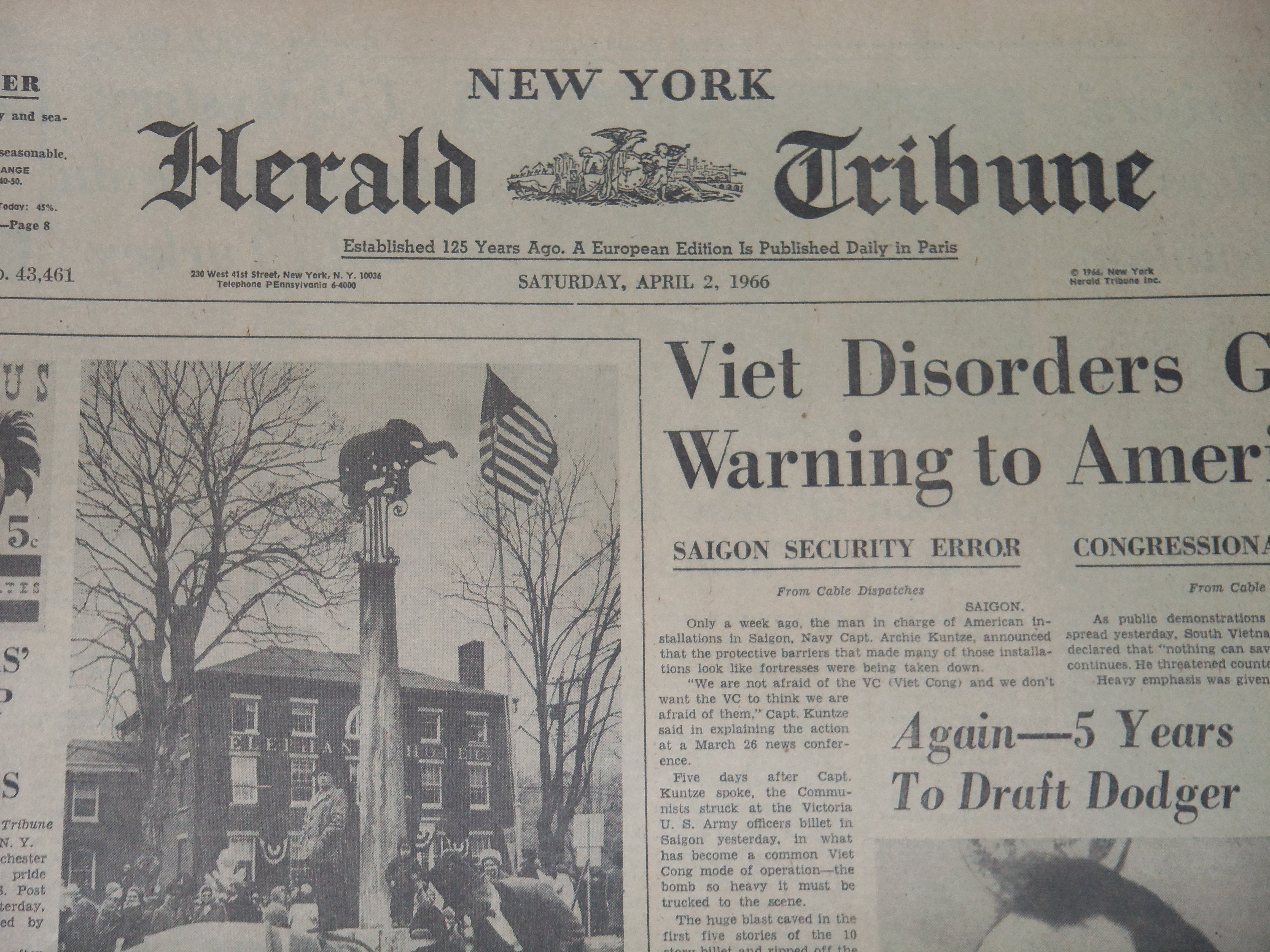
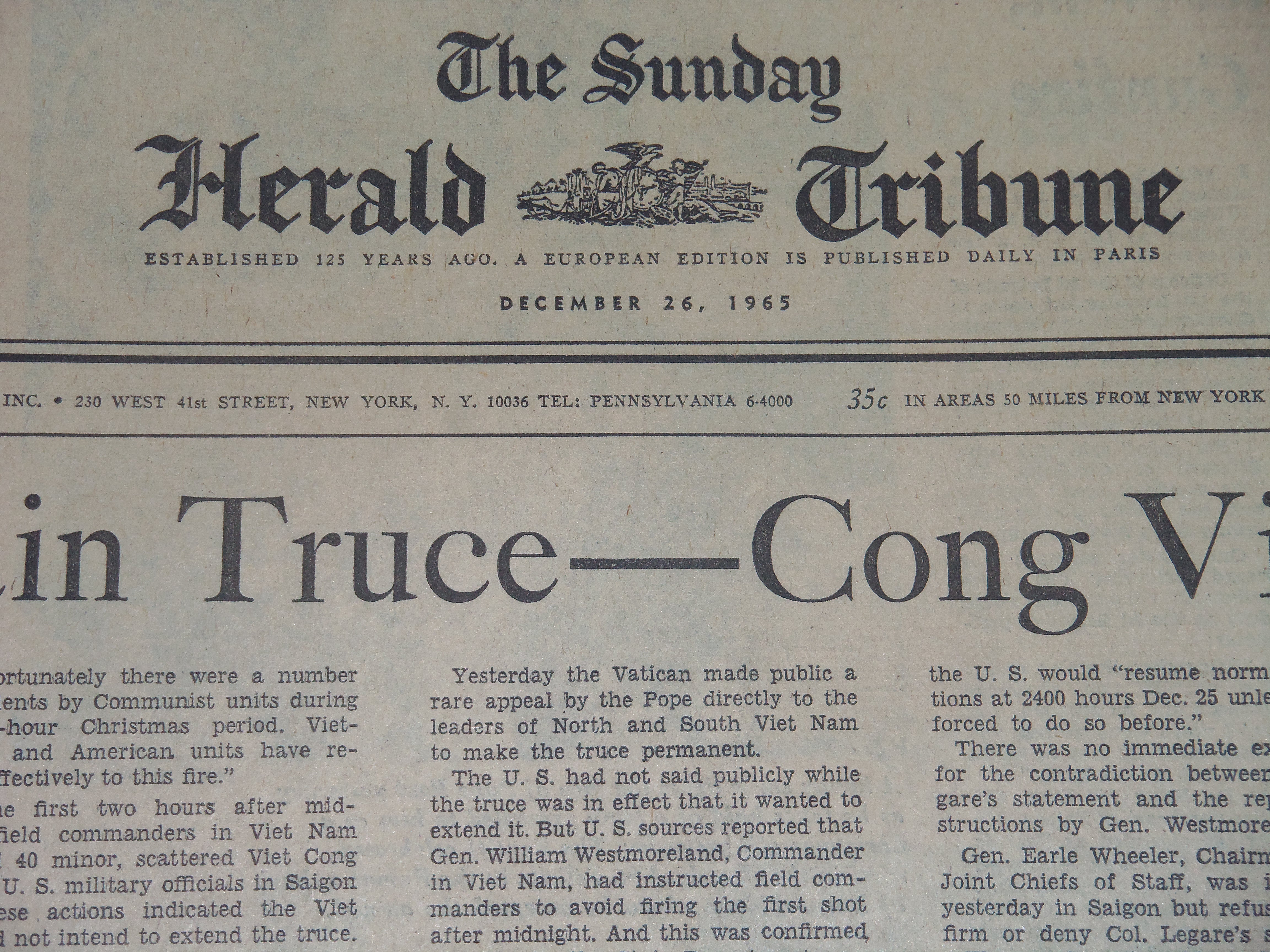
While we’re at it, here are some pages from the New York Herald Tribune’s final years, when it established itself in my mind as the most elegant and exciting newspaper ever. (Remember, I was still a teen and a budding journalist.)

The daily edition.
The daily edition.
And Sunday.
And Sunday.

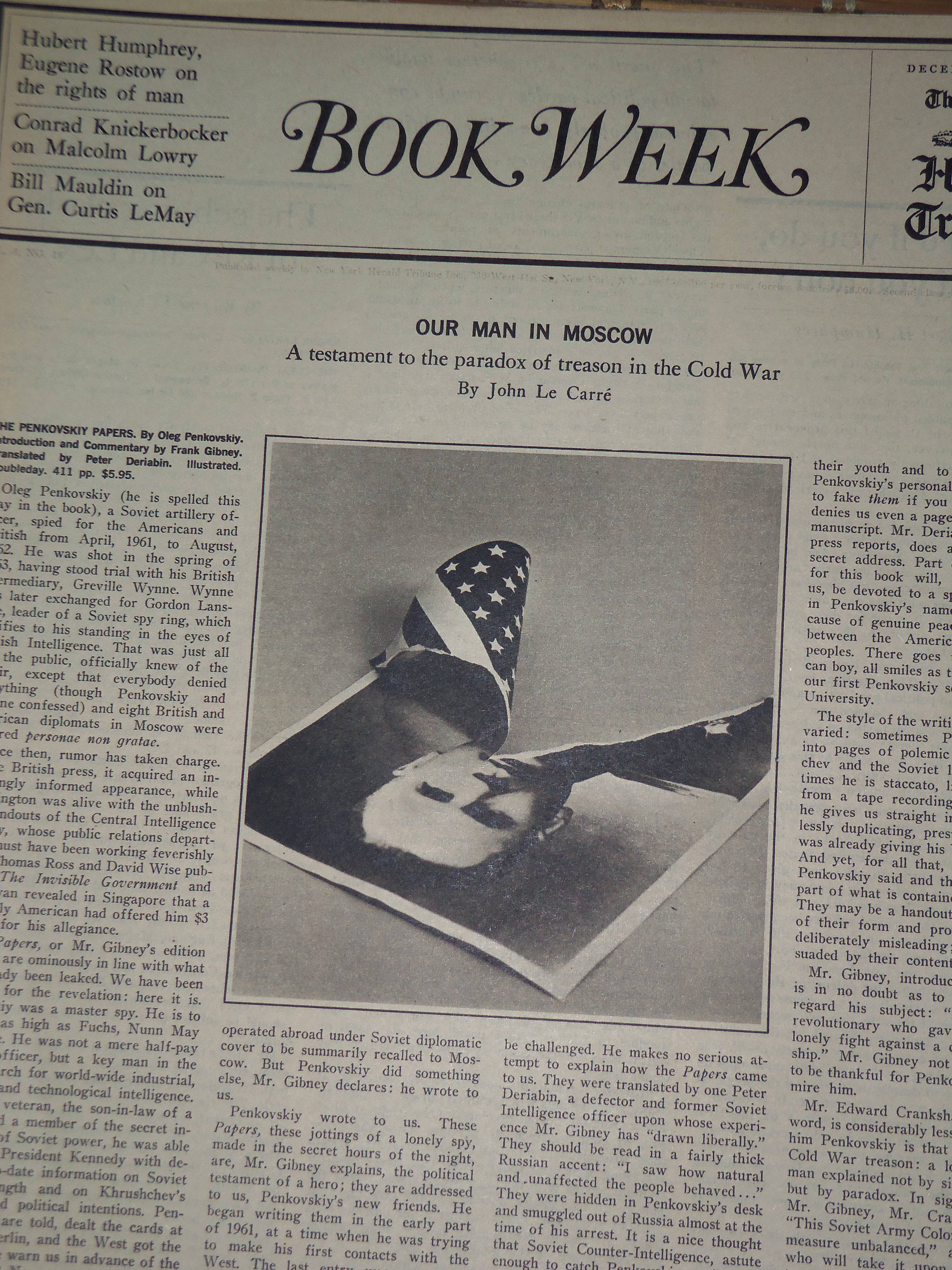
Among the Trib’s legacy was New York Magazine, which originated as the Trib’s Sunday glossy magazine. It was classic. And Book Week reflects a time when books were really important, at least in the eyes of the informed public.

The Sunday mag.
The Sunday mag.
And the books review section.

~*~

Not all of the exciting journalistic action took place in Gotham or Fleet Street or Chicago’s competitive shootouts, though.

Much of the most dedicated and innovative work emerged in small communities in the heartland where a few individuals could make an obvious difference. That’s the story I explore in my latest novel. In some ways, it’s Tom Peters’ Pursuit of Excellence meets Dilbert on steroids. It might even resemble some places you’ve labored.

 ~*~

To find out more about Hometown News or to obtain your own copy, go to my page at Smashwords.com.

COUNTING TO SEVEN

Dover, where I live, is proclaimed as the oldest permanent settlement in New Hampshire and the seventh oldest in the United States.

Counting gets tricky, because there were earlier settlements that were abandoned. As best as I can determine, then, here’s the list the counts to seven:

  1. St. Augustine, Florida, 1565
  2. Santa Fe, New Mexico, 1607
  3. Newport News as Hopewell or Elizabeth Cittie, Virginia, 1613
  4. Albany, New York, 1614
  5. Jersey City, New Jersey, as Pavonia, New Netherlands, 1617
  6. Plymouth, Massachusetts, 1620
  7. Dover, New Hampshire, 1623

While I found Weymouth, Massachusetts, as Wessagussett, 1622, the town itself notes 1630 as its settlement. And Taos, New Mexico, 1615, was abandoned by its Spanish missionaries in 1640. As I said, counting gets tricky.

SAGEBRUSH AS A STATEMENT

The diamond hitch is a top-of-the-line knot, especially useful in cowboy, mining, or logging country – or, as I apply it, the desert foothills of Washington state found east of the Cascade mountains. Forefront in my related set of poems is the unspoken recognition of diamond hitch as marriage, with its implied images of diamond ring and getting hitched. In the background, also unvoiced, is the diamond symbol of the clear and enduring heart – further extended to intense spiritual quest, as The Diamond Sutra (Vajrachchedika in Sanskrit) demonstrates, found also in the Buddhist linkage of diamond to Dharma. In addition to serving as an emblem for the open range of the American Far West, sagebrush, moreover, suggests wisdom, spice, even the Burning Bush of Moses – the profound influence desert has upheld for prophets and mystics over the millennia.

SUCH DIFFERENCES

As I said at the time …

Finally, observing the banner in the background of the thirty-fifth reunion pictures, my wife finally connected a date she’d long known with her own experience: “When you were all graduating, I was being potty trained.”

I wonder what I would tell them, given the chance. I’m not judging them, as much as judging myself and all of the intervening years. The long journey to here. I’m not gloating that I have a younger wife, one who’s only a few years older than some of their own children; besides, that wouldn’t have been the case, had my first marriage not failed. I’m finally experiencing the challenges and joys of parenting, while they already have grandchildren – on that front, maybe they really are much older. See, I am envious of those still married to their spouse right out of high school. They took the straight path and got down to business. In contrast, many lonely nights and a sequence of transitory relationships have been my alternative. I think how innocent I was (ignorant is the more accurate term, actually), especially on matters of sex. In the intervening years, even after I realized that certain girls had gone away because they were pregnant or certain guys were homosexual, I simply couldn’t admit that any of us were actually having, gulp, intercourse. Although, years later, looking at the homecoming court photos in the yearbook, the realization flashed upon me, from one’s smile, that she must have recently become sexually active.

Which leads me to the goddesses. The beauties I both idealized and gazed at with masked lust, wondering how the soft touch would feel, how the naked body would look, how two people actually connect. The ones who left me speechless. The ones who were, in many ways, in a league other than the one I inhabited. To my eyes, they were miraculous and mysterious, invested with secret knowledge and magical powers, with taste, social graces, and high style – no matter how middle-class we were or the fact that our conversations rarely went any deeper than howdy. The reunion photos, then, confirm my fears – that goddesses may become hags – yes, mortal, even grotesque. And yet, to my surprise, some have become more beautiful than ever. How can this be? If we could only return, however briefly, for candid discourse, to uncover what thoughts, feelings, and actions lurked behind those Mona Lisa facades, both then and in the subsequent years. Not superficial conversation, but blunt disclosures. Now, however, sifting through the reunion photos, I soon calculate how few of these goddesses attended – which leads to further speculation. To my eye, they were the essence of what Hollywood starlets aspire to represent. Unlike any mythology, however, few remain in any Olympus. Instead, I must confront a youth culture that offered little wisdom.

I must leave it to the girls-turned-to-women to speak of the Adonis club and its deterioration. Besides, I was never a member. On the other hand, I’ve sometimes quipped that if I could do it all over again, I would have hung out with the greasers – that they had what I was lacking. As if they would have had me! Or am I only imagining they had fun in their tweaking of authority?

To reenter those years also means admitting shame, embarrassment, and guilt. I’m not the golden boy my mother expected, or the great talent my youth pastor counseled. For that matter, it’s been many years since I could tie my hair back in a ponytail or part it down the middle. Since I had a beer bottle tossed at me at a party. As I’ve said, it’s been a long road from there to here.

One soon approaching what will be a fiftieth anniversary reunion, if it happens.

ST. LOUIS AND CIVILIZATION

As I said at the time …

We share a debt of gratitude to your grandmother, who has spent many hours assembling a remarkable gift for you – a knowledge of your ancestors. I hope you will come to treasure her findings, and the love she has put into this project.

Through Eide Henry Hopke, you and I also share a common bond, although our legacy from him varies in one crucial aspect. For you, he provides not only your surname, but also some distinctive DNA strands that come only through the male line. For me, he is part of a maternal genetic mix that is ever-expanding, the further back we go. (For example, while Eide Henry is one of my sixteen great-great-great-grandfathers, only George Hodgin carries the equivalent DNA strands for me; Eide Henry’s endowment, meanwhile, comes down through my mother’s father’s mother’s mother, in a bit of a zig-zag path.)

I hope you won’t look at your genealogy simply as a long list of names and dates – a sort of variation on the Biblical begats. (That’s not to deny the frustration and pleasure that goes into the investigative digging and puzzle-solving involved along the way of gathering these details.) Rather, the power comes in building the story of these seemingly common people and the ways they addressed their time in history and the places they dwelled. Researchers who try to connect their ancestry to ancient royalty or who stop the moment they find an ancestor hanged as a horse thief need to rethink their vision. In this venture we need to accept the facts, good or bad, in their full truth; what we eventually have is a personal history, one that will often stand at some distance from the one taught in schoolrooms or give us some insight into a greater framework. As you read historical accounts, you may find that through these ancestors, you, too, are in their time and place. Oh, yes, and as stories go, genealogies can turn up the most unexpected twists. For instance, the first of my Hodson surname ancestors in America arrived as the only surviving family member after their ship had been captured by French privateers (pirates); his great-grandson, a miller, owned a gold mine in North Carolina; and, on my dad’s side, all of my ancestors until the Second World War were staunch pacifists in their religious principles – I knew none of this when I was growing up.

On my mother’s side, Eide Henry emerges as a remarkable figure. Maybe you’ll be the one to figure out how he arrived in the New World, whether he came alone or with family, how he paid for his journey, or what led him to St. Louis; there are certainly many details to fill in about his life, and every answer seems to produce more questions. But what we already can sketch from the facts at hand point to an enterprising character who adapted himself well to his new surroundings. While we don’t know for certain what prompted him to leave Prussia, we can imagine the values the place instilled in him – truthfulness, modesty, self-control, and loyalty, in the words of Peter F. Drucker. “This Prussia had been a military state” and “was not educated, let alone cultured; but it was pious, with a narrow and sentimental Lutheranism,” Drucker notes, including an observation credited to Bismarck “that the Germans require a father figure, and that they will fall victim to a tyrant unless they have a legitimate and lawful king.” (From “The Man Who Invented Kissinger” in Adventures of a Bystander.) We can ask ourselves how much of this played out in Eide Henry’s life – in his decision to serve in the Mexican-American War, for instance, or in naming sons during the Civil War Robert Lee Hopke and Jefferson D. Hopke. This, despite the reported universal opposition to slavery by the German population in St. Louis during this period. (As you grow older, you may come to realize how often our values conflict or how much ambiguity arises in daily life; black-and-white decisions seem to be far rarer than we’d like.) We can also imagine that Eide Henry knew sorrow, in the death of his first wife or young children, and perhaps in the separation from his homeland. He must have known loneliness, too, in those times when he lived apart from his family in order to earn an income. We can look at the portrait your grandmother has collected and see all of these things in his face.

He also opens us to the pervasiveness of German civilization on American life, something that World War I erased from public awareness. Actually, I can speak of two major streams of German influence, the first being what we would consider Pennsylvania Dutch and including the Anabaptist traditions most visible now among the Amish, and a second, which settled largely in Midwestern cities and carried a deep sense of “good living,” meaning learning and progress. Eide Henry would have been part of that second movement, while many of my father’s ancestors were part of the first.

Sometimes we will glean background for our story from the most unexpectedly sources. One of my wife’s favorite books, for instance, is Stand Facing the Stove: The Story of the Women Who Gave America “The Joy of Cooking.” While Anne Mendelson is writing about her mother and grandmother, her opening chapter examines “The Golden Age of St. Louis,” which did “indeed – at least in a brief and glorious interval after the Civil War – seem one of the finest spots on earth to dwell … “ She then turns to Lebenskunstler, “as untranslatable as any word in the German language, which is saying a good deal. It implies a civilized command of living as an art form like singing or painting. German-English dictionaries lamely offer explanations like ‘one who appreciates the finer things in life.’ ‘Life artist’ is the baldly literal rendering, and perhaps as good as any.” Mendelson then goes to present the story of her genealogy in a thoroughly engaging manner, one that can be seen as a model for this enterprise. What interests us most, however, is the points where it overlaps on our own story. For instance, she mentions “Thousands of poor Irish had also come to the region, especially after the potato famine of 1845-46. They competed for work as laborers, artisans, and servants with large numbers of Germans fleeing comparable poverty.” And then she notes “a very different community brought by the abortive stirrings of liberal German nationalism after 1830 and more markedly 1848. They were articulate professionals, or sometimes minor nobility, who rejoiced in a particularly German marriage of cultural ideals, consciously enlightened convictions, and creature comforts.” At this point, it seems more likely that Eide Henry was one of those “fleeing comparable poverty,” yet he still would have been part of that mixture of German life in the city, with its “life artist” influence. While my mother probably had no idea of her Hopke ancestry, she always spoke of St. Louis in almost reverential tones; meanwhile, her mother – who married a Hopke descendant – strikes me as one who hungered for that “life artist” ideal, even though she had not been born into it.

Maybe you forget that St. Louis was once the largest and most important city west of the Appalachian mountains, after supplanting Cincinnati for the honor. Chicago took the lead only later. By 1860, Mendleson writes, St. Louis “had a population of nearly 161,000, and supported a small handful of theaters and a large handful of music societies (well populated with Germans), a library, the new St. Louis Academy of Sciences, Washington University, several foundries, the Pacific Railroad (stretching a magnificent 176 miles westward), a noisy range of political opinions, and sundry German- and English-language newspapers.”

She relates that a “traveler reaching St. Louis by steamer saw first the broad man-made plateau of city levees, swarming with teamsters’ wagons and lined with warehouses. The land rose to a modified grid of streets, orderly enough on paper but at most seasons of the year fed by an inexhaustible supply of mud reputed not to differ greatly from the St. Louis drinking water.” As a teamster, Eide Henry may well have been one of those with a wagon waiting at the wharf; we can imagine, too, what he said of the water.

Much of what I know about Eide Henry is thanks to your grandmother’s generous sharing of material she’s gathered for you. Along the way, she has also filled in large gaps in my knowledge of Eide Henry’s son-in-law, David W. Ward, and even my Munro ancestors from Scotland – all of which somehow come together in Pike County, Missouri, in what can be seen as the northern shadow of St. Louis. None of these people are among her own bloodlines, either, yet she has been faithful to the larger task of bringing their lives to the light.

How it all comes together is largely up to us. Jeremy, I hope you find much in this legacy that will inspire you, add perspective to your own life decisions, and give you an appreciation for the blessings we have because of their efforts.

I’ve spoken of Eide Henry as a remarkable character. I think we can add Patsy Lynn to that list, as well.

Best wishes in all you undertake, Cousin.

AN UNFOLDING GREEK TRAGEDY

For past several weeks, the hottest news story across New England has been over what will no doubt be a textbook case of how to kill your own golden goose in corporate America.

The business is a family-owned chain of 71 supermarkets that has somehow managed to carve out the region’s highest profit rate in a notoriously thin-margin field while simultaneously paying its workers more than its rivals — along with profit-sharing and bonuses — while keeping its prices well below those of the other grocers. (You can imagine, for one thing, that the pilferage that undermines many groceries is nonexistent at Market Basket. Its workers are loyal, at least to the executive responsible for the success — a man who seems to know not just each of them but their family members as well.) Add to that a great deal of flexibility for store managers to respond to customer requests and you can understand the wide variety of ethnic foods found on the shelves; consider the fact that our local Asian restaurants choose to buy their tofu supplies at Market Basket rather than the wholesalers, and you get a sense of how that policy pays off all the way around.

In recent years customers have turned in droves away from the competition, and their loyalty is palpable. Lately, I’ve found parking spaces are always available right by the front doors of those underpopulated stores, unlike Market Basket, where the parking lot and aisles are always overflowing.

Given the win/win/win realities of the still growing Market Basket chain, nobody was prepared for the directors’ decision to ax its successful president. Well, half of the board’s decision.

The half that wasn’t prepared for the impassioned backlash from the public or its own workers, who have essentially shut down the operation.

The board’s decision, as far as anyone can see, was based more on lingering bad blood in the Demoulas family that had previously erupted in a notorious 1990 lawsuit that nearly forced the sale of the company, this time apparently heightened by greed. Seems there’s  a $300 million reserve fund, for one thing.

But if the side that ousted Arthur T. Demoulas and his top aides thinks it can manage the company better than he did, it’s produced no evidence to date. Indeed, each day brings another public relations debacle that has gone unchallenged and signs the victorious side of the board is unaware of what’s happening on the streets. Brand loyalty, as the lore goes, is priceless. And it’s hard to win back. If they’re hoping to sell the chain, its value is plummeting by the hour. How often, after all, have you seen managers and workers stand together in solidarity as they are now?

The daily drama is not subsiding.The region’s newspapers, led by the Boston Globe, have been covering the details thoroughly, and I’ll point you in that direction.

For now, there are the petitions to sign and emails to send.

Here’s one example that was sent to the independent board members:

~*~

Dear All,

I have shopped at Market Basket for 30 years. I appreciated the low prices as well as the availability and quality of ethnic foods. When I learned that the employees were also the highest paid of any grocery in New England, that cemented the choice. I’ve barely walked through the door of a Hannaford or Shaw’s in 15 years.

Yesterday, I went to my local Market Basket, but only to sign the petition and cheer on the workers. I then I bought my groceries at Shaw’s and planned a trip to Costco.

You have had a business model that serves customers, employees, and owners. That this model would be thrown over for no discernible reason except personal animosity and greed is beyond me. I do not know or care if ATD is a good or terrible human being. I do believe he is a supremely competent one. He has run a business that gives customer the lowest prices, employees the highest compensation, and  the owners considerable profit, while maintaining zero debt and ensuring the stability of the company. I have paid close attention to every news report I can find to see if there was any substantial reason for ATD”s removal. Nothing I have heard or read has indicated that new management has better ideas, or for that matter any ideas at all. That, in addition it cared so little for the loyalty and dedication of its employees that made the model work is the final straw.

You’ve lost another customer.

JUST A ROLLING STONE

Lately, thanks in part to a great yard-sale find, I’ve been revisiting a lot of Bob Dylan and realizing how many phrases that pass through my head originate in his lyrics. Or at least the ones that also have a musical line. I came to him in late ’62 or early ’63 and was a loyal fan until he went electrified and left the activist and folk scenes. Count me among the contingent that felt betrayed.

OK, I’ve come to recognize and even admire a lot of significant material he wrote in the years since. The man could turn a phrase, for certain, even when he was drawing heavily from others.

The line, “Like a Rolling Stone,” had me wondering about its relationship to the naming of the band and the rock magazine, all three products of the ’60s. Did the song prompt the other two?

Turns out the band was formed in ’62; the song, ’65; and the magazine, then a tabloid newspaper, November 9, ’67. But, in another twist, the band took its name from Muddy Waters’ 1950 “Rollin’ Stone.”

As for the popular phrase, “A rolling stone gathers no moss,” the line points to John Heywood’s 1546 translation of the Roman-era Pubilius Syrus. So it’s been rolling around for some time.

~*~

Also from the ’60s was my discovery of the common Pennsylvania road sign, “Beware of Rolling Rock,” along with the brew. I suppose looking at the connection between those two would be like asking which came first, the chicken or the egg. Or even why the chicken crossed the road before or after.