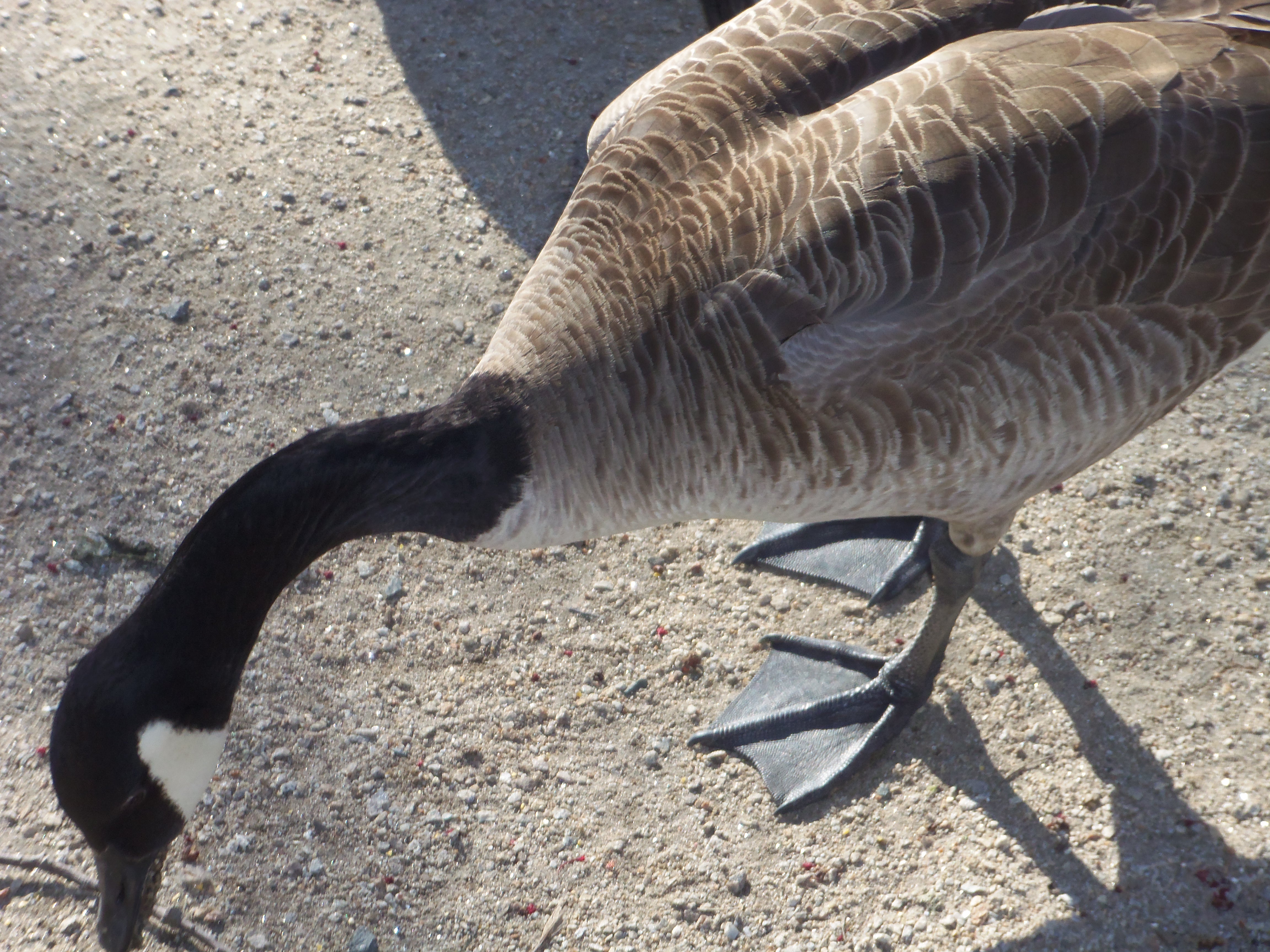
GOOSE NECK
You never know what we'll churn up in cleaning a stall
As I said at the time:
I suppose every writer will have had an image of what an acclaimed author would look like. Maybe the impression comes down through a tour of one of those great hushed houses of history – Longfellow or Twain or Whittier or James Whitcomb Riley come to mind. Hemingway’s Key West, as well. Or from the book jacket portraits or a magazine interview or critiques. Then there are the novels and movies themselves about literary struggle and the inevitable success. So much for the myth – and myth it is, with the superhuman vision and divine blessing accompanied by the Guide’s intervention and the visitors’ awe. And just where does each of us place ourselves in its manifestations?
My own expectations have changed greatly. When I set forth from college, I still envisioned an urban life – a stylish high-rise or a federal era townhouse or a loft in some variation of Greenwich Village – accompanied by a suitable social circle. Or life in a quaint college town, as an alternative. Within a few years, though, I was willing to swap for a rambling farmhouse in the mountains or on a lake, with my studio set out on a ridge. Shades of Kesey and Kerouac, of course. All the while, however, I was employed full-time and trying to work in serious writing in my off-hours – the evenings and weekends while my colleagues were raising children, picking up overtime (“OT”) to buy the house and car of their dreams, going off to professional ballgames and rock concerts. My frugal sabbatical year changed the vision, and publication of my first novel delivered a hardened sense of reality. Now I realized how many writers with a string of books to their credit still drew their main paycheck elsewhere. When they met for lunch, the discussion was likely centered on mortgages, medical problems, and mutual friends rather than literature. I could still hope that a breakout novel might free me from the newsroom, but there was no guarantee it would suffice. There had to be a crack in the wall, of course, someplace, if I could only find it and break through. None of this has lessened the compulsion to write; if anything, that has intensified as I turned away from the management track and, thanks to Newspaper Guild union membership, could afford to live a modest life away from the basic hours at the office. (No more sixty- and seventy-hour workweeks.)
Now I imagine it intensified in official retirement. At the moment, I do not sense another novel in the works – not with seven or eight still awaiting a publisher, in addition to the volumes of Quaker history and spirituality, the genealogies, and the poems. So there is plenty of revision to do, plus correspondence and submissions. Perhaps there will finally be time to attend conferences and workshops, to travel, to give readings. I see it continuing where I am, in Dover, where I’ve established friends and community. Maybe the loft of the barn will be finished into a year-round space, as I’ve longed dreamed, but even that’s not necessary; now that I can access it via attic stairs, it serves nicely as a three-session rustic retreat with room to spread out papers and manuscripts. Besides, as long as the children are gone, there’s a bit more room in the house.
What has changed is that successful author has become simply an active writer.
~*~
And to that let me add, Thank God for Smashwords! As well as WordPress!
Especially when you live in a climate like northern New England, you can find winter dragging on. Really dragging on. Never mind that by this time of year, we’re getting as much sunlight as we do in late October. The snow often remains deep, and the frost heaves on the country roads are just beginning.
Sometimes you can cheat, though. That’s where I try forcing bulbs to bloom indoors early. Daffodil, iris, hyacinth, especially, or paperwite, in a room where my elder daughter won’t be offended by its aroma. A personal thing, you know.
My wife, meanwhile, goes for the amaryllis, hopefully in time for Easter.
Playing with my entry-level Kodak digital camera, I’ll have to admit, has been a lot of fun. And I hope you’ve been enjoying the results I keep posting here at the Barn.
But I’d never consider myself a photographer, especially after working with some of the best in the news business. After watching them cope with so many of the nuances of light- and shutter-speed adjustments in the days of negatives and film-processing, I can’t shake the awareness that this digital stuff is just too easy. (Well, I’ve written about feeling the same way about desktop publishing in comparison to the old Linotype craftsmanship back I started my journalism career.)
Yes, the real photographers today are still meticulous about getting everything right. They use tripods, slow-speed exposure, lens adjustments for depth and focus, and so much more. Whether to Photoshop an image later is a whole other discussion.
Maybe it’s in homage to their high standards that I’ve chosen (with rare exceptions) to compose or crop my pictures in the camera itself, using only the 5x zoom. Yes, sometimes the camera “sees” quite differently than I do at the time – color and light, especially, but I’ve chosen to stick with that rather than trying to “correct” it later. Art and crafts, after all, function best within limitations. Yes, too, my work is taken “on the fly,” rather than waiting hours for perfect conditions, the way a real photographer would do.
The bottom line? I’m getting fond of the funky results, even if some of the work of my former colleagues is so incredibly exquisite it often brings tears to my eyes. Never, ever, forget the gap between what they’re doing and what the rest of us are attempting with our cellphones and cameras these days.
~*~
Now, for an update: Our latest round of Christmas gifts brought me a new camera, a huge improvement, I must add, and one my elder daughter, in giving it a test run, almost didn’t return. I’ll admit, the Olympus is a lot of fun, even as I’m just starting to play with it.
But I must also confess, it still doesn’t change my perspective on the Real Photographers and the rest of us. Humility, then, in the face of brilliance.
I have to admit I wince, looking back.
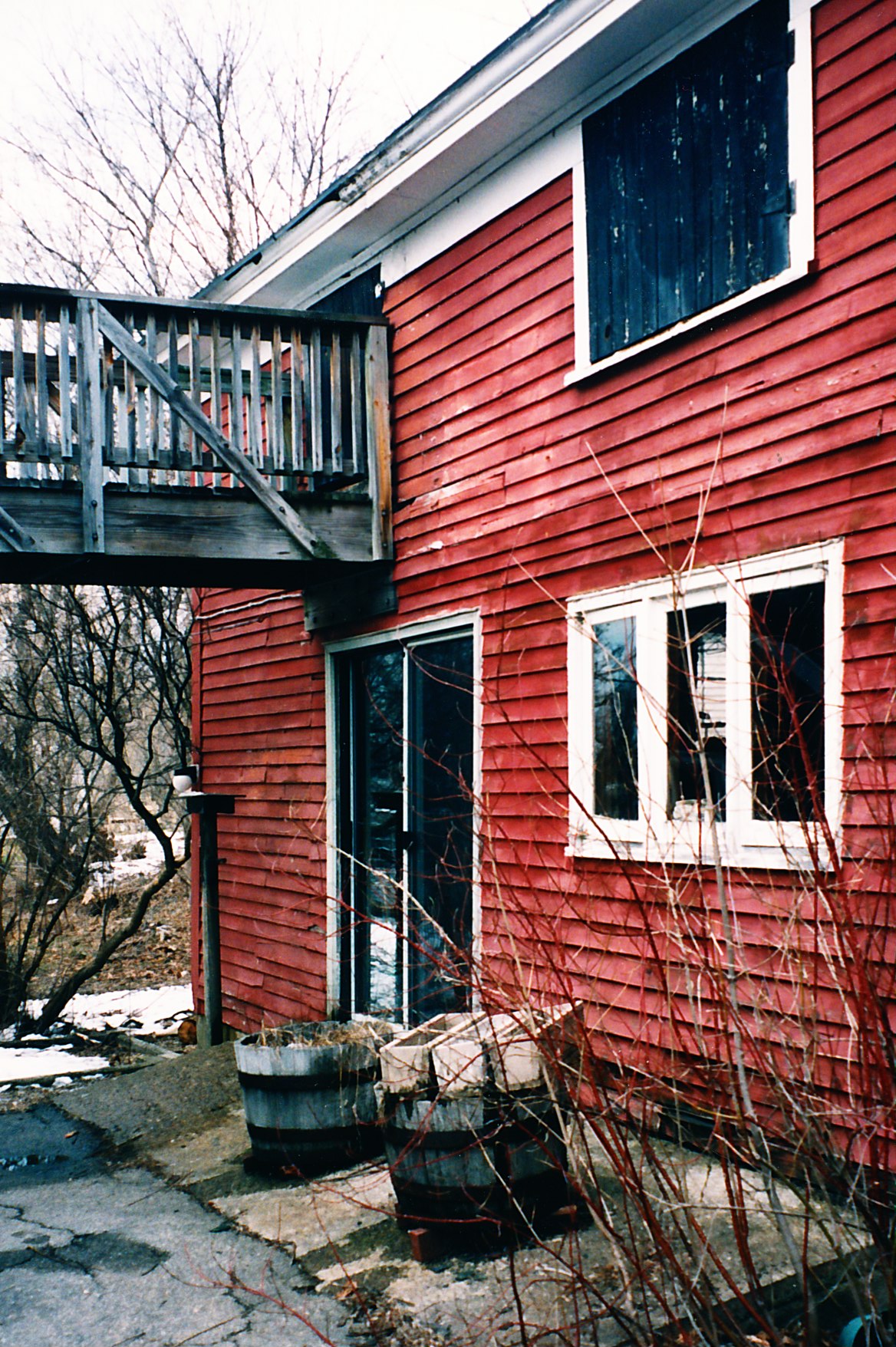

Originally it was three lines, but this is what I read:
Now hiring fried clam strips chicken tenders.
(Well, I always wondered about their scallops. But now we know who tenders those chickens. Or is it strips those clams?)
Yes, this definitely puts chicken tenders in a new category.
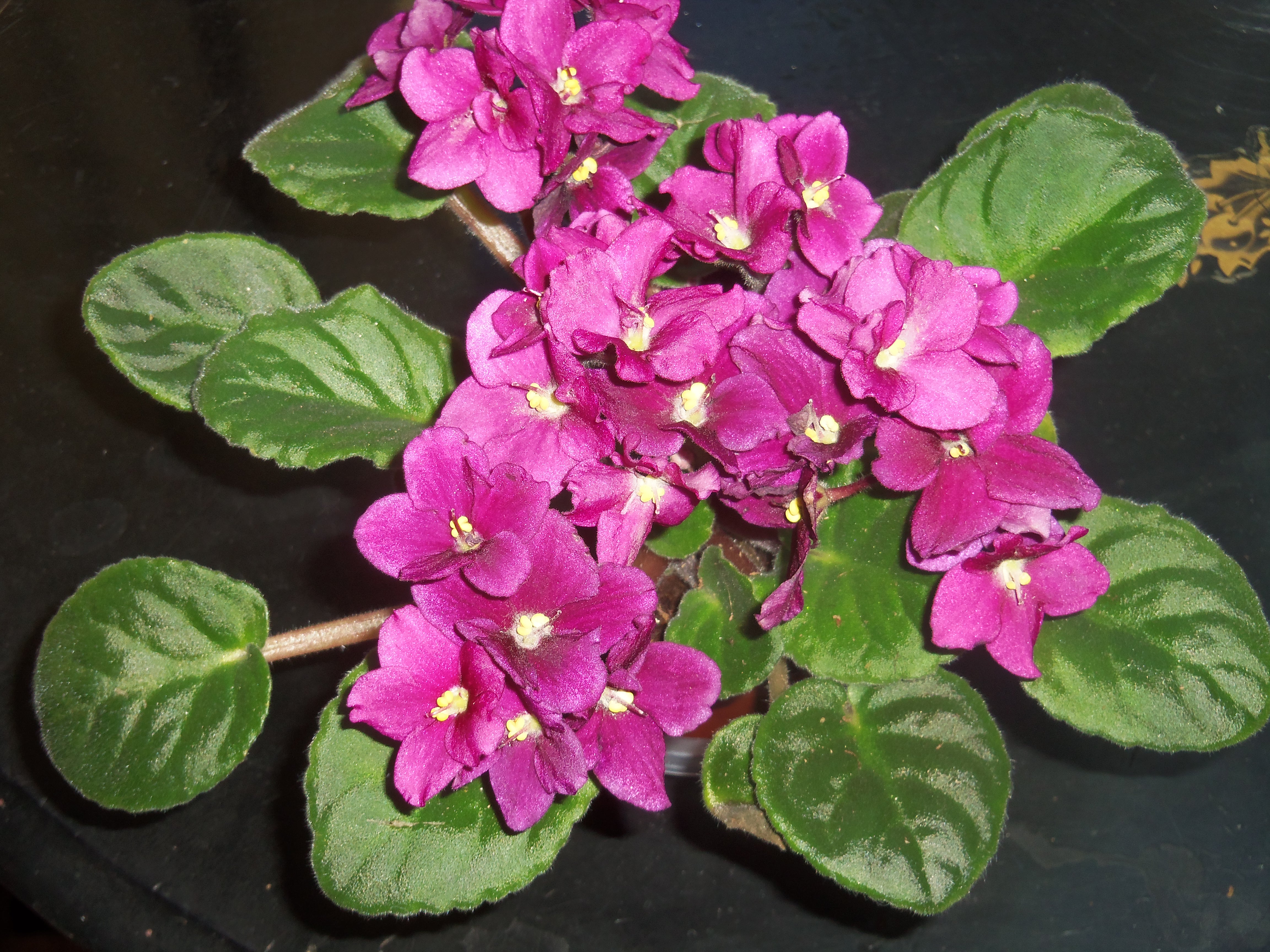
Can’t see an African violet in bloom without thinking of the calm reading room at the Lilly Library in Bloomington, Indiana. You had to be buzzed in from the museum displays, and the difference in air pressure was noticeable. And there, in the midst of some of the rarest books and broadsides ever printed, a librarian kept potted violets on the thick sills of its windows.
At the time, I was reading a lot of Samuel Johnson in the original. Pinpricks, coffee stains, and all.
As I noted at the time …
It remains work, except for that sense, in the practice of the art, of being alive. Aware. Totally there, at times. A balance, between inspiration breath within and exhalation the atmosphere without.
Yes, it would be wonderful if we were all so spiritually deep that pure worship and our daily work of gardening and cutting firewood would be sufficient. But from experience, we can see that too often what resulted from enforced exclusion of color and imagination from our lives leads, over time, to extinguishing personality our gifts, as a group, are diminished and rather than loving delight, a bitter boredom sets in bringing with it, the backbiting profits of Satan. Which brings us full circle!
I believe we are expected to bring something back to the world from our solitude. Expected to be visionaries and priests. But not, as some would claim, shaman not unless we want to stake our life on the healing power of the individual work. Perhaps, as was recognized in Zen some time ago, when we start writing and singing and painting from this experience, the spiritual movement is already past its zenith. Nonetheless we also know the power of the Zen-suffused works of painting, poetry, pottery, architecture, tea ceremony, various martial arts.
Tantra: as means of going deeper. Concentration. Vibrations. Here the importance of the work of art is not the surface itself but what it triggers within the psyche of the viewer. That is, the canvas we Westerners revere is not so important mere surface of paint. The reverberation within the viewer is, ultimately, the point of value. (All that the viewer brings to the work, or the use of religious icons in the Eastern Orthodox traditions.)
Art as discipline. Self-discipline. Form. Submission/obedience. Never ending practice.
Stravinsky’s “limitations make art.” Heifitz’s love of movies yet no time to attend.
Solitude. Prophecy. Communion. Community. Vision. Hard labor.
Magnetic center point of growth.
Simplicity/direction versus art/artifice.
A separate life, our art? Or integrated?
Having something to say to express. Versus blue smoke and mirrors. Spiritual man has no need to be clever. Distrust of tricks. (Difference between craftsmanship and trickster?) Rather, to stand naked. Irony? Sarcasm? Or loving concern for the good of all? Celebration! Creation/creating. Versus discovery. Contrived versus organic. Maybe everything is different when played on a blue guitar. Not at all!
Exploring the Mystery. Connections. Links.
Here I am, writing (a) fiction about (b) sex and drugs and other aspects of searching. Also, (c) poetry from my pre-Christian experience. Some of my fellowship would argue that’s not where I should be. Some have been praying for me through this period. The kind of work that could get me read out of Meeting. Is this acceptable activity for a free Gospel minister? All I can do is explore the Truth as it’s been given to me.
How, then, turning outward into community or the world? To be candid, including the desire to get laid, the poet’s quest, the troubadour. Yet most of us, as “artists,” are out of touch with our communities. This is a manifold argument, too complex and heated to explore here, except to say.
Perhaps we really do need to be actively intertwined with our community to write well. Not necessarily a community of fellow artists, either. Rather, an intimate fellowship. Speak honestly, critically. Now look at the faces on the magazine covers or workshop brochures. How few look like people you’d like to meet! How much anger, hatred, envy, darkness brooding comes through. How little serenity, how little joy. (Would I want any of them for neighbors? Even the ones whose work I admire?)
Yet through the act of writing, I’m also more aware of qualities in other workers. Interesting. One measure of admiration is seeing something in someone’s work and recognizing a quality I wish I had but know I don’t. So I read that with gratitude and admiration rather than jealousy. Fellow workers in the fields.
Think of the spontaneous and to our “trained” ears, trite verse composed and uttered at Ohio Yearly Meeting, that when shared received an immediate reaction: “I would like to see that included in the published Minutes” and it was, because it expressed a communal feeling.
In the ancient Shah’s court, the poet stood at one end, and the jester, at the other. When one moved, performed, the other remained absolutely motionless: the unspoken balance.
Somehow it’s happened.
I’ve lived in this house longer than anywhere else.
Along with this tickety boo woman.
As I said at the time …
And you think I’ve raised a lot of questions already? Just wait till I begin pondering my wife! I’d start there, if I thought I could make any sense of it without all of the previous history and experiences, good and not so good. Yes, she and I both believe it would have been much better if we’d met, say, 12 years earlier … We would have been younger and more flexible, in many ways, than we were when our lives enmeshed. Or did I mention there are many parts of this getting older I just don’t like, all in addition to balding? She’s a most remarkable woman, incredibly talented and frustrating, highly opinionated and conflicted, too. We’ll just have to see where this all goes, especially in the transitions we see coming ahead.
Enough! What I am simply trying to do here is look under or around the all-too-often light give-and-take you and I have enjoyed and known, this time to more clearly see and identify the “differences” you so early noted while I so blithely remained ignorant or in denial. Through everything, though, you remain very special, mysterious, and yes, magical, in my life.
After all of this, for the record, it’s not snowing here – yet. And I’m off to the office, again.
As one funeral director ended our call on a night when I was the obituary editor a few months ago, “Stay well” – or better yet, as I’d add, “Stay faithful to all you are and believe.”
Fondly and ever gratefully yours.

