FOR THE WIDER GOOD

Be wary of folks who seem to believe they’re better than the rest of us. (They’re likely to expect more than their share.)

Yes, respect superior skills and abilities, especially when they’re used for the wider good.

But see through the mask, as well.

(Oh, I hope I’m not wearing mine …)

HIGH STREET STYLE

On one corner.
On one corner.

Situated at the mouth of the Merrimack River, Newburyport, Massachusetts, has a historic harbor and charming brick downtown – one that echoes many others in New England, for that matter. Its residential neighborhoods are likewise filled with a range of fascinating details from many historic styles. But for me, the real glory is High Street, built at the height of the lucrative whale oil business. Interspersed among the dominant federal-style houses are some other fine examples. Here’s a sampling.

Colonial.
Colonial.


Lingering Georgian, without many of the distinctive details.


Greek Revival.
Greek Revival.


Greek Revival Temple, here a former church converted to private residence. It has an attached matching garage.


Second Empire.
Second Empire.


Gothic Revival.
Gothic Revival.


Georgian "Colonial" Revival
Georgian “Colonial” Revival

FEDERAL ROW

100_0939The federal style of architecture flourished from the 1780s into the 1820s, and you’d be hard-pressed to find a finer sampling of it than in Newburyport, Massachusetts – especially along High Street. Here are a few examples.

100_0942

100_0936

100_0945

100_0925

100_0921

100_0884


DIGGING OUT INTO SUMMER

Now that winter’s over, some of us are finding difficulty in trying to shift gears. Yes, the snow’s finally melted, but that’s not how I feel.

I suppose officially I’ve been enduring a mild depression, though for me that means mostly emotional numbness along with some simmering anger. Call it the blahs. No need to go into details here, other than to admit there were a few complicating elements of chronic negativity in the air.

What does matter is the feeling of being stuck. Molasses. Even impoverished, no matter the reality.

Where’s the joy, the sunlight, the ongoing pleasure?

There have been small steps. The daily indoor swimming, for one. Yes, it’s still a daily effort but also an emerging sense of accomplishment and meeting some goals. I’ve also been growing my hair out, which is going much slower than the first time around – don’t know if I’ll keep it this way, either, just wanted to revisit that side of my hippie past. Still, the seemingly terminal winter chilled much of my desire to play with my Christmas-gift camera, even if I did get some shots I’ll likely post next winter. (I just didn’t want to put any more snow and ice up on the Web. It was getting tedious.) And there’s been some overdue reading, including a bout of Philip Roth, pro and con.

The question, on this merry-go-round? Well, a cluster of questions, actually.

What’s really at the center? Where’s my core energy? What do I have to offer to others? To the world? How do I become a better person, more open to others? More compassionate, especially? In other words, how do I more fully engage the spiritual life before me?

Time to turn some soil, transplant sprouts, plant some seeds. Ideally, helping others – or sharing companionship in the process.

In other words, here we go ’round again.

THIS OLD (MEETING) HOUSE

Today commemorates the 247th anniversary of the erection of our meetinghouse. And to think, this was Dover Friends’ third house of worship, coming a little more than a century after the first Quaker convincements along the Cocheco River. The structure covers a lot of history, as we would see if we created timelines of those years – the entire life of our nation, for starters. Add to that science, the arts and leisure, religion, education, economics … the overlays become mind-boggling.

It’s hard for us to envision that day, with its swarm of activity, everyone seemingly knowing the tasks to be done. Cookbook writer Marcia Adams says it takes at least 100 to 150 men to raise an Amish barn, and then recites a menu that fed 175 men in the 1800s. Oxen and strong horses or mules would have been part of the scene, with pulleys and poles lifting the posts and beams into place. Many of the skills used have likely been lost to antiquity. A similar number of women would have busily arranged the accompanying feast, and children would have been assisting everywhere. Today, Jehovah’s Witnesses do something similar when they construct a new Kingdom Hall, which like the Amish barn or our meetinghouse, goes up in a single day.

Settling into worship, I once again regard our Quaker ancestors’ application of classical proportions, pleasing to the eye. The additional touches others have added across the years. Plumbing, heating, wiring, the classrooms upstairs and down. I also realize how much my own perception of the building has changed, now that I’ve become a New England homeowner. How much responsibility we carry for the upkeep of this legacy or how difficult it would be to replace what we have.

In the background, I hear an echo of an old Friend in Iowa, viewing the beautiful curly maple shutters in a meetinghouse about to be shipped by rail car to another part of the state. “It will be a good thing if they be not too proud of it,” she said, with a curious balance of humility and admiration. The advice, of course, extends to us, as well. The fact remains that Friends do not worship in a temple but a house, with all of its Biblical sense of extended family and even their domestic animals. Welcome to our house.

Barbara Sturrock and me on the "facing bench" inside. This is the room where we worship, seated in a "hollow square" facing each other.
Barbara Sturrock and me (years ago) on the “facing bench” inside. This is the room where we worship, seated in a “hollow square” facing each other.

SCN_0070

YET ANOTHER SCANDAL

Growing up, many of us were instructed that the Fourth Commandment, “Thou shalt not take the name of the LORD thy God in vain,” was a prohibition against using certain curse words, not all of them confined to four letters.

But that misses a much larger situation: those who arrogantly claim to know or do what God wants, even when that harms others or runs counter to Scripture.

Faithful action, from all I’ve seen, requires humility and compassion. As humans, any of us can be wrong or fail, especially when we mistake our egos for divine guidance.

Newer translations of Exodus 20:7, I sense, capture this difference by using “misuse” instead: “You shall not misuse the name of Yahweh your God, for Yahweh will not leave unpunished anyone who misuses his name” (New Jerusalem Bible). The New International version, meanwhile, finishes the line with “not hold anyone guiltless who misuses his name.”

Everett Fox, in his close-to-the-grain rendering, presents the passage this way: “You are not to take up the name of YHWH your God for emptiness, for YHWH will not clear him that takes up his name for emptiness.” In a footnote, Fox explains “take up … for emptiness” as “Use for a false purpose.”

I can’t help but think of this in light of the continuing news reports involving the cablevision series 19 Kids and Counting.

We’ve heard their lines of argument.

Now listen for the “will not leave unpunished” part of the commandment. Who’s standing up for the alleged victims? And where’s the true, full submission in place of arrogance? Let the tables turn rightly.

For now, the words fly. And fly. Can we ask how many are empty?

ALL THE FITNESS THAT FITS

Physical fitness has never been high on my list of priorities. Not the ones that actually find action. Yes, there have been stages where hatha yoga was a routine activity. And getting ready for mountain trails could be another.

Right after college, as I mentioned a while back, I did swim indoor laps through one winter – maybe two or three times a week.

So here I am, in retirement, getting back into the swimming – in part a consequence of elder daughter’s Christmas gift of a yearlong pass to the city’s indoor pool, and in part due to the urging of my physician.

It’s interesting watching the stages of adjustment here.

The first month, three laps – a mere three – were my limit of ability. And that was a fight, three times a week. A fight for air. A fight to get to the end of the lane. It was embarrassing.

Slowly, I’ve been edging up to 10 laps a day, five days a week. Sometimes more.

Each length of the pool has its own kind of stroke, a rotation of free-style, back, breast, and each side. It helps keeping count, too.

Since nine laps is a bit more than a quarter-mile, it’s adding up.

With my sinuses and allergies, breathing will always be a problem. At least I’m able to do half of my lengths without the nose clips now. (What a relief!)

One breakthrough came in sensing I was no longer fighting to get from one end to the other but instead engaging the resistance of the water to my advantage. That’s not the same as being at home in the water or even relaxed, but it does change the relationship.

And then there was the recognition of moments of ease – say in the glide pushing off from the end or easing off at the other, or the lift between strokes.

The other afternoon, pausing before returning to my car, I realized I was exhausted, as I always am after the laps. But there was also another sensation. I felt GOOD. As in satisfied.

Allelujah!

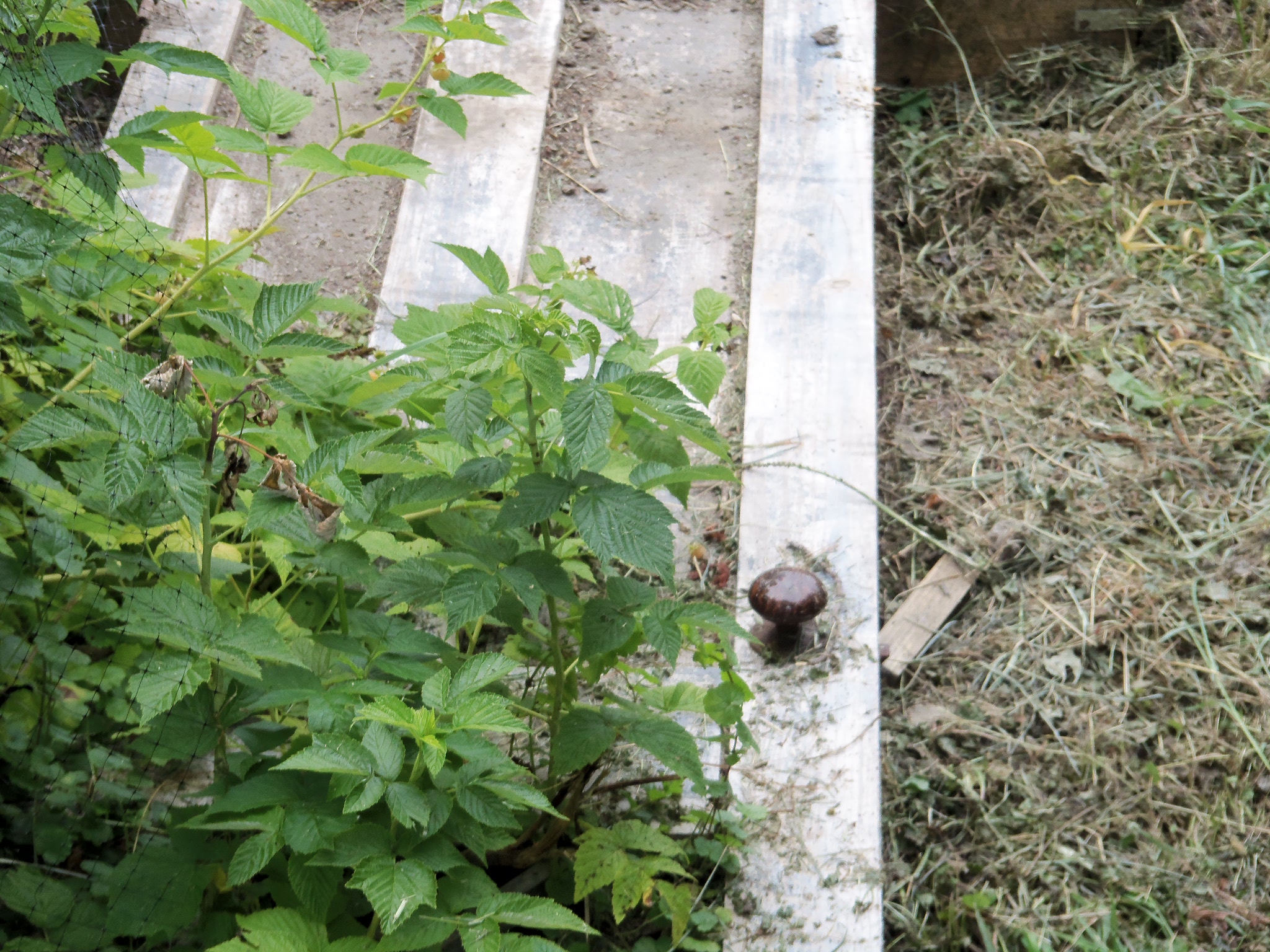
FRIENDLY WEEDS

“They’re weeds,” my wife says. In this case, adding, “We’ll let them fight it out.”

The idea of giving permission to certain uninvited plants to push out others no longer baffles me. Yes, I still retain the definition of a weed as being “nothing more than a flower out of place,” a concept first encountered back in my Boy Scout days; experience, however, has taught that not all weeds were created equal. Feisty agression and stamina, of course, are qualities separating a weed from domestic plants we’re actually attempting to nurture.

in reality, though, some weeds are easily seen as evil – poison ivy, for instance, or bindweed or the ground ivy that would easily overrun everything else we’re trying to raise. The gout weed invading from the neighbors’ side of the fence, despite its lovely flowers, is another. Add to that the thousands of maple sprouts we uproot each spring — they’re rather victims of landing in an area we’d rather not have return to forest quite yet.

My wife and I have had more than a few disagreements over what she considers weeds and what I happen to appreciate. Mint, for instance, with associations I have with hiking in the bluegrass region of Kentucky and pausing to drink cool spring water – although I’ve now come around to understand its ability to take over a bed if left unchecked. Wild strawberries, for another. In either instance, these are things one can eat. In other examples, we’ve actually transplanted some commonly defined weeds, such as Queen Anne’s lace, to corners of the yard that could use some blooming help. Others, such as the flowering forget-me-not and dame’s rocket, are largely encouraged to spread as they will, along with any number of self-seeding plants that technically are domestic but have in their own way run wild – sunflowers and calendula, especially.

These are lessons in discernment, tolerance, and discipline. Working a piece of ground for more than a few years gives exposure to plants one begins to recognize and automatically uproot while strolling through a patch, perhaps with an intention of eventually learning its name. Somewhere in my files is a Boston Globe page of common New England invasive plants – what I remember is that we have nearly all. What I didn’t expect when we moved to this plot was that I’d perceive a hierarchy of weeds. That is, ones I’ll tolerate one year, while focusing on more troublesome species. This year, for instance, I’ve been uprooting Virginia creeper as the marsh marigold flourishes. Last year, wild roses joined the list. Our wild asters, meanwhile, go largely unchecked.

One other consideration arises in the fact that we have pet rabbits. As a consequence, we see dandelion greens no longer as weeds but rather as a voraciously favored part of their cuisine, in season. (More recently, the greens have become part of our spring diet as well.) Tall grasses gone to seed at the edge of the yard likewise fit into their salad.

Fighting it out isn’t reserved solely for our friendly weeds. There are corners of our yard where a number of species are proliferating, leaving us uncertain which ones will predominate over time. Joe Pye weed in a Jerusalem artichoke patch, for instance. At the moment, I’m anticipating their succession of blossoms, a definite improvement over what was there when we moved in. It’s not the orderly beds I once envisioned, nor the Japanese gardens I’ve long admired, but it is a style I’ve come to appreciate and even encourage, in my own small way. It’s not quite survival of the fittest, except for “fittest at the table,” as food or as a floral cutting. Fight it out, then, with a referee.

ANOTHER REPRESENTATIVE SCANDAL

Even his own mother and sister are rejecting his claims about the money.

Frank Guinta, who represents half of New Hampshire in the U.S. House of Representatives, is in hot water over $355,000 an investigation by the Federal Election Commission has documented as campaign finance violations.

How serious is this? His explanations from 2010 on have been tangled, leading to Tuesday’s damning FEC report.

As for serious, the right-wing editorial page of the Union Leader, the statewide newspaper based in Manchester, came to the conclusion yesterday: “For the New Hampshire Republican Party, there also remains no choice. It must call for Guinta’s resignation and sever its ties.”

Quite simply, he “received illegal campaign contributions … for the purpose of stealing a Republican primary and a general election, then repeatedly lied to the people of New Hampshire to cover it up.”

In other words, it’s about maintaining the viability of democracy. Both sides of the aisle. And it’s about serving the voting public, regardless of their identity. Without that, we’re left with raw power — and its abuse.

The editorial emphasizes, “The party cannot stand by a politician who has revealed himself to be wholly unworthy of the public trust. Political parties are supposed to stand for ideals, not merely tribal connections. … The party can either lead by integrity or it can stand by Frank Guinta. It cannot do both.”

This is a small state where you often get to meet or question your public representatives. Even when you don’t agree with them, they’re not from another planet, as it can feel elsewhere.

In this case, Guinta serves from my House district. And it hurts.