UP NIMBLE HILL

Nimble Hill Road is quite a contrast to the congestion around the mall and big-box stores on the other side of the turnpike.

The town of Newington, just over the bridge on our way to Portsmouth, is easily misunderstood.

With a 2010 population of a mere 753, it often appears to be little more than the Spaulding Turnpike exits to the mall and big-box stores plus a few apartment complexes and a section of the Pease International Tradeport industrial park.

It also has a major electrical generation plant contributing heavily to the property tax base – a major, major factor for any municipality in New Hampshire as it addresses public finances.

The town is also surrounded on three sides by tidewater, including ocean docking on its eastern edge.

But the place was also severely impacted during the Cold War when the U.S. Air Force used eminent domain to acquire 4,255 acres to construct an air base (now turned into the industrial zone) mostly in Newington. The noise of bomber-sized jet planes taking off and landing did little to enhance the neighborhood as a place to live peacefully in those days – the frequent interruptions even forced the grade school to find a quieter setting. After all, its runway, now used by commercial, private, and National Guard flights, is among the longest in New England.

Given those factors, few people would have much incentive to take the Nimble Hill Road exit from the turnpike.

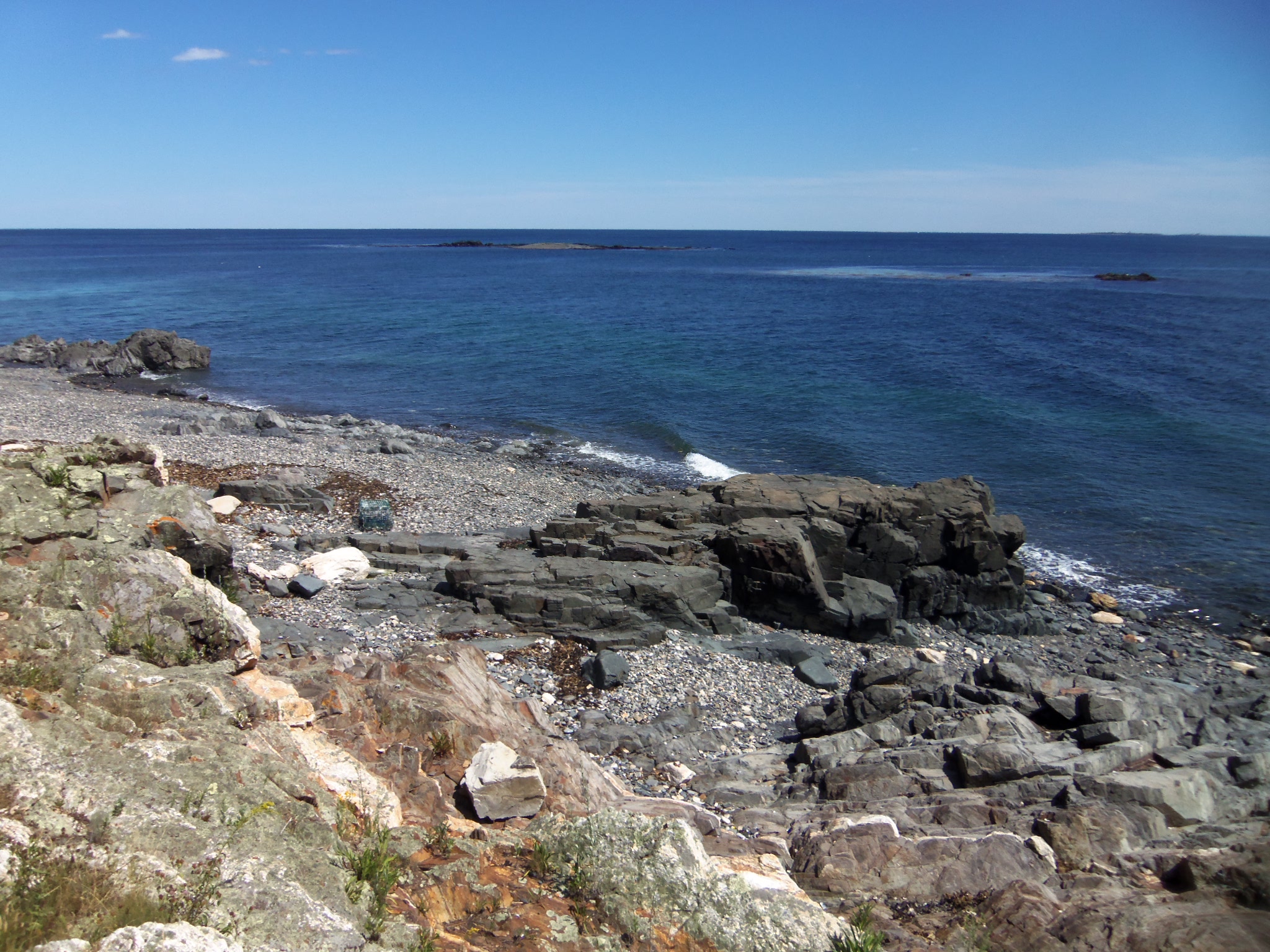
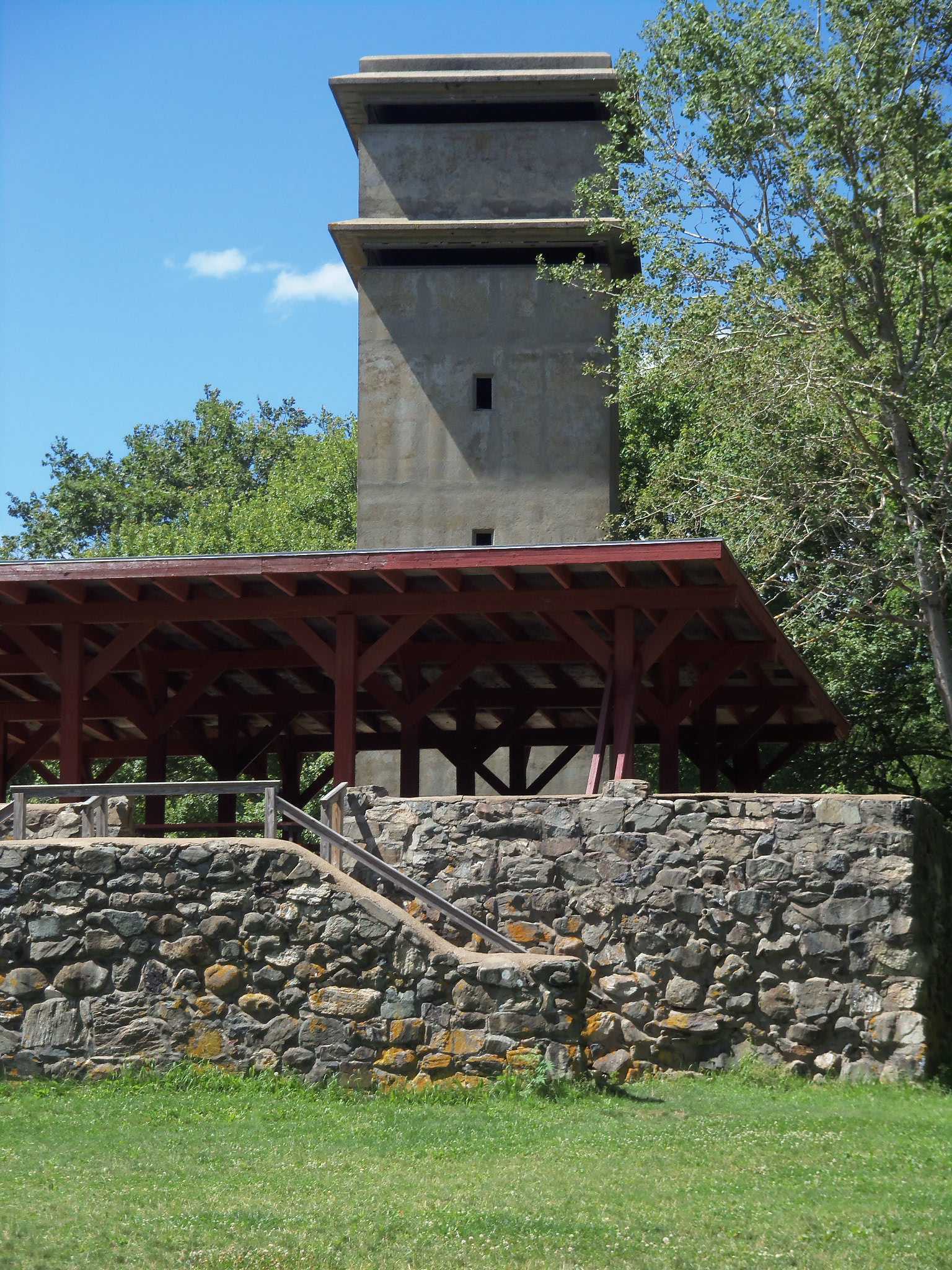
As it turns it, the road presents some classic New England just before culminating in a dead end near the runway. The historic district is a treasure.

Here’s a taste of what you’d see.

The 1725 parsonage includes a salt-box addition as an early renovation.
A cannon is part of the town monuments near the center of the Parade where the militia practiced. More Newington men served in the Siege of Louisburg (13) and War of 1812 (12) than in World War I. The background includes the well-funded library and 1712 meeting house, said to be the oldest in New Hampshire. (Hope they mean oldest in continuous use, since I know of two Quaker meetinghouses that are now private residences.)
The elementary school fell victim to loud noise from Air Force bombers.
The 1872 Old Town Hall once also housed the school.


ON THE ROAD AGAIN

We’ve entered vacation season (not that we Friends don’t travel widely throughout the year). While it also means that our attendance is likely to be down through the summer, it also means we’re likely to have visitors from, well, just about everywhere – people I expect we’ll welcome warmly.

It also means we’ll have the opportunity in our own travels to attend other Meetings, something I strongly encourage. For the truly adventurous, worshiping with Friends in the “other” streams can be stimulating and thought-provoking. A pastor? A choir? Hymnals? I always learn something. Last time, it was silent singing. Another time, that the Evangelical Friends can have just as much of a cat-herding condition as we do. Memories of a humorous exchange with the baritone sitting next to me in the choir.

There’s also a curiosity about us, too. “Why did you choose us?” – that, in the pastoral meeting style, rather than the unprogrammed worship a dozen miles away. I could have given any of a dozen reasons, but eventually got down to the part, “Besides, I have the book” – meaning a collection of historic essays and oral histories made before the village was flooded by a Corps of Engineers dam, and the new meetinghouse built out along the highway. And then, in the give-and-take of quick conversation, receiving that priceless look and gentle reply, “It’s all fiction.” As a writer, I had to laugh, knowing all too well how difficult it is to get any story right. The quick exchange followed by some suggestions of sites to poke about afterward, if I had time.

I come home with a renewed appreciation for every visitor who ventures through our doorway. With a little more flexibility in our own open worship. With my own additional chapter to a well-used book on the shelf behind me. And with an expanded awareness of our body as a Society of Friends.

YET ANOTHER PILE OF OBSOLESCENCE

Years ago my father gave me a small metal cabinet with 18 one-inch-deep plastic drawers, each 2.5-by-6 inches. It was intended to hold screws, nuts and bolts, and other small items for the household repair shop – but mine wound up in my studio, where it holds small items of the writer’s trade. An artist’s pencil sharpener, push pins, souvenir fossils and flakes of mica, fountain pen cartridges, staples (for the stapler), a measuring tape, clothespins, business cards, foreign coins, colorful paperclips in both small and large sizes.

The last item – three of the drawers, in fact – recently stopped me cold.

Not so long ago, or so it seemed, I started collecting them at the office as we went through the mail. My literary work at home included a hefty dose of correspondence – not just submissions, either – and the bright-color clips seemed a much brighter option than the usual shiny steel in circulation.

As I gazed on them this time, though, I started to wonder what I’ll really be doing with them. Submissions are all done online these days, as is most correspondence, even of the personal streak. Maybe I’ll clip materials together when offering a workshop here or there, but I’ll never go through my stash.

Add to that the manila envelopes and cardboard backing, the loud bursts of colorful folders and binders, even the three bottles of typewriter correction fluid.

Not too long ago I wanted more filing cabinets, but as elder daughter informs me, folks can’t even give those away these days. Besides, I stopped printing out manuscripts long ago. Talk about downsizing?

Makes me wonder what’s next to go. Not that I’m really comfortable with any of these changes.

CIVIC PRIDE

A former school.
A former school.
And another.
And another.
And yet another.
And yet another.

As municipalities emerged in the 19th century, the populace often took pride in the local identity – and this was reflected in the craftsmanship and details adorning their public buildings.

Dover's old waterworks.
Dover’s old waterworks.
Stained glass windows in what was the high school's chemistry lab. It's now a community center.
Stained glass windows in what was the high school’s chemistry lab. It’s now a community center.
Don't forget the central firehouse.
Don’t forget the central firehouse.

RADAR VIEW AND THE EXPERIENCE

Looking at the forecast a while back, trying to figure out whether we’d actually be hit by thunderstorms, I played with the radar view on the online map and saw – for the second or third time in as many days – some heavy activity in Upstate New York. The stuff that was headed our way.

Brought back some intense memories of my first summer after college, when I was living with two others in a neighborhood that fluctuated between Italian during the day and black ghetto at night. Much of it, I should add, has since been leveled, at least from what I see in the satellite photos of the neighborhood.

We lived on the second floor, with a porch on the front that overlooked the street as well as windows in the parlor and dining room that looked out into the foothills – or mountains down the valley, as this flatlander viewed them. Still, it seemed that most late afternoons that June included a dramatic thunderstorm rolling in. The mountains would disappear in swirling gray and then emerge in slices, at best, before becoming whole again. It was nothing like anything I’d viewed in the Midwest.

The radar, of course, doesn’t present that part of the experience. But for me, at the time, it was magical.

Don’t think I’ve ever viewed a thunderstorm quite the same since, either.


A SECLUDED COURTYARD, IF YOU WILL

I’ve already mentioned it, the patio-like space beside the barn where we grill and dine through the summer. The place we call the Smoking Garden.

Originally, I envisioned it as a haven for the kids’ grandmother to sit with her cigarettes, but she never used it. Preferred the porch to the barn, if anywhere.

We inherited the arrangement when we bought the place. A couple of thick maple branches had to be removed, since they were blocking any passage at chest level. But the round fiberglass table was already in place, with pea-gravel on the ground and three adjoining panels I’ve since cleared and planted.

Now we’ve added tiki torches and twinkling Christmas lights overhead, plus the hammock.

Pour me a glass, please. Turn up the music.

~*~

 let me praise the secluded outdoor corner
as part of an urban dwelling:
a patio or deck
(my last apartment lacked one)
the courtyard with a fountain
a large porch or gazebo
at the least, a place to sit
or, better yet, cook
any place close enough to the kitchen
with a degree of privacy and a view of something

Poem copyright 2015 by Jnana Hodson

CRACKLING IN OUR AIR

In blogging here, I’ve generally tried to steer clear of current events, as in political and economic news. Even my reflections on the weather have been, I hope, along a larger or more timeless horizon than mere day-to-day changes. Think of watching the grass grow.

But I do live in New Hampshire, and the campaigns for the November 8, 2016, presidential election are already generating daily front-page headlines here. Remember, that’s nearly a year-and-a-half away.

The primary is tentatively set for February 9, but that could move up, depending. We hate when it clashes with Christmas.

The point is, politics is already crackling in our air. How can I possibly avoid it?

BACK AND BACK AND BACK

As I said at the time …

You’re home once more, with many fresh laurels, I hope. On my end, the computer’s fixed and I’m dancing with some frequency again. At least between some heavy allergies. (Birch pollen at the moment; pine comes soon.)

I’m still in shock from Sam Hamill’s “To Eron on Her Thirty-Second Birthday” – she’s always a twelve-year-old tomboy in my memory! Impossible, it seems. And that was back when I was still married and my wife studied painting under John Bennett’s wife, Ellensburg, Washington … back in his Vagabond days. Small world. Am still trying to figure out when and where I heard Bill Stafford read. Yakima Valley College, I believe. Will the parts of my life ever come together?

Yes, you certainly are a moon-child, with all of the sign’s gentle humanity. Violet, a variant of purple, the cancer-sign’s color. Star, like the moon, of the moody night. Well-named, it seems! For whatever reason, more of my serious relationships have been with women born under the sign of Cancer than with any other; in fact, there have been no Gemini or Libra, which are supposed to be a natural fit for me. Go figure!

~*~

My, what ancient history this, too, has become!