WALKING THE DOG THROUGH THE ZOO

Humankind’s attraction to other animals – the baby ones, especially – is universal. What is it in our love of pets, for instance, that so opens us to our own existence?

What I see is a recognition of our animal nature and a desire to snuggle in amid our fellow critters rather than hover above them. Well, most of them – there are those we fear or detest. Even so …

As the German grandmother loves to quote, God has a big zoo.

And that includes us.

In a Heartbeat~*~

For a look at my animal kingdom poems, click here.

WHERE ARE THE VOLUNTEERS?

Some years ago, as I recall, a New York Times op-ed piece mentioned that America’s reliance on volunteer service in public affairs shifted after World War I. We started turning more and more to paid workers – the ones we now call professionals.

Maybe some of it had to do with the shift from a rural and small-town society to big city life. And some of it, no doubt, as a matter of working inflexible hours in factories. Nowadays I’d add the shrinkage of local ownership, with executives who were expected to participate in public service, and the necessity of two-income families to make ends meet in the face of lower pay levels.

It’s a complicated issue, one that can lead to long discussion – maybe even some wailing.

I see it most directly in my Quaker circles, which function on an expectation that everyone in the faith community will offer service to the whole. That is, serve on a committee. I’m among those who are arguing that model needs to change to adapt to current conditions. Of course, it’s a matter many other groups – secular and religious – are facing. But it’s refreshing to read others who are thinking along similar lines. For one presentation, click here.

Maybe you have some helpful suggestions to add.

FROM A SECLUDED SLIP BELOW THE LEVEE

I’ve already written of living along the Susquehanna and being introduced to the trail that wove through a wooded strip between the water and the freeway.

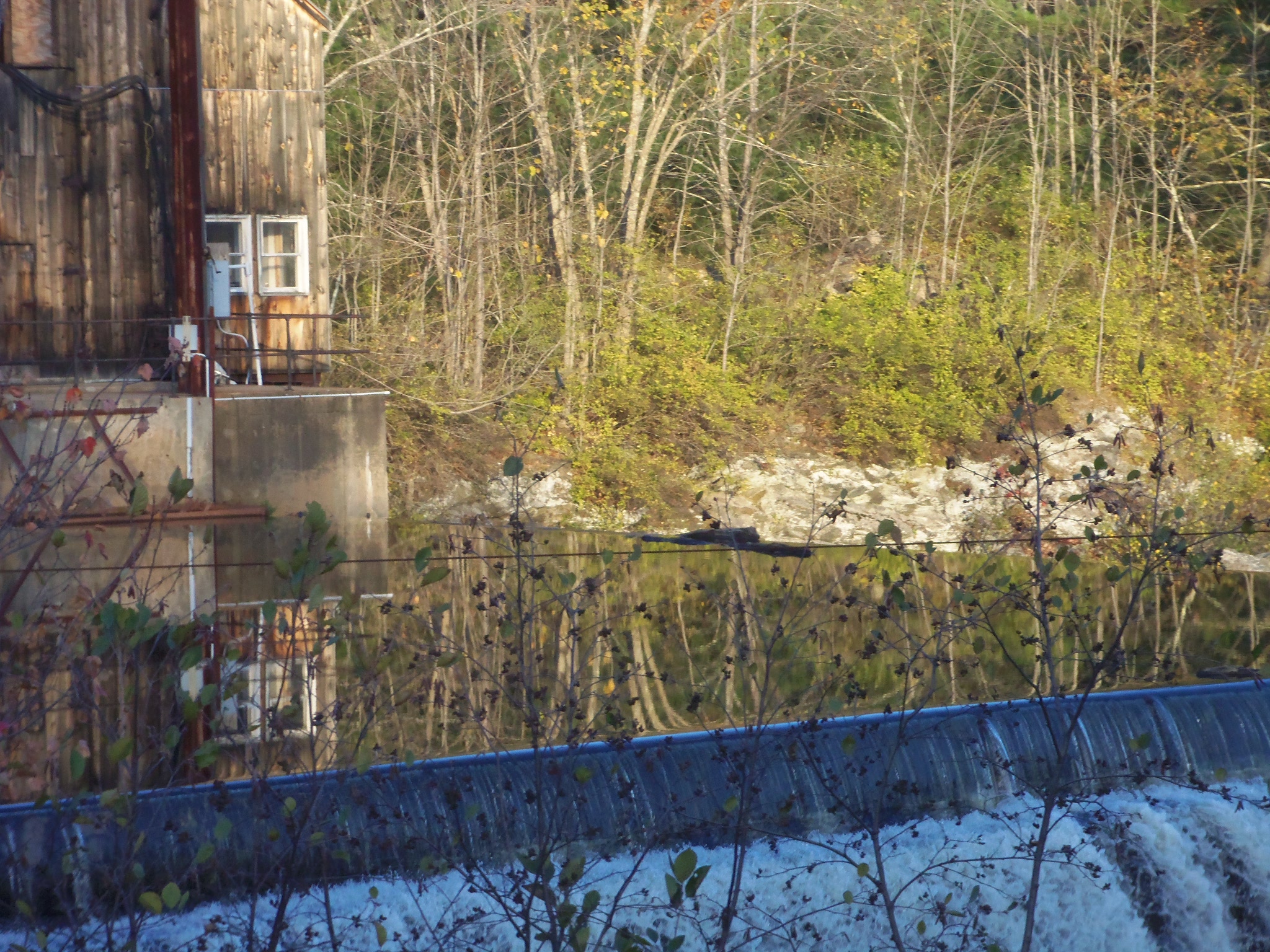
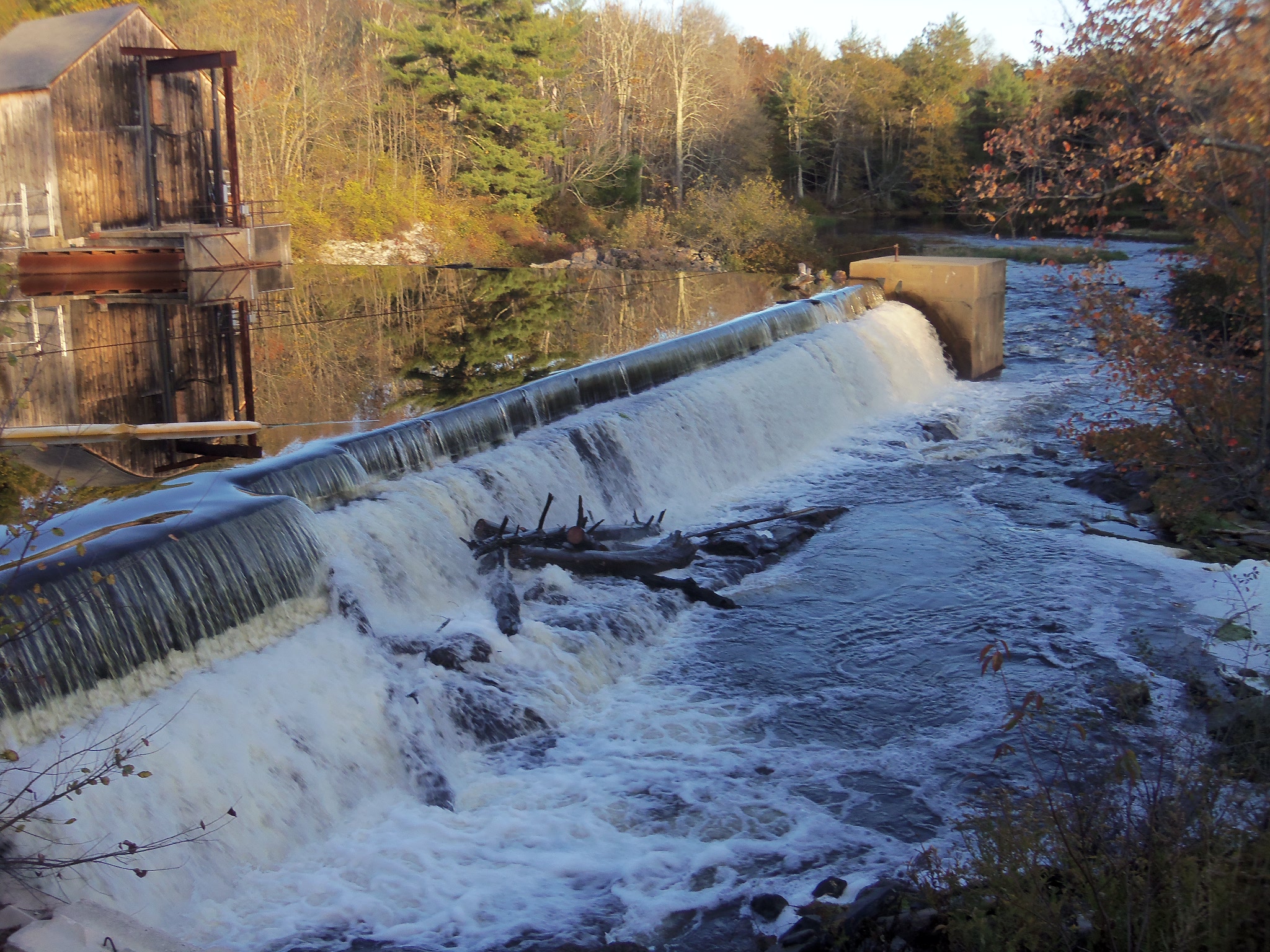
The site included a bridge that stood closed to vehicular traffic and a low dam that once diverted water to power cigar factories along the riverbanks. Only part of the foundations of the mills remained, along with some of the weir, which filled with moody water after a heavy rainfall.

At the time I was living in an inner-city neighborhood – Italian by day, Afro-American by night. The riverside provided a mostly private escape into nature.

It was enough, though, to give rise to poetry. Follow its seasons and flow in my new chapbook by clicking here.

Susquehanna 1

WALNUT ASSAULT

Among the mature trees surrounding our house are several black walnuts, including one that hangs over the 1928 one-story addition where our kitchen sits. Its open ceiling allows us to hang pots, pans, and stemware from the joists – shall we just call it a rustic look? – and I’ve sometimes considered installing a skylight or two.

On the other side of that roof, squirrels strip the nuts from the trees early in the season of a typical year. Watching their frantic action can be quite amusing, first as the leaves on a branch shake furiously and then as a squirrel bounds away with a large ball in its mouth.

A few nuts might actually survive into autumn. More likely, we find them buried the next spring as we prepare the new garden and sift compost. Having lived here for a decade-and-a-half, we think we know what to anticipate as the seasons advance.

Not this year, to our surprise, at least as far as the walnuts go.

Our awareness that something was amiss began in the middle of the night. Was somebody trying to break into the house?

The next morning, though, as wind whipped around the house, the noise really picked up. Imagine someone hitting the kitchen roof with a baseball bat. Repeatedly, sometimes three or four a minute. The whack was enough to make us jump.

I moved one car further from the house – we’d seen what large hail did to a friend’s pickup truck and the damage wasn’t pretty. These nuts were larger and heavier, after all, and ones that fell on that side of the roof were bouncing into the driveway.

The tree still has a few nuts left on the branches, but the racket has slowed considerably. Instead, some of the pathways leading to the garden are now covered in walnuts. As my wife observed, it’s like trying to walk on marbles.

Between that and the noise, it’s enough to drive anyone nuts.

Or squirrelly.

NOT JUST BETHLEHEM, THEN

In early postings about creating a suitable bibliography reflecting the hippie era, your comments suggested some of the best works are in the realm of non-fiction, in contrast to Tom Wolfe’s demand for the big novel. Yes, as we discussed, there are some good novels, the bulk of them proving that small is beautiful, in contrast to Wolfe’s standard.

My reflections the other day on Patti Smith’s memoir, Just Kids (2010), added the underground artistic scene in New York to the list and has me thinking just how different the hippie centers could be. Most of them, as I see it, eventually wound up around college campuses.

Some recent overviews of Joan Didion’s life work have brought her 1968 collection of essays, Slouching Towards Bethlehem, to mind. Without going into criticism that she concentrated on the scandalous rather than the broader scene, what is stirred in my revisiting her essays is how localized and fleeting the hippie outbreak could be as it developed.

Quite simply, what fit one neighborhood or time didn’t necessarily fit others.

Haight-Ashbury, after all, soon morphed into back-to-the-earth networks or even rural communes, along with other situations, leaving its name to linger as a legend.

I mention this simply as a reminder of how far we are from a clear understanding of this remarkable history, much less its continuing – and pervasive – streams of action.

As for the big novel? Maybe it’s still waiting to happen.

RUPERT IN THE FRAY

One of the more curious twists in recent American history is the impact of Rupert Murdoch, the Australian press baron who became an American citizen to keep control of his then fledgling television network.

Politically conservative, he’s nevertheless lowered the social standards of mass media. So much for values. He introduced dirty words to television and thus made them more acceptable in otherwise polite public discussion. His tabloid newspaper journalism, meanwhile, focused on celebrities and scandal in ways that have eroded serious political debate and public policy. That’s even without getting into his influence in Hollywood.

Put simply, we’re a less polite society than we were before his appearance. Or should we just say, cruder? That’s even before we get into the Fox News role as the Republican Party mouthpiece. Or all of the Murdoch-related phone-hacking uproar in Britain.

Now we might wonder how he’s reacting in private to the Donald’s emergence as the GOP presidential race leader. Someone from another television network, free from the Fox connection, all the same rising and then riding on the confrontational entertainment celebrity approach to political argument Murdoch’s nurtured.

Still, Murdoch’s far from the faceless corporate existence we see elsewhere. He’s passionate about print journalism, for one thing, and has been willing to take risks. But when people complain about “the media,” he’s still part of the mix, the one that almost always carries negative connotations. And, for the record, let’s point out it’s really corporate media, focused on big profits, rather than liberal.

FESTERING ETHNIC TENSIONS

With America’s reputation as a melting pot, it’s surprising to see how long some ethnic tensions continue – often for generations.

Sometimes it’s simply in the ways values differ – the extent to which cunning is admired or detested, for instance, or how the family is expected to behave at the dining table.

Sometimes these erupt in a marriage of spouses from different backgrounds.

And sometimes the conflicts arise in the Old World the family fled in the first place. Think of the Balkans or Middle East, for example.

In Big Inca Versus a New Pony Express Rider, these come to the fore in mysterious ways in the isolated community of yrUBbury, especially once Bill puts the Company agenda into motion.

That is, once Big Inca also begins moving mysteriously in the background, drawing and redrawing the battle lines, largely along ethnic identities.

It’s a wilder fantasy, after all, than Wall Street. To continue, just click here.

Inca 1