LOOKING IN THE MIRROR OF BIAS

Those of us on the liberal side of the social and political spectrum like to think of ourselves as open-minded, which means the times we exhibit flashes of bigotry can be especially painful.

First off, we’re blind to it. Not us, right? But we do.

And sometimes we do it to each other.

An example comes in the gold cross a young woman decided to wear. She’s nothing along the lines of a Fundamentalist or even a committed believer, but she liked her grandmother’s jewelry and this particular piece. Difficult, though, was her experience of the reactions from her fellow college students and faculty, starting with their physical motion a step backward. Literally.

There were words that would not dare be said to Jews or Muslims or ethnic groups of any stripe – and assumptions that simply did not fit. In fact, there’s a presumption of right-wing positions accompanying an ignorance of the social-justice dimensions of other Christian communities and their actions. And there’s nothing of the nuanced theology that moves beyond the cartoonish criticisms we often hear.

For the record, Quaker tradition long frowned on any jewelry whatsoever as superfluous and vain. But I’m not wearing the distinctive Plain clothing of Quaker history, either. Now how would they react to that?

QUADRILLE

four theatrical scenes

1

thirteen dancers hold large butterflies, frogs, crabs, and fish
on sticks over their heads

on our pallet, everyone laughing and tickling

Christmas lights adorn a swan the size of a sailboat on the beach
surrounded by jesters and an undertaker in top hat

and don’t giggle much

tents with electrical lighting have encamped under a bird feeder in the library

late-night lime daquiris, with or without salt

a dozen dresses covering light bulbs
hang from a leafy tree after sunset

2

the classic marble trio upholding the blue orb
stands in three stages of undress

regardless, stay cool

3

behind the eyes and ears of her diaphanous gown
she wears nothing

she still has eggshells behind the ears

Salome, with her slippery hands

4

a surgical theater of the dead Romans and Dutch masters
with a sole nun present and in prayer

while the child skateboards through the kitchen

elaborate mathematical equations in icing on the wedding cake
as animal tracks through a universe

Poem copyright 2016 by Jnana Hodson
To see the full set of
Partitas, click here.

LACKING

outwardly, my ways were simple
even austere or ascetic

my modest apparel
considered drab or seedy

still I was becoming

wary of self-negation
that denies the sweet
Bread of Life

*   *   *

when John from Tri-State Megabucks phoned the office
to report the latest week’s winning number, he asked
in an attempt to be friendly, if I had my ticket in hand

so I replied, “no, it’s against my religion” and then
sensed a stupefaction on his end of the line
there might be another position on this business

O Holy One
keep me tender in reaching across differences
where a holier-than-thou attitude accomplishes
nothing more than standing in faith

*   *   *

if there weren’t so much insufficiency all around

the homeless, unemployed, imprisoned,
impoverished, illiterate

quickly overwhelm
apart from family and spiritual community

within my neighborhood
how little I alone can do
against needs deeper
than those seen

where any sense of great inadequacy provokes
a hardening wall

while judging myself harshly
reminded
to my own consternation
of how I’m lacking

Poem copyright 2016 by Jnana Hodson
To see the full set, click here.


STREAMS OF SEEKING IN FAITH

In the historical overview that forms the core of Seekers Found: Atonement in Early Quaker Experience, Douglas Gwyn casts his net wider than the circles in northern England of the mid-1600s who formed what we’ve come to know as the Seekers. What he traces is a broad undercurrent of radical faith from the outbreak of the Protestant Reformation, an alternative Christianity in which an Indwelling Christ or Inward Light is to some degree acknowledged and which, in turn, leads to rejection of many or all outward sacraments or ritual in worship. It turns out to be far more widespread before the Quaker movement emerged and gave it distinctive voice than I’d previously seen.

Frankly, as he focuses on seminal figures who advanced this thinking, I’m amazed that his brain didn’t simply explode. Remember, he’s following not just one person but many, all with flashes of nuance and insight that begin to overlap and also to diverge. Nothing is static.

Of course, we face similar problems looking at the counterculture movements of our own time. Just who, for starters, would we look to as voices of hippie thought and lifestyle?

When Gwyn remarks that “many of the Seekers-turning-Quakers … started out as hyper-Puritans whose idealistic moral absolutism made them unbearable to themselves and to those around them,” I feel an echo in my own hippie passage. Many of us seemed to be doing something similar. My, could we be intense! (That, along with the emphasis on “mellow.” Go figure.)

It also has me wondering about the spiritual starting point for many of the teens and young adults in our wider society today. Just where would deep conversation and inner growth begin? What are the driving forces in their lives?

Historically, the focus on events in England also leaves me sensing a gap in awareness of the radical advances in New England from the 1630s, exemplified in Roger Williams, Anne Hutchinson, and Samuel Gorton, as they prefigured those in England in the 1640s. I’m not faulting Gwyn here, since his thesis is on the forerunners and emergence of the Quaker movement, but it is a topic ripe for exploration. Let me suggest John M. Barry’s Roger Williams and the Creation of the American Soul: Church, State, and the Birth of Liberty (Penguin, 2012) as a starting point. The New Englanders, quite simply, seem to be ahead of their Old World compatriots. Maybe the British court records present a fuller picture, but until the end of censorship in 1642, we seem to have little else to go on.

It’s all a potent mix. When the first Quakers came to New England, they found fertile ground.

What Quakers added, according to Gwyn, was a means of putting that seeking into action within daily lives. It was a matter he views as apocalypse. Somehow, our hippie adventures never got that far, which leads to a whole new set of considerations.

~*~

More of my own reflections on alternative Christianity are found at Religion Turned Upside Down. You’re welcome to take a look.
ALL IN THE WILD

Being mindful of what’s right in front of us can always be a challenge. Here are 10 new items from my end.

~*~

  1. On the highway north, somewhere just before Tamworth, comes that first big view of Mount Washington. This time of year the crest is an eagle span of ghostly white spreading atop powder-blue ranges below. Sometimes another band of clouds resembling mountains stretches above, and all three sit below a blue band of real sky. Knowing what’s coming up simply heightens the anticipation.
  2. Back home, my rounds of outdoor spring tasks soon lead to the Smoking Garden. The bags of leaves stacked beside the barn as windbreakers will need to be moved to the big compost bin, which needs to be emptied first (though it’s usually frozen tight this time of year). Then there’s the hammock to reassemble, after being stored in the loft. Strings of twinkle lights will go up overhead, too. I’ll often take lunch here, though my wife finds the air too chilly. Not too chilly, though, to prevent us from grilling on charcoal.
  3. Yes, warm enough to grill a beer-can chicken (insert open can into bird, which you cook upright). Excellent, despite the stiff wind.
  4. Seapoint in Maine (town-resident sticker required for parking, May 15 to September 30, where the road ends at the ocean): trek out to the spit between beaches, hunker down in clefts between rock and sunshine for needed respite against wind. The restless blue ocean opens before me. A tease, awaiting summer.
  5. Woodpecker still has a splitting headache.
  6. Income tax time runs up against my professional life as a journalist. How much I hate waiting till deadline to finish something. Get it off, quickly, if you can.
  7. Need to find ways to keep my lair from becoming a chamber of static energy. Ditto, the loft of the barn.
  8. The leadership we’re seeing is a bunch of cowardly brutes.
  9. Once again, the moral issue of civil disobedience comes to the fore. For the record, regarding the Transcendentalist Henry David, it’s THOR-oh, not Thor-OH. And Nixon lawyer Charles Colson came to advocate some powerful moral guidelines for civil disobedience, after he’d repented – that is, “turned” – while imprisoned.
  10. What turns you WILD? (As in dreams and passions, secrets and fetishes. Am I really so orderly or repressed at this point? I’m clueless, apart from anger.)

 ~*~

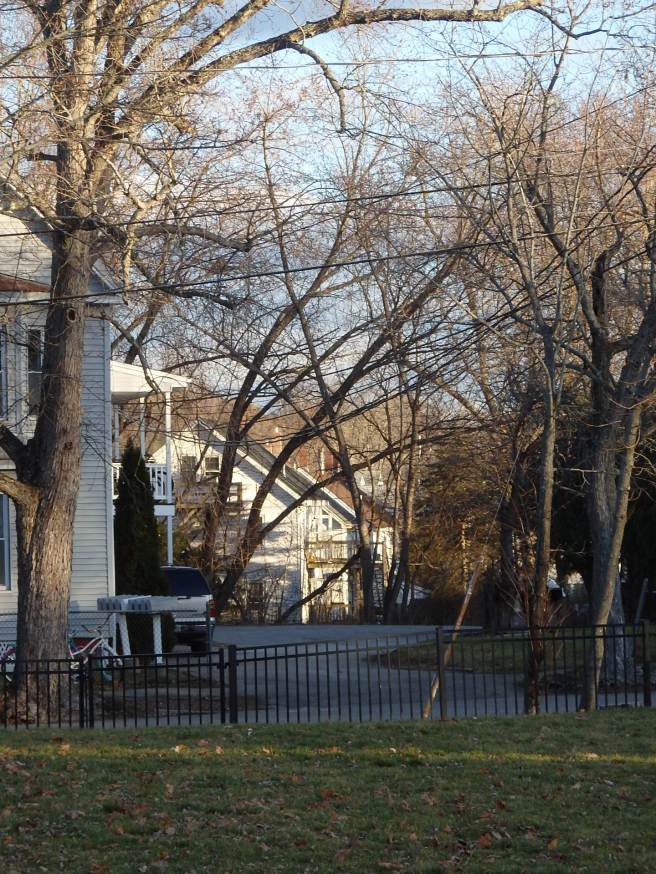
It's our end of Dover.
It’s our end of Dover.


EXODUS

If spring arrives without rain,
would the root and leaf open?

Seed that has not rotted
or satisfied hunger,

become buried too deep
or fallen on stone,

may reply, in its own season. And so,
in your own way, rise up and walk.

Keeping your heart tender,
within reason.

Poem copyright 2015 by Jnana Hodson
To see the full Green Repose collection,
click here.

IN A WHIMSICAL VEIN

Atop Fanueil Hall.
Atop Fanueil Hall.

The cricket design of the weather vane atop Faneuil Hall always delights me. Or, as I long wondered from the ground, could it be a grasshopper?

Whichever, the craftsman and the client both demonstrate a lasting sense of delight in the realms of nature. Turns out to be a cricket after all, crafted in 1742 by Deacon Shem Drowne, perhaps inspired by similar weather vanes on London’s Royal Exchange building. The cricket, by the way, is the only part of the historic building to remain unchanged from the 1742 original. A 1761 fire gutted merchant Peter Faneuil’s original structure, and in 1805 architect Charles Bulfinch designed additions that doubled the width and length of the building while keeping the basic style to produce what we see today.

Boston is a rich and varied destination – the Hub of New England, or the Universe, as they used to say. Living a little more than an hour to the north, we’re well within its orb.

ANOTHER OF THOSE OLD WATERTOWN FAMILIES

Lately, I’ve been running into references to Saltonstalls. It’s an old prominent New England family, admittedly, but I had never really connected the dots.

One is an imposing Colonial saltbox house in Haverhill, Massachusetts, with 1712 emblazed on the central chimney. It sits at One Saltonstall Square.

Another dot to the family came in a reference to two (Robert and Sir Richard) as purchasers in the charter for provincial New Hampshire, perhaps buying out the first settlers of Dover. “Probably in 1633,” as the account goes.

Then there’s the principled judge (Nathaniel) who resigned in 1692 in disgust from the direction the Salem witch trials were taking.

That stirred memories of hearing of a U.S. senator from Massachusetts (Leverett II) or a family that owned a small daily newspaper north of Boston.

Now I see I’d taken photos of the statue of Sir Richard Saltonstall, a founder of Watertown in 1630. (Since Watertown is where my choir rehearses weekly, it’s on my radar.)

While Sir Richard returned to London two years later, two of his sons remained and established what became a Boston Brahmin family, one that produced at least one graduate of Harvard in every generation, plus governors of Massachusetts and Connecticut. Before leaving the New World, Sir Richard was among those granted a patent of Connecticut – and back in Europe he had his portrait painted by Rembrandt.

I suppose that’s enough for now. The full story could run on for volumes.

But it’s not the kind of world I grew up in, not out in the Midwest.

I’m left wondering if old establishment families like this functioned as close-knit networks or even as tribes and how much individual deviation was permitted. Who were the chiefs and elders, especially? What was the role of religion or political affiliation?

Maybe that would be an entirely different kind of history than we’re accustomed to seeing. What are your thoughts?

REAL DEVELOPMENTS IN THE YEARS SINCE I DRAFTED THAT NOVEL

The years since I drafted Big Inca versus a New Pony Express Rider have brought significant, often dramatic, restoration and redevelopment to long neglected historic mills like the ones at the heart of my novel.

One impetus for the renewal appeared in a handful of towns in Maine, where credit-card giant MBNA transformed old mills into attractive call centers that in turn revitalized local economies. Even after being shut down in a later buyout, the benefits linger, and other developers had concrete models to follow.

Visionary entrepreneurs like the late Joseph Sawtelle here in New Hampshire as well as nonprofit agencies or local government-backed councils entered the picture, making mills in other towns emerge as small-business incubators or readily adaptable buildings for new arrivals, especially enterprises growing rapidly.

And, if the location’s right, they can attract artists of all stripes – painters, sculptors, printers, dancers, musicians, craftsmen, bakers and caterers – as an affordable alternative with natural light and high ceilings. (We love the annual studio tours and open houses in the mills in one nearby town.)

Sometimes the downtown locations lend themselves to conversion into residential condos as well. And then there are universities, health-care organizations, and museums that move in for convenience. (Well, one mill in downtown Manchester, New Hampshire, does have a helicopter pad on the roof.)

In other words, there are some fascinating case studies just about everywhere I turn.  But I still haven’t found any where the top of the tower is turned into a tiny penthouse, not the way Bill did at one point in the novel. I’m still quite fond of that touch.

RIDGES AND RIVERS

Someday I’ll learn the identities of clouds. Buy the chart, memorize their qualities and forms, and then watch the flowing sky afresh. This is, after all, yet another strand of mapping.

From childhood, I’ve absorbed maps. Mind travel. Concepts augmented by photographs and writings, which have often furnished a sense a such familiarity that when I arrive in a new place, strangers stop me to ask directions, even on my inaugural visit. Foliage, waters, buildings, and people fill in the lines of his maps as they stretch toward some new border. But this move, with its desert, has been an exception. Nothing’s been predictable or particularly comforting. Besides, I experience a vague agitation when venturing to the edge of my known universe. If possible, when visiting new locale, I push out a few miles further, to determine what’s over the next ridge or river — or at least down the road — as if to anchor myself within some context, rather than remain at its periphery. Curiously, I feel more secure when placing that border at some shoreline or rise — countryside, at the least — rather than within seemingly endless tracts of housing, factories, stores, and pavement. Even a round earth has places where monsters may lurk. Gaps exist in any map. Consider the clouds. Everything is, after all, changing. Even that rock, where Kokopelli is sitting.

For more insights from the American Far West and Kokopelli, click here.