FARM-FRESH POTENTIAL

Carmichael’s, the restaurant her family owns in my new novel, has me looking more closely at others.

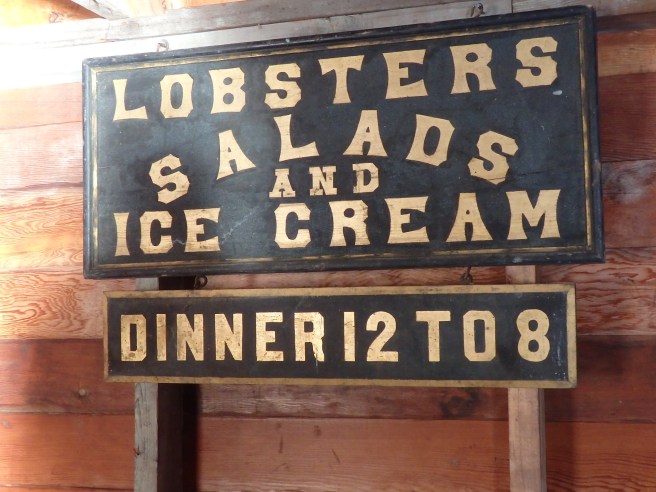
The daily soup special at the family restaurant in my new novel, What’s Left, was one way to introduce the now widely touted practice of local sourcing, perhaps with a hint of organic gardening. Here it begins when Cassia’s great-grandmother and her sister make rounds of nearby farms, gardens, and orchards in search of fresh produce, eggs and dairy, and perhaps meat. (I never get quite that specific, but a quick brushstroke will do.) The action picks up with her parents’ generation and its back-to-the earth movement – one in which I suspect some bartering might have occurred. Used cooking oil, for instance, has found value as motor fuel for some farmers.

Continue reading “FARM-FRESH POTENTIAL”

TEN THINGS I LIKE ABOUT JUNE

  1. Birthdays … my wife’s and then elder daughter’s.
  2. Natural light lasts long into the evening and returns again early in the morning.
  3. Warmth! Open windows!
  4.  Nobody gives you funny looks for ordering ice cream.
  5. We get serious about charcoal grilling.
  6. Ox-eye daisies blaze forth.
  7. I don my Hawaiian shirts for more than contradances.
  8. Mountain laurel bloom.
  9. Bare skin all through town the sidewalks fill with people once again.
  10. I can put my snow shovels away.

~*~

What do you like about June?

Sounds like a balanced meal to me. Damariscotta, Maine.


RETURNING TO THOSE DAILY LAPS, TOO

Getting back into swimming laps – however gingerly – feels so good. As did the last few choir sessions before the ensemble took its break for the summer.

I’m still not up to my usual half-mile – 18 laps (or 36 lengths) in the indoor pool – but I am feeling secure as long as I don’t overdo it, and I am pretty much back in the water daily.

One thing I became aware of after the stent was inserted was just how close I’d come to having a heart attack in the previous months. I’d felt the breathing problem in the pool, for one thing, and also while carrying a three-year-old down off Mount Agamenticus in November. Am sure glad the event didn’t hit on either of those, I’d hate to traumatize either a kid or the lifeguards.

About a month ago, when I finally got the OK to return to the pool, I realized how much had passed since I last saw the guards or some of my fellow swimmers. Some are coming up on high school graduation, for one thing – and the banter is always a lift.

Even when one tells me that for the kind of obstruction I was having, had it turned into a heart attack, the odds weren’t in my favor. As she said, nine out of ten never make it to the hospital. And as I’ve been saying, I’m feeling very blessed.

CHARTING THEIR COURSE

As Cassia reconstructs the household when her father-to-be first shows up, she sees multiple currents in motion.

As she observed in an earlier version of my new novel, What’s Left:

Dimitri’s primarily about family duty. Too many have worked too hard to get us here. For Barney, that’s steam and splatter and sudsy sinks. Tito and Manoula are essentially on hold, preparing for their own futures – college for her, law school for him.

~*~

In another version of the story, Tito and Manoula’s futures could have been thwarted at this point. Dimitri may have required their help in the restaurant and real estate ventures.

Something similar happened with my grandfather, whose classroom education ended at elementary school because he was needed on the farm. Later, though, he did learn the plumbing trade from his two older brothers.

With Cassia’s family, though, they were agreed on a plan. They all worked together to assure it.

What’s your No. 1 goal these days? What support do you need? How are you arranging it?

~*~

Ring dancing at Greek Fest, New Orleans. (Photo by Infrogmation via Wikimedia Commons.)

Cassia’s roots included inspiration like this.

TWO TWEAKS IN THE DESIGN

As I moved from the Advance Reading Copy to the First Edition of my new novel, I decided to make two tweaks in the cover design.

The photo itself remains unchanged. It’s the typeface that altered.

When I lined the original cover up beside the covers for the related books in the cycle of Cassia’s discoveries, I realized it’s serif typeface was out of step with the sans serif on the other three volumes. As much as I love serifs (they have more character, for one thing), I also saw that a sans would have more punch on the thumbnail size used to display most ebooks. OK, so that changed.

Again, as I considered the four books together, I saw something else happening. The next book in line, Daffodil Uprising, features a prominent daffodil bloom in a bright yellow antique-style drawing. The contrast between its artwork and the photo on What’s Left works, I think, but the white title somehow felt out of step.

That’s when the thought flashed, “You idiot! It has to be yellow! Like the yolk! Like the daffodil, too!”

Here’s the progression. First, the ARC:

What’s Left

Then the sans serif:

And finally color:

What’s Left

So here you have it. Any reactions?


AND NOW FOR THE FIRST EDITION

The cardio incident in January threw off my planned marketing campaign to support the Advanced Reading Copy availability of my new novel, What’s Left, but maybe that’s a good thing.

Instead, “laying low” meant I had time to read all of the frothy Richard Avedon bio I’d been given at Christmas, and that had me rethinking the particulars of the life of a photographer. Remember, in the novel, Cassia’s father is a famed photographer, though nothing like Dick. The negatives and glossy prints her Baba leaves behind establish the foundation for much of her own recovery and growth.

At the time, I was already planning to revise the four novels that form the backstory to What’s Left – my Hippie Trails series – but had no intention of becoming as immersed in that project as I did. Well, it’s one of the big reasons I’ve been AWOL or missing in action the past five months. I’ll leave that for an upcoming post.

One critical reaction to the new novel, however, sent me back through the story to make some crucial changes.

The Advance Reading Copy used no quotation marks. Not one. Since the story is being told by Cassia, who’s to say she’s quoting others exactly or is instead paraphrasing what she remembers hearing them say? That is, filtering them into her own voice? The quotation-mark-free approach, I hoped, would present the tale as her own rich interior experience, but it was unconventional and apparently a challenge for some readers to follow. Since engaging everyone in this story is far more important to me than my personal pursuit of a literary technique, I yielded in preparing the first edition. Yes, I have to admit, judiciously adding quotation marks here and there does clarify the flow.

The revision also had me simplifying much of the grammar and syntax. As much as I love long, complex sentences, not everyone is comfortable reading, say 17th century literature. Besides, this novel is being told by Cassia, not me.

Well, this official version, the first edition, is now available. I think the tweaks make a huge difference, and I’m grateful for those who’ve given me feedback.

Hope you enjoy it.

COUSINS WHO COUNT

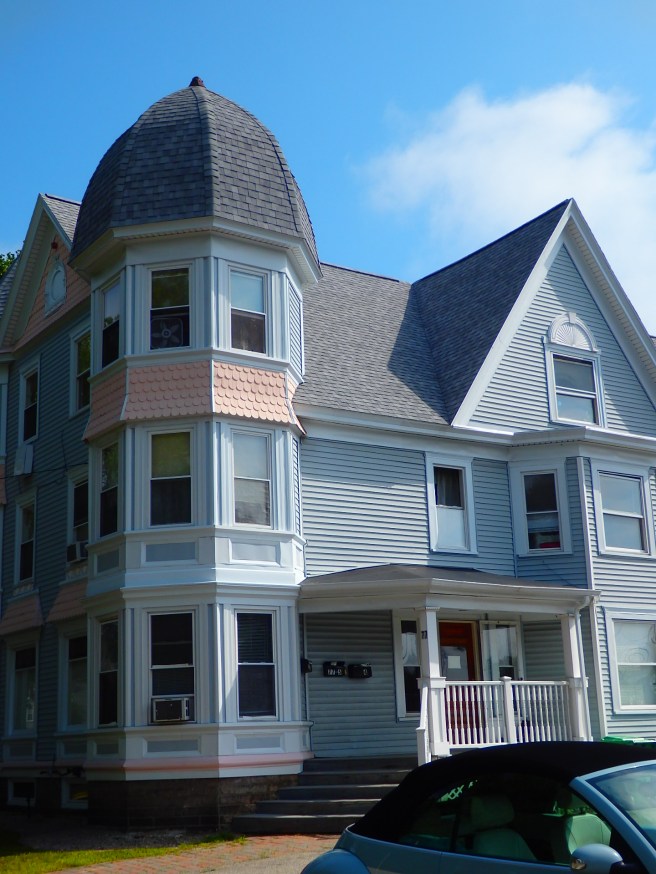
A large Queen Anne-style house with a distinctive witch’s hat tower something like this is the headquarters for Cassia’s extended family in my new novel, What’s Left. If only this one were pink, like hers.

Could I have directed my new novel, What’s Left, to move straight from her loss at age 11 into her subsequent growth within her close-knit circle of cousins?

Since so much of their group identity depends on the family restaurant where they all work at some point in their youth and the big Victorian house where they gather and many of them still live, this would nevertheless require some hints of the history of their being where they are – and who they are – pretty close to the top of the story anyway, plus far more detail about the cousins and their parents than I now need to engage in the opening chapters.

As a writer, I’m left wondering how I’d ever introduce all of this at once and still have you readers following the narrative. A related challenge would be any attempt to work our way back through the family history, like an archaeologist, layer by layer, rather than jumping down to the trunk of her family in the New World and moving upward from there. There are many sound reasons for presenting a history chronologically, after all. Especially when past events help us more clearly understand where we are and who we are now.

~*~

Well, you can check out the book as it stands.

The story, of course, turns toward the crucial decisions they’ll face. Will Cassia and her cousins ever live up to their family’s resourceful and romantic roots? Will they be able to take their legacy to greater heights?

What would you do in their place, given their resources? Stay and work in the restaurant and real estate? Start something of your own while living close at hand? Or head off for careers and family elsewhere?

BIG DIETARY CHANGES, OH, BOY …

Yeah, it seems everyone these days is on some kind of restricted diet. Just try throwing a party or inviting others over for dinner, you soon learn all about it.

My cardio incident has had me essentially eliminating eggs, butter, and cheese from what I eat – three glorious mainstays that now get in only as gingerly applied additives or, for the cheese, in low-fat and fat-free versions. And it’s red meat no more than once a week. Look up the Healthy Heart stuff if you want. I’m trying to be stricter than that, at least for a while.

Simply reading the labels on most prepared products is a horror story. Do you know how many bad fats show up in cookies or doughnuts or, oh my, just about everything snack like? And forget fast food along the highway. No, I’m not stopping at McDonald’s for a salad and having to inhale all that lovely fry-vat grease in the air. At least around the corner there’s sushi. Or a bagel with jam or jelly, no cream cheese, though lox might pass the test. You get the point.

My cholesterol levels weren’t bad before, but since the stent went in, my medical professionals want them even lower. Well, I pushed the profile down sharply in five or six weeks. It can be done.

I’m considering this as perpetual Lent of a Greek Orthodox sort, with a few tradeoffs like red wine thrown in. OK, mine’s not really that strict – I’m not vegan – but I am applying many of the lessons we gleaned from observing a strict Advent back in ’16.

Among the negative tradeoffs is caffeine, which my primary care physician wants cut down to a cup a day, max. I’m there now but do miss the second big mug (café au lait style, heavily laced with one-percent milk and sugar) as well as the midafternoon pickup. A substitute instant brew found at the natural foods store is surprisingly satisfying, apart from its lack of kick. The lingering question is do I shift to decaf, which strikes me like cheating but cuts out the caffeine? Any suggestions?

Well, the caffeine reduction is essential if I’m to address another issue. Will spare you the details, for now. Maybe forever.

At least the garden’s kicking in. A sorrel sauce on the asparagus almost has me forgetting mayonnaise, melted butter, or a runny egg or two atop the spears. Do I cheat with the fresh whipped cream when the strawberries hit in a few weeks? I’m already planning on that low-fat mayo when the tomatoes finally flood us in August – you don’t need the bacon to create a great sandwich, especially if you use basil instead of lettuce.

I hate to sound grumpy. This getting older does have its downsides, doesn’t it?

TEN HOT HISPANIC MUSICIANS

According to one amiga and her buds:

  1. Dulce Marcia.
  2. Jencarlos Canela.
  3. Rolando Polo, pop-opera tenor.
  4. Moneda Dura.
  5. Balvin.
  6. Willy Chirino.
  7. Shakira. (And here I’m trying to keep this to performers new to the rest of us. So be it.)
  8. Manolito Simonet.
  9. Gilberto Santa Rosa.
  10. Myriam Herandez.

Admittedly, this list is biased in a Cuban direction. But it’s a start.

~*~

Digame más. I’m all ears. Any other world music talent we should know about?

A whimsical fence. Warren, Maine.

Of course, this is totally unrelated to the theme. Just another thing on my mind.

WHEN THREE’S NOT A CROWD

For me, her uncle Tito originates as a problematic character. I have no idea what prompted me to create him nearly five decades ago in the closing chapter of my first published novel, but he does change the dynamic of the family that Cassia’s father-to-be joins.

Having five siblings rather than four avoids the symmetry of two brothers and two sisters, for one thing, and as an odd number, five pushes us away from possible gridlock. But advancing the story another generation, as I do in my new novel, What’s Left, means we’ll have more characters to follow, once we add spouses and children.

Without him, my new novel would be tighter, since all of Cassia’s close cousins would come from Barney and Pia. Well, maybe Dimitri and/or Nita would have to be recast, too, losing some of the story’s diversity and depth. The plot itself would likely pivot on the sibling rivalry of Dimitri and Barney, and I’m not sure we’d have the impetus for expanding the family enterprise that I, for one, find exciting. The status quo could continue, with the story’s focus on day to day interactions more than transformation of the larger community. The mantle of patriarch, too, would fall differently.

Continue reading “WHEN THREE’S NOT A CROWD”