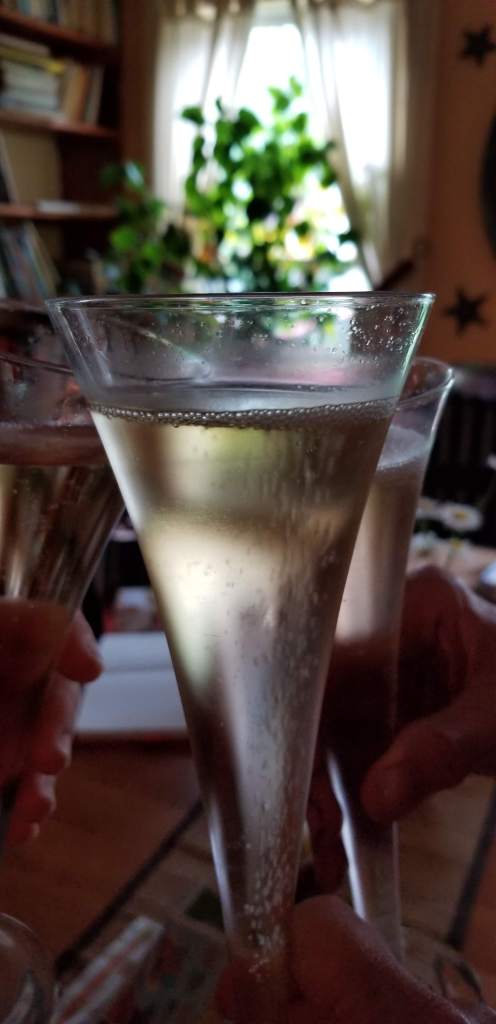
Bubbly in the afternoon
You never know what we'll churn up in cleaning a stall
Removing Hippie Love from my shelf of available ebook offerings was a difficult decision.
From a writer’s point of view, having an alternative telling of Hippie Drum remained a fascinating experiment. Yes, it turned the story into erotica. But, with the release of What’s Left, I also realized it’s not something any daughter would want to know about her dad. And so, the two hippie books are gone, replaced by Pit-a-Pat High Jinks.
Quite simply, I believe Cassia’s story holds greater interest, at least for younger generations. After all, it’s really about today.
what did I know beforehand?) unpacking, making each room orderly, scrubbing and waxing floors, vacuuming, reorganizing files, going to the laundry with all my woven possessions, running errands, and without warning things fall into place
Greater Boston is comprised of many suburbs that were originally Colonial towns out in the country. As a result, much of the metropolitan area today retains a village feel in addition to its cosmopolitan chic.
Each town – or, in many cases, now city – is different, however subtly.
Let me illustrate with Watertown, where my choir rehearses.

For a writer, nothing is more magical than when a character begins dictating the story. Sometimes, you can’t type fast enough to keep up with her.
As I was saying about the “zipper” that sometimes appears while revising a work? This one, I’d say, is the most satisfying.
~*~
Now that I’ve confessed, it’s your turn.
Do you ever hear “voices” while doing something? Do they help or hinder your action?
~*~
My novel’s available at the Apple Store, Barnes & Noble’s Nook, Scribd, Smashwords, Sony’s Kobo, and other fine ebook distributors and at Amazon in both Kindle and paperback.



When Jaya and Joshua set of for the Pacific Northwest in my novel Nearly Canaan, what they expect to find is something very much like the Olympic Peninsula rather than the fertile desert where they land.
Here’s some of the alternative.
~*~
Hope that serves as an introduction. We haven’t even touched on Port Townsend.
Cassia’s father grew up in a conventional middle-class family in the middle of the country. It was much, much different from her mother’s upbringing not that many miles away.
As they say, opposites attract. So, from your experience, how about an example?
~*~


