knock, knock, in the name of the law in the Name of Jesus let us pray together naming and claiming in either case not quite the letter but the spirit of authority bet your life beginning as a child traversing the expanse of your own moniker with some Divine confrontation and wonder, as they’d say, Warmly with the chattering monkeys
Giving the devil his due
In researching a project of any scope, you can’t ever read everything touching on the subject, and sometimes that can be a blessing in disguise.
For one thing, it may mean you have to examine points afresh and unguided rather than relying on another’s assumptions or conclusions.
And, for another, you may find reassurance or in seeing how another researcher has come to the same results you have independently or, in another vein, you may strengthen your disagreement.
That’s where I find myself on The Devil of Great Island: Witchcraft and Conflict in Early New England, Emerson W. Baker’s 2007 examination of a paranormal outbreak of flying rocks in an inn on an island in Portsmouth, New Hampshire, ten years before the infamous Salem witch trials just to the south. Now that I’ve finally read it, I can say he’s cleared up some questions I had on events upstream and provided backup for some of my deductions.
My new book, Quaking Dover, takes place one colonial town upriver from Great Island, today’s New Castle, and shares some of the same cultural and historic influences. While I examine a sharp divide in Dover between its English settlers from Devonshire and the Puritans from East Anglia, Baker identifies this in Portsmouth and much of the rest of New England as the Old Planters, of Anglican faith, being pushed aside by the newer Puritans, and their rigid Calvinism. Quite simply, the tensions were more prevalent and widespread than I’d assumed.
The target of the airborne mineral projectiles was innkeeper George Walton, along with his family and guests, evening after evening through an entire summer.
 Baker labels Walton repeatedly as a Quaker, as he also does for the identity for Nicholas Shapleigh, continuing a widespread misconception. The prominent Shapleigh proved a valuable ally but, as his descendants point out, he was never a member of the Society of Friends (Quakers). While Major Shapleigh suffers persecution for maintaining some of the Friends positions, nothing in Walton’s life or character suggests he did so. Quite the contrary, there were many reasons he would have been disciplined and disowned, if he had been part of a Quaker Meeting, the closest one being at Hampton.
As Baker, a Salem State University history professor, lays out Walton’s family and neighbors, what becomes clear that just about everyone had good reason to target the contentious innkeeper. As for a devil on Great Island, I’d have to say it was Walton himself.
Baker sees the New Castle incident as a precursor to similar events that culminate in Salem, and he traces individuals who would have been familiar with the Walton stoning incidents to the outbreaks elsewhere. He further finds common elements that include contested land claims and political upheaval, which far outweigh theological issues.
Baker has since written much more about witchcraft, befitting his locale. The Devil of Great Island is a fun and fast read and a fine introduction to a definitive moment in the American experience.
As I’m arguing, there’s much more in New England’s past than you were ever taught. Or maybe even suspected.
You really can find a nearly empty pristine ocean beach on a Sunday morning in summer
Roque Beach State Park, a few miles south of Machias, is one of the rare sandy beaches in an otherwise rocky shoreline.
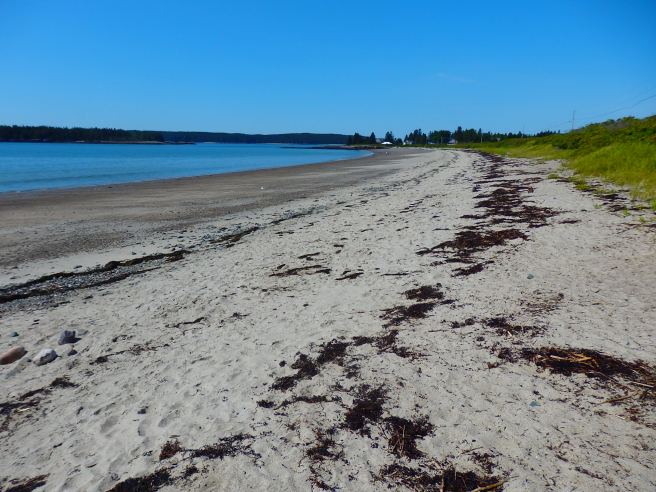
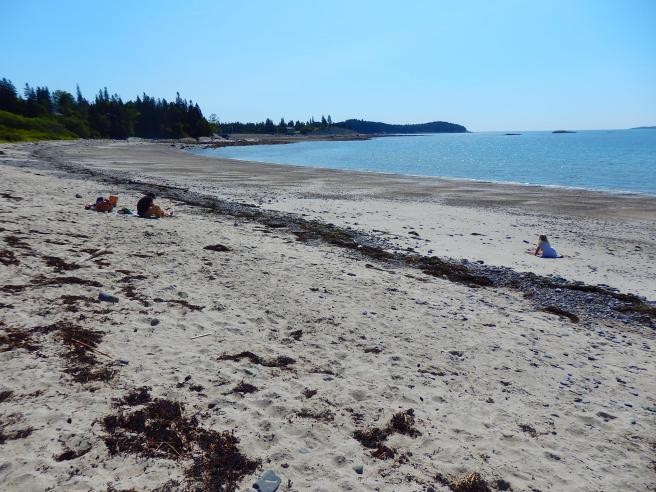
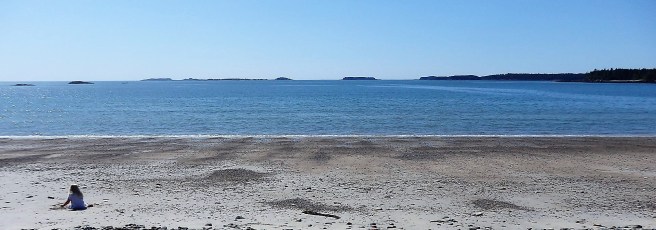
The water is too cold for swimming, for most of us, though some sports will take a dunk.
A little more heaven on earth
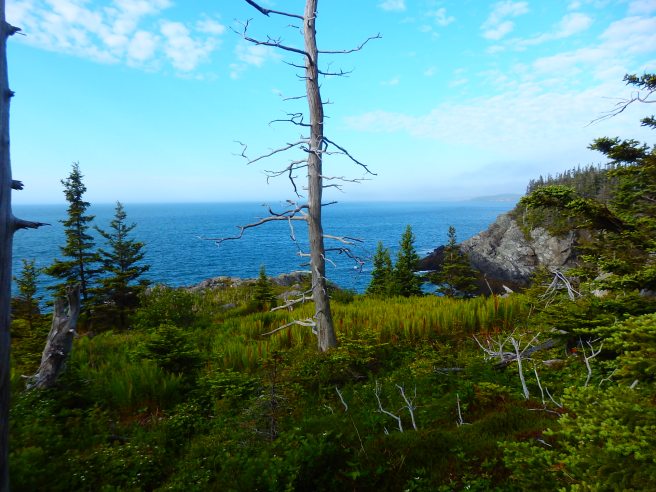
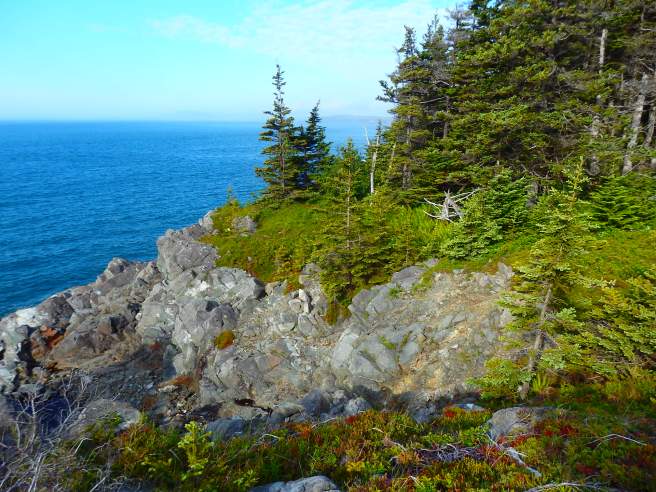
The day I shot these, I encountered only one other person in two hours … and that was just as I was leaving. Admittedly, I arrived around 7 as a foggy dawn lifted and then listened to a mournful foghorn in the neighboring Bailey’s Mistake cove much of the morning. How could I not be elated?
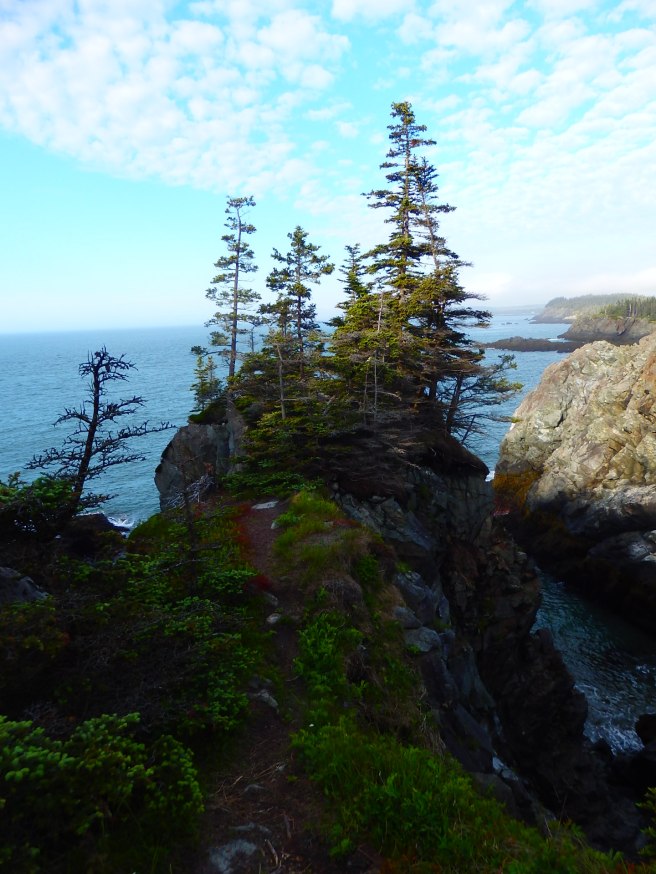
In 1988, the Maine Coastal Heritage Trust secured the property now known as Boot Head Preserve, saving it from a planned 35-lot subdivision and instead opening it to public enjoyment. It’s a gem that includes coastal hiking, a cove with a cobble beach, and an arctic peat bog.
Promise me you won’t tell anyone else.




A few memorable camping adventures in my life
I’ve mentioned the impact of my rogue Boy Scout troop on my life via hiking. Camping was related. We used homemade square tarpaulins – three rows of muslin our mothers sewed together that we then dyed and waterproofed.
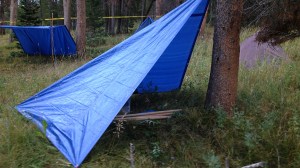
We called them “trail tents,” though “tarp tents” seems to be more universal. They could be set up in any number of ways – a two-sided triangle with the front open was most common, using a second one as the ground cloth – or in good weather we could even roll our sleeping bags into one and stretch out in the open.
We took pride in our primitive camping abilities.
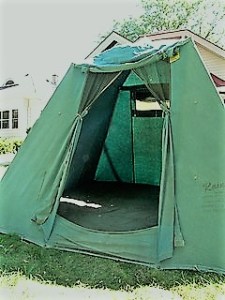
My family, on the other hand, had a clumsy and often smelly “umbrella tent,” so named for the way you had to set it up from the inside and then remove the aluminum center post – well, they’re now called “cabin tents,” and apparently more flexible.
I inherited the tent and used it for many of my escapes in the Pacific Northwest, my complaints aside. It got a lot of miles over the years.
The result in either case was some memorable opportunities to get closer to nature. Among them:
- Family summer vacations at Indiana state parks, especially Spring Mill with its limestone caves; Natural Bridge in eastern Kentucky with its old railroad tunnel at the base of a mountain with a stone arch at the top; Mammoth Cave in Kentucky; and Lincoln’s Old Salem in Illinois.
- There was also a Florida trip we shared with a Chattanooga family Mom and Dad were fond of from his Army-Air Force days. At age 12, it was my first exposure to the ocean and a Southern belle a year or two older than me. Our trip back included a night 17 miles back from the highway in Okefenokee Swamp in Georgia, where we were surrounded by masses of mosquitoes, more than a few three-legged deer (the result of encounters with ‘gators), and raccoons that could open the doors to the porches of the camp headquarters and then raid the top-slider Coke coolers. Let’s say simply we heard a lot of eerie sounds in the darkness and escaped with our lives once the sun rose through the Spanish moss.
- My first time in a trail tent was shared with another neophyte. We proudly set up our tent, tying the front line to an Osage orange tree – I remember the strange color when we split firewood. Alas, a storm blew in during the middle of the night and pulled up some of our stakes. I rolled enough of the ground cloth around my sleeping bag to get through the night. Not so, Jackson. He nearly froze and his bag the next day must have weighed a hundred pounds. After that experience, I always checked the wind direction before deciding where to raise the tent.
- Another Scout outing, remembered vaguely, was in May or June in a farmer’s woodlot. It simply felt magical, nothing like a designated campground.
- Our troop joined one or two others in the summer at a site in Lake Vesuvius State Park near Ironton, Ohio. This time we used wall tents, but it was still primitive. The park had the remains of an early stone blast furnace, and we spent a day in rowboats exploring the lake. One fall, we returned to plant trees in a strip mine. I’ve hated that form of mining ever since.
- Out-of-state hiking trips also included overnights, usually two. I especially remember those of the Lincoln trails and others around Lexington, Kentucky. And there was the near-perfect night in Indiana when we rolled out under the stars only to be interrupted at midnight and having to hustle our gear under a nearby picnic pavilion when a harsh storm blew in. And then the rangers showed up and scolded our scoutmasters. But the next morning, and for much of our drive home, we saw tornado damage.
- Roan High Knob, at the end of our week on the Appalachian Trail, turned into a festive array of unconventional trail-tent setups. It was like a camel caravan had moved in. At least until the big thunderstorm and repeated deluges.
- Later, as an adult, there was a week circumnavigating the Olympic Peninsula, an event I celebrate in a longpoem.
- Also in Washington state, a week I spent in the North Cascades – where poet Gary Snyder, especially, wrote extensively as a forest fire lookout. Silver Star Mountain was especially memorable and worth a return with my then-wife.
- Another week in the North Cascades included time at the base of Mount Shuksan and Mount Baker. Washing my dishes in the small river, I recognized gold flecks in my bowl – not enough to pan, if I could, but the valley had been the scene of a big gold rush once upon a time. I also noticed that the river level kept rising through the day, a result of melting snow and glacier ice upstream, up above me.
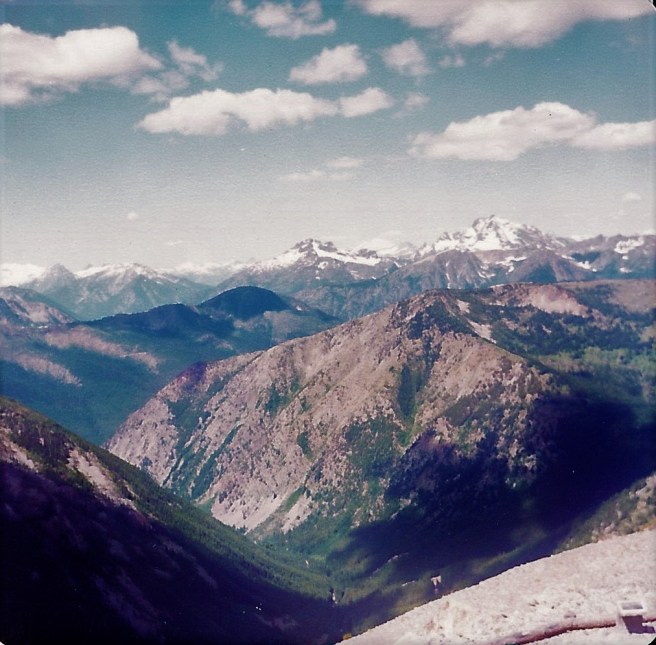
Curiously, I haven’t camped since 1980, though there was a week I spent in a spartan, bare-bone cabin near Lake Sabago, Maine, in October ’99. That’s when I learned to canoe … and to steer clear of the middle of the water when it’s just me all alone.
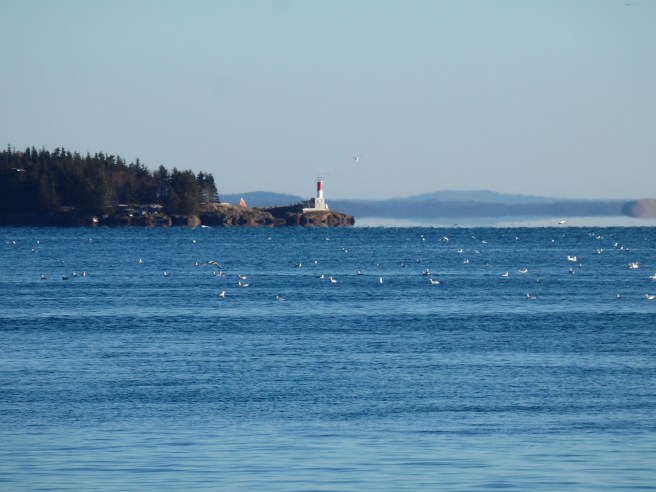
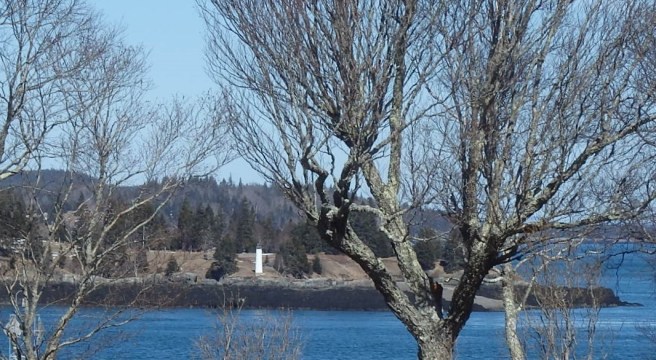
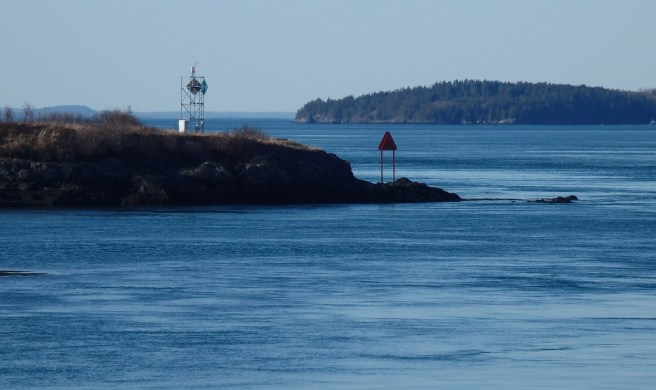
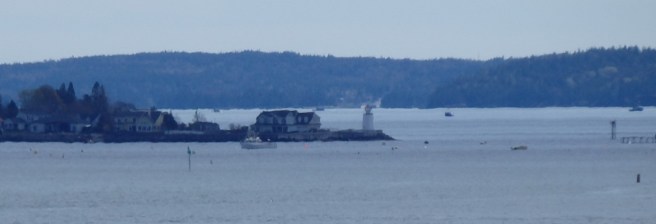
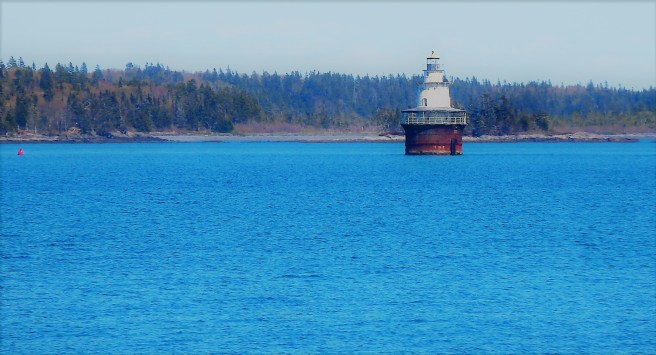
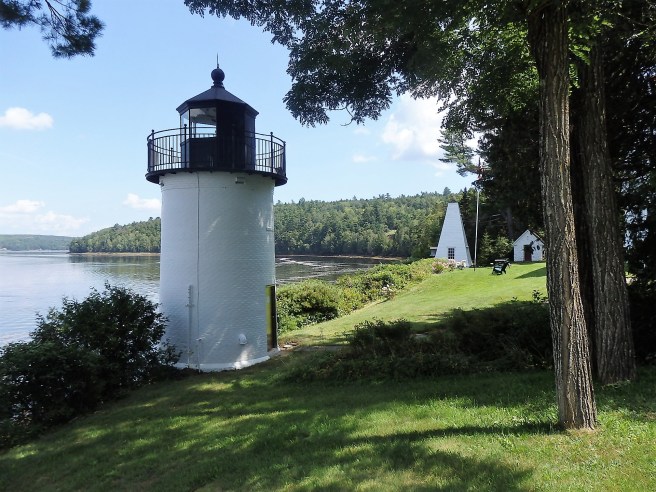
The lighthouses around Eastport are rather modest
Unlike the two most photographed and visited lighthouses around here – East Quoddy on Campobello Island, New Brunswick, and West Quoddy in Lubec, Maine, both of which have been featured here at the Barn – the remaining lighthouses I encounter locally are small-scale. They’re beacons, all right, but to call them houses may push the definition.
You be the judge. Here they are.

Kinisi 113
Once upon a time I thought I would have children with the woman of my dreams who would grow old with me.
Once upon a time I would have had a Rolls Royce or at least a Mercedes.
Once upon a time I would have lived in a city where I could ride subways
and subscribe to the opera.
Once upon a time I would have never believed in dragons.
Was there a hidden connection in the street name?
The site in south Boston where two Quaker missionaries were hanged less than a month after visiting Dover, New Hampshire, was eventually christened – get this – Dover Street.

Another of the four who died on the gallows there had also apparently visited Dover a year or two earlier.
Who made the decision – and why? They couldn’t be that oblivious, could they?
Once the surrounding water was filled in, the street came to have a long history of immigrants and seedy characters, perhaps doomed by its bloody past, before part of the neighborhood was razed for the urban renewal that brought the Boston Herald newspaper plant and later removed the elevated subway station after the Orange Line was rerouted to the west in 1987.
Today it’s known as East Berkeley Street, hoping for a new image.
Check out my new book, Quaking Dover, available in your choice of ebook platforms at Smashwords.com.
Elizabeth Hanson’s ordeal
Through the waves of warfare between the English settlers and the French and their Native allies to the north and the east, Dover Friends were caught in a bind.
Quakers espoused a pacifist Peace Testimony as part of their Christian faith, but in New England all fit adult males were compelled to participate in the militia. In some cases, accommodations may have been made, such as allowing the Friends to not carry arms or to serve as watchmen or in other non-combatant service. But some no doubt refused to do even that because it still supported the fighting.
Quaker testimony of non-violence was anything but an idealistic, abstract statement. It meant placing their lives – and their children’s – in jeopardy. The final fatal forays in Dover were on a Quaker family.
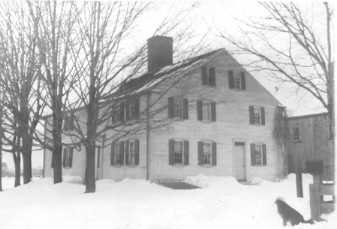
John Hanson’s house at Nock’s Marsh (more commonly known as Knox Marsh) was in an exposed position. Because of the renewed troubles, he was advised by neighbors to move into the more compact area of Cochecho village. Instead, as a “stiff Quaker” upholding the Friends’ witness of good relations with the Natives, he stayed put.
Life looked good to him. On August 9, 1725, his eldest daughter, Hannah, and Israel Hodgdon junior wed in a Quaker service. Four days later, Hanson’s wife gave birth to daughter Mary (also known as Mercy).
Only two weeks after those celebrations, though, 13 Natives, including French Mohawks, lay in wait for several days, looking for an opportunity to attack. On August 27, while Hanson and daughter Hannah attended midweek Quaker worship and his two oldest sons were work at some distance, the Natives swept in and “all naked with their guns and tomahawks” entered the house.
Elizabeth Meader Hanson was at home, along with a servant and three children. Two young sons, playing in the orchard, would have escaped but just as the Indians had finished rifling the house, the boys – Ebenezer, age five, and Caleb, four – came in sight and made such noise that the invaders immediately killed them by bashing out their brains and scalping them – in front of their mother – to stop the alarm. Daughter Sarah entered the house and was also taken. The raiders promptly started for Canada, with their captives in tow – Elizabeth Hanson, who had given birth to daughter Mary just two weeks before, plus seven-year-old son Daniel, daughters Sarah, 16, and Elizabeth, 14, and the servant girl.
The attack and departure came swiftly and quietly. Newly-wed Hannah discovered the carnage on her return from worship.
Not knowing the Natives were resolved to strike again, her father stayed briefly with a brother who, though Quaker, had three lusty sons with firearms loaded for big game. Still, John moved back to the farm. When three men came by on September 25, 1725, the raiders hid in the barn before promptly shooting and killing either 37-year-old Benjamin Evans or his likely nephew William. Slightly wounded but profusely bleeding was John Evans, whom the Natives thought was dead. They scalped him, turned him over, pounded him with their guns, and moved on. Making their escape, they took 12- or 13-year-old Benjamin Evans as a captive. He was later ransomed. John Evans, meanwhile, was taken to a nearby garrison where he recovered to live another 50 years. He was the last Dover man to lose his scalp.
The large Evans family was no stranger to Native attacks. Among the victims were patriarch John Evans, chained to Major Waldron’s barn and burned in the 1689 carnage at Cochecho village, and his son John, who died in captivity in 1692.
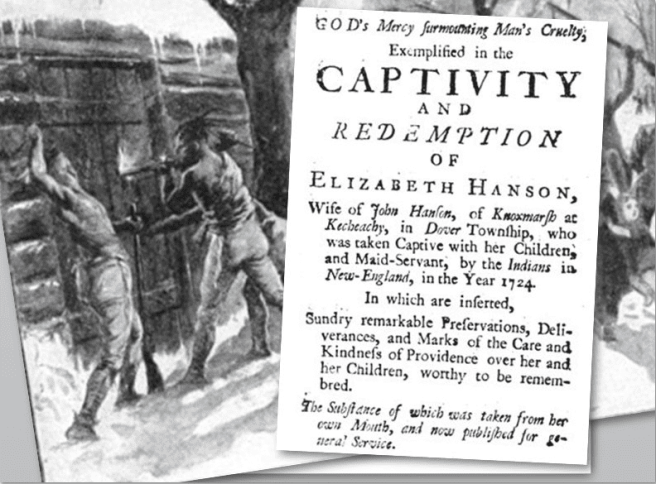
Elizabeth Hanson’s arduous ordeal, though, turned into five months of captivity, which she later related in detail. The trek to Canada was merciless, leaving the captives wet, cold, bruised, and hungry. At one stretch, they had nothing to eat but tree bark, and Elizabeth feared for her infant as her milk began to dry up. Once in Quebec, all her children except the baby were separated from her, and in one instance, she was informed that her captor was very displeased with her and was planning to murder her the next night.
Funds for the family’s ransom included a large sum collected by Philadelphia Yearly Meeting, and her husband quickly went to Canada to redeem them. The price for Elizabeth and baby Mary was around 700 pounds. He also obtained the release of son Daniel and daughter Elizabeth, but the Natives would not release Sarah on any terms, though they did allow the father and daughter several hours together.
The chief’s wife had plans of having the girl become their son’s bride, even though the name they gave her translated as “the woman of the burning of the cooking.”
Back in Dover, John and Elizabeth had yet another child, Abigail, but he could not be content until rescuing Sarah, too. On April 19, 1727, he set out with a kinsman for Canada but fell ill at Crown Point, New York, on the west bank of Lake Champlain, and died.
The kinsman, Ebenezer Downs, and his wife continued on in hopes of redeeming their own children as well.
In Quebec, Frenchman Jean-Baptise Sabourin had interposed with the Natives and persuaded Sarah to obtain her freedom by marrying him, which she did on June 27, 1727. The record names her as Sara Ennson, daughter of Jean Ennson, deceased, and Elizabeth Midor, English of the village of Touba in the government of Boston.
Apparently, Downs had managed to meet with her and inform her of the death of her father. But she had been baptized at age 17 and renamed Catherine, perhaps as a step in gaining her release from the Natives.
With Jean-Baptiste, she had at least eight children, two of whom married children of Deerfield, Massachusetts, captives, two who died in infancy, and one who became a nun.
On March 24, 1730, her sister Elizabeth married Ebenezer Varney, the son of Ebenezer Varney, whose garrison had survived the 1689 attack on Cochecho village, and Mary Otis, who had been captured and returned.
Two first-person accounts of Elizabeth Hanson’s experience became widely known. The first, God’s Mercy Surmounting Man’s Cruelty, Exemplified in the Captivity and Redemption of Elizabeth Hanson, appeared in 1728 in Philadelphia.
A second, more detailed version was by English Quaker minister Samuel Bownas, who knew the Hansons from his travels to America. It was first published in London in 1760: An Account of the Captivity of Elizabeth Hanson, Now or Late of Kachecky, in New-England: Who, With Four of Her Children and Servant-maid, Was Taken Captive by the Indians, and Carried into Canada. This volume, especially, gives insights into life within a tribal culture. Both narratives lean heavily on a Quaker religious framework.
Kachecky, of course, was another variant of Cochecho, while Touba was a French attempt at Dover.
Widow Hanson, as Bownas repeatedly referred to her, never remarried and died in 1737.
~*~
Check out my new book, Quaking Dover, available in your choice of ebook platforms at Smashwords.com.
Welcome to Dover’s upcoming 400th anniversary.
Whatayasay Dusty
of heaven and earth and so right at the moment this righteousness struck a relationship without a tinge of merely imagined fragrance closer and more real, the daily repetition overflows into a sink of unwashed dishes of confusing lion and the lamb of dilemmas, paradoxes, even tedious crosscurrents the Adversary complicates a profusion of weeds just doesn’t ring clear the first time around oh, my poor memory, in callous fingers clutching whatever

