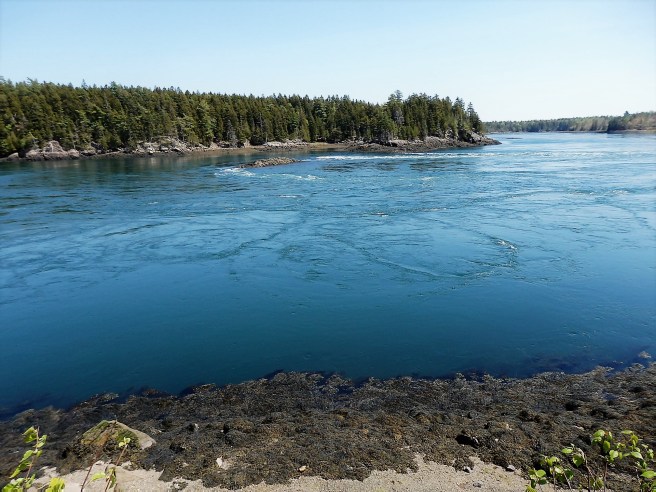
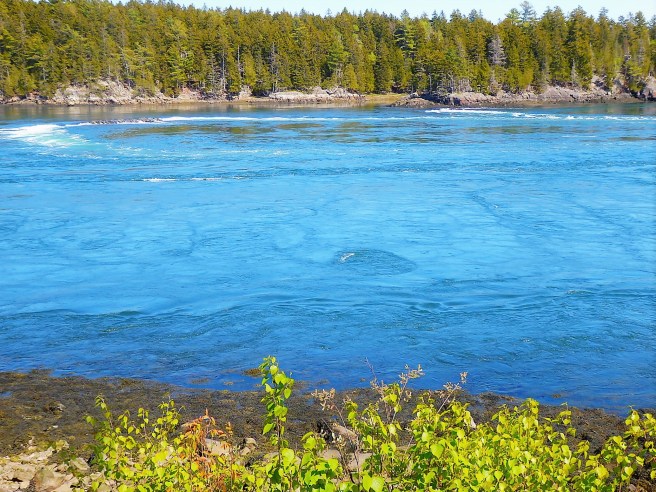
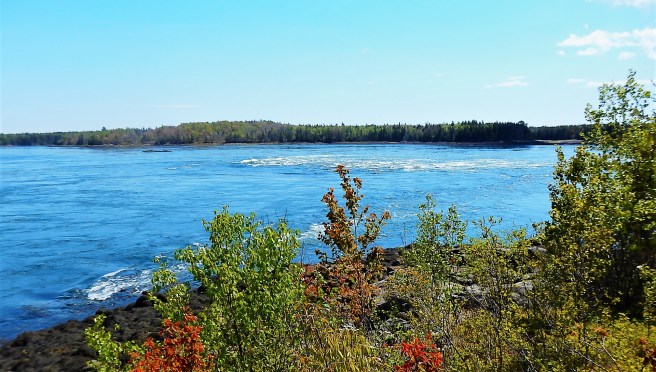
Still, the Old Sow can be seen about a mile away from Eastport if you time it right, about three hours before high tide on the biggest days of the month. The Western Hemisphere’s biggest whirlpool not only swirls but also shoots spouts into the air. As if I could capture that flash with my camera.
The current, though, often runs at seven knots, faster than an Olympic champion swimmer could manage in even a very short burst. It’s also treacherous for Scuba divers, waders, and sailors alike.
It’s by no means the only place to be mesmerized while watching the charge.
Tide pressing from the Atlantic into Dennys and Whiting Bays churns and ripples.
Another impressive sight is the Reversing Falls in Pembroke, though “rapids” would be a more accurate term. The sounds of the waters rushing from one bay to another are as mesmerizing as any waterfall, though.
As the level intensifies, a large whirlpool with a concave depression forms behind the rock ledge, setting off smaller whirlpools around it.The major action is a set of rapids I’d hesitate to call “falls,” though they’re just as noisy. Once the tide comes in, it has to go out, keeping the action going endlessly. As I was shooting this, a pair of seals lolled in the whitewater wings, diving and coming up with fish in their mouths.
Up to the American Revolution, despite opposition, some Quakers held slaves, and Dover was not exempt. Up to ten were manumitted, likely with the equivalent of a year’s wages.
~*~
Slaveholding was a particularly difficult issue. Initially, queries pointed slave-owning Friends to treat their subjects fairly, but that perspective evolved under the influence of ardent abolitionists. In 1731, as the minutes record, “Whereas some Friends signified at our last Monthly Meeting that they were uneasy with the practice of Friends buying or trading Negroes or slaves which was left to this meeting for consideration. After due consideration thereof the desire of this meeting is that all Friends that are clear of slaves may not be concerned with the practice thereof, but to keep themselves clear of practicing ye trade of buying or selling slaves.”
Nevertheless, that proved insufficient at the time.
Finally, on 9 mo 22, 1777, a committee was appointed – James Neal, Elijah Jenkins, and Jonathan Dame – “to visit those Friends belonging to this Meeting that hold Negroes as slaves, and advise them to set them free, and make report to our next Monthly Meeting.”
Doing so would not be easy. For Friends, manumission included payment of the equivalent of a year’s wages, a hefty amount. Elsewhere, it bankrupted some Quakers, who were then disowned for failing to keep their financial promises and their debts clear.
Still, three months later, “The Friends that were appointed to visit those Friends that held Negroes as slaves have made their report that that they proceeded likewise and obtained the manumissions from those that had Negroes in their possession. It is the judgment of this meeting that those manumissions should be recorded upon our minutes.”
Eight manumissions involving ten slaves were recorded.
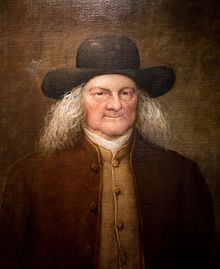
Moses Brown of Rhode Island helped facilitate the freeing of slaves in Dover.
Assisting in the process was Moses Brown of Providence, Rhode Island, who had been appointed by New England Yearly Meeting to the manumission drive. He was an abolitionist who had separated himself from a prominent, wealthy family involved in the slave trade and instead joined Friends. Through his co-ownership of the Slater Mill at Pawtucket, he is considered a founder of the industrial revolution in America. He also helped establish Brown University, and the Quaker-affiliated Moses Brown School is named is his honor. He signed as a witness to most of the Dover manumissions.
One of them, Seasar Sanky, or Caesar, liberated in 1777 by James Neal of Kittery, had earlier married another slave, Sarah Sharp, among Dover Friends on November 23, 1774.
In the manumission, as Annie Pinkham relates, “Neal stated that he had some years since permitted Seasar to go and labor for himself, but received his wages, and applied same to his use in purchasing a piece of land with a house in Berwick on Oak Hill for which a deed was taken in Seasar’s name.”
However, when Seasar entered the Revolutionary War in 1777, he lost his membership as a Friend.
In another case, “I, Thomas Hanson of Dover, in the Government of New Hampshire, having for some years held Peter, a Negro man, as a slave, according to the tradition of the Country, but being convinced of the Error of the Practice, and the right of all men to be Free, I sometime in the past gave him his Liberty, but the more Effectually to Secure the same and to publish my Unity with our Christian Testimony in this Matter, I do by these presents Manumit, Release, and Set Free the Said Negro Man, Peter, in as full a manner as if he had been Free born, and hereby Warrant to Secure and Defend his said Freedom against the claim of all persons Claiming by, from, or under me, in Witness Whereof I hereunto set my hand the Twenty-First day of the Eleventh month 1777.”
The document was witnessed by Moses Brown and James Neal.
Others manumitted were Jack by Moses Roberts and Dinah by Keziah Roberts, the widow of Stephen Roberts.
The actions were part of a larger drive. By 1784, no Friend in America held slaves. In all fairness, I will also note that some of the wealthiest Quaker families had instead become Episcopalian or Presbyterian, in part as a way of avoiding the Quaker discipline, including its emphasis on equality, and in part to better enjoy a lifestyle of the rich.
~*~
Check out my new book, Quaking Dover, available in your choice of ebook platforms at Smashwords.com.
whatever abundance before the eye rests under that spirit of being guided through the wall after waiting through dry periods when you’ve voiced those personal, esoteric why must it be myself or the other when feeling a drawing away to that which I alone happen to sense when working and nodded without anticipating any fulfillment except in so many conjectures now absolutely engaged in the hand of accomplishment you definitely pursue now so romantic exciting perhaps with some overlap perhaps you too understand
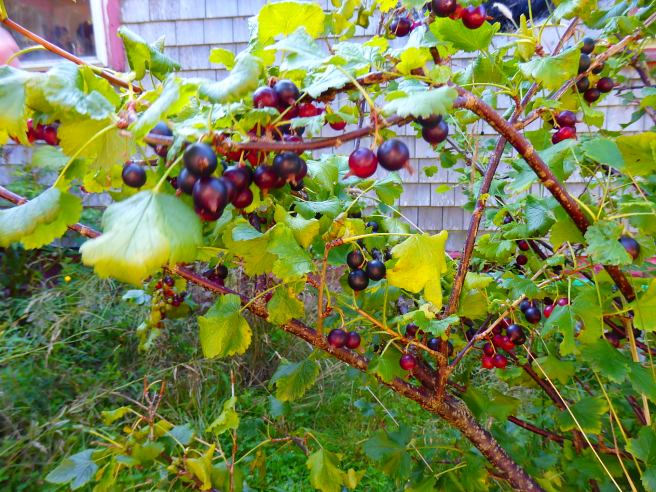
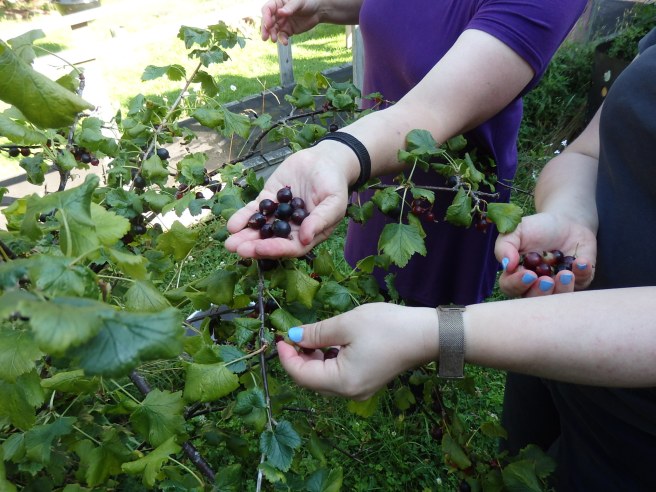
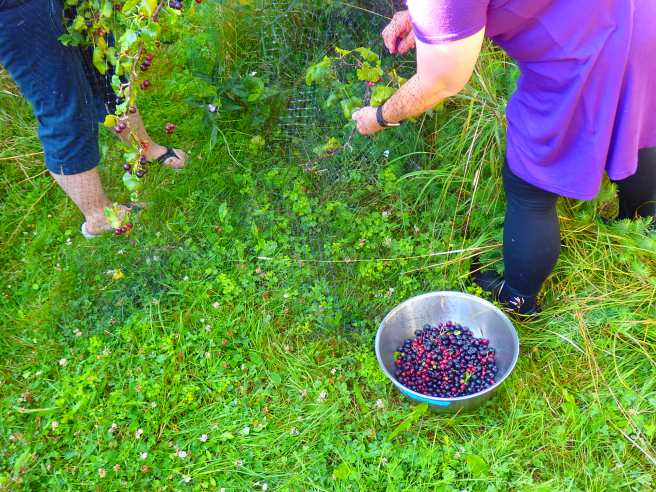
The currants we’re harvesting in Eastport are a different variety than we obtained from the conservation district’s plant sale back in Dover. They’re bigger and juicier, for one thing. And the bushes aren’t as thorny or sprawling, for another.
We got 4½ pounds from a single bush. Most of it will go into jelly.
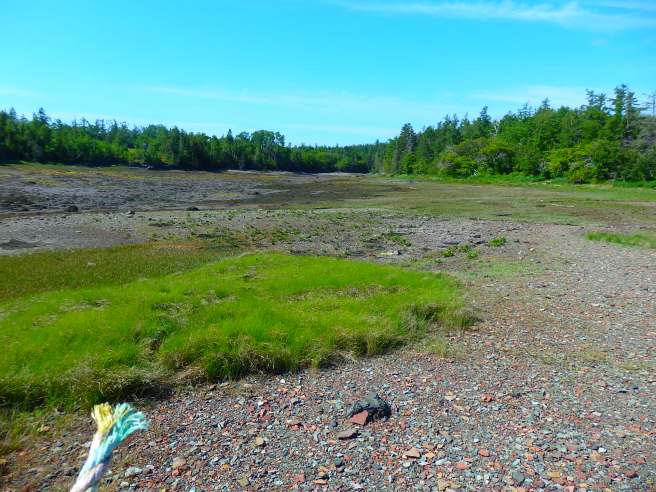
Funded by a family trust, Cobscook Shores is preserving waterfront lands around Cobscook Bay and its subsidiaries for public use and pleasure. One of its 14 sites is Pike Lands Cove, facing Eastport’s west side across the water from the North Lubec peninsula.
A trail leads out around tidepools I hope to investigate later.
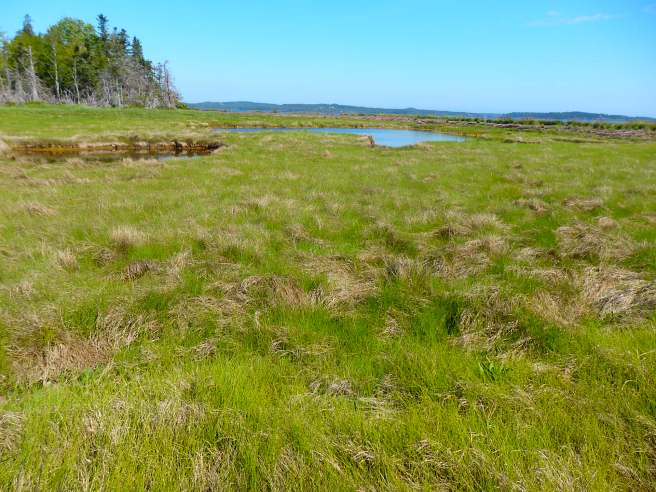
A saltmarsh can be explored up-close.
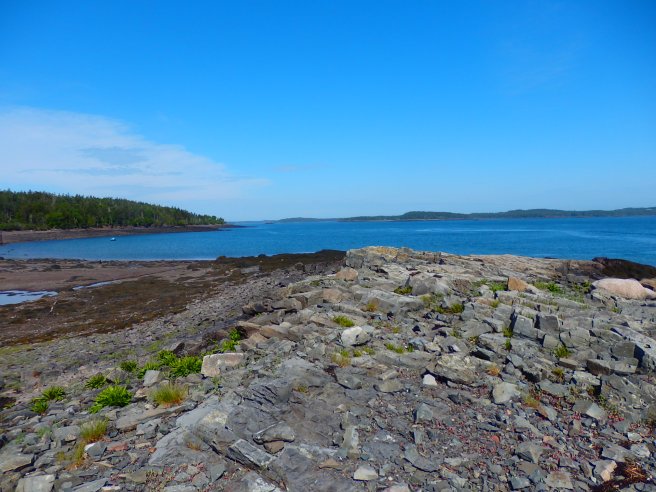
Here’s where that eagle nearly ran into me. It was being chased by an angry gull. Eastport is across the water.
In writing my history of Dover, I had to face up to the problems of the word “Indian,” which can refer to someone from the Asian subcontinent as much as it does to an Indigenous person of North America. In the end I decided to avoid it altogether unless it was part of a direct quotation or traditional title.
The fact is, the Native tribes themselves can differ widely in their language, customs, and culture, so a generalized label can be downright misleading. And in a particular place, the same people may have been referred to by different labels, depending. You know, the way a Daytonian was also an Ohioan, Midwesterner, or even Buckeye, though not necessarily an Ohio State football fan.
In addition, the tribes themselves may have been much more fluid in their associations than the English and American authorities could comprehend, insisting instead on a more rigid classification.
That was the case with the Passamaquoddy and Penobscots in Maine.
In the Dover history, I ran up against that when some sources called the local Natives Abenaki, while others called them Cochecho or Penacook or something else.
As the Wabanaki Confederacy explains, though, all Abanaki are Wabanaki, but not all Wabanaki are Abanaki.
That said, let’s take a quick look at the Wabanaki.
It’s not a tribe. Rather, the confederacy today is an official alliance of four East Algonquian nations remaining in Maine – Mi’kmaq, Maliseet, Penobscot, and Passamaquoddy.
Historically, it was a looser alliance of tribes stretching from Newfoundland and Prince Edward across Nova Scotia, Cape Breton Island, New Brunswick, and part of Quebec in Canada on to the Western Wabanaki in the Merrimack Valley of New Hampshire and Massachusetts and perhaps beyond into Vermont.
Native names for the affiliation included “convention council” or “orator council,” “be related to one another,” “those united into one,” and “completely united.”
The tribes formed their council after a rise in raids by their ancient enemy the Iroquois League, especially the Mohawks.
In the colonial era, many members aligned with the French, who called the region of Maine the Wabanaki inhabited “Acadia.” Many of the Natives converted to Roman Catholic faith. The defeat of the French in 1763 proved costly for the tribes.
For thousands of years, Mount Desert Island – in today’s Acadia National Park – was a summer gathering place, where they arrived by seaworthy birchbark canoes.
They didn’t live in tepees. They lived in small round bark-covered buildings called wigwams.
Most of them grew squash, beans, and corn, and also harvested berries and other wild fruit.
They didn’t dress like the High Plains Natives out west. They had their own distinctive style.
They loved storytelling and legends. Mount Katahdin, for instance, was inhabited by a half-human, half-bird winged spirit called Pamola who could make the night wind blow or generate snowstorms. And the Maliseet had tales about the little people, who were like brownies or leprechauns.
When I moved to New England more than three decades ago, I tried to take in at least one whale-watch cruise each year, usually out of Newburyport, Massachusetts. But my first time of meeting a live whale came during my first-time ever time in a real sailboat, which was also my first time out on the Atlantic. At first, we saw minkes lolling along at a distance, some of them parallel to our course. And then, just as we were turning into the harbor on the Isles of Shoals, one came up right beside the bow, where I was standing. You can’t say this Ohio boy wasn’t impressed. Minkes may be the smallest of the whales around here, but our 32-foot craft wasn’t much bigger.
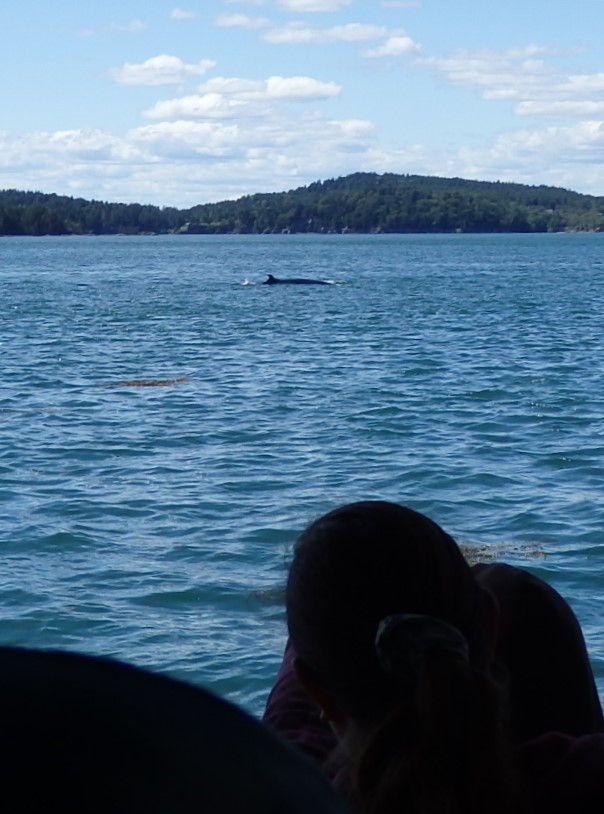
A minke is viewed between Campobello and Deer islands in New Brunswick on a cruise out of Eastport.
Whales migrate up the New England coast each May and linger in its nutrient-rich waters well into October.
One thing I quickly came to appreciate is that there are no guarantees about what you’ll encounter when you go out from shore. What I’ve often called a poor man’s cruise is an experience in itself, especially as you watch land recede and then disappear altogether behind you and there’s nothing save the expanse of sea and sky with occasional birds and boats as punctuation. On one outing, the only whales we found were a minke cow and her calf, which we followed at a leisurely pace. On another outing, so many minkes, humpbacks, and finbacks surrounded us – some close enough to be misted by their stinky blow, others breaching off in the distance – I lost count. Once, we had to be content with a trio of porpoises. You should be grateful for whatever presents itself.
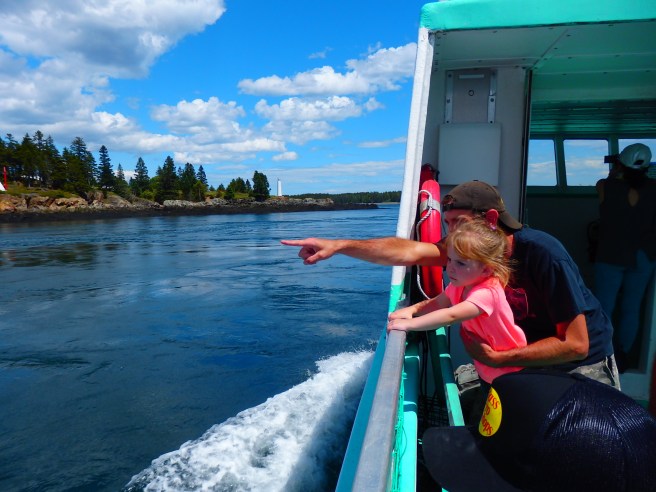
I was trying to get a good shot of the Cherry Island lighthouse but wound up with this moment of a father and daughter from Ohio.
Somehow, though, after I remarried, the annual event faded from the schedule – maybe a handful in 20 years, always with family and sometimes with the kids’ friends. I still have the memories.
Relocating to an old house a block from the ocean has now recharged that. I can walk to the whales. Seriously. In late season, they can even be seen from the shore here.
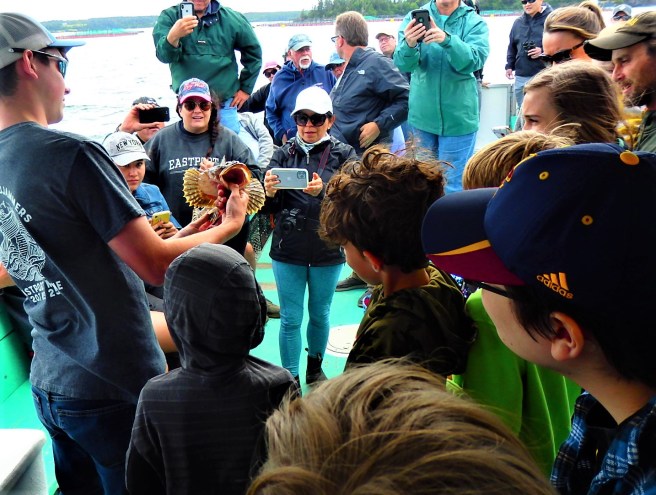
Here’s a sculpin fish that was in a lobster trap the cruise pulled up as part of its tour of the local waters.
More likely is walking down to Butch and Jana Harris’ Eastport Windjammers and setting forth in one of their refitted lobster boats. The vessels are smaller than the usual whale-watch models but put you much closer to the water. The route, from downtown Eastport out between Campobello and Deer islands in New Brunswick, doesn’t need to go into the open waters of the Bay of Fundy. On at least one of boats, you can even stand beside the captain – usually, but not always, Butch – and, on occasion, each of the kids on board gets to briefly take a turn steering at the wheel.
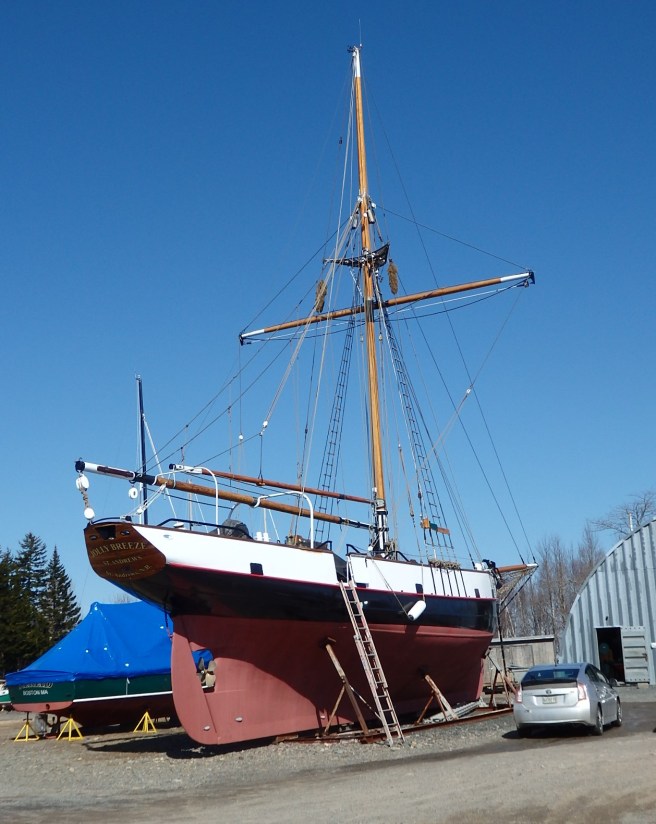
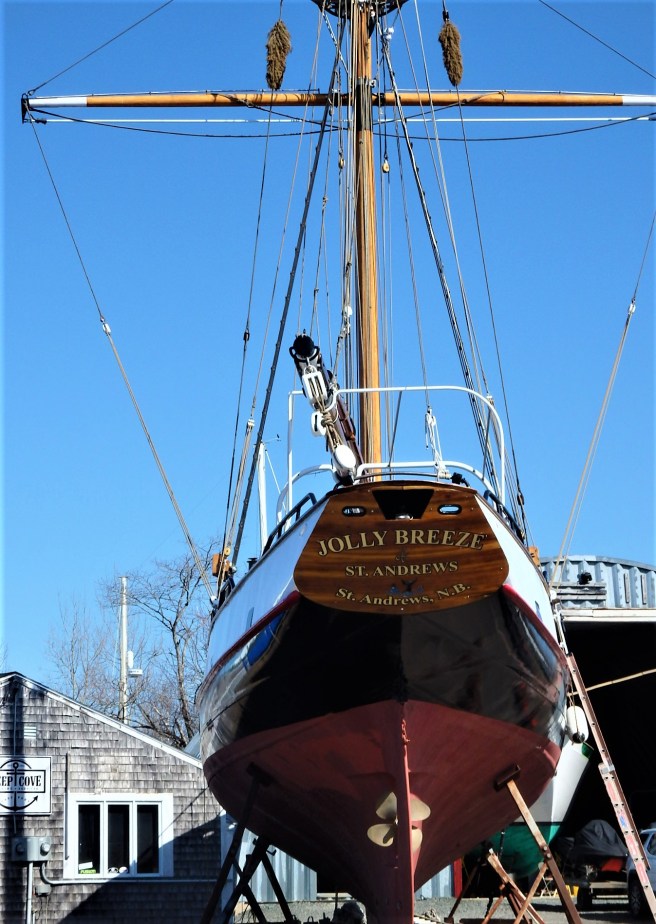
Don’t scoff when you connect “windjammer” with “lobster boat.” The enterprise comes by its name honestly. Up through 2014, its whale-watch cruises took place aboard Butch’s 118-foot, three-masted schooner, the Ada Lore. But on December 4 that year, a portion of the Breakwater collapsed, wrecking the schooner.
Pursuing whales from a wind-powered deck, I’ve been assured, is the most satisfying way of all to go forth.
I’m ready and willing, should the opportunity present itself.
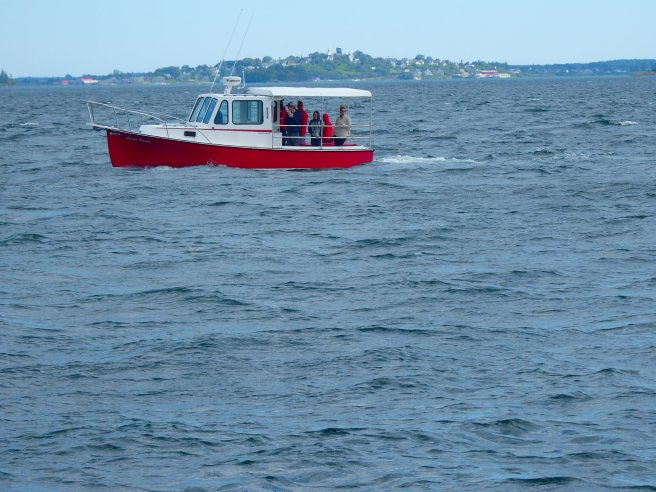
At times we were joined by what I jokingly call the world’s smallest whale-watch vessel, which sails out of neighboring Lubec. The captains work together by radio to share sightings and other info. Lubec is seen in the background.
What’s been your most memorable experience with the sea? Or some other body of water?