here you perceive it’s not within my nature to offer any spoken contention in the row of bricks other craftsmen would so often enwrap in false modesty if you can tolerate canned soup or a vulcanized cheese omelet, well, then you’ll also observe how turning together after so many years maybe occupied with survival in the rarified air the conundrum by God becomes devotion
Wholly mackerel
The humble mackerel – usually less than a pound apiece – is a popular fish caught around here. Its delicate nature means it doesn’t keep long, so for human consumption, it’s typically smoked for preservation. An oily fish, it tastes somewhat like salmon. More commonly, it’s used as bait in lobster traps.


Getting there is half of the fun
The Maine coast is 3,478 miles, not including islands. They raise the figure to 7,000 miles.
I live on an island.
Just two miles away, as the crow flies, but an hour by land is the waterfront town of Lubec. One of the best ways for tourists to appreciate the coastal nature of Downeast is by taking the passenger ferry that runs between there and downtown Eastport. I promise you it’s much less crowded than Acadia.
We go down for a walkabout the town, a New Jersey-style pizza, and a sit in the brewpub’s beer garden. One day I watched seven gray seals cavort in the current. And then we catch a ride back, which runs along the other side of the channel from the one we followed down.
Folks from Lubec do something similar, including a stroll though Eastport’s art galleries.
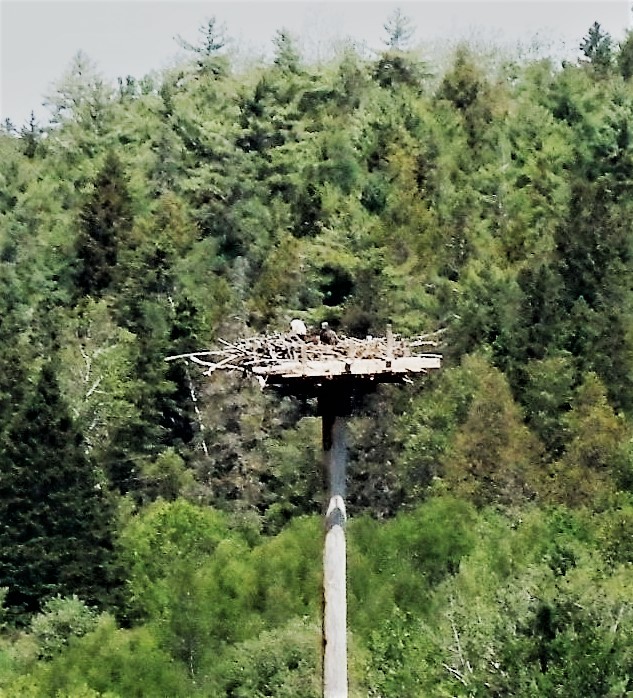
Either way, you get fine insights the shoreline, history, and wildlife in a way you’d never get from land. There’s the Cargo Terminal, salmon farms, Roosevelt summer home, Treat Island. Maybe seals and eagles, too.
The ferry runs every two hours on Friday, Saturday, and Sunday, weather permitting.


About the Passamaquoddy
Getting to or from Eastport means driving through the Passamaquoddy’s Pleasant Point Reservation. And yes, I dutifully observe the 35 mile an hour speed limit. I also gladly pay the voluntary “toll” that helps fund the fireworks for the tribe’s annual festival. Besides, it’s a better bargain than a movie and, anyway, we’re all invited.
Having lived previously at the edge of the Yakama reservation in Washington state, I appreciate having an Indigenous population so close at hand.
Here are some things I’ve learned.
- The first time I heard of the tribe was through a traditional healer and his apprentice who were our house guests maybe a dozen years ago back in Dover. And ever since, thanks to his warning, I never disrespect a mockingbird. Could that be why I’m still here?
- The tribe generally proclaims itself as “people of the dawn” or even “keepers of the dawn.” I’ve already posted that the dawns around here – the first light in the USA – are unique and full of wonder. But the tribal name’s root reflects the importance of fishing in their culture – “pollock-spearer” or “those of the place where pollock are plentiful.”
- Traditionally, for most of their 10,000 or more years, they summered in settled villages around the coasts and tributaries on both sides of the St. Croix River, where they harvested shellfish and worked the deep waters. In winter they dispersed inland, where they hunted large game.
- Today their centers are Sipayak (the Pleasant Point Reservation adjoining Eastport), where 2,005 members are enrolled; Motahkomikuk (Indian Township an hour to the north), 1,364 members; and Qonasqamkuk in New Brunswick, 206. There are also uninhabited tribal tracts inland.
- Economically, on-reservation families have a much higher poverty-income rate compared to Maine overall. The tribe is making efforts to improve income. A blueberry enterprise, a maple-syrup operation, and vacation sites are among its new directions.
- About 500 people speak its Algonquian dialect. After a steep decline in numbers over recent decades, efforts to preserve and reclaim its use are under way. It is being taught in the elementary schools.
- They’ve long been considered first-class loggers and woodworkers, as well as excellent basketry artists.
- In 1993 the state banned the use of the word “Passamaquoddy” by businesses, products, and activities without the written authorization of the tribe. Those using it before that date, however, were exempted.
- The tribe is one of four comprising the Wabanaki Confederacy today.
- Joe Clabby’s two excellent histories about Eastport and the Passamaquoddy vicinity delineate seemingly endless governmental mismanagement, mistreatment, and betrayal of the tribe and others in Maine and the nation – even when its members have served with honor in the world wars. One entry, relatively minor in comparison, hits home for me. In 1950, longtime “Indian agent … Hiram Hall allowed the state to charge the Passamaquoddy Fund $8,000 per home for home construction (the homes are worth only $2,500.)” Not that it ended his career.
We’re rolling in wild blueberries

What’s harvested by the ton in Washington County is not just blueberries, but wild blueberries – lowbush, laced with small pellets of complex, concentrated flavor, rather than the big, juicy, cultivated highbush kind.
What grows here, I’ll argue, is tastier and richer than the more coddled kind I had previously known and even grown.

Maine has a near monopoly in the production of the wild lowbush berries in the United States. Neighboring parts of Canada are also of note. Still, the output is only a fraction of what’s harvested from the domesticated highbush farmers in other states.


Just so you know.
What’s your favorite kind of berry? And your favorite way to eat (or drink) them?
Kinisi 114
FOGGY
FUDDY
FROGGY
FREDDY
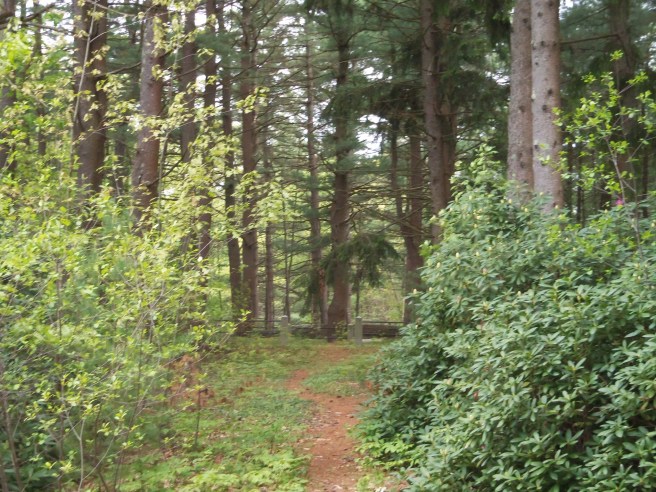
I’m becoming fond of those straight pine trees
In Colonial times, the royal surveyor marked the biggest ones as the King’s Pine, reserved for the masts of the Royal Navy.
It created a lot of bitter resentment among the settlers who had to work around them.

Today, pines of that stature are largely a legend in a state that has been heavily logged over. But some, we can hope, are growing back.
Friends lived ‘under discipline’ as a means to avoid disorder
Quakers have always faced an inherent conflict in trying to uphold a community of faith predicated on a personal experience of the Divine. How do you know you’re not being deluded or misled? You have to turn to others. (I’d say this is a great value in marriage, as well!)
This is further complicated by the profession of embodying an eternally unchanging Truth while acknowledging shortcomings in our human comprehension and changing social conditions.
I’m convinced that when the Friends movement first burst forth in Britain, anti-blasphemy laws precluded them from fully articulating the scope of their theological vision. They couched some of that by referring to the Light rather than Christ, and focused on daily conduct, or “walking in the Light.” And, no, it was never “Inner Light,” not until the late 1800s, but rather “Inward Light” or some variant. Light pouring into oneself, like a lighthouse beacon. Well, that’s the thrust of my pamphlet Revolutionary Light, available as a free download at my Thistle Finch site.
~*~
BY THE END OF THE 1600S, Quaker leadership had resolved to push away from theological correctness in favor of right daily practice – orthopraxis rather than orthodoxy.
The choice has come back to bite us repeatedly.
What we did inherit was a system of unique decision-making.
First is the organization of Meetings designated by the frequency of their decision-making sessions.
The local body is called a Monthly Meeting, and this is where memberships are “held” or recorded. A Monthly Meeting likely encompassed smaller neighborhood bodies of worship within it, such as Preparative Meetings (so called because they might “prepare” items for the monthly business session) or Indulged Meetings or, nowadays, a Worship Group.
Thus, Dover Monthly Meeting over time included Sunday and midweek worshiping bodies on Dover Neck and Cochecho Village, as well as in Kittery/Eliot, Berwick, Rochester, Lee, Barrington, New Durham, Wolfeboro, and Sandwich. In time, those that survived were set off as their own Monthly Meetings and then included in Dover Quarterly Meeting.
Which leads us to the way neighboring Monthly Meetings joined four times in a Quarterly Meeting, for mutual nurture and the resolution of lingering issues. These could be a kind of holiday that Friends and family spent together. I’m told that the local meetinghouses were closed on these occasions, because everyone was away, together.
And once a year, a regional Yearly Meeting gathered, essentially uniting a common discipline and practice for the Quarterly and Monthly Meetings within it. For Dover, this was New England Yearly Meeting, which gathered in the haven of Newport, Rhode Island. And those present were largely representatives who could afford to be away for a week.
~*~
SECOND, AND UNIQUELY, Friends developed sets of Queries and Advices to guide practice. At each Monthly Meeting, a few questions would be pondered, personally and then collectively, and a written response would be drafted and sent to the Quarterly Meeting, which would then draft a summary to be considered at the Yearly Meeting.
Until the late 1800s, business was done by the men’s “side of the Meeting” and by the women’s – the meetinghouse had interior dividing shutters that could be opened for worship and closed for business – and each half had its own responsibilities. If there were problems in a marriage, for instance, the man had to report to the women’s Meeting. Or at least, more privately, to its elders.

~*~
THIRD, FROM THE DUTCH MENNONITES, via the General Baptists they influenced in England, was our recognition of ministers and elders (aka bishops within a Meeting) and, by extension, overseers.
Through them, we also gain our peace testimony, Plainness, even anti-slavery plank.
~*~
AND, YES, WE’VE COME TO APPRECIATE “continuing Revelation.” That is, an awareness of our own human fallibilities combined with some flexibility.
If only that had come more fully into Quaker awareness earlier. Instead, at times, we’ve fallen under a deadly legalism.
~*~
Check out my new book, Quaking Dover, available in your choice of ebook platforms at Smashwords.com.
Welcome to Dover’s upcoming 400th anniversary.
Chuckles, anyway
knock, knock, in the name of the law in the Name of Jesus let us pray together naming and claiming in either case not quite the letter but the spirit of authority bet your life beginning as a child traversing the expanse of your own moniker with some Divine confrontation and wonder, as they’d say, Warmly with the chattering monkeys
Giving the devil his due
In researching a project of any scope, you can’t ever read everything touching on the subject, and sometimes that can be a blessing in disguise.
For one thing, it may mean you have to examine points afresh and unguided rather than relying on another’s assumptions or conclusions.
And, for another, you may find reassurance or in seeing how another researcher has come to the same results you have independently or, in another vein, you may strengthen your disagreement.
That’s where I find myself on The Devil of Great Island: Witchcraft and Conflict in Early New England, Emerson W. Baker’s 2007 examination of a paranormal outbreak of flying rocks in an inn on an island in Portsmouth, New Hampshire, ten years before the infamous Salem witch trials just to the south. Now that I’ve finally read it, I can say he’s cleared up some questions I had on events upstream and provided backup for some of my deductions.
My new book, Quaking Dover, takes place one colonial town upriver from Great Island, today’s New Castle, and shares some of the same cultural and historic influences. While I examine a sharp divide in Dover between its English settlers from Devonshire and the Puritans from East Anglia, Baker identifies this in Portsmouth and much of the rest of New England as the Old Planters, of Anglican faith, being pushed aside by the newer Puritans, and their rigid Calvinism. Quite simply, the tensions were more prevalent and widespread than I’d assumed.
The target of the airborne mineral projectiles was innkeeper George Walton, along with his family and guests, evening after evening through an entire summer.
Baker labels Walton repeatedly as a Quaker, as he also does for the identity for Nicholas Shapleigh, continuing a widespread misconception. The prominent Shapleigh proved a valuable ally but, as his descendants point out, he was never a member of the Society of Friends (Quakers). While Major Shapleigh suffers persecution for maintaining some of the Friends positions, nothing in Walton’s life or character suggests he did so. Quite the contrary, there were many reasons he would have been disciplined and disowned, if he had been part of a Quaker Meeting, the closest one being at Hampton.
As Baker, a Salem State University history professor, lays out Walton’s family and neighbors, what becomes clear that just about everyone had good reason to target the contentious innkeeper. As for a devil on Great Island, I’d have to say it was Walton himself.
Baker sees the New Castle incident as a precursor to similar events that culminate in Salem, and he traces individuals who would have been familiar with the Walton stoning incidents to the outbreaks elsewhere. He further finds common elements that include contested land claims and political upheaval, which far outweigh theological issues.
Baker has since written much more about witchcraft, befitting his locale. The Devil of Great Island is a fun and fast read and a fine introduction to a definitive moment in the American experience.
As I’m arguing, there’s much more in New England’s past than you were ever taught. Or maybe even suspected.