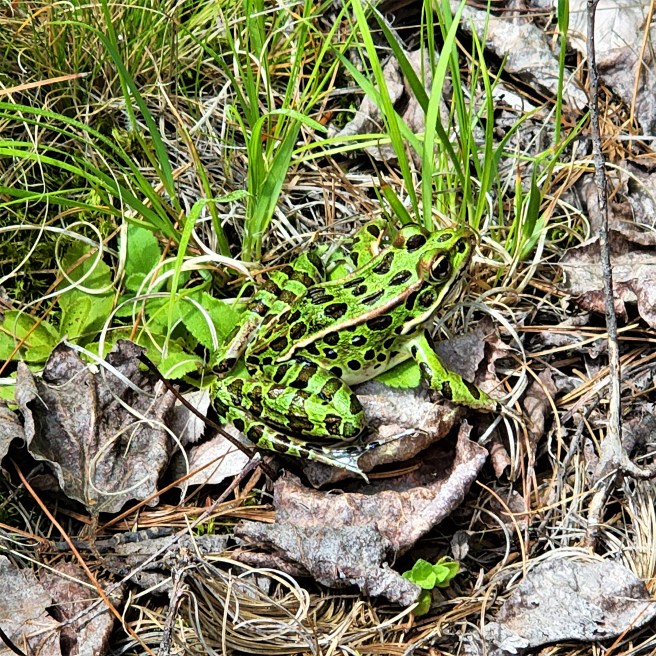
Ambush Rock

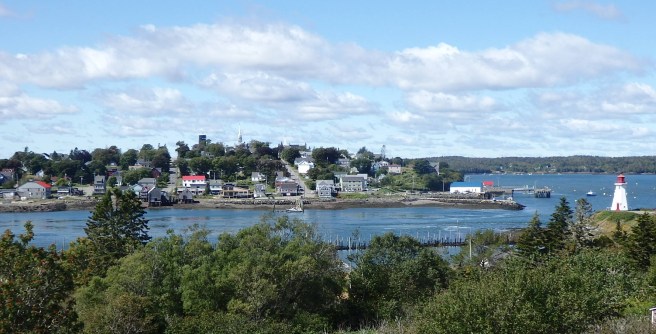
What the marker in Eliot, Maine, doesn’t mention is that Major Charles Frost and Dover’s Richard Waldron concocted the mock wargame that led to the hanging of Native men sent to Boston and the sale of about 350 Penacook women and children into slavery in the West Indies.

This was hardly an attack on an innocent party, then. The Natives waited years to extract revenge, and did it at a time and place that spared others.

My history Quaking Dover adds details.

For me, it’s a big meet-an-author event

A program Thursday night at the Dover Public Library promises to be lively fun.

Hosted by Dover 400, the folks behind the year-long celebration of the town’s settlement 400 years ago, I’ll be one of three authors of new books about the community’s past. Each of us brings something different to the table, and I’m really looking forward to meeting the others, as well as an audience full of additional insights and angles.

The program will allow each of us to address some prepared questions and briefly discuss our book before turning into wider discussion and an audience Q-and-A.

Retired librarian Cathy Beaudoin, the unofficial (and unrivaled) Dover historian, will be moderating. As an aside, I do wish she’d write the big volume about the city’s textile mills and the ways they transformed the community. She’s already curated a comprehensive lode of entries you’ll find on the public library’s website.

As a handy book you can follow around town, J. Andy Galt contributes an updated set of neighborhood walks that were originally conducted by the Dover Heritage Group. As I’ve previously posted, the city is pedestrian-friendly and has quite a range of architectural styles. In many neighborhoods, every house you pass seems to possess a history, if you stop, look, and have a few tidbits of info in hand. From the directions to one of those walks, Dover Friends Meeting finally learned where our second meetinghouse, from 1720, had been moved and now sits as a private residence.

Former Woodman Institute trustee Tony McManus brings a newly published, wide-ranging collection of newspaper columns he’s written on local history, especially the people involved.

And I’ll be there looking at the early developments from the perspective of the Quakers, for decades the town’s biggest minority.

As a grand finale, there will be an opportunity to sign books we’ll have for sale and meet one-on-one with readers. I couldn’t do that with ebooks.

(The snow date is March 9.)

English relations with the Natives were strained from the very beginning

One of the troubling revelations I found in researching my new book Quaking Dover is the depth of the English injustice and violence toward the Indigenous people of what we know as New England. It goes all the way back.

Forget the happy images of that first Thanksgiving feast where the Natives are portrayed as the special, very welcome, guests of the Pilgrims.

Squanto, after all, had been kidnapped, enslaved, and spent five years in England before the first English settlement took hold on Plymouth Bay.

Explorer Martin Pring, who established a fortified camp at Truro on Cape Cod in 1603, fled under attack by enraged Natives after he had set his mastiffs on them and fired his cannon in their direction.

The Pilgrims’ military leader, Myles Standish (not one of their faith, by the way), led the 1623 Wessagussett massacre, prompting Natives to abandon their villages for safer ground.

The Pequot war, 1637, was ultimately a land grab ending with the construction of New England’s first slave ship to trade the Native survivors into slavery in the West Indies in exchange for Africans.

And that’s before King Phillip’s war, with the mock wargame in Dover, or the waves of combat across northern New England until the treaty ending the French and Indian wars in 1763.

The outlook, of course, of “savages” and “heathens” was only part of the problem. The English insisted on addressing legal conflicts only in colonial courts. Not surprisingly, the decisions all seemed to come down against the Natives, with no independent course of appeal.

The pressure finally exploded in 1689 with the devastating raid on Cochecho Village and then Oyster River, both in Dover – hostilities that would continue another seven decades.

Are you ready for a fuller story?

When you see someplace you’ve known now in the news

The train derailment in East Palestine, Ohio, has me mentally revisiting a part of my landscape from forty years ago.

At the time, I lived two counties to the north but was a member of one of three old-style Quaker Meetings in Columbiana County, where the accident took place. So I was down there at least once a week most of the year. The county was a mix of industrial and suburban, especially where it bordered Rust Belt Youngstown, and rural Appalachia along with touches of New England. One corner abutted the Ohio River and West Virginia.

The rail line in the headlines was like those running through a small city where I had worked in another corner of the state, a place I call Prairie Depot in my fiction. And East Palestine itself could be adjacent to the city at the core of my novel, Hometown News.

Churches included Mennonite and Brethren, in the peace tradition, as well as Evangelical Friends at the other end of the Quaker spectrum.

Retracing the terrain via satellite maps, I was struck by how much I’ve forgotten, even parts I had known fondly. Others were pretty gritty, even back then.

From a distance now, it’s like encountering a ghost in a haunted house I thought I’d left behind.

Back to places I’ve inhabited or at least visited

A rather elaborate sequence of dreams after drafting a letter to our former landlords. I had fallen asleep especially early, around 8 p.m., and this was kicking in probably around 4 a.m. and continuing until 6:

I’m in Yakima (actually had an elaborate “east of Yakima” dream about six months ago, heading through the small towns off toward Tri-Cities … no trace of its content now). Except that this one could as easily be Binghamton or even Manchester.

It picks up as we’re coming over the crest of a high hill overlooking the city. We’re on a clean concrete boulevard on a sunny day, the downtown arrayed below us – and golden hillsides overlooking it from the other side. Blue sparkling river flows through it. (Columbia River, as it is up in Wenatchee?) We’re chatting about my return visit after so long.

Actually, I now remember there was an earlier episode about taking my family out West … spurred by the letter, actually … so they become part of the crowd in this series, even when they’re masked as others, I suppose. In actually, it’s a golden morning after a very glum Sunday.

It’s a smooth sweep downhill, skirting the downtown. We’re talking about a movie that was done here. (Maybe even picking up on another recent dream of visiting Ivar’s orchard, which in reality could have been in York County as easily as Washington State.)

Next thing I know is we’re driving along the sparkling blue river. From the angle of the sunlight, we must have been headed east. The freeway is in a set of elaborate caging – wiring like extended lobster pots, actually – sprinkled by a earlier shower perhaps or occasional irrigation. A vast serpentine structure along the river and overhead – was the other side cliff? “They haven’t done a movie with this yet, have they?” Laughter. And our guide (Phyllis?) replying, “Not yet.” It was very cinematic and joyful.

We pull off at a small mill area … like those of New England. (I now remember yet another recent dream, of what I pegged as eastern Ohio or even West Virginia: driving along an industrial valley, leaving the freeway and visiting within the varied small cities. Many shades of Warren, Niles, Youngstown, with moats thrown in. Maybe this dream repeatedly. Trying to reconnect with something lost.) We park and walk past or through a small Catholic church and out on a shaded plaza beside a mill. In the window, I see someone sitting. Looks like Carl P., only turning to face us, is a woman. Not pleased by our banter, either. We start to borrow a picnic table bench to use elsewhere, then I turn around and replace it. Glancing down the street beside the church, I notice that what first appeared to be triple-deckers beside the mill are actually one long, complex series of stucco apartments with Roman Catholic crosses in strategic places.

I think we had been visiting in one of the apartments … a rather erotic introduction for me … though it’s all fuzzy now. Again, later vague memories of other apartment dreams and student-residents. Colleges or art schools. Maybe Cincinnati and theaters or music.

We exit through the church, and dash across the street to a parking lot – all set high above the river, like the Sam Hill museum and Stonehenge in the Horse Heaven Hills. The headlights of a procession approach – either a wedding or, as it turns out, a funeral. Now off to the side, we watch two groups in conflict – the funeral contingent above, with the hearse, and a group taunting and jeering below. Some kind of minor thug – a woman? – is to be buried after a funeral mass.

But first, we’re off. Somehow, our own crowd has changed. It’s more crowded, and Phyllis must be driving. A teenage orphan is snuggled up next to me and several others. (It’s getting very erotic.) She’s freckled, open-faced, and has somehow managed to live on her own – a victim of the thug’s oppression. A blanket’s thrown over us. I reach down to scratch my leg (I’m wearing shorts) but am scolded for touching someone else. Lift the blanket, and a face looks up at us. “Sorry. I’ll keep my hands up here, to myself.” Laughter. There are other bodies pressed in against us, too. It’s a crowded, but joyful trip.

Turns out this is part of a group that sees this as the moment of liberation from the thug’s circle.

A leap again, and we’ve stopped at a small roadside restaurant called, it turns out, Baklava’s. Looks like a Carvel’s or Baskin-Robbins. We’re running around in some confusion. I see bagels for sale, but not what I’m seeking. (Something big and fluffy, like a cinnamon roll, or even baklava.) “Oh, the coffee comes with baklava,” I’m told, and yes, the coffee is dark and thick.

After I get my order, one of our companions (not Phyllis?) goes up to the counter, where the manager (I presume) in a red-plaid shirt is at the counter. She squirts him with a fountain pen-turned-hypodermic, hitting him with a dark liquid. He falls over backward. He was one of the thugs and we’ve made our hit. We run from the store and no one pursues us to the parking lot. Good thing, since my car keys are tangled in my pocket. (So I’m driving now?) Even with the delay, there’s no sensation of panic. We’re on the side of justice, however illicit. The people’s side. Justice has been served. It’s still morning.