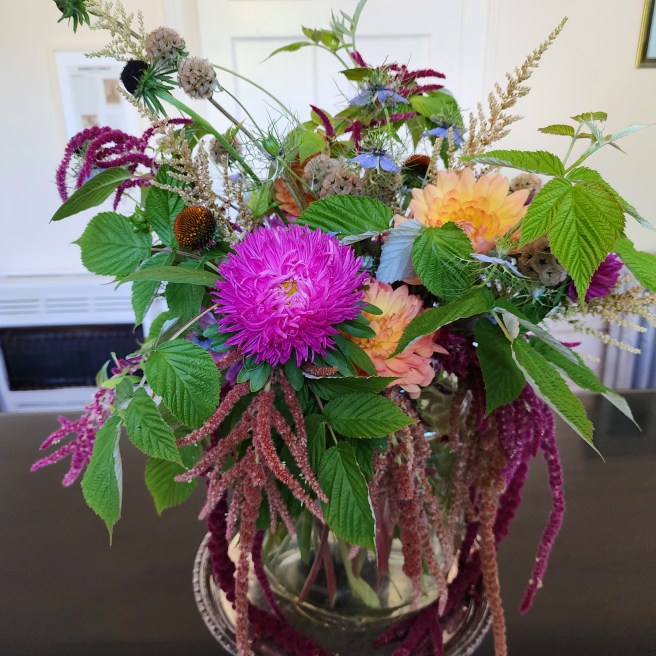
How quickly a year passes. I loved this arrangement at a Tides Institute gathering last summer.
You never know what we'll churn up in cleaning a stall
How quickly a year passes. I loved this arrangement at a Tides Institute gathering last summer.
You’ve no doubt heard more than one person boast that their life could be a book, perhaps even adding that it would make a fortune and lead to fame. Perhaps you even shuddered because this was somebody who doesn’t read books, somebody essentially uninterested that way. As a fellow writer once quipped, he could simply look at a page and tell immediately if the creator was a reader.
The fact is that good writers are also devoted readers. We are inspired by good models, informed by their content, and strengthened by their style and structure. They give us standards to measure up to, excellence to aspire toward, and frontiers to explore. They caution us against getting lazy or complacent.
As my diamond jubilee winds down, I find myself reflecting on novelists and poets and a few others who have accompanied me at some crucial stretch in my writing and editing practice. I’ve come up with a list of 50 plus one.
It’s a quirky list, with an emphasis on those who have been influences at one point or another. Sometimes just one book is enough to leave an impact. I’m not calling these “favorites” – much of my pleasure reading isn’t necessarily that original or elicit that spontaneous “Oh, wow!” reaction. Think of what I’m presenting as godfathers and godmothers of a work. These have served as touchstones or charm stones, elders, wilderness guides, guardian angels. They weren’t there to be imitated or copied but to provoke, definitely, and sometimes comfort.
Over the coming year, I’ll present one a week. They’ll run alphabetically – by first name, just to shake up expectations.
Feel free to name your own personal top writers in the comments as we go. If you’re a reader, one name will lead to another.
Onward!
Somehow, each year here at the Red Barn has taken on a special spin, despite the merry-go-round sequence of postings, categories, themes, and tags. Or maybe because of that.
While I keep looking forward to “retirement” of some kind, new material for this blog hasn’t let up.
Last year, many of my recorded dreams became a regular presentation, but I’ve run out of those. Previously, prose-poems had their run. Newspaper Traditions are now far in antiquity. And many of my poems are available at my Thistle Finch blog for reading or download. Yet I’m living in a newer, much different, world, lucky me.
Many of this coming year’s postings are shaping up as once-a-week series.
Now that the house renovations are actually happening (Huzzah! Huzzah!), you’ll be seeing that progression on Saturdays. I mean, how many times do you get to watch an old house be torn apart and rebuilt while the residents are still within it? As we were or let me say are.
My week out on Penobscot Bay in a historic schooner provided enough text and photos for a series on Sunday mornings. For me, it’s still dreamy. Hope you see it that way, too.
With a presidential election coming up, I’m returning to a clearer understanding of what’s at stake based on the Federalist papers through excerpts you’ll be seeing on Thursdays. It was that or some childish and more current quips of my own. I see this as more principled.
As a break in my Quaking Dover book reflections, I’m turning to a series looking at what’s behind my published novels. See that in contrast to “what they’re about.” That series of posts is set for Fridays.
Add to that is a series on Mondays, looking at authors who have influenced me one way or another. They’re not necessarily my “favorites,” but definitely ones I want to revisit in my years ahead.
Meanwhile, the Tuesday Tendrils, ten items about whatever strikes my fancy, will continue, as will the Sunday night Kinisi.
I promise you these posts will encompass another full year. Please stop by often, and leave comments, especially. I still think your contributions are the best part.
Happy New Year, dear readers.
Cell calls
fingers
Like finally running out of words and thoughts?
Can I quit now?
Rather than what the French call la petite mort – little death.
Even with the big grin or two.
If you’ve wondered about the many unanswered questions in my book Quaking Dover, let me say I’m hoping they become a prompt for other history fans to follow up on.
Frankly, if I hadn’t given myself the deadline of Dover’s 400th anniversary, I’d still be in the research stage rather than having a published book in hand.
I would especially be interested in pursuing what happened to Friends who were disowned by Meeting, especially over matters of marriage. How many joined other congregations – and which ones? How many drifted away from religion altogether? How many Quaker values did they continue, as well as which ones did they reject?
There are also the things from our own time that we might answer, if asked, but that will fall through the cracks. Ours are truly fast-moving times, and I’ve often been startled when presenting my own poetry and fiction to find points I have to explain to younger ears in the room. Transistors, the forerunner to computer chips, was a prime example.
So here we are once again, looking ahead and looking back in our own lives.
As for Dover, as the big 400th anniversary wraps up?
Happy New Year, all!
Most conductors try to make it melodious and strictly in time, constrained by starched shirts and gowns. Seated audiences typically go for that tuneful approach, not that humming along is approved.
What I find more compelling and exciting, though, is when the performance is filled with bubbles, like champagne, and a tad tipsy. One dance partner stepping on the other’s toes. Even better, when there’s some tension between, say, the brass and the strings, with a hint of freedom within the beats, the way one dance partner is a hair ahead or behind the other. Yeah, a little swing, if you will. And a little playful unpredictability.
Well, here we go, in the air approaching another new year.
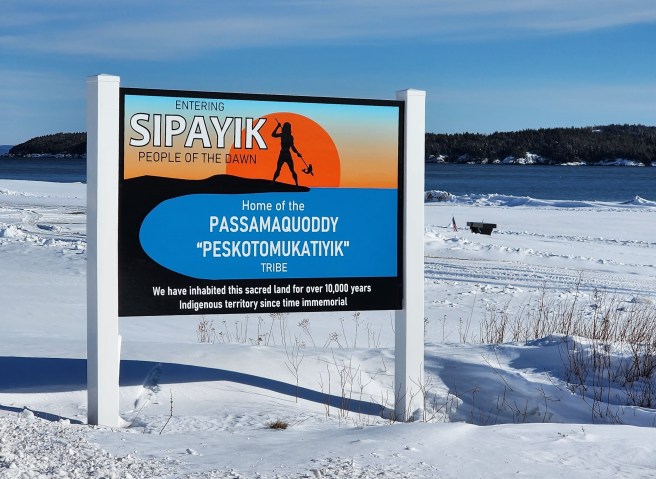
The name of the reservation, I mean. The opening S is supposed to sound more like a Z.
As for the tribe? The anglicized version demonstrates how tin-eared most Americans have been throughout history. Makes me wonder what else has been lost in translation.
Everybody wants something.
You have to have somebody you hate.
 Jnana's Red Barn