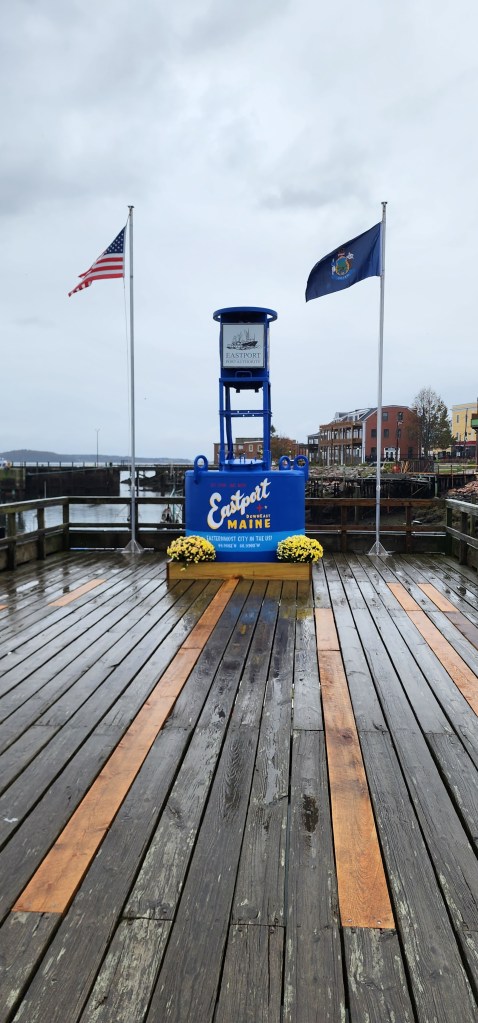
The buoy has become a popular spot for selfies.
You never know what we'll churn up in cleaning a stall
The buoy has become a popular spot for selfies.
It’s pure coincidence that he should appear in this series on Earth Day, but it’s totally fitting.
The tumultuous spring of 1970, when the first Earth Day was observed, was also when I first saw someone sitting in deep meditation. The figure was in lotus position under a beech tree totally motionless for perhaps a half hour while I waited for my girlfriend at the street corner nearby. My inner reaction was hostile, wondering how anybody could withdraw from the world amid all of the conflict around us at the time. Only later did I put the events together – Gary Snyder, just back from years of Zen practice in Japan, was giving a reading on campus. I even admired some of his calligraphy in a display in the Student Union. And, as I would discover, he was a leading activist on progressive fronts.
About a year later, when I took up yoga and its meditation, I had already begun reading his poetry and was struck by what seemed wild construction. What I eventually detected was how precisely it fit an American voice yet moved on Asian meters with utmost economy and, in his case, clarity.
About a year later, I was living in a yoga ashram, a monastic community not that different from the Zen monasteries he had known in Japan. In addition, one of his essays told of visiting the ashram of our teacher’s teacher in India. It was perhaps the best portrayal of Sivananda I’ve yet read, free of the usual guru adoration.
Similar flashes continued as I returned to Indiana, where he had done graduate studies, and then on to his native Washington state, where he had long been a much better mountaineer than I ever would be. Still, the high country he celebrated was both real and transcendental, even in my briefer experiences. His familiarity with Indigenous tribes also informed my own encounters while living at the edge of the Yakama reservation.
I relate more of this in a poem in my Elders Hold chapbook, should you be interested.
Or, for a thinly veiled biography of him before he left for Japan, there’s Japhy Ryder in Jack Kerouac’s Dharma Bums.
Much of my writing, poetry and fiction, has concentrated on place itself, and that’s been something Snyder, too, has done. While I have moved independently of his example, I have been indebted and inspired.
Hari Om Tat Sat!
sputtering
stuttering
GENIUS
The evolution of the surviving coasting schooners from freight to a summer vacation platform where people could get a taste of what had previously been available only aboard the yachts of the rich is largely credited to Captain Frank Swift and his efforts from 1936 to create what he saw as a kind of dude ranch escape on the waters of Penobscot Bay.
In time, other owners joined in.
Notably, in 1973 Captain John Foss purchased the Louis R. French and removed her from the freight trade. He spent three years restoring the vessel to her original sailing condition and outfitting her hold for passengers. Oh, my, did he!
In 1986, he sold the schooner to his brother-in-law, who sailed and captained the French out of Rockland and then Camden until she was purchased from by Captain Garth Wells in 2003, who in turn sold to Captain Becky Wright and Nathan Sigouin. Maybe “passed her on” would be a more apt description.
Meanwhile, the already legendary Foss turned his attention to renovating the American Eagle, which he purchased in 1984. It’s now one of the few schooners that undertake longer voyages to places like Grand Manan Island near me or down to Gloucester on Cape Ann, Massachusetts, in addition to venturing offshore looking for whales.
At first, those names meant little to me. Now, however, I understand why they’re often uttered in reverential tones.

first, flapping fabric as wind kicks in
then a surge at my seat and flooring
like riding a stallion
muscular under the saddle
As I said, the best place in the house for our new woodburning stove was occupied by a large cold-air intake duct for the furnace. We needed a plumber to move the vent over a few feet. “Piece of cake,” as we were told. Well, he needed a carpenter, too. We were already covered there. Ditto for the electrical.
In addition, as I’ve explained, the best pathway for the wood stove’s metal pipe chimney ran right through a cubbyhole where our water heater sat. We were already intending to replace the unit for a more efficient heat-exchange model anyway, so we bumped that up in the timeline. As long as the plumber was in, right?
And while Thomas was at it, the float on our old, jerry-rigged sump pump had begun sticking, causing the cellar to flood, so that could go, too. No problem, he’d replace that at the same time.
If we like him, there’s a lot more ahead – a kitchen remodel, a new bathroom upstairs, and then remodeling the little one downstairs that’s way too outdated. Oh, yes, and the outdoor faucets.
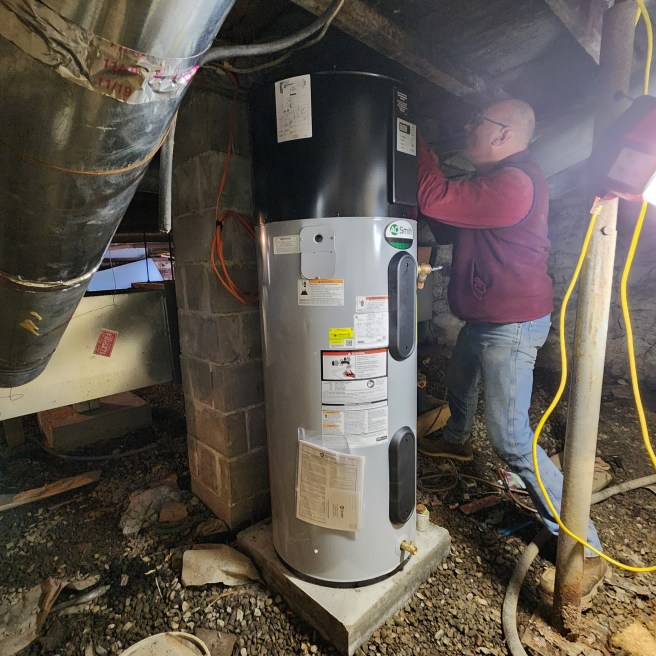
Its pad was installed earlier.

So that’s how the heat-exchange water heater was installed in the cellar, under the old, inefficient water heater. Adam, our contractor, handled the new concrete footer and the electrical wiring. We’re told it should also dehumidify our cellar. Now that’s a happy bonus!
And all this was wrapped up the day before Christmas Eve.
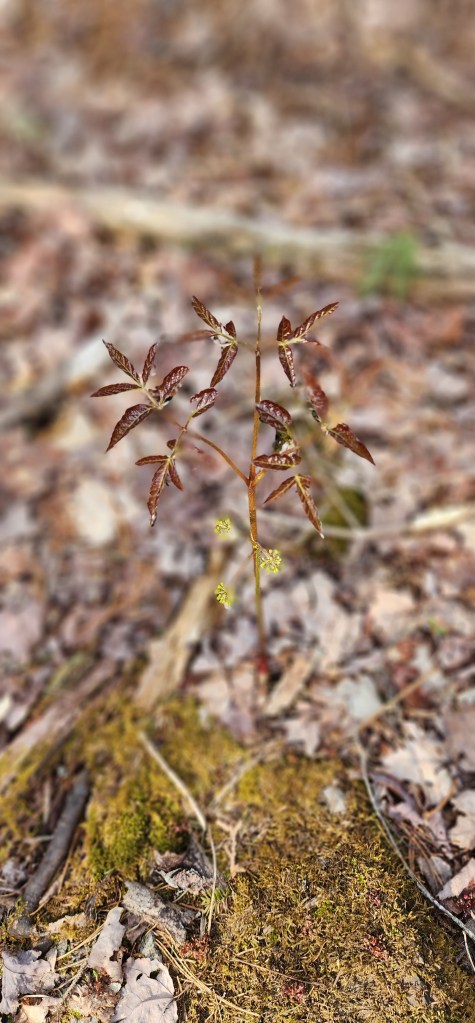
Almost like a miniature Zen garden.
Is it even a sanctuary? I call mine a studio, while my spouse refers to it as my lair.
In my first four apartments, mine was in a corner of a room, including three where I sat cross-legged. (Not an option any more, thanks to aging. The sitting on the floor, I mean.) The fourth had a circular utility spool on its side as a table and some kind of chair. If you don’t remember that piece of hippie furniture, just ask.
In later moves, I rented apartments having a second bedroom I could dedicate to the Real Work.
The most impressive was in the small townhouse, where my dream studio occupied the only bedroom upstairs. With its hanging ferns, it looked pretty impressive – from the street, especially, I configured the downstairs into a comfy studio apartment.
There’s the question about sitting in front of a window, providing some kind of view. Annie Dillard, for one, has weighed in totally against that, preferring concrete blocks. At the other extreme, I remember overhearing one wannabe writer detailing to her husband all of the remodeling that was to be done to their house so she could take up writing the novel she planned.
I’ve had both. My office chair in the townhouse gave me a commanding view of the parking lot and water tower beyond. Well, the arrangement gave me a feeling of command, period. In my second apartment in Baltimore, my studio overlooked a set of AM radio towers but my desk stared straight into a wall. The first had looked down on some small urban backyards and an A&P grocery beyond an alley.
Once I moved to Dover and remarried, I wound up in the north half of the third floor, under the eaves, as you can see in previous posts here at the Red Barn.
At the moment, I’m in a corner of my bedroom, in front of a window and our backyard. Once our renovations are finished, I’ll be upstairs but with the window further above me.
Since I’m pretty much paper-free these days, I need far less tabletop and filing cabinets – remember those? You can’t even give them away any more. They’re rather like used pianos.
Well, one friend gets a new chair for each new book, sometimes nothing more than an aluminum lawn chair, and he’s done quite well, getting reviewed in both the New York Times and its Sunday book section or magazine and sometimes showing up on the bestseller list.
What’s usually overlooked is the supporting space – filing cabinets (yes, a few remain), bookshelves, tables, additional seating, even a daybed or couch, perhaps. Dillard, I recall, had some kind of cube. I think fondly of a Mainer who had the top half of a small barn remodeled for his library and cozy reading and writing space – it was the inspiration of what I hoped to do to our red barn, a dream that never quite materialized.
One big transformation for me has been the shift from paper to digital. I mean, I rarely print out anything anymore. For a while, I didn’t even have a printer. And, when I was up on the third floor, our printer was down on the main floor, accessible to the rest of the family. That wireless connection was a huge advance over the proprietary cord attachment.
I require far less room now than I did when I dreamed of converting the top of my red barn into a studio and library. My, that was grandiose! I hate to think what the heating bill would have been, just for starters. And besides, once we went from five to two in the household, the entire equation changed.
~*~
Equally fascinating is a writer’s use of time.
Charles Bukowski insisted on daily “butt time” at the keyboard, while Jack Kerouac would charge up for a two-week mostly sleepless typing orgy every six months or more.
I’ve known both but lean more these days toward Bukowski.
For much of my adult life, I felt guilty for the reality that writing took away from so many other things I “should” be doing. It was somehow selfish. One summer, though, at a Quaker gathering on the Bowdoin College campus in Maine, I was in a workshop on prayer. The facilitator handed us each a card and told us to write a prayer request – for something for ourselves. For most of the circle, maybe all, this came as a shock. We were prepared to pray for world peace or people we knew, but not ourselves.
So we broke out into groups of three or four, and prayed for each other’s requests. To my surprise, I felt liberated. One participant told my writing was my gift and to respect that. It made it much easier for me to dedicate one day a week to my writing efforts – I was on a four-day workweek at the time, but managed to continue that focus after going back to the traditional five.
~*~
My productive time in college was after midnight. After living in the ashram, that shifted to dawn. During my sabbatical, it was two stretches – one roughly 10 am to 2 pm and then after 10 pm to whenever.
I had big daily and weekly schedule plans for my retirement years, but now that I’m there, those are either amusing or embarrassing. I spend way too much of my life at this laptop, let’s simply say.
Remember, Internet and blogging weren’t a factor back when I was dreaming of being free of the daily office.
Earlier in this series I touched on authors who said they wrote only two or four hours a day and my shock that it wasn’t more.
Now, though, I’m seeing that in a different light. In my time with the newspaper syndicate, my “productive” time was a mere hour-and-a-half to two hours a day when I called on editors in person. The rest of the time was travel, preparing for the sales call, following up with phone calls and letters, filing expense and mileage reports along with reactions – what I term infrastructure. It’s a pattern I see as more common than the assembly line productivity that’s somehow instilled in me. You know, the reaction when you see a Road Work sign and then see three guys doing nothing more than smoking a cigarette.
Or, as I realized when I was stationed in the composing room on a Saturday night and moving pages for the Sunday editions, I more than earned my week’s pay in an hour-and-a-half as we raced to meet deadline. It was a furious crush. If those papers weren’t in supermarkets or readers’ homes across the state on time, we’d lose sales and subscribers.
In other words, you can’t go by assembly-line wage thinking.
The Federal and State Governments are in fact but different agents and trustees of the people, instituted with different powers, and designated for different purposes.
James Madison in Federalist No. 46
For many people, worship – or even spirituality – is a way of escaping everyday life and conflict.
For Friends, in contrast, worship is a place and time to embrace it, face it, transform it, find harmony and appropriate action.
Not that I would have said that before. In fact, for years the high I felt in the hour did provide me a weekly respite.
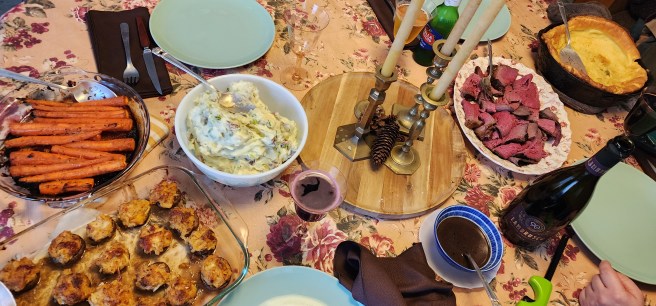
After such a spread, there will be no need for dinner later.
 Jnana's Red Barn