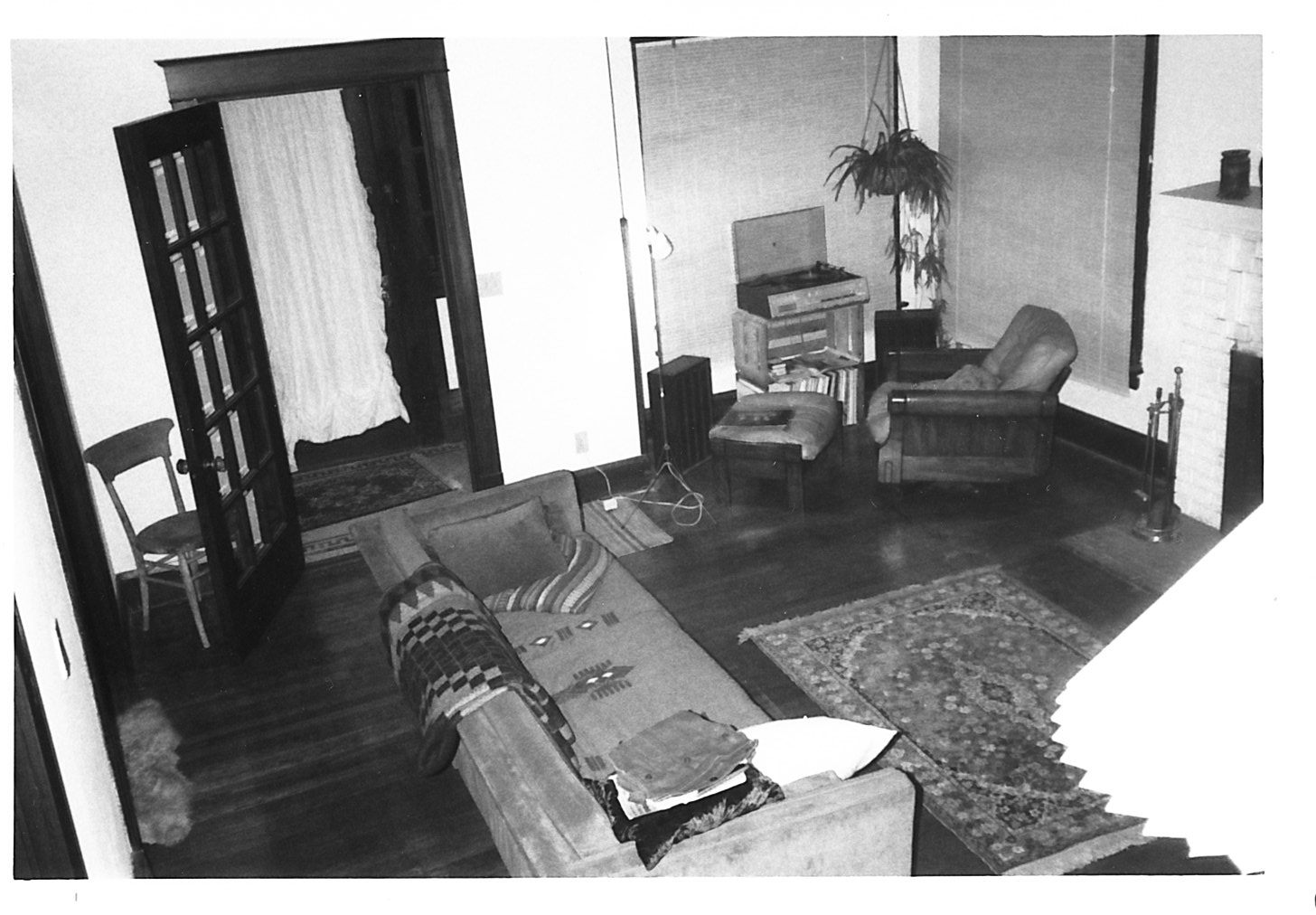
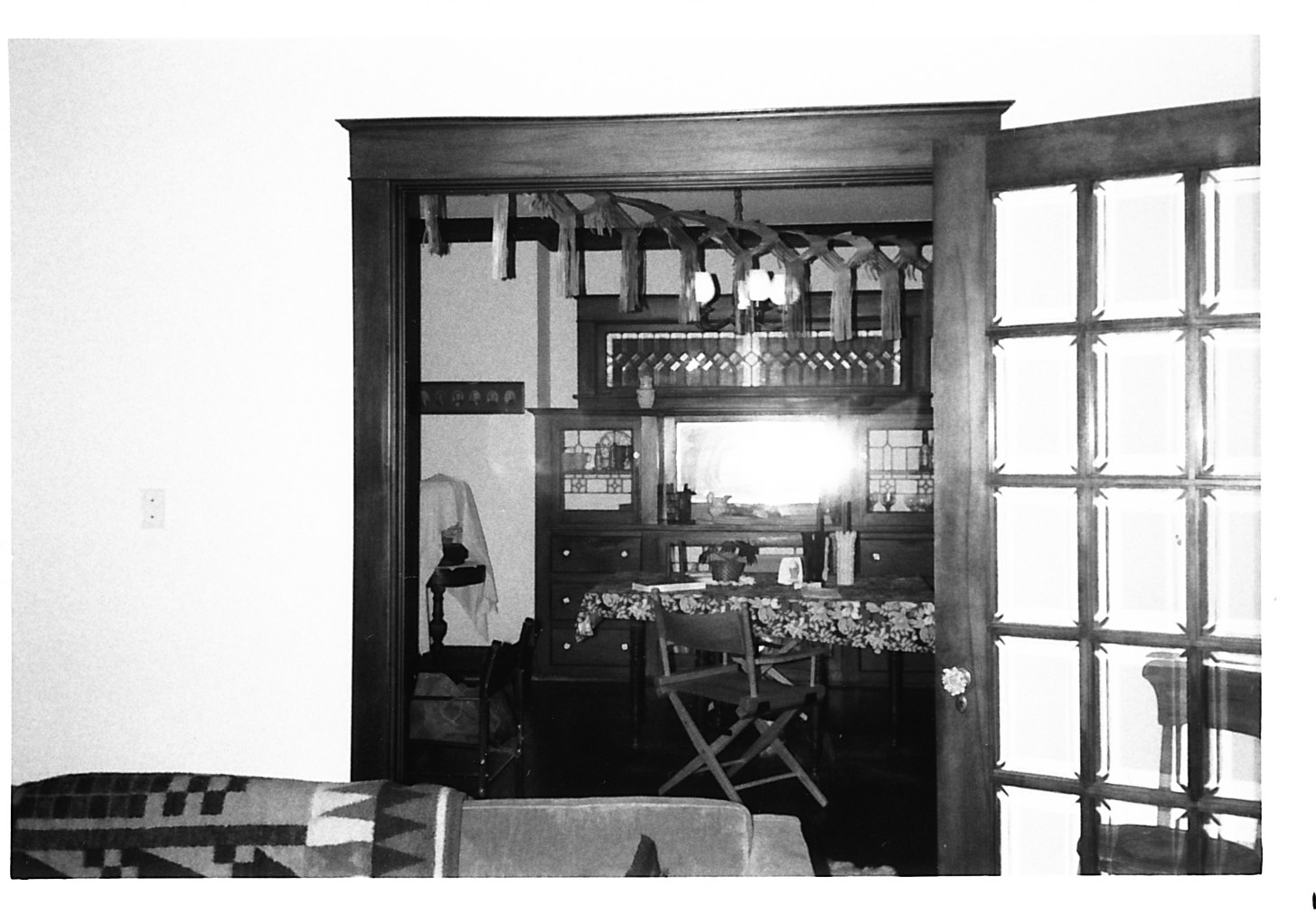
 I still miss this house with all of its Craftsman movement touches. It had a marvelous aroma, too.
You never know what we'll churn up in cleaning a stall
I still miss this house with all of its Craftsman movement touches. It had a marvelous aroma, too.
Ever look back and wonder when you first encountered an item that’s now one of your go-to menu items?
Oh, I can remember when pizzas first invaded our neighborhood – the smell of oregano easily triggers that preschool memory!
But the Greek wrap called a gyro – and pronounced HE-ro – remains a mystery. I may have discovered it, along with souvlaki, in the late ’70s in the University District of Seattle, back when we’d visit from the interior desert. Or it may have come from a takeout place we ordered from at the newspaper, a decade-and-a-half later.
I do remember a heavenly example from a wood-fired stove at the Common Ground Fair in Unity, Maine, back in 2002 – along with a wait in a very long line.
More recently, it’s been the highlight of dinner before our weekly choir rehearsals in Watertown, Massachusetts.
Just remember, no onions on mine, please.
As I said at the time, all too long ago now:
Preserved and mature, how tall the great trees along the Northwest rim: the redwood, red cedar, Douglas fir.
Too often a memory, the tall-masted vessels as well, billowing in the current.
~*~
To see more, click here.

One of the biggest lessons I carry from backpacking as a kid is the importance of traveling light. Take no more than you need. Be resourceful.
In those days, I should add, everything weighed more than today’s high-tech, lightweight gear and dehydrated food packets.
On our week along the Appalachian Trail, I was a 12-year-old hauling a 60-pound pack in what seemed endless uphill marathons.
It’s a lesson you don’t easily forget, even when you’re going by airplane.
~*~
 To learn more, click here.
Curiously, growing up in Ohio, I was nonetheless somehow fascinated by mountains. They arose in my early drawings. On family trips, it didn’t take much for a wooded hill to become a mountain in my mind. An astrologer might argue it has something to do with all the air signs in my chart. Whatever the reasons, a ridge line or summit calls to me.
There were a few tantalizing early encounters in childhood trips to the Great Smokies and eastern Kentucky. My true initiation, however, came at age eleven with a week of backpacking on the Appalachian Trail in Tennessee and North Carolina. It was miserable and magical, and left lessons for a lifetime.
Still, it wasn’t until after my college graduation that I came to fully appreciate mountains – living, by turns, in the Southern Tier of Upstate New York, the Poconos of Pennsylvania, the Cascades and Olympics of the Pacific Northwest, as well as Maryland (with its Catoctins and access to the Shenandoah Valley) and finally New Hampshire.
Many of my poems arise in some of those experiences over the years.
We could collect them as “By Gully,” playing off Louis Ulrich’s vow to climb Ulrich Couloir to the summit of Mount Stuart (9,415-foot elevation) one final time – “my gully,” as he referred to the trajectory more than four decades after he and two partners established the now basic mountaineering route in July 1933. A climber explores a slope, recognizes the avalanche chutes along the higher crests, approaches summits themselves via passes, gaps, or notches, usually following a streambed. The connection of gullies and mountains is established. By Gully.
Yet that is only half of the equation. Mysticism, as I’ve known it, keeps a foot to the ground, and often a hand or the butt, too. The spiritual journey leads to the mountaintop and back – if you don’t run ahead of your Guide.
~*~
It’s the background for some of my novels and poetry now appearing at Thistle/Flinch editions. To read more, click here.
I learned to backpack as a Boy Scout. Our troop was big on primitive camping using homemade trail tents.
When you successfully passed the requirements for the Second Class rank (twice – ours was a strict troop), you got to construct your own pack frame. When we went camping, you had everything tied tight to it – inside your sleeping bag, which was rolled into the trail tent.
When you were awarded the First Class rank, you were privileged to weave and stain a rectangular basket that was then bolted to the frame. Your sleeping bag would be rolled up in the tent and tied to the top of the basket, while the rest of your goods went into the basket itself – a much more convenient arrangement.
You couldn’t buy a backpack like that anywhere except, maybe, a very expensive outfitter’s.
What I learned along the way was equally priceless.
The pack on the cover of my poetry volume is a more traditional design, but it still stirs the memories.
~*~
To see more, click here.
I don’t know how it is where you live, but here in New England, we seem to have gone straight from the end of June into August. Not just my household, either – ask around, and everybody admits the same. We just didn’t have a July. Nobody knows where it went. Hiding out in one of the closets?
Some years we know it’s July by a prolonged steamy oppression that finally breaks out into a glorious August. Not this year. The only evidence of passing time I see is in the profusion of weeds – the garden was still orderly at the end of June. At least the produce is coming along on schedule. Oh, my, yes! Real tomatoes!
If it were just me, I’d blame being obsessed with drafting my newest (and likely final) novel. But then I ask around. Yup, everybody agrees.
Now, let’s make the most of August before it, too, has passed.
At our yearly meeting sessions each summer, one night features an all-ages coffee house organized by the teens. It’s a great release for the adults, who have been hunkered down in joint business agendas that often run three hours at a shot. Still, in a week filled with those plus organized discussions and workshops, committee reports and tables, social issues documentaries, casual conversations, and much more, the live amateur entertainment can be a bit much, no matter how excellent many of the acts are.
So it was for me one year when I decided to skip the event – perhaps even go to bed early for a switch.
As I wandered down a hallway, I came across a half-dozen or so Friends gathered around an upright piano and singing four-part music. Great! I jumped right in and was delighted when we turned to a Stephen Foster piece that’s also in the repertoire of my choir. We were just getting it down for ourselves when the announcement came: “You’re on in five!”
What?
My plans had just changed.
So there we were, all adults, lining up for the stage, marching up, finding our places in a semi-circle facing the audience, and being introduced by an enthusiastic high school senior. What was supposed to be “the Hard-Timers,” after the piece we were to sing, came out of her mouth as “the Old-Timers.” Instead of being offended, though, I was grateful it hadn’t come out “the Alzheimers.” Ahem.
If you’re not yet there, be warned: This getting older does have a lot of unanticipated turns. Don’t you forget it. And don’t forget to smile.
Gourmet is one of those words I’ve come to detest, in large part because it’s lost any genuine meaning. Well, these days it’s usually an excuse to charge more for an assembly-line product, but that’s about it. As an adjective to suggest quality, it rarely reflects excellence. As for its other definition, as a noun, we have glutton or pig.
So here I am thinking once more of the “wow factor” on our tongue and palate. It’s the surprise that accompanies an amazing first morsel or sip, when our reaction is “Oh! Wow!” in discovering the treasure before us. Often, it’s uttered before we’re fully conscious of doing so.
I know those who take the over-the-top approach here, adding and adding to a dish until it’s simply overwhelming. Or taking a drink to near-lethal alcohol levels for its whammy.
For us, the “wow factor” is more simply direct. It honors the ingredients and makes them shine. It knows there’s no substitute for freshness, and its techniques aim at enhancing that.
If you want to read more of this philosophy, Angelo Pellegrini’s writings, as my wife attests, lay it out delightfully. A generation before Julia Child, he began instructing fellow Americans on the ways of applying homegrown herbs and spices and appreciating the pleasures that follow. His lovely essays are about gardening as much as cooking, along with a few diversions like making your own wine or the joys of being a granddad.
I come back to this each year as our own garden kicks into gear. Forget any argument that gardening is cheaper – it’s not, even before you consider your own labor. It’s the taste that accompanies freshness – sometimes while the strawberry’s still warm from the sun or the lettuce was crisped earlier in the afternoon. Real tomatoes in contrast to the impostors at the grocery are another matter altogether. I’ll go ten months without the latter, if necessary.
We managed an overnight getaway to the Cape recently and decided to try the bakery-bistro combination across the highway. There are good reasons the line’s out the door in the morning. As for the evening, when we decided to stop for drinks and appetizers, we figured we could walk home rather than drive.
As I was saying about Wow? From start to finish. Let me warn you, it wasn’t cheap, not even by today’s average. But it was worth every penny – something I won’t say for any of the chains where I’ve eaten in the past few years. And what they’ve done to the former clam shack in the past six years is amazing – you’d never guess something this charming could come out of something that had been so decrepit.
I’ll try not to go into a restaurant review, but let me say I never imagined corn (fresh, local) could be pureed with (forget the cooking-school terms) the sweat from a baked salmon to produce a cold soup this heavenly. As for the oysters on the half-shell, the presentation was breath-taking – generous in the ice, accompanied by the in-house sauces – but the oysters themselves were fat and succulent, the way they are in November or December, fattened up for winter, rather than this time of year. Responding to that observation when chef/owner Philippe Rispoli stopped by our seats at the bar counter, we heard his pride in working with Richard Blakeley and paying top dollar for the best. I know this was Wellfleet, but I’ve had Maine oysters that have surpassed what I’ve had in other establishments in town – until now. As for their variant on Oysters Rockefeller, we go back to Wow.
We ordered wine by the glass – and our sauvignon blanc was priced reasonably, and the portions were generous. Perfect.
My wife, always a critic when it comes to food, declared her pate to be everything she’d hoped for, even before she got to the accompaniments and salad. The vinaigrette, as she noted, was amazing – whatever measurements he’d worked out, there’d be no changing this recipe.
Curiosity taking priority over any appearance of sophistication, we also ordered a side of pommes frites – or French fries, to most of us. They arrived in a glorious presentation with a red-and-white checkered napkin – and one bite once again went Wow. The chef asked how we liked them, grinned in response, told us he made them himself.
I should explain that we’ve decided fries are often a reliable test of a restaurant’s ability. Are they straight from a supplier’s frozen batch – or made from scratch, like these? Are the outsides hot and crusty and well seasoned, like these? Or limp and flavorless? Are the insides creamy and yummy, like these, or merely whatever?
The test also extends to a restaurant’s attention to its frying oil and batters – fried onion rings are another big litmus test here. Light and fresh? Old and heavy? As we say, “They do cooking oil well.”
OK, if you’re planning a trip to Cape Cod (I first typed that Cape Cook, make of it what you will), I won’t keep the place secret. Just click here.
Another blast from my past:
I spoke in Meeting about being a flatlander from a landlocked place and my ongoing fascination with the tides and moods of the ocean, leading into my first experience on a sailboat which was also my first experience out on the Atlantic and my first time of seeing a whale, which popped up in front of us.
I then mentioned another trip when my boss asked me to take the till and my surprise at feeling the wind pull the sailboat in one direction while the current tried to turn it in the opposite and how I was trying to steer to a compass point in-between – me, who would rather avoid conflict. On top of it all, it was a day when we could not see our destination, the Isle of Shoals, but had to trust our maps and calculations. Then, too, Peter’s girlfriend laughed, realizing my fear of having the boat be blown over. “Don’t worry,” she said. “If the boat tips that far, the sails will deflate and we’ll right again.” She paused before adding, “Besides, if there’s really a big gust, there’s nothing you can do about it. That’s how I lost my boat.”
As I spoke, I admitted the associations of wind to spirit (inspiration) and, as I’d now add, intellect, and of water to emotions and the unseen, while we are here in our own little vessels steering in the hope of an unseen destination.
Afterward, one Friend told me of the importance of finding that point of critical tension in our lives, where things can be accomplished. I now see this in contrast to the Tao, path of least resistance or way of falling water.
A second round of memories involves an ability to choose the right sail or combination of sails to fit the wind, as well as the lulls. The emerging harmony, too, between the winds and the waves, the lift and fall along the way.
 Jnana's Red Barn