On the domestic front, such as it was

Picked Kitty up after her job Friday and hit Keoki’s for cocktails and appetizers. How I wish she would like it here! Indian crafts show in Toppenish this morning, stopped at Wappenish Bead Shop/Trading Post, very nice vibes — mild ashramic throughout, a place to return. Both Rainier and Adams in the sky.

Ray’s Meat Store, hardback bacon and shoulder of lamb — free pound of ground sausage, free pound of ground beef — friendly old shaky fat fellow. Kitty, afterward, “Do you cook the shoulder the same as the leg?” and then phoned her mother, who said, “The shoulder’s better!”

We were getting to know salmon and crab and rainbow trout, too.

~*~

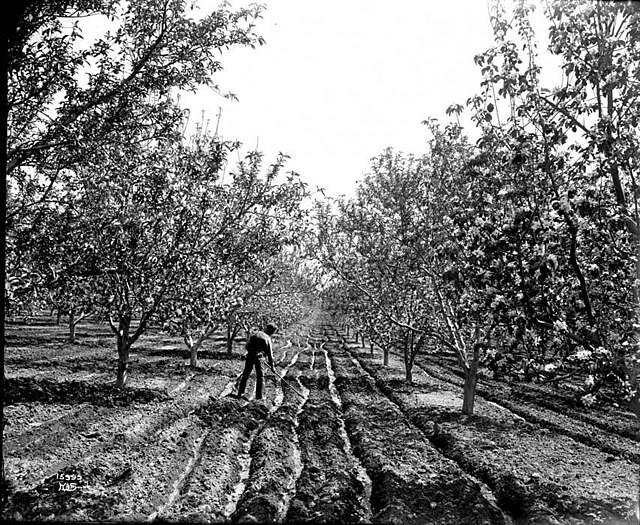
As my then-wife accused me, where the hell was I taking her? Much of the land was settled within the memory of some of the oldest living residents. The route we entered by, with heavy cloud cover, was highly honky-tonk cowboy. Here’s a historic photo reflecting the early settlement, 1880 to 1920, via Wikimedia Commons.

~*~

Touchy around Kitty, who’s speaking baby talk more and more, drawing me into pointless conversation or interruptions, “How do you spell …” for the umpteenth time, and desires to spend (I just noticed the clutch needs tightening). Now she wants a $139 necklace for Christmas.

Where am I going? What am I doing here?

To again be passive and receptive wouldn’t be bad.

She’s impossible to live with these days. She wants something, wants to buy everything, but that’s not it. Unhappy, clinging to me yet feeling trapped, not knowing which way to go.

A man can live on next to nothing but not a woman. Even in the war, when they were starving, they had cosmetics, they had perfume. (So says my father-in-law, with a sly grin.)

Her Christmas list:

  1. Baskets
  2. Photo supplies — new tank, shaker, orthographic paper, textured paper, drying rack, timer
  3. Blank paperbound sketchbooks
  4. Art supplies — easel, loom, ball winder
  5. Sachet
  6. Mittens, knee socks, sweater
  7. Another flannel shirt — 36 or size 12/large women’s or medium men’s
  8. Candles
  9. Place mats
  10. Ceramic cups etc.

Paul [a new sports writer?] was talking about the spirits in his parents’ house (behind you, the cold), thermostats clicking on within warm rooms. Well, it was a funeral parlor.

Where everyone has a fireplace
or wood stove
that works,
everyone burns.
Or could.

Watch the flames
while pondering life
facing death.

With or without smoke.

Or a snake.

Kitty got her four-harness loom on our dash to Seattle … and we stayed with [former Workshop colleague] Franny’s parents, Cortes Island … quite lovely on the waterfront with light snow.

Putting presents away: Avon bottle, English Leather aftershave, an electric can opener — things you get used to, the trappings of middle class.

~*~

From Spiralbound Cascadia with commentary.
 

I must wonder now how others perceived my role

In reviewing my journal scribblings, I’ve been surprised how little I recorded about my introductory months at the Herald-Republic. By the way, that had been “Republican” for much of the paper’s history. What I am seeing, though, is how much I was Gil’s right-hand man, rather than the newbie at the bottom of the pecking order. Still, I was a utility player who had to jump in wherever the need arose. Not exactly a floater but close.

For the first time in my career, I was working closely under a manager who was actively grooming me. It was definitely different from my internships at the Journal Herald, which had presented some solid coaching all the same.

I don’t know how much of this period was reacclimating myself to daily journalism after my year-and-a-half break in academia, but in addition to adapting to a new landscape quite different than any I had known, I was also observing the lay of the land inside the newsroom, where Kent and Gil hadn’t made any big changes yet.

Astrologically, my Aquarius was a complementary opposite to Gil’s Leo, and from the ashram, I had learned to let him shine. In return, he respected my need for independence. It worked well. He was an avid sports fan, contrary to me, and had even been executive sports editor at the Miami News in one of his stints.

One bit of interesting coincidence was that in the Air Force, he had almost been posted in Enewetak in the Air Weather Service, 1957-’58, when Sam [my father-on-law] was the meteorologist in charge during hydrogen bomb tests.

In trying to catch up now, I see that he was born in Omaha in 1936 and died in Newburgh, New York, in 2015. I always thought of him as a Californian and learn from his obituary that he moved there after his military service, attended college, and then worked at a series of California papers before joining Kent as the assistant managing editor in Yakima.

~*~

As for my floater situation? As I noted:

Tenth straight day of work. The Sunday night/Monday morning doing me in. But have built the GR boards (timeless backup stories ready to paste up if the system crashes) and removed deadwood. …

On day shift this week and told I’ll be editor of special sections — day shift, M-F, beginning early December … [four months away] .

~*~

Photo by Cacophony at Wikimedia Commons.

~*~

 Should you wonder why I go by Jnana:

Ours was a newsroom of Jims: both the current and future publishers, the city editor and his assistant, the sports editor, our local columnist, maybe a reporter or two … ultimately, a third of the males in the newsroom … as for the composing room, advertising, the pressmen? It was like being named “Boy.”

Even so, I was back to my pedestrian given name in this setting, unlike Bloomington. Here, Jnana became reserved for my friends, fellow Quakers, and literary endeavors. You’ve probably figured out by now that I have often functioned by relying on a compartmentalized life.

~*~

From Spiralbound Cascadia with commentary.
 

My initial explorations in the Cascades

The primary attraction had been the mountains. We were in the foothills on the eastern flank of the Cascade Range. I was getting out into the wild probably every week from summer to the start of winter. Here are a few excerpts.

Darling Mountain

One of my first exploration, maybe the first, was on a Tuesday I had off work, when I drove up the Middle Fork from Tampico and then logging roads to Darling Mountain crest. Sheep scats and tracks around the snow and awesome meadows. Old site of forest fire lookout, since torn down. Climbed a dead tree to enhance the view. Mount Hood, above clouds. Adams, thrusting into them, closer. Goat Rocks across the way, and St. Helens’ perfect cone beyond. Straight ahead, following the road, Rainier thicker into the clouds somehow superior to the others. Then, a golden eagle sailing straight toward me, turning off perhaps 30 yards away, soaring off, circling briefly, and disappearing. With my guest status, I gave gratitude.

Deep forests were extraordinary.

I had no idea that this was on the second-highest logging road in the state.

Cowlitz Chimneys (center) with the Goat Rocks (background) from Sunrise point on Mount Rainer, photo by Steve Redman at Wikimedia Commons. 

Rainier route

On another trip, on my way to Mount Rainier, saw my first petroglyphs (rock inscriptions) and petrographs (rock paintings) outside of Naches. The paintings looked a little faked — red and white, perhaps with a little blue or red.

They were found near where the Naches and Tieton rivers veered off westward toward the Cascade Range. Photo by William Borg.


Photographs by Robert Niles via Wikimedia Commons.

Our routes to Rainier were progressions through ecosystems that became familiar over repeated exposure as we drove from sagebrush desert into ponderosa pines and reservoirs of future irrigation waters on our way to the high country of the Cascade Crest and the rainforests beyond.

Rainier hikes inspired many poems as well as scenes in my novel Nearly Canaan.

Each day trip was intoxicating.

To the south

John Day Dam in Columbia River: fish ladder and 80-foot drop of locks: air in stomach, at man’s mass of cement: aluminum company by the RR tracks.

Steam locomotive at Maryhill State Park, reflecting Sam Hill’s source of wealth: Maryhill Museum of Fine Arts, his castle above the palisades, green lawn dropping off into clouds. The sculpture studies by Rodin the claim to fame. During the trip, pondering Mount Adams vs Rainier …

Sam Hill Memorial Bridge and Columbia River, seen from Maryhill Museum of Art, Maryhill, Washington. Oregon at top/right. Photo by Joe Mabel at Wikimedia Commons.

~*~

Along the way

Sweet vinegar smell of hay [up to 5 mowings a year in the interior Far West; the hay was grown in the sunny lands east of the Cascades, and much of it was trucked to dairy farms and other livestock operations on the rainy western side of the mountains].

~*~

From Spiralbound Cascadia with commentary.
 

Getting into a groove, a route, routine, even rootlets 

My 2nd tall, kraft-colored Citadel spiralbound opened with “May you be inscribed with a good year,” Rosh Hashanah 5737.

Apart from the office, I faced a host of new discoveries.

  • The mountains, especially.
  • The canyon from Selah to Ellensburg, with its river road as an alternative to the Interstate beside the U.S. Army’s vast firing range.
  • The Lower Valley, below the Union Gap, a vast expanse of orchards and more …
  • The Reservation, meaning the Yakama tribe, though much of it was laced with Japanese vegetable gardens …
  • The metropolis a four-hour or so drive over the mountains.
  • Learning to eat crab.
  • Maryhill, a quirky museum overlooking the Columbia River and Mount Hood off to our southwest …
  • Portland, further along the lower Columbia …
  • Gathering the Quaker Meeting …
  • My new colleague Zenny and his wife, Wisteria, living a dozen or so blocks away from us.
  • Gasperetti’s … gourmet Italian, when we stretched our budget.
  • Mount Adams,, which we viewed prominently, was not Rainier, which was easier to drive to and my primary focus of early high-country hiking …

Photo of Mount Adams by Josh Hild at Pexels, as seen from the high country at the fringe of our valley.

Looking back, I see that few in our circle of friends in Yakima were from the place … At the office, a few filled me in …

After my promotion, did my mountains explorations diminish?

~*~

From Spiralbound Cascadia with commentary.
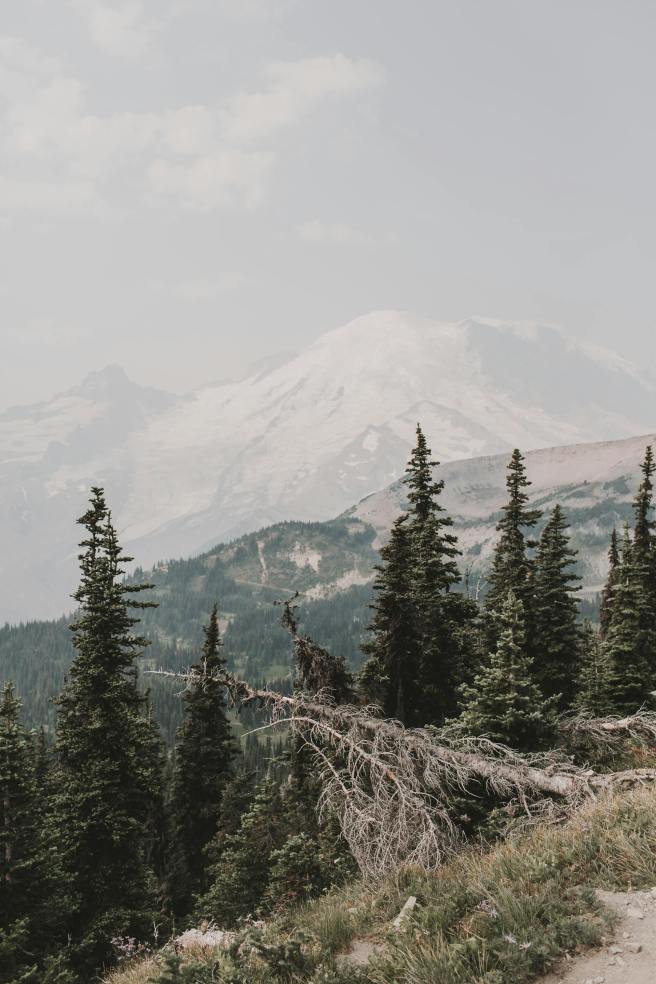
 

Living in seeming luxury

We settled into a new three-bedroom duplex with an attached garage, situated at the base of the ridge.

Living in town: the newest and most modern dwelling of my life, even now 50 years later … (of my first decade after college, I’m seeing on aerial photos that the majority have been demolished) … It was about a 30-block walk to the office, something that could be done if needed but still long.

We even had a fireplace, come fall and winter.

We were down there somewhere. Photo by Michael S. Shannon via Wikimedia Commons.

Summertime, though, had us learning the intensity of the desert sun, including the need to close both the blinds and the curtains in windows being struck by direct sunlight. The radiant heat was brutal. That was especially true of our living room in the late afternoon. Many houses had extra blinds on the outside, too.

As I set up my meditation room slash studio, I noted: European/American Eastern poetry reflects a resignation, where Asian/American Western has an acceptance of life / one is essentially sad, the other full of discovery and delight / the curious juxtaposition of East and West here!

While I was reading the Hindu classic Patanjali, the doorbell rang. Thought it might be the mailman, answered it to find an old man carrying Bible tracts denouncing crime, asking if I had watched the presidential debates, handing me his Bible to read two verses — an answer, he said — talking all the while of meekness — but this was no dialogue, no conversation — it didn’t matter if I were here or not, only that there be an audience.

In his demeanor, no meekness, yet my feelings were mixed. Admiration in his determination going door-to-door, but sadness in his lack of holy radiance. His book for a quarter? “Can you speak to the dead?” and “Is Hell really hot?” And then his magazine, the Watchtower.

He kept speaking of the Kingdom. “Kingdom, isn’t that what it’s all about?” Guess he’s never heard of love.

Well, you can speak to the dead but don’t expect an answer.

Rosh Hassahna began that night — a new year of thanksgiving.

We were certainly on the verge of a new year, personally.

~*~

From Spiralbound Cascadia with commentary.
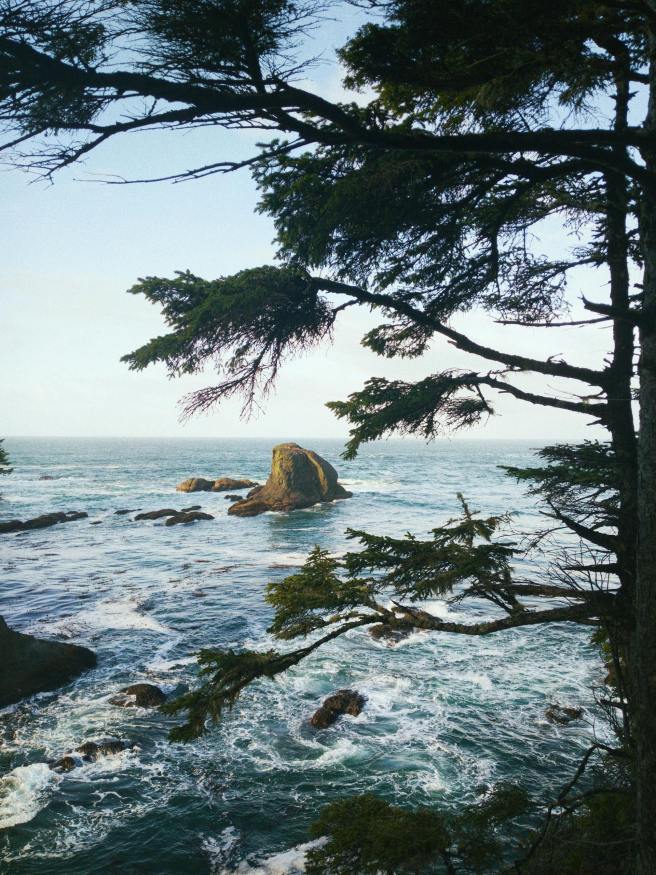
 

Getting started at the paper — my early work

In the initial job description, if there had actually been one, I would have been doing some basic reporting, including the lead for Crossroads, the weekly religion tab section we ran on Saturdays.

I was also working nights and weekends, including one Saturday or Sunday night when I wound up in the copy desk slot rather the rim after Belcher handed it over to me after he had had it with superiors’ memos. We finished pasteup with one minute before the 12:30 deadline. I’m a whiz.

My basic schedule seems to have been day shifts, 10-7 tues-fri, then late weekend Saturdays while Gil’s in slot. So I do scrub work on advertising-driven special sections and love it … He’s appreciating my willingness and flexibility … he asked about weekend slot, “Kent was in Sat.” and then asked if I was comfortable there, adding he has plans … so things looking good (did new TV listings logo last night, it’s OK) …

One reporter’s husband had Keogh as his PhD chairman at IU… turns out Rash is the top man in his field in the country, yet one more humble Quaker in my exposure.

In retrospect, the early office was more conflicted than I recalled … my erratic hours did give me most Mondays off …

Kent’s big dream, with me being assigned much of the effort, was a weekly outdoors tab to be called Action Northwest. At this stretch, it was still in the early planning stage.

Essentially, I was learning the local ropes first.

~*~

From Spiralbound Cascadia with commentary.
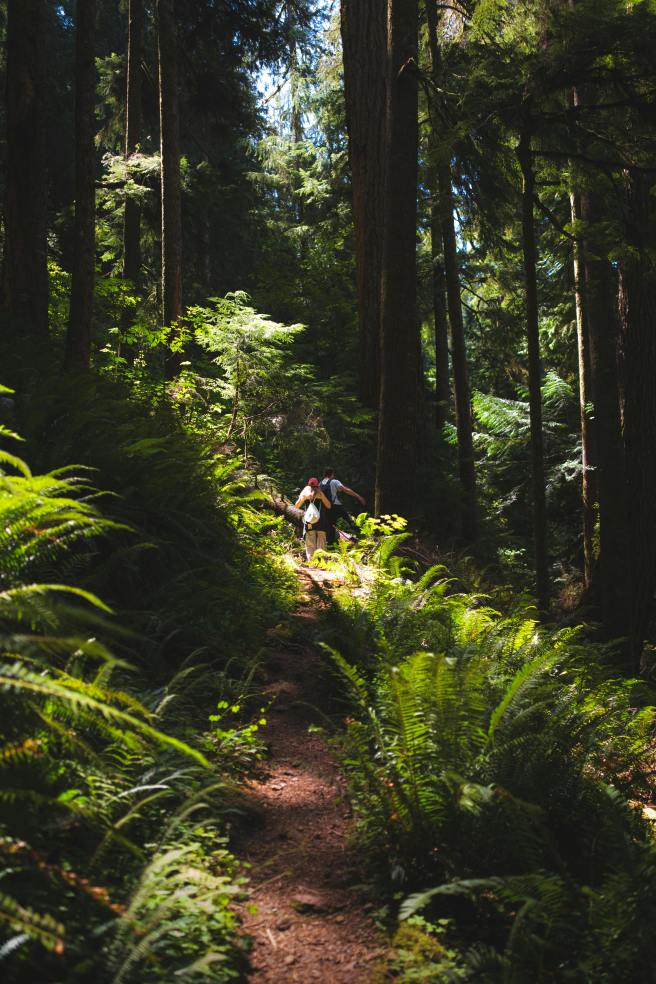
 

Off into another swirl

My journal entries from the Yakima years weave together — or more accurately jump among — a half-dozen major fronts in my life. In revisiting these in the upcoming postings, we’ll focus on one front at a time, hoping to gain a little more context of what was happening at the office, at home and my marriage, in the great outdoors, in my literary efforts, in my spiritual life especially as a Quaker, and with a grab bag of extras. The result will mean overlapping the chronology in advancing the timeline, but it’s the best I’m coming up with.

I should introduce Yakima, however briefly, by noting it’s the name of the River and Valley, the County, the City, the Avenue. Sometime after we left, the tribe and its large reservation altered its spelling to set itself apart from all of these other usages. They use Yakama, rather than Yakima. Fair ‘nuff.

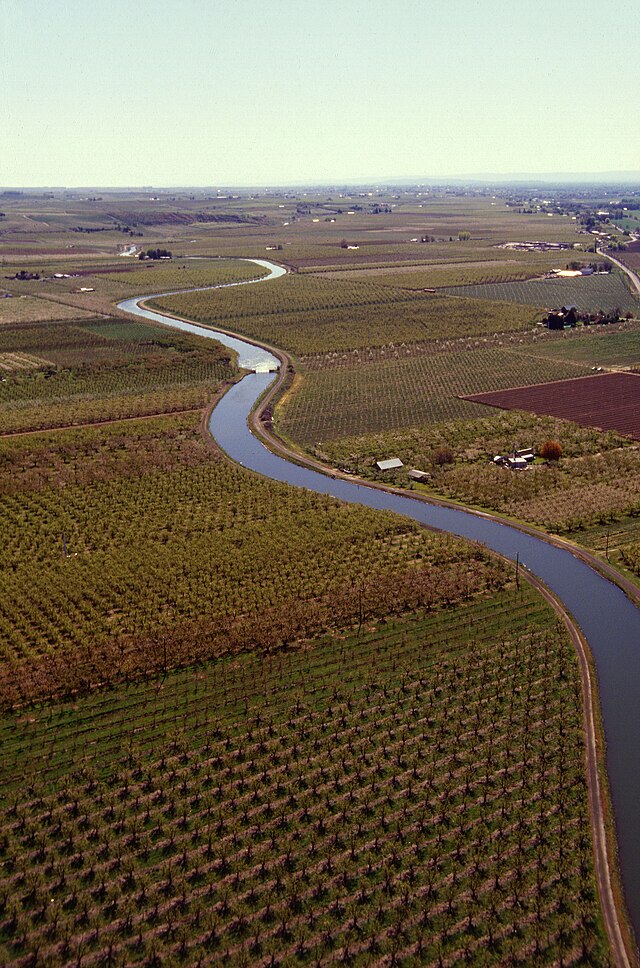
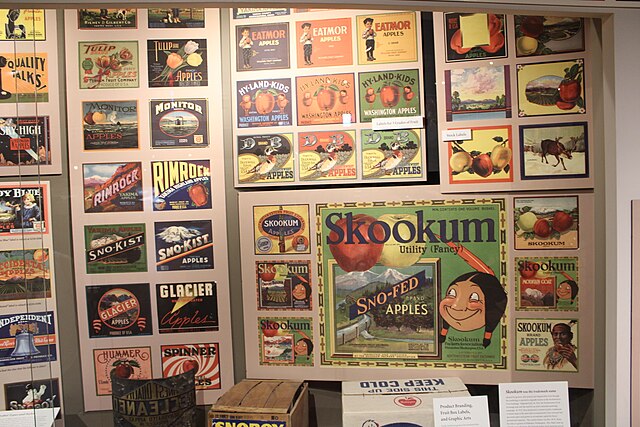
Hardly anything grows without irrigation, so water becomes a significant consideration. The economy is principally agricultural — a fifth of the apples sold in the U.S. are raised there, with another fifth in Wenatchee County to the north. Peaches, pears, apricots, cherries, and plums are also prominent, as well as hops for beer brewing, barley, hay, and, after we left, wine vineyards. Cattle, sheep, and horses were the primary livestock, and logging was also a major industry.

It was unlike anyplace I had ever been before. Amazing photo by Tom Fisk at Pexels.

Getting used to the arid landscape was a challenge … “like living on the inside of an ashtray,” as I read somewhere, describing another interior Far West scene.

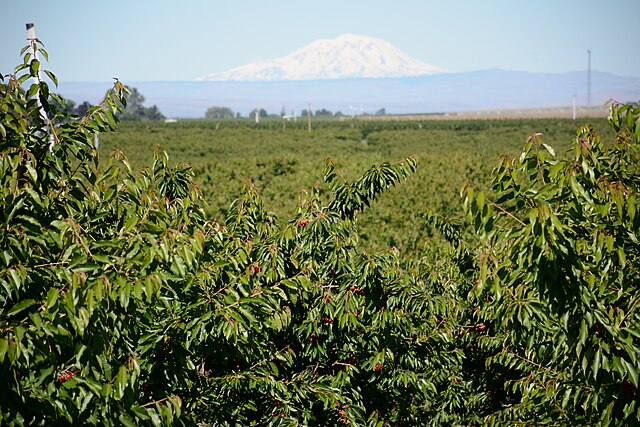
The big snowy mountain to the west, which we could view almost everywhere, was Mount Adams, which we initially confused with Mount Rainier, which was visible from a few points.

Steve Groom via Wikimedia Commons.

Politically and socially, it was conservative, yet participated in a high level of collective action. Perhaps it was pragmatic more than ideological at the core.

~*~

Produce, produce
clear dry air
and everyone a gardener

 I just hope this elation lasts.

~*~

Here goes!

~*~

From Spiralbound Cascadia with commentary.
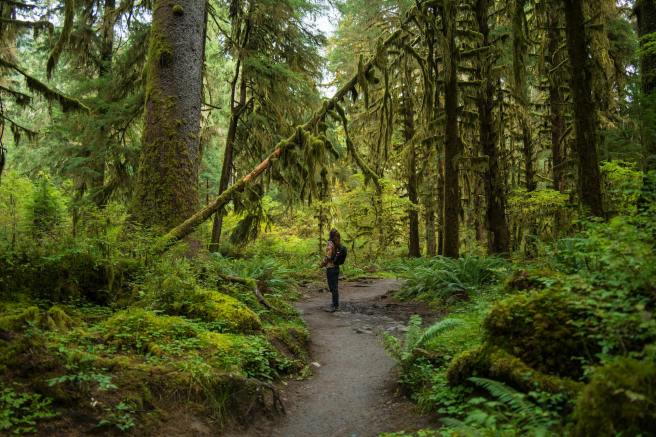
 

One thing I did note was things I threw out in the move

It’s amazing how much piles up in a short time. As they say about moving every five years to get clear of unneeded possessions? Here’s what went out in this relocation.

  • Newspapers pages from places I almost worked.
  • Notes to myself.
  • Narrow neckties, worn-out belts.
  • Love letters and photos.
  • A wooden finger. Yes, that one.
  • Rough drafts and manilla folders.
  • Torn-up mat board.
  • Crayons.
  • Cardboard boxes, wrapping, and stuffing paper.
  • A half ream of employment rejection letters.
  • Topographic maps of Monroe and Lawrence counties, Indiana.
  • Also, Catskills trails maps, Upstate New York.
  • Day campers’ cartoons of “Fat Steve.”
  • Duplicate copies of my college journalism or the embarrassing mistakes.

~*~

As I also noted:

After three months of unemployment, dejection, and waiting, we’ve made it … to Yakima, WA.

No Friends Meeting, but perhaps someday … Lord will make a way

~*~

From Spiralbound Cascadia with commentary.
 

The notebook covers themselves frame a story

As my Bloomington/Daffodil entries in this presentation became grouped by subject, rather than chronological order, we lost a sense of the progression of the notebooks themselves. Take a look now.

  • 18, Cornell Campus Store, 90 sheets, kraft cover. Undated. The Cornell spiral-bound lined volumes have wide margins, 3½ inches. My, how I loved those wide margins! Such luxury! Poetry drafts, early ashram experiences. A few bits saved for possible current poems now.
  • 19, Cornell Campus Store, 90 sheets, kraft cover. Undated. Let me repeat, these Cornell spiral-bound lined volumes have wide margins, 3½ inches. More poetry drafts, early ashram experiences. A few bits saved for possible current poems now. (How is it I had a stash of these varied campus notebooks?)
  • 20, Cornell, 90 sheets. Undated, except one entry in late November. “Swami Jnana-Devananda into winter: ashram.” Mostly quotes: Zen, Ginsberg, Hutterites, etc. Includes Swami’s return from first India trip. The onset of my ashram residency. 23:XI:71
  • Vol 21 Winter ’72: ashram. Begins with our first week-long seminar. Some really bizarre group action, both from the guests and the staff. includes trip to Ohio for Grandma’s funeral; she died June 21
  • Vol 22 summer ’72, ashram, and well into autumn. More tracings in the water / into Sannasyn, 8:VII:72 11:45 am.
  • Unnumbered red cover stenographer book, mostly October 1972. Includes trips to New York City and Binghamton.
  • Vol 23? Starts 23:XII:72 and ends with leaving ashram.
  • Vol 24? Miscellaneous, though where the pages fit in is uncertain now:
  • 24, Yellow Varsity. Has inner cover His Holiness Sri Swami Jnana-Devananda in the middle of Erewhon 22 January 1973. So my ashram residency ended earlier than I recalled …
  • 25, green Indiana cover, beginning 19 February ’73 in a Bloomington visit, then turning into the first of the Fostoria series. Some overlap with the previous volume.
  • 26, hunter green cover, beginning December 1973. Filed out of sequence, opening with many Tibetan notes. Three-inch left margins.
  • 27, blue IU (Aristotle’s Inc.), 23:III:73 on inside cover
  • 29, hunter green, 17:I:74, Fostoria. By now I’m dating the entries, in one of the new styles (colons or periods, depending). National Blank Book Company Holyoke, Mass. Wide margins!
  • 30, BGSU, 24:VII:74, Fostoria. Verge of marriage.
  • END OF CRATE 1: the plastic milk carton cubes, which were so handy in all of my moves from place to place and then turning into instant bookshelves later. Remember those?
  • 31, Hunter Green cover, begins 18:X:74 Another wide-margin notebook. Glory be!
  • 32, avocado green Penrite 4 Subject Divider Theme Book, 98 cents, 2409 W. Second St., Marion Indiana 46952. Undated entries, mostly stabs at verse and a few other notes in closing up in Fostoria and traipsing on to Bloomington. The last three divider sections remained blank.
  • 28, green Campus twin-wire, 59 cents, product of Mead Corporation, Dayton, Ohio. Out of order.

This does have me wondering if you saved any of your college notebooks or the like in your life journey to wherever you are now. What souvenirs have you kept? Or what have you intentionally discarded? Perhaps even with regrets later? Photos, letters, cards as well?

By the way, I hate to think what a spiralbound notebook costs nowadays.


First, to wrap up the Bloomington sojourn

“If thee needs anything and cannot find it, just come to me and I’ll tell thee how to get along without it.” — Etta Macy, Owen County, Quaker, in “Indiana’s Self-reliant Uplanders,” National Geographic, March 1976.

It’s something I’ve heard from others later, across the country.

~*~

Oh, my, one of my favorite off-the-cuff poems of all time wasn’t by the poet I’ve long attributed it to but rather our dear colleague, Richard Pflum. To wit: “In the garden / the women are pacing to and fro / speaking of fellatio.”

I stand corrected.

Reacting to an attack on “just folks poets” by an Iowa staffer in Kayak, criticizing those he looked down on in circles of poets who didn’t aspire to greatness but rather preferred comradery and “goodness.”

“All American poetry today sounds the same,” to which Paul Solyn replied, “not if you listen to it.”

“There aren’t any memorable lines in today’s work,” was equally glib. What was he expecting, advertising slogans? By the way, as one poet told me, “The lines I in my work I find most memorable, other readers don’t.”

[Gee, I found nothing about packing up everything or loading the U-Haul or farewells. Guess I was just too busy.]

~*~

Gleanings from my spiralbound journals plus commentary from now. .