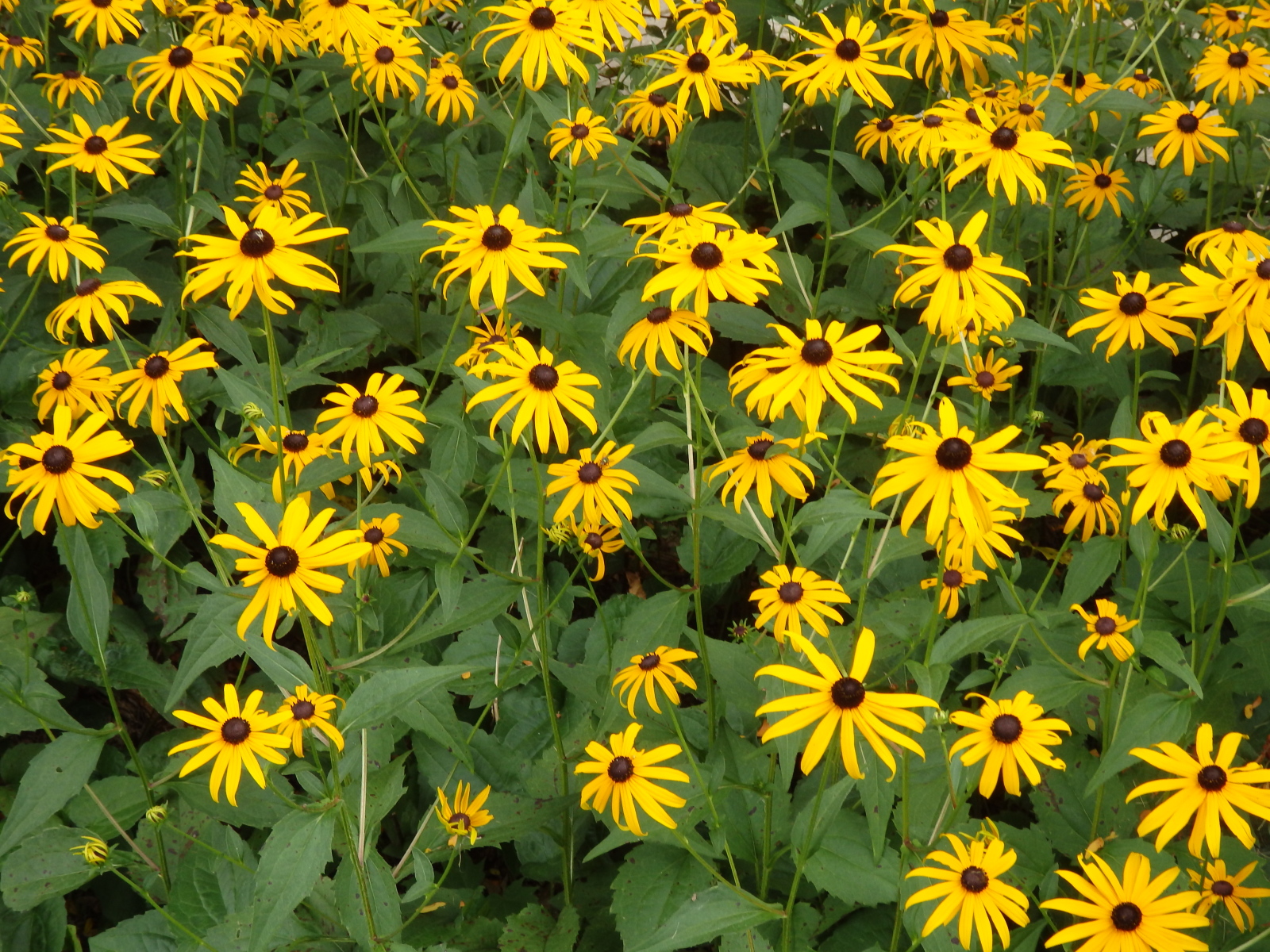
So much yellow, this time of summer! Sunflowers, finches, goldenrod, corn drenched in butter. Banks of black-eyed susans, too.
~*~
For my collected garden poems and more, click here.

You never know what we'll churn up in cleaning a stall
So much yellow, this time of summer! Sunflowers, finches, goldenrod, corn drenched in butter. Banks of black-eyed susans, too.
~*~
For my collected garden poems and more, click here.
The other afternoon we were sitting with friends in our Smoking Garden when a fast-moving object caught my eye. Shaped like a small airplane, it dashed across a span of sky visible between the limbs of a maple overhead and then halted. What we heard sounded like a large mosquito and was about just as welcome.
We presume it carried a camera and was spying on the neighborhood. When we edged outward for a closer look at the offending intruder, it scooted away, only to return several times later. Maybe it didn’t like being observed. For that matter, neither did we.
“If we had a gun, could we shoot it down?”
Well, how far does our airspace extend? And what rights do we have versus theirs? Whoever they are. Potential burglars looking for easy prey? Perverts? Even police?
The fact is, the experience is disconcerting, even before we get to the notorious role of drones in Afghanistan and other military – and not so military – zones.
Who’s responsible for this one? What’s it doing there, above us? And why?
Some of us cherish privacy as an essential American right embedded in the First Amendment. And then there’s that matter of my home is my castle, arising in English Common Law.
Besides, a mechanical drone has none of the freedom birds enjoy. The lower reaches of the sky should belong to natural aviators, not an artificial intruder.
Anyone else care to “chirp” in?
Maybe I’ve been too involved watching the surreal political scene that’s unfolding in America, but that hasn’t precluded us from enjoying the usual sequence of developments in the garden — things I’ve blogged about in previous years. We’ve enjoyed waves of (wild) dandelions followed by crops of asparagus, lettuce, and spinach, and now the sugar snap peas and raspberries. Maybe I’ve been too busy trying to stay ahead of the weeds, repairing some of our raised beds, even tackling a small patio space between the kitchen and driveway to report on any of it, but in general things are looking good and tasting even better.
One thing that always amazes us is the popularity of the bird feeder in summer. You’d think with all of the natural, wild food sources, the birds would ignore the feeder. Instead, they become voracious, going through as much of my grain and seed in a couple of days as they do in nearly a month of deep cold and snow. Yes, there are those babies to feed, but this still has us shaking our heads in wonderment. OK, we do live in a city, and anything we can do to enhance the avian population has its pluses. Still, we’d like them to remain independent and turn to our supply when things are tough rather than bountiful.
Feeders, I should note, fuel their own band of human supporters — along with topics of conversations. Squirrels are only one of the menaces.
Each spring, when I was editing the newspaper, I’d have to chuckle when the state Fish and Game Department issued its annual bring-your-feeders-in alert. We had enough friends who lived in the country to tell us — and sometimes show us the damage — of what could happen when the bears come out of hibernation and start roaming. The bruins will rip a feeder to shreds, sometimes a half-mile from the scene of the crime. (Well, our dentist had photos of the hairy ones at work — five days in a row of bears visiting the feeders on his deck right outside the kitchen overlooking the lake.) Living in town, though, I’ve never considered us at risk.
But now? A neighbor saw a bear yesterday just four or five blocks from us as it crossed a busy street just north of downtown. I know it’s a rare though not unknown phenomenon, but it’s still news. For now, I’m shaking my head and hoping the neighborhood dogs are on guard. Their barking should do the trick, if need be. So I’m told.
It started when we had some trees removed – the box elder that was shading a third of the Swamp, another shading the kitchen garden, and then a dead elm. We kept the flakes from the cutters’ chipper, rather than having them go to the dump. Repeatedly since, when we hear tree cutters in the neighborhood, we ask if they could give us the truckload, and they oblige, grateful to be spared the city dump charge.
Those chips work great for lining the pathways through our garden or around the yard. Eventually, of course, they decompose and enrich and soften our clay soil. It’s just another of the many lessons we’ve had in assuming an old house and barn and reclaiming a garden and grounds. I’m glad I’ve collected those stories, an indication how far we’ve come over the years, as well as reminders how far we have yet to go.
~*~

For more home and garden poems, click here.
As the title of my poetry collection about gardening goes, There Is No Statuary in Our Garden Except for the Plastic Spacemen Occasionally Surfacing, working the soil here turns up many surprises. Bits of broken glass and metal, definitely, and endless rocks.
A few weeks ago I came across a wiggly something I first thought might have been a petrified snake or, a bit later, a skink. As I extracted its clay-encrusted fullness and pulled bits away, I slowly realized what I had was a three-inch-long tail to a plastic ‘gator or croc’, the body and snout adding about two more inches.
Forget trying to take a photo. Even cleaned up, it’s hard to make out.
I’m sure this was never one of our kids’ toys, which leaves a question of just how long since there were other children living on the property and then just what use they made of this stretch of the side of the house we call the Swamp.
Maybe they knew something after all.
A couple of years ago, when our old lawnmower died, we decided to switch to a more eco-friendly battery-powered one.
And, no, a riding mower was altogether out of the question, unless it could also handle a snowplow for the other part of the year.
Let me confess I’ve never been comfortable with the traditional power mower. You have to buy gasoline, for starters, and check the oil. As for gapping spark plugs?
None of that with the new baby. It’s lighter, quieter (only a hum instead of the cranky roar), and much easier to maneuver. And while the blade’s shorter than the old one, it does allow me to get in spots the old one couldn’t manage. (Places like those around the fireplug in the strip along the curb.)
One good friend, who once had his own lawn-care service, in fact, took a few swipes with the new one and promptly dubbed it the “mini-Prius.” The moniker’s stuck.
The one drawback is that I can’t quite do our full yard on one charge, especially if the grass is deeper than usual or damp.
I can live with that, certainly. Or even buy a second battery, to keep me running while the first one’s recharging.
At least I’m not spilling gasoline anymore.
~*~
We’re serious about gardening, too, as my poetry collection There Is No Statuary in Our Garden Except for the Plastic Spacemen Occasionally Surfacing relates.
Our driveway and yard have been neighborhood shortcuts long before we moved here. We couldn’t refuse them, now, could we?
The kids, especially, still use it to get to the school bus in the morning and home again in the afternoon. We know some of the posse. Others, we’ll ask about.
One winter, with snow piled high in the Swamp, I learned to cross-country ski in the loop I carved around the periphery – including the precipice I finally more or less mastered.
The rest of the year, I can recognize pathways we maintain through the various beds and plantings.
I think there’s a bit of excitement in cutting across the grass or through a hole in the fence, compared to a sidewalk. Or for playing a variation of tag at dusk.
you could build boring straight lines
or else add curves or maze-figures
~*~
with the neighbors hosting Soupa
girls squealing kick-the-can
scurry amid carnival sounds
look, there’s a flurry, along the bushes
poem copyright 2016 by Jnana Hodson
~*~
For more on my home and garden poetry collections, click here.
Somewhere early in our time of living in this house – the property that includes the Red Barn – my wife and I bought a freezer. And then we got another, free, which also found a space in the barn. (Somebody was moving and couldn’t take it with them. So we came to their rescue.)
These two upright chests were great for stocking up on grocery specials, as well as banking our garden harvests and a lot of prepped dinners. How did we ever live without them?
When I was employed, these towering white caches were a source for many of my dinners at the office – and I was surprised by how much money we saved as a result. Cuban black bean soup, anyone? Just one of the specialties made in quantity and stored in serving-size plastic containers. As for our side-street harvest of real tomatoes, Brussels sprouts, blueberries and raspberries, eggplant, and more? Or loaves of homemade bread? Or the marked-down meats found at Market Basket? How could we live without them, indeed.
Both freezers were packed to the proverbial gills. And maybe then some.
From my perspective, this was glorious. What would we do for Sunday dinner? How about a roast chicken? How perfect! Some weeks we needed little more than fresh milk from the store.
But! This winter brought two disasters. First, one freezer died, and that meant salvaging what we could, seeking homes for some of the packages elsewhere (elder daughter, especially, rushing to the rescue), along with an orgy of using up what treasures we could.
All this happened, mind you, before the scheduled defrosting of the freezers and reorganizing of the contents, a delay prompted by other household crises.
My, what feasts while they lasted!
And then, before we’d cleared our way free, the other freezer died. This was getting serious! There was no margin left.
Some of the meat, having thawed, went straight into the trash. No value in having people getting sick. A few hams and pork tenderloins were gifted to neighbors, if we could catch them. Elder daughter had a few more spaces in her freezer and refrigerator, bless her. (Younger daughter, the vegetarian, lives too far away for consultation.)
Skip ahead a few steps, and we have a store-bought new freezer. The second one, cross your fingers, seems to be working again. The dead one’s gone to the city dump aka recycling center, via a borrowed pickup. (Yes, my back and ribs are still aching.) Some of the thawed meat has been cooked into sauces and the like and returned in new form to the new freezer. And we’re grilling each chance we can.
Oh, there’s so much more I could be saying.
But at least our life seems to be back in some kind of balance.
I hope. Now, back to the intense rounds of planting the garden. We’ve got to stay ahead of the weeds — and the advancing daylight.
This summer we’re participating in a program that’s introducing us to varieties of fish caught off the New Hampshire coast. Once a week we trot down to the natural foods store in town to pick up our delivery – our location gives us a three-hour window – and we return with a pound of very fresh seafood. Every week it’s a different variety (11 are likely over the season), and we get an email earlier in the week notifying us what will be on the way, allowing the cook in the household to begin considering menu options. Or we can go to their website for links to suggested recipes.
It’s not cheap – you pay when you sign up, in our case for the 15-week program – about twice what we’d normally shell out for what’s featured at Market Basket, but there are other factors to weigh in. For one thing, living in the Seacoast Region of the state, we’re very aware of the plight of the once vital fishing industry across New England and the struggles to sustain both a way of life for families and communities and the fishing grounds themselves. While we’re not militant local-harvest activists (it just isn’t economically viable for our part of the world, not with its long winter), we are inclined toward small-scale economics wherever possible (just consider the banks, for starters). So we feel good about our token support for our neighbors. In a way, it’s like a farmers market, except that we’re committed to taking the week’s delivery, the way you are in a community-supported agriculture (CSA) setup.
That leads us to another consideration, the fact that the program itself arises in an attempt by the commercial fishermen sailing from Seabrook, Hampton, Rye Harbor, and Portsmouth Harbor to counter the negative impacts of a practice begun in 1976 that directly sold the local harvest in international auction. Rather than having their fishing practices driven by global market pressures, they wanted a more sustainable alternative, a strategy to better manage marine resources and fish more selectively. In response, four years ago the harvest coop they organized was given an ownership right to collectively manage the federal groundfish fishery. In other words, there’s a strong environmental component here, including a more efficient use of high-cost fuel along the way. As they say, their fish catch hasn’t been sitting on the boat for a week – it comes to port the same day it was caught. Good for them!
Of course, all of that still needs to come together at the dinner table. This isn’t charity, after all, but a win-win deal we’re looking for. We can start with a sense of adventure as we explore previously unknown types of fish. (Acadian redfish, anyone? Or dabs? Or dayboat dogfish shark?) Let me rave about the monkfish on that front – as I ate, I kept thinking this could be lobster tail. So what else is swimming in the same water with me each summer? My curiosity is heightened. What they’re delivering isn’t everything in the local catch, but it is a way of supplementing their income and providing more balance in their cash flow.
We’ll admit this is our splurge, the way our weekly wine tastings were, back when I was duly employed, or the half-pig we ordered from a farm in Maine, two other examples that allowed us to learn more of the range in taste and satisfaction in our world. Admittedly, we couldn’t do the fishery program when the kids were still living in the house – they can be picky that way, with one easily upset by the mere whiff of fish cooking. Oh, my.
Initially, too, I thought a pound would be on the skimpy side when it comes to our dinner, but we’re finding the enhanced freshness in flavor satisfies in smaller portions – we can serve three and still have a bit left over. Actually, it’s about what we’d get in a restaurant while spending much more.
Reading the profiles of the participating fishermen on the website has me wondering how long I’ll go before making a list of their boats, just so I can identify them when they pass by in the water or tie up at dock. They seem like nice guys, too. Maybe we’ll wave. It does change my perspective, doesn’t it.
Now I’m wondering about similar alternatives being developed around the world. Pipe up, if you wish, along with your own growing awareness.
~*~
New Hampshire Community Seafood is a cooperative of fishermen and consumers that has 18 pickup locations with deliveries spaced from Tuesday through Saturday.
Gardeners in New England – especially in its northern realms of Maine, New Hampshire, and Vermont – soon discover the month of May can be a frantic stretch. (Or, for those of us with short memories, the word should be rediscover. I keep hoping for something more orderly than what feels dropped upon us each year.) For much of April, even apart from the threat of killer-frost nights or piles of lingering snow, the ground can be too cold or too wet for planting, and that’s if rain’s not falling. With our clay-based soil, I’ve learned not to turn it when wet, lest it form brick-like clumps. For that matter, in a typical year our large compost bin can still be frozen at heart, posing another obstacle to preparing the garden beds themselves.
When it comes to these projects, I often find myself in a bind. We simply don’t have enough room to “park” something while waiting for something else to open up or be moved to another spot. Compost is a case in point, though hardly the only one.
So when May hits, we’re rushing to get as much in the ground as soon as possible to maximize a relatively short growing season and, frankly, to try to beat the weeds to a solid start.
And that’s where we are at the moment.
I feel pretty good about a lot of the pace. Two of our raised beds have received new wooden frames, the compost bin’s been emptied and refilled with a new round of leaves and garbage, black plastic and a soaker hose are in place on what will be this year’s nightshade bed (tomatoes and peppers), the pea frames are up as are the seedlings below them, the bean tripods are in place … and we’re dining on what I think’s the best asparagus ever.
Let me add that my wife’s scheduling here means a few other outdoor projects I thought I’d be addressing are put off for a few weeks, and that’s frustrating. I hope they don’t get pushed back for months, because, well, that would affect other projects in the pipeline – and that touches on yet another issue she raised today. What if we just moved to a condo with a deck and a small garden bed about the size of our dining room table?
I could see that if we did square-foot gardening as intensely as we once envisioned, we might raise enough to keep us smiling at dinner. But my beloved asparagus bed’s larger than that. Ahem.
~*~
So we finished our first round of morning coffee and headed outside for the day’s task, the fourth of the raised beds in what we call the Kitchen Garden, the one on the far side of the driveway. The one we’re tackling is a perennial bed of bee balm (which attracts hummingbirds as well as bees), sorrel (which makes for an excellent sauce on fish), and chives, all of which we’d hoped to salvage. Unfortunately, a bout of lemon balm’s gone invasive, along with grass, plus our ubiquitous ground ivy, dandelions, vetch, and several familiar weeds I have yet to identify.
In short, this has meant uprooting most of the bed, attempting to save what we could, including some hyacinth bulbs, and admitting we’d have to start from scratch with much of the rest, including new bee balm.
So here we are, ripping out, grubbing, turning, cursing, adding compost, wondering how this got away from us, anticipating, what?
I have to admit I’m not the gardener, the one who plans the arrangement using page after page of grid paper or reads up on the options or orders the seeds or starts the flats indoors under the grow lights I set up or waters them daily while envisioning the results or anticipates the way they’ll wind up in tasty dishes or fill the freezer for dinners next winter. (I admire the one who does all this, in more ways than one. After all, I married her.) At the moment, though, I’m more concerned with what goes into the wheelbarrow, shovel by shovel or handful by handful, and where it goes from there.
And then, there will be one more thing checked off my to-do list … while adding to hers.
 Jnana's Red Barn