Using skills and connections he acquires working in a shipyard in Greece, Aristotle relocates to Indiana in my novel What’s Left.
How did your grandfather wind up pursuing the work he did?
You never know what we'll churn up in cleaning a stall
Using skills and connections he acquires working in a shipyard in Greece, Aristotle relocates to Indiana in my novel What’s Left.
How did your grandfather wind up pursuing the work he did?
Let me repeat, What’s Left is my final novel, even though it’s appeared before several earlier ones — or their later revisions. That doesn’t mean I might not rework some more of my earlier books, but I have no intention (at this point, ahem) of undertaking such an ambitious project.
Still, if it’s ever successful, there can be a demand for a sequel. There are many possibilities that point to further development.
One plot twist I considered was this:
A handful of the Erinyes’ grandchildren rebel by returning to attend college across the street from Carmichael’s. Perhaps it’s inevitable that they apply for jobs in the restaurant.
Can they work? We’ll let them decide about becoming cousins.
This could have opened considerations about rebalancing the ownership, for one thing. Or more dimensions to our understanding of what it means to be a family. Or even their own reasons that parallel those of Cassia’s father in moving way back in the early ’70s.
~*~
It’s a big book, admittedly. But it could be a lot bigger.
Where would you take the story of What’s Left from what’s already there? What would you like to have answered?
~*~
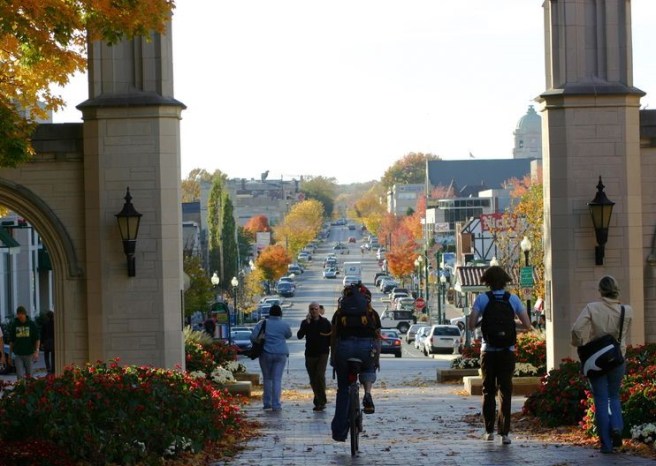
In my novel What’s Left, Cassia’s great-grandmother and her sister marry two brothers. One is named Aristotle.
Do you know of any brothers in one family who marry sisters from another?
It’s is not my debut novel. Rather, I have the feeling it’s the opposite — the final one. I could never do this again. What’s Left is a big novel chock full of surprising turns, deep thoughts, and lively details. Unless Cassia starts speaking to me again, there will be no sequels. For me, at least, the story condenses so much into its pages I’m feeling completed.
Unlike my earlier novels, this one was not written on the fly while working full-time as a journalist. Like them, though, it’s undergone extensive revision.
Woven through the book are themes I’d explored in my earlier stories, now seen in a new light, while investigating others I’m tackling for the first time. Family and family enterprise, adolescence and childhood, death and divorce, and Greek-American culture, especially, are new while counterculture, romance, spirituality, community, nature and specific place, livelihood, journalism itself all run through my previous work.
~*~
Think of this bit as going into the compost rather than being served on the plate:
All I’m doing is asking you to apply your new comprehension to the rest of your life.
~*~
Of course, you’ve heard somebody blurt out, “I’m never going to forget this as long as I live!” Or some such. And sometimes it’s true.
Me? I have trouble remembering nearly everything. Could it be one reason I read so widely is to help me remember? Of course, writing gets it down on paper, once again so I don’t forget.
So while I read to help me remember and to gain insight on the world around me, it’s not the only reason by any stretch.
What do you look for most in a novel or poem?
~*~

Like most of us, Cassia finds herself carrying a host of identities. She’s Greek-American, on one side, and Midwestern WASP, on the other. She’s been raised with both Tibetan Buddhist and Greek Orthodox religious influences. She’s a female, of course, and an entrepreneur. She’s part of a large extended family, a Hoosier, a bohemian, a college graduate, a devoted sister, a daughter. And that’s just for starters.
What are your most prominent identities? How do they shape your life?
In creating What’s Left, I’ve been on fragile ground with both Greek-American life and the behind-the-scenes realities of the family restaurant business.
Those are both places your insights would be gratefully received, especially when I hit a wrong note.
Well, we can extend that to the entire work as it treks across a lot of unfamiliar ground.
What have I caught right? And where I’m I off-track?
~*~

In my novel What’s Left, Cassia’s great-grandfather and his brother marry two sisters. One is named Athina.
How do people in your circles discover each other as couples?
These days some of my favorite daily encounters come at our city’s indoor pool, where I swim laps. In addition to the familiar faces of fellow swimmers, there are the interactions with the lifeguards, many of them still in high school. When they’re not actively watching us in the water, they have rounds manning the front desk, where they might also be doing their physics homework or working on a paper. In other words, they were the right age to help me with my novel What’s Left, not that I’m ever that direct. No, just a wild question or subtle ear’s enough to keep me grounded in their direction.
In revising a manuscript, I sometimes chance upon a “zipper” that seems to run along the entire piece and releases something trapped within it. Tugging along page after page is an amazing experience, when it happens, which is not nearly as often as I’d hope. Mercifully, that’s what’s happened in the ninth revision of What’s Left, my novel thanks to comments from some of the early readers. The key this round came in having her talking to her father throughout, at least in her head and often in the midst of other people, rather than simply about him. It gives the work a whole new dimension and makes the story far more intimate, especially when she makes irrational leaps that match her emotions.
This, in turn, allowed her to relate much of her investigation as it happened as a young teen, rather than looking back on it from her early twenties, and had her aunt Nita and her best friend, cousin Sandra, present as co-conspirators.
Note that none of these revisions changed the way I saw the novel as an author — I knew how it begins, develops, and ends — but they change it entirely for the reader.
Yes, the changes were extensive. When one of the lifeguards remarked, “What? You’re not done yet?” I came back the next week with two pages from the hardcopy I was working from — half of the sentences containing crossed-out words and phrases, several moved to new locations, and a taped-on flap of new notes to add in, all needing to be keyboarded. It’s typical professional work, as you’ll discover reading the Paris Review or any number of writer-oriented magazines.
Still, they were astonished. I doubt they’ll look at a 500-word assignment quite the same again.
The point is that all of these changes are for the reader. Curiously, the very shift of having Cassia speak directly to her father throughout soon has the reader stepping into his shoes, hearing through his ears in a new intimacy.
And now I trust the story’s ready for you, as its reader.
~*~
It’s not always simply a coincidence, is it?
Have you ever started out on your way to one place and wound up somewhere quite different? Somewhere that turned out to be right? Tell us about what happened.
~*~
Cassia and her brothers and cousins face a crucial decision. Do they continue to jointly hold the family business as a resource for future generations, requiring them to keep working for a living, or do they divvy up their shares and then live independently wherever and however they desire?
Put yourself in Cassia’s shoes.
How would your life be different if you didn’t have to worry about how you’d make ends meet? What would you dream of doing?
~*~

In my novel What’s Left, there’s one big subject Cassia couldn’t ignore — not if she truly wanted to understand her father. It’s the whole hippie thing.
As he noted, in a sentence no longer in the text:
Will any of our inner music — our desires and activity — ever come into a reliably ongoing harmony?
As was this tidbit:
This is all new to him. The language, unfamiliar, even after the sporadic trips of his youth. The music, profoundly moving.
Take his hitchhiking. As her aunt Nita explained in yet another deleted text:
As for your body, well, you could go about anywhere on your thumb. Maybe not the Deep South or some of the big cities. But adventure called. Out in the countryside. And in the heart of the metropolis. There were moments when everything turned utterly surreal. It was a wild time, wasn’t it? You’re forgetting Nixon got reelected to the White House? If you were a freak — a hippie — you were part of a stream of kindred souls. You saw the world askew. You wanted to explore and discover new vistas, many of them psychedelic. You knew there was more — much more — than what your parents had ever imagined. The entire world was spiraling, about to go out of control, or so it seemed. And what difference does any veracity of hitchhiking in the subways make? Aren’t those some wild stories? Where does the line fall between what’s real and what’s imaginary? Didn’t your Baba land here after all? Return to build on earlier connections? Who cares how he got here as long as he did? You believe this is where he was destined, don’t you?
Admittedly, it’s a lot to take in. More than we needed, in fact. Even this flash:
Angels as hitchhikers! As subway riders! As candy store clerks!
~*~
These days, I’m left with mixed feelings.
Where do you think the hippie movement missed the boat? And what do you think it got right?
~*~

 Jnana's Red Barn