Cutting through our neighborhood park and playground on a Saturday afternoon, I noticed it was filled with dads and their kids. Not even a mom in sight.
Usually (meaning other days of the week), it’s the other way around.
You never know what we'll churn up in cleaning a stall
Cutting through our neighborhood park and playground on a Saturday afternoon, I noticed it was filled with dads and their kids. Not even a mom in sight.
Usually (meaning other days of the week), it’s the other way around.
As I said at the time: Golly, I hadn’t thought in terms of “lower middle class” in ages, though that’s where I’ve been most of my adult life – even as management. According to government statistics, at least, and thanks to my union card, we made it up to median income, although in reality, considering the cost of housing in New England, we were never quite there. Before the housing market decline (our property had more than doubled in price in a half-dozen years), my wife saw the assessment and cried out, “I never thought I’d live in a quarter-million dollar house – and it’s still a dump!” Yup.
What is amazing is what can be accomplished when we focus our resources and set priorities. The secret is that you can’t have it all. My wife would love to travel, but then we managed for her to not have to be employed, which in turn allowed her to return to college and to chair the local charter high school (a full-time, unpaid job) while taking care of both her mother and the girls. Maybe we’ll get around to travel, but for now, there are too many other demands – on our time, especially. I was able to carve out blocks to draft/revise large sections of work, although in doing so, I wasn’t submitting much anywhere – that would come later, probably in retirement. So I hoped.
One of our favorite writers, Wendell Barry, points out that a divorced family is, on paper, far more economically viable because it has to pay for two households, hold down two jobs, maintain two cars, and so on, each point adding to the cash flow, which can be measured. Of course, that fails to calculate a lot of other, more meaningful values. Keeping my mother-in-law in her own little apartment in the barn, for instance, allows her some independence while still getting some family care – none of it showing up in the gross national product, or whatever we call that calculation these days.
Among those dim memories from childhood are Sunday afternoon drives, including one on a dull rainy day as we approached Farmersville. As Dad slowed the car, I heard an eerie panorama of tinkling glass and looked out over a seeming junkyard with large, black figures shaped from roofing tin, I suppose – witches, Indians on horseback, perhaps cowboys and the like – and many poles “like cornstalks,” as some have described, but with bottles instead of leaves. Plus, as I’ve read, a number of old church bells mounted somewhere, in addition to the bells of grazing sheep.
Yes, it was the chorus of sound that lingered strongest in my mind.
By the time we got a chance to go back, it had all been razed, declared a public health hazard, I remember hearing, because of the broken glass caused by vandals. Other stories suggested the orgies of motorcycle gangs instead.
One history I’d heard, that this was a relative of the late comedian Jonathan Winters, proved erroneous. The owner’s name was not Zero Winters, but Winter Zellar (Zero) Swartsel (1876-1953), an eccentric who turned his 22 acres into artwork fashioned from discards such as old bedframes and twisted wire. What I retain from that one day is far more cluttered than the clean photographs taken by Edward Weston.
It’s all lost, of course. How much it could have been an installation in some gallery will forever remain conjectural, but Winter was way ahead of his time on his multi-sensual approach to creation.
With the exception of a small spur to our south, all of the railroad traffic to and from Maine goes within a few blocks of our house.
The first year or so we were here, our youngest complained of the noise through the night – turns out it was gravel and sand headed to Boston for the Big Dig construction. At least that’s died down.
During the day, though, we have the Amtrak Downeaster’s five runs south, to Boston, and back, to Brunswick, Maine, plus the usual freight traffic.
But is it healthy to have so much dependent on such a tiny point of transit? At least as a point of homeland security, I’d argue not.

As I said at the time, I’ve been thinking about names. Especially place names. Take “Baltimore,” a name most of us use repeatedly and never consider. There’s Balty More, kind of salty. Or Balta moor, rather Mediterranean. The name itself sounds Irish. I know, they were English. But it sure sounds like Ballyhagen or . . .
Of course, not everybody pronounces quite the same. I was in Florida a couple of years back and we went out to a restaurant owned by a woman and her husband, who had retired from Tennessee and, well, got so bored with the retirement life they went back into business just to take their minds off the boredom. So, following the dinner, she asked us where we were all from and the first of my colleagues replied, “I’m from Los Angeles,” and she said, “Oh, that’s very nice,” and the second colleague replied, “I’m from Chicago,” and she said, “Oh, that’s a nice city,” and the third said, “I’m from right here in Florida,” and of course she had to ask what neighborhood, and then my fourth colleague drawled, “I’m from right outside Atlanta,” and naturally they had that Southern thing going right away, in ways we Northerners can never know about. Finally, she turned to me and I said, as some folks around here do, “Bal’mer.” All of my colleagues looked at me queerly. Bal’mer? Not Bal-ty more? But not that lady, no sir. Without missing a beat, she came back, “Oh! Merlin!” Yessirree. I’m from the state of Merlin.
But back to Bal’mer, which sounds like something you put on a wound. Especially a burn.
At one time, the name made sense. Unique, except for the home plantation, wherever that was back in the British Isles. Named for the good Lord Baltimore, and all that.
But it’s time for a change.
For one thing, there are so many other Baltimores around the country, we’re only the biggest of them these days. I mean, there are all of those West Baltimores, New Baltimores, and North Baltimores, and so on running around, who needs them?
Even the Baltimore and Ohio Railroad decided it was time to change its name to CSX or whatever. Even here, in the metropolis, we have problems confusing, as we do, between Baltimore City and Baltimore County.
No, friends, it’s time for a change. New and improved, as they say in the advertising business.
We could turn to the original names, but Fells Point just doesn’t ring quite right. And Jonestown just won’t work, not after the Reverend Jim and his little band of suicidals. Nor would Otterbein, with its sectarian overtones as a denomination that no longer exists, for that matter. Harbor City doesn’t quite say it. Our nicknames Charm City, Mobtown, Crabtown, and so on, fail us as well.
What I am proposing is Pimlico.
Yes, this is Horse Country. And Pimlico has a nice ring to it. Consider the crowd that does Paris and Rome each year. Would they ever say, “I did Paris, Rome, and Baltimore”? Hell, no. But now try “Paris, Rome, and Pimlico” and you see what I mean. Pimlico has the kind of sound to it to reflect our definite up scaling of the city. It sounds just a tad racy, too.
Say Pimlico it shall be.
Remember, when you see the shining college students outside your favorite supermarket and they ask you to sign the petition, do not hesitate. And remember to vote yes on Proposition Fourteen, to rename Baltimore City and Baltimore County. Either or both.
Then we call all unite in saying, with renewed vigor: “Tally Ho, Pimlico!”
If only …
One of my wife’s childhood heroes, George Washington Carver, is proof that some of the best mothers never have children of their own. After his own mother’s death as a consequence of being stolen from one slave-owning family and carried off to a plantation, before being bought back – how vile, the entire institution – young George was cared for, first, by the sickly wife of the slaveowner, and third, by an art teacher who directed him on to her own father, a college professor of botany. But most important was Mariah Watkins and her husband, Andrew.
We know very little about this black couple, except for her influence on the boy who emerged from spending a night in their barn. In another circumstance, George might have been shot. Instead, she called out for him to wash up and come inside for breakfast. What’s your name, she asked. Carver’s boy George, came the reply. No, she corrected, from now on you’re George Carver. (The Washington came later.) He lived with them while attending the Lincoln School for Negro Children. She gently instilled a deep religious awareness in him, presenting him with her beautiful, large family Bible, which he used daily for the remainder of his life, and also nurtured a sense of responsibility for the advancement of his own people. Essentially what we know about her comes in the correspondence they continued over the years. (Among the few other bits we know is that she was a midwife who cared for about 500 babies, including the painter Thomas Hart Benton.)
You can also trace the two connections between George and another great agricultural reformer, Norman Borlaug, whose Green Revolution is credited with saving the lives of a billion people.
Indirectly, then, by feeding a single child that first morning, Mariah put into motion events that would feed a billion humans – a miracle overshadowing the multitude Jesus’ disciples fed with those few loaves and fishes on the banks of Galilee.
Even though I’ve never asked previous clerks how they experienced sitting at the head of an institution founded in the 1660s, I found it humbling. The mere thought of superintending the construction of our present meetinghouse (1768) is overwhelming, as is the faithfulness that led the congregation through the Revolutionary and Civil wars. To think of the succession of mighty Quakers who came here in traveling ministry reflects the history of the movement itself, beginning with Elizabeth Hooton, who first nurtured George Fox in the emerging faith. Dover Friends sat down to worship originally in homes and barns, then in our first two meetinghouses, and finally in the room we know so well.
Visit historic Plimoth Plantation, and you get a taste of what Dover must have been like – already four years old at the time those enactors portray. It’s probably not that different from what the first Friends encountered just 3½ decades later when they stirred up what would become our Meeting. Just think of the differences in dialects and vocabulary. (Plimouth, to represent a population of slightly more than a hundred people, employs seventeen dialects, moderating them enough to make them understandable to modern visitors; Dover was likely no less divergent.) From all the evidence of smoke-filled houses, bitter winters, mosquito-infested summers, this must have been a rough-and-tumble community where Friends required generations to evolve into the sedate image we often treasure.
There aren’t many places in the United States having organizations with such long histories. We know only a portion of ours. Even so, we’ve been entrusted with this legacy, and to fulfill it and pass it on. How humbling, indeed.
Once upon a time, or so it seems now, a girlfriend sent me out with orders to come back with hot dog buns, which is what I did.
But when I handed her the grocery bag, she cried out, “Oh, no! What are these?”
“They’re hot dog buns,” I replied ever so naively.
“No they’re not!” she insisted.
“But they’re what I’ve always had hot dogs on,” and they were.
She would not believe me, so off we went, together, to the supermarket.
“These,” she said, “are hot dog buns.”

They looked like a flattened loaf of bread cut in fat slices. The side of each “bun,” in fact, was without crust – naked, to my taste.
Pointing to another shelf, I looked at the kind I’d always known – the kind, that in fact, came labeled Hot Dog Buns. Hers, in contrast, were labeled Frankfurter Rolls.
Hmm, we both said without satisfaction.
She had, in truth, grown up in New England and lived nowhere else. And her idea of how to serve a hot dog was unique to the region. Not in something she considered a torpedo roll.
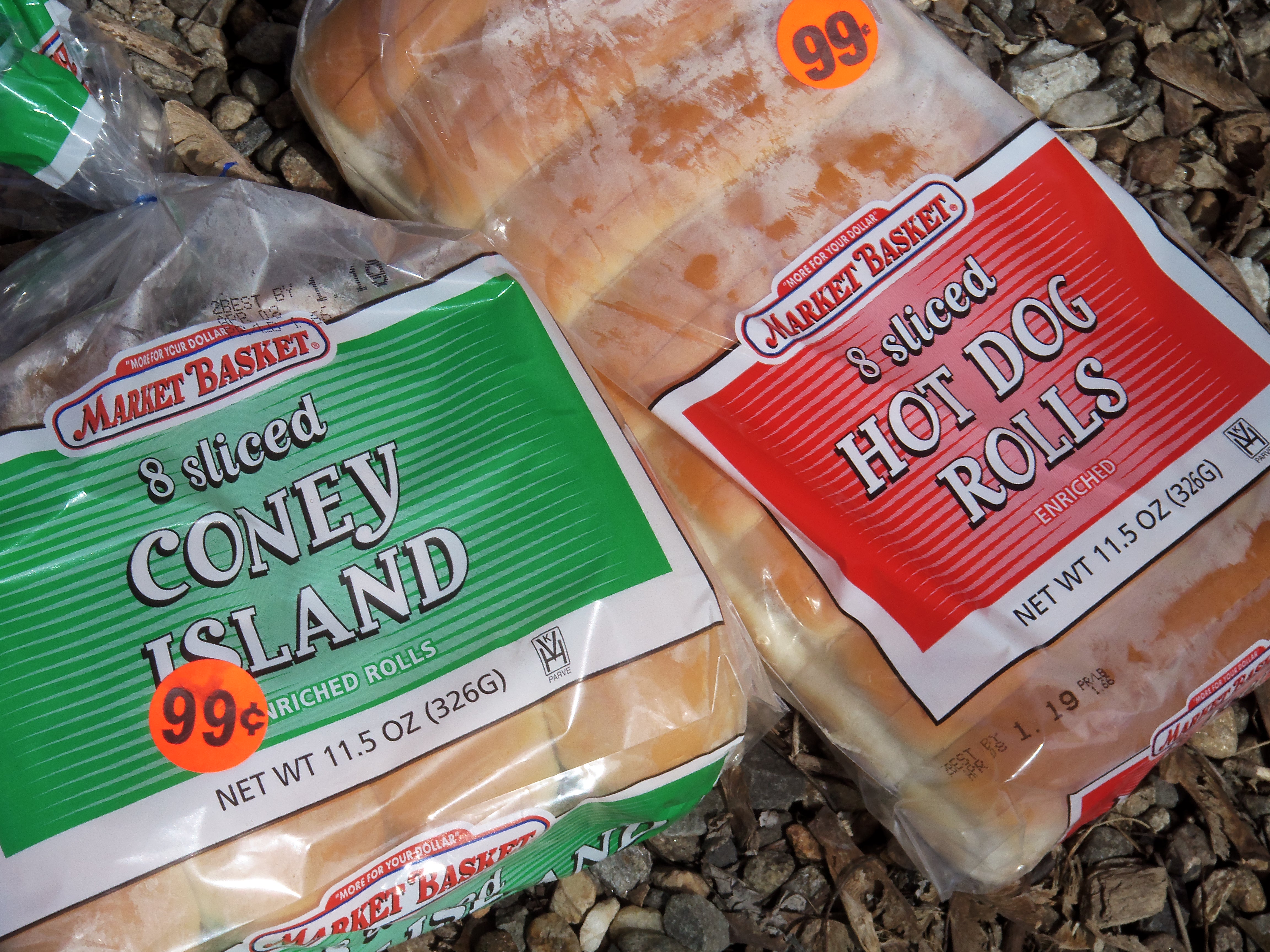
This can, in turn, point to a lot of other regional distinctions. Whether you call a device a watercooler, a water fountain, or a bubbler, as we do here. Or whether you order a soda, a pop, or a cola. Feel free to expand the list. It can go on a long time.
Fast forward, then, to lunchtime at a national conference being held in Rhode Island. I sat down and joined a random group that included a handful of teens. One was from North Carolina. I pointed to the hot dog on his neighbor’s plate. He looked bewildered. “What’s it wrapped in?” he asked.
“Would you call it a hot dog bun?” I prompted.
“No way!”
“Oh yes it is,” said the girl from Connecticut. “It’s what we always use.”
You know where the conversation went from there. Yes it is, no it isn’t.
At least the college cafeteria knew to stock both Hot Dog Buns and Frankfurter Rolls. As we all discovered.
Hmm. Maybe next time we have a crowd over and we’re grilling hot dogs, I’ll get packages of both – and then see which kind goes first.
When I awoke this morning, my wife greeted me with the words, “You missed it last night; all hell broke loose.” I thought she was talking about her board meeting or maybe a big fire, but instead she told me that all of Watertown, Massachusetts, and several surrounding towns were locked down. And then she related the news of the Boston Marathon suspects, the subsequent shootings in Cambridge, the carjacking, the mad police chase down Mount Auburn Street, and all of the activity taking place around the Arsenal Mall.
The developments are still unfolding – and likely will continue to do so for days – and I won’t attempt to relate what’s being reported. What is difficult is trying to imagine the challenges of coping with the shutdown of a very active community. One I’ve been coming to know with some affection.
This year, my Thursdays have wound up in Watertown, where the Revels Singers rehearse for two hours each week in St. John United Methodist Church on Mount Auburn Street. The choir, ranging up to 80 voices, many of them very fine, is led by George Emlen in works from the Renaissance to the present spanning many nationalities and languages. Last night, for instance, we tackled Welsh and French-Canadian as well as English, and the musical experience was exhilarating. No, I’d never even dreamed of being part of such an ensemble.
Rather than getting stuck in rush-hour traffic, I try to arrive early enough to have dinner at one of the inexpensive but excellent restaurants a block or two down the street. (Don’t let looks deceive you: follow your nose instead.) Watertown is an older suburb of Boston, one with substantial houses typically on small lots, and has become a haven of many ethnic cultures. The church where we practice, for instance, also houses a Korean Methodist congregation. Buses pass by frequently, and pedestrians fill the sidewalks. In one block I pass the Greek kabob and gyro emporium I’ve come to habituate, an acclaimed Chinese storefront with tables and takeout (yes, some of it goes back with me to New Hampshire), a Japanese fusion eatery, an Iranian bakery, an Hispanic-focused grocery, several hair and nails salons, a cigar store or two. (I’d planned to make a list someday.)
Yesterday I even arrived in time to tour the Armenian Library and Museum of America, which incidentally had free admission this week as an offering of a quiet public place for the community to heal from the tragedy on Monday. (The irony of the free admission now comes, of course, in the closing of the town itself.) As the center of Armenian culture in the New World, Watertown has much to say about genocide and suffering over the centuries.
I was still reflecting on that experience as I ate, until noticing the repeated images on the large-screen TV on the restaurant wall as it showed footage of the two suspects shortly before Monday’s bombings. A man at one table got up, pointed to something on the screen, and commented on a detail, which prompted discussion from other tables. People were paying attention.
From there it was on to rehearsal. A magnolia and the daffodils in front of the church were in full bloom. Spring was in the air. Even afterward, as we returned to the street, we wanted to linger.
Who could have anticipated the state of siege that would erupt a few hours later?
There’s something wonderfully small-town about Boston, despite all of its world-class amenities. For those of us who love professional sports, classical music, museums of all stripes, theater and ballet, lectures and the like, there’s far more to do than time will ever permit.
But the scale, especially with all of its smaller cities and towns clustered in close at hand, can be wonderfully human. Or think of Fenway, one of Major League Baseball’s smallest parks, and its oldest.
Nowhere have I seen this balance more acutely than in the Boston Marathon.
The first inkling I had was one April Monday when I was driving along 128, the semicircular freeway around the city. With all of its high-tech business headquarters, it’s often called Silicon Valley East. Approaching one overpass, I noticed the side of the highway was thick with (illegally) parked cars, almost as if there’d been an accident. But then I saw the overpass itself was crowded with people. Only when I turned on the radio for the every-10-minute traffic report did I discover this was where the race route crossed on the way toward Copley Square. The station, by the way, was almost exclusively marathon coverage.
Nor was it alone.
The city’s television stations also provided continuous coverage, from 9 a.m. or so at the start in Hopkinton through the awards at 5 p.m. on Copley Square in the Back Bay. Live cameras broadcast from trucks in front of the lead runners and wheelchair contestants, as well as reporters and cameras all along the 26-mile route. The technical planning and execution of such coverage must be incredible.
While the event has more than 20,000 registered participants and 500,000 spectators each year, you’re still likely to know someone or more who have run in it. In fact, if they’ve qualified, you can follow their progress and times online. That’s another incredible aspect, to my eyes. And then there are all of those who jump in afterward, no need to register — you just get to say you’ve run the marathon.
To share in that joy and community spirit combined with the determined efforts of each of the runners is inspiring, even before we add the outdoors release from New England’s long winter. This is what the evil scheming behind yesterday’s bombing targeted. If the perpetrators thought they were somehow reenacting the Shot Heard ‘Round the World that the Patriots’ Day event commemorates, they have it backwards. We celebrate the resolve and victory of the people over tyranny and fear.
While officials are remaining tight-lipped about what’s happened, we’re getting our news from those we know, even when we live more than an hour away from the action. We’re relieved to hear our daughter’s safe and that a friend crossed the finish line hours earlier, but we’re also troubled by the words coming second-hand from the emergency rooms. We’ll learn more in conversations in the weeks ahead. In the small-town character of Boston, these things hit home, one way or another.
With determination, then, here’s looking ahead to the 118th annual marathon running April 21, 2014, God willing.
 Jnana's Red Barn