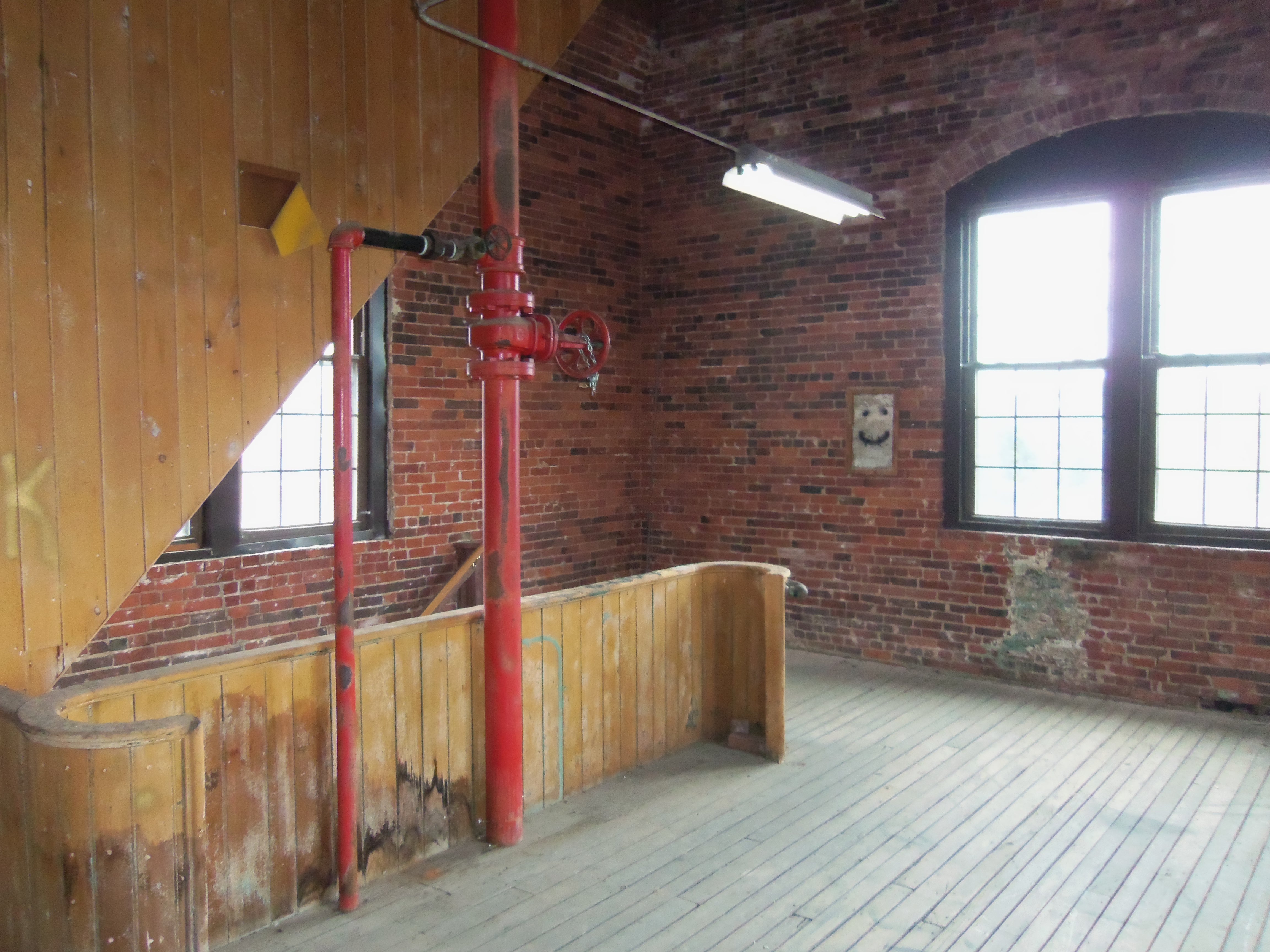
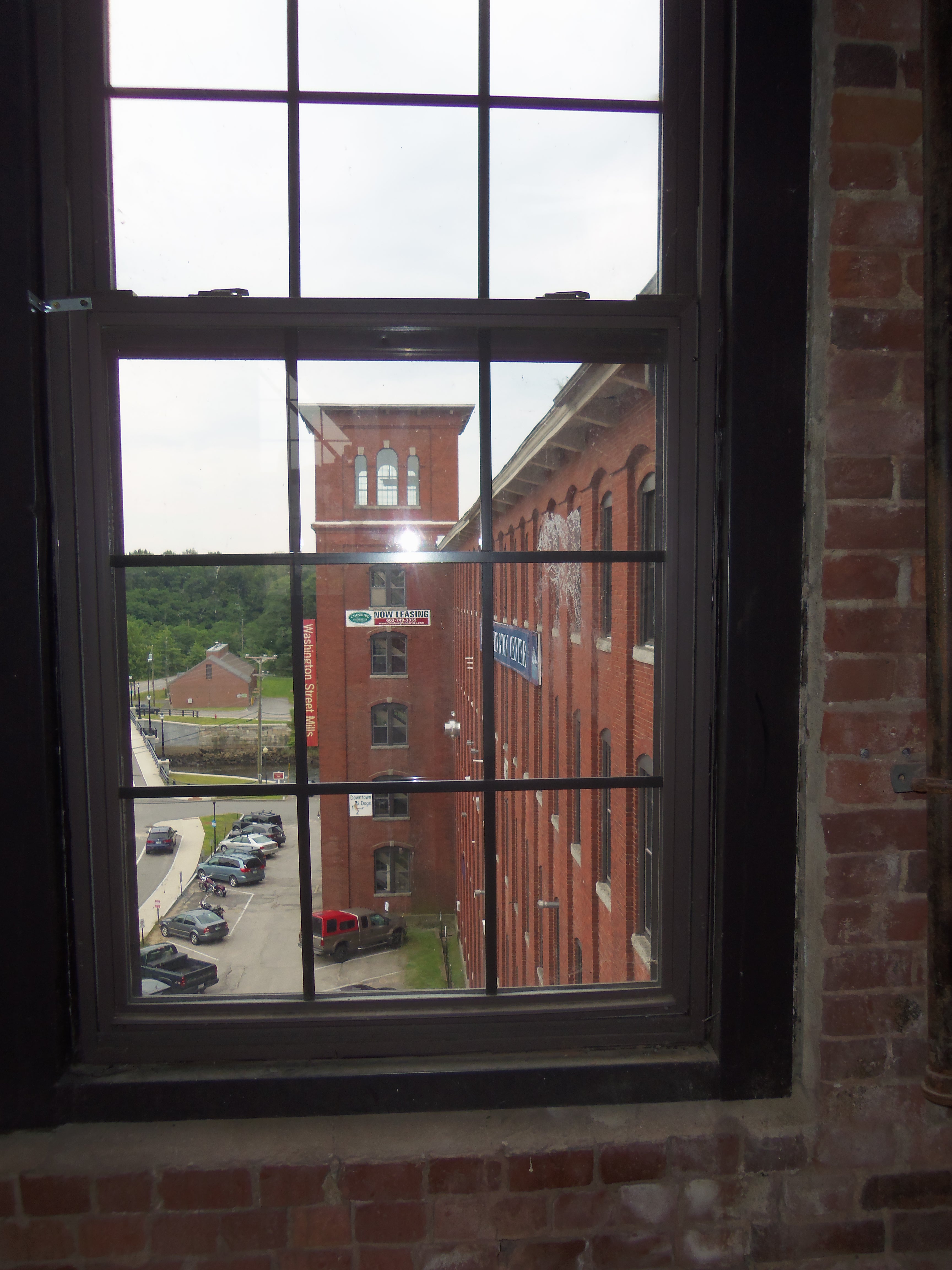


You never know what we'll churn up in cleaning a stall
So there we were, in one of our informal noontime forums, this one led by an economist. The group itself was multidisciplinary, which made for some lively discussion.
As we analyzed the problem at hand, we saw that there were downsides to every possible solution we envisioned. No course of action was perfect, although some appeared to be better than others. Any way we turned, we’d be making some kind of mess for someone else to clean up or a burden for one group or another to carry.
We laughed, realizing that this is the way most of life actually is. There’s almost always a cost involved, and often unintended consequences.
And then one of our colleagues summed it up in a line that became our institute’s unofficial motto:
Once in a while, economics really does touch on reality.

I’ve spent a lot of my life behind a steering wheel, and that’s where a number of my poems originate.
From this, I can look at a concept. Lines from the road. Basho? Brautigan? McCord?
Flight or escape remains a central theme in American literature. Kerouac’s On the Road and Hunter Thompson come to mind, along with Zen and the Art of Motorcycle Maintenance and Blue Highways. Of course our two greatest American novels also reflect this action, often with its male bonding and fields of discovery – Moby Dick and Huckleberry Finn. It’s not just some vague sense of the liberty of a frontier to resettle, but with wheels, there’s the thrill of speed more destructive than hiking or canoeing or sailing. As for hobos and the rails? Another era. Outlaws more than vagabonds? As for the Gypsy, there’s an entire community to consider. As well as flights with a destination, in contrast to those lacking.
Sorting the holiday cards coming into the house renews my appreciation for the human scale of the state we live in.
There’s a card from the governor and her family, and another from our U.S. senator. (Note the singular: the other one’s a national embarrassment who represents the One Percent, non-fulltime-residents of New Hampshire all, even including any who do summer here.)
OK, these cards aren’t personally signed, but it’s still a reminder that retail politics is a Granite State tradition, one that carries some responsibility as well.
No, we aren’t responding with cards to them as well. But we still wish them a very merry Christmas. And we’re glad they’re on the case.
Once each week I get more than enough of rush hour, Boston style, which doesn’t rush at all when you consider the traffic’s at a standstill. Don’t know how people do it morning and evening, day after day, week after week.
It’s what I’m calling “crush hour,” even though it’s more than an hour.
Even if it’s where the jobs are, especially the ones that pay.
Question: What do you do when something doesn’t work?
Answer: Fix it.
Q: And what if it still won’t work?
A: You throw it in the trash.
Q: But what if it’s not a thing but a person?
A: You fire ’em.
Q: But what if they’re one of the family?
A: Now the situation gets difficult. Really difficult.
A misunderstanding of the “turn on, tune in, drop out” motto popularized by Timothy Leary in 1966 likely blinded most of us to the extent to which the hippie movement was rooted in college campuses. That is, the “drop out” part was assumed to mean quitting one’s studies, even though Leary later insisted he meant it as a discovery of one’s unique nature and self-reliance, a mission that should have been central to the college experience itself.
Revisiting the era as it blossomed in the late ’60s and early ’70s, I see how much of its energy came from college students and the circles they supported – musicians, artisans and craftspeople, small-scale entrepreneurs of all stripes, social activists, dealers. Not just students, either, but hip young faculty and their families – all overlapping.
Essentially, it meant dropping a lot of old assumptions and embracing new experiences and values.
The reality, then, is that relatively few hippies dropped out of college, at least over the long haul. Talk all you want about Gypsies or vagabonds, few hippies stayed out on the road for long. Most remained grounded right in the center of the action.
Days after what’s been dubbed the Thanksgiving Nor’easter, much of New Hampshire was left without electrical power. It wasn’t just people out in the sticks either, where homes are scattered and require long lines for connections. No, major sections of the largest cities were also affected.
It’s not that this is an isolated incident, either. Officially, this was the fourth worst outage ever — following December 2008, February 2010, and October 2011.
The electrical grid has become undependable, and that should have the utilities worried. Customers are given more incentive for seeking not just backup relief, mainly generators, but energy independence by means of solar and wind sources.
While many of the big-bucks folks have been insisting that global warming — or more accurately, climatic instability and upheaval — is a fabrication, these kinds of disasters fit right into the predictions they’re denying. And these kinds of events will just keep coming. Or should I say snowballing? The four worst within eight years? Think about it.
The other argument that comes to mind has to do with line maintenance. Again, the four worst in eight years. The utilities can plead all they want for rate hikes, but they’ll be facing increased hostility. Folks will ask, “Just what are we getting for our money?”
It’s safe to say that for somebody here, things are going to get worse before they get better. Or before the public, at least, turns the corner.
Can’t drive through the Big Dig – the tunnels that take Interstate 93 under Boston’s downtown – without thinking of the story of Remington the Rabbit.
Seems his first owner, a teen, named him after her favorite TV show at the time, Remington Steele, in honor of its star. The one she had a crush on.
And then, when she and her mother moved to England, Remington became a feature in another household, at least until they, too, had to move, this time into an apartment that didn’t allow pets.
So Remington, in his long life, spent his final days surrounded by three children who, from all accounts, treated him well and found their delight returned.
And then, when Remington’s days ended, their father provided the crowning touch. Seems Daddy was an engineer working on the Big Dig in Boston. And that’s where Remington was clandestinely buried.
Somehow seems fitting, amid all that steel, knowing there’s a rabbit in the works, somewhere over my head.
 Jnana's Red Barn