passing parade, both directions, all around
young especially with airs of lusty septum rings
combat boots, woven surrounds, none of them
the American idolized Ken or Barbie
nor all of them old hippies
You never know what we'll churn up in cleaning a stall
passing parade, both directions, all around
young especially with airs of lusty septum rings
combat boots, woven surrounds, none of them
the American idolized Ken or Barbie
nor all of them old hippies
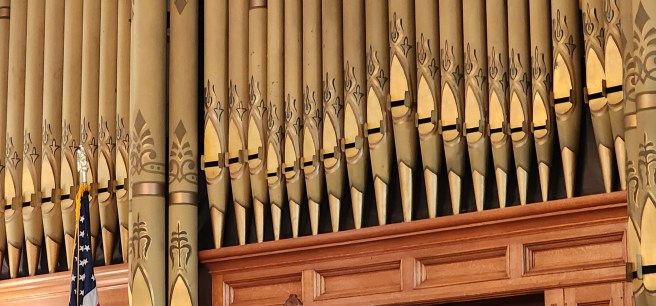
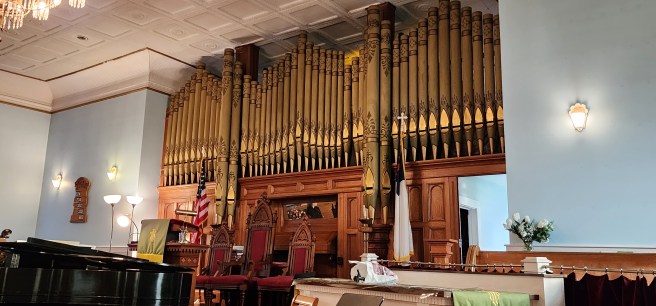
Christian Congregational church in Lubec. I hate to think what it costs to maintain them. Much less employ a musician slash minister worthy of them.
Ever have one of those days? You may have some serious reasons for concern if it includes the following symptoms.
And here I had thought these were simply symptoms of aging.
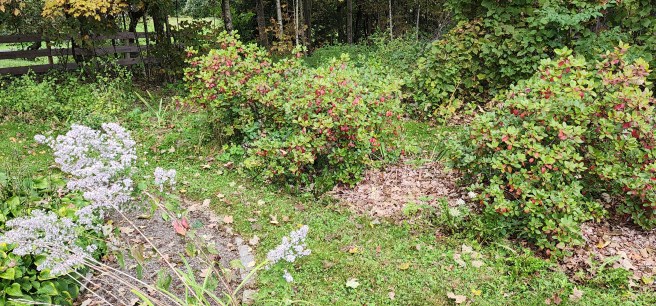
Vassalboro, Maine
Blame Susan Sontag for the introduction, but she was right in lauding the erotic achievement of the pseudonym French author only recently revealed to be Anne Cecile Desclos.
While many of the once shocking practices in The Story of O and its companion volume have become common knowledge in the years since publication, other parts remain contentious. I’ll leave the subject matter there.
What fascinates me as a writer is the spare, even lacy, language that develops the story. O herself says very little and next to nothing is revealed about her background – there’s nothing at all about her family – yet everything is shown as if we’re inside her head. Somehow, Reage skirts being prescient in the mater-of-fact telling. We learn more background about other characters’ families, in fact. When it comes to scurrilous events, she avoids dwelling in detail but hints briefly and quite effectively moves on. As for cliché? Minimal.
Let that be a reminder to some of us who would otherwise produce too much information for our readers at certain points of our own drafting.
DRY ICE
DRY EYES
Or line, as they insist

right-handed cord
coil it clockwise?
left-handed, counter?
Right laid
a Z twist
versus an S twist
in the cable
coiled wrong, it will kink
potentially dangerous
where will I apply such arcane detail?
Since relocating to Eastport at the close of 2020, I’ve been posting about the place where I now live, but this may be the time to present a slightly broader perspective.
Officially, Eastport is both a small city and an archipelago. It comprises 3.63 square miles of land, mostly on Moose Island, and 8.7 square miles of water. Moose Island is extremely irregular in shape, with multiple inlets, or coves, and corresponding points, or heads, largely lined with a shore of rock walls and scattered pocket beaches. The island is 4½ miles long and no more than a mile and a quarter wide, depending.
You don’t catch much of that from land, even with the zig-zag state highway into town. That is, emphatically, the only route to or from the mainland. Viewed from the water, of course, a much different picture emerges.
Today, the island is connected to the mainland via a causeway. The roadway passes through the tribal reservation at Pleasant Point, or Sipayik. They, too, are a presence.
In an unusual twist, the Passamaquoddy name, Muselenk, is derived from the English “moose island,” so we glean no ancient nuances there. The waters, on the other hand, are varied and rich, as the Native names reveal.
As you’ll see when we peel away the layers of our old Cape, its orientation – like those of the community’s European descendants over the years – gravitates increasingly to the waters, especially the sheltered, ice-free harbor a block from the house.
Moose Island is described as being on Passamaquoddy Bay, which technically borders the island on one side while Cobscook Bay hugs the other, though both are extensions of the famed Bay of Fundy and its extreme tides. Thanks to Fundy Bay, our tides are the largest in the continental United States, as you’ve seen in some of my posts here. We do face Campobello Island, Deer Island, and a few others only a mile or two away in New Brunswick, Canada, and they shelter us from the open Atlantic. Again, you’ve met them here at the Red Barn.
Campobello, in fact, is a mere mile or two away, across the deep channel, and can be seen from our house.
Legalistically, the border between the United States and Canada slash Britain remained somewhat fluid through many of the early years. Earlier conflicts between France and England precluded permanent settlement before the end of the French and Indian wars in 1763 and few others came in until the end of the American Revolution in 1783. There were also four years from the War of 1812 when Eastport was under British jurisdiction – making the city the last location in the continental U.S. to be under foreign rule.
Perhaps that was a factor in making the harbor the second busiest in the U.S. in 1833, much of it smuggling with New Brunswick.
The line between the U.S. (meaning Eastport) and Canada wasn’t fixed until 1842. Canada and Canadian-born people play a significant role in the evolution of the town.
All of this, as I discovered, plays into the history of our house and its inhabitants, too.
I’m thinking of those ridiculous online ads that purport to be something about Maine but show us images of urban Arizona or maybe Miami, the furthest opposites to where I live yet purporting to be local for here. You know, most affordable housing or food delivery or the ten best restaurants or plumbers in Eastport. We don’t have nearly that many. Got it?
Many of them somehow zero in on tiny East Machias or, for our weather almanac, as St. John, New Brunswick, or Halifax, Nova Scotia. Do note that East Machias is not Eastport. They’re an hour apart.
There’s also the Microsoft ab that proclaims “Eastport light traffic,” which is truly baffling. There are only three or four traffic lights in the entire county, OK? Heavy traffic, apart from road construction, is usually three or four vehicles.
These are even worse than the late-night TV commercials that couldn’t come close to properly pronouncing where we lived in the Pacific Northwest.
I had expected that the deep revisions to my previously published novels in reaction to the appearance What’s Left would apply only to the ones related to Cassia’s father.
I was wrong, once again. I blame Cassia, by the way.
She had led me to present a more unified set of hippie novels and bring them more into the present. Now she wanted me to do something similar to my remaining works.
I could connect two more books through the character of Jaya. She was the center of my book that leads into the Pacific Northwest. By shifting her spiritual identity from Sufi to yogi, I could then weave her into the yoga novel, in effect creating a two-part series.
How would that work?
It all depended, I sensed, on the yoga novel. She would have to become one of the eight resident followers of the guru.
The obvious one, Swami’s right-hand disciple, was male. That shift would throw off the balance of having half of the followers being male and the other half, female. In addition, the interaction with Jaya and the guru, a female, would lack a basic tension.
Having Swami be a woman, as mine was, had presented a hurdle for many of my potential readers. The ashram was rogue enough as it was.
The gender change allowed for a more credible – and colorful – character. It also had a ripple effect through the rest of the cast.
In the end, the book had a new title and some renamed and otherwise altered characters while now leading organically into a series. Just where does she go when she leaves the ashram? You got it.
~*~
Finding the artwork that now graces the cover was a boost. Maybe it even prompted another sweep through the story to enhance the humor.
Much had happened in the yoga world in the time since I drafted the story and eventually published it. Many of the new religion organizations in America – and I’ll include yoga, despite the usual protests – had suffered serious scandals, either monetary or sexual. At least I had avoided that by keeping my story to a single day.
Bit by bit, I learned some of what happened after I had moved on. A chance encounter in a central Pennsylvania diner with one of the figures, who was waitressing on a very busy day, revealed one disturbing schism. Later, through the Internet, I heard from several key players from my residency and learned I hadn’t been ostracized, after all, but the operation had undergone a serious upheaval shortly before Swami’s death. And then I had some long phone calls with the figure who had been in the role Jaya subsumed in the revised novel. The relationship wasn’t exactly as I had assumed – or anyone else, as far as I can see. On top of that, a former girlfriend finally told me of her mistreatment when she visited. There were other dark sides I hadn’t suspected.
Repeatedly, they agreed that I was at the ashram during its glorious apogee. I missed later conflicts that erupted when the locals decided the place was a cult or events I see as fatal changes in direction, especially in terms of guru worship.
~*~
With the focus on Jaya and what she gained from her experiences on the yoga farm, I’m spared from going into an expose of a marginal spiritual community. For me, the time was a major turning point in my life, leading me to the Society of Friends, or Quakers, which to my surprise had been the faith of my ancestors.
I still believe as a nation, we could be doing much, much better. Something more like what I see in the Biblical Kingdom of God on earth.
Yoga had been a stretch for me. My preference would have been for Zen Buddhist, had a teacher appeared. Instead, this American woman in a pink jump suit came across my path. It still seems surreal. In my hippie novels, it’s Tibetan Buddhist.
A good friend who had been an Episcopal nun had her own insights on monastic life, with many overlaps to what I had experienced. I’ve long been fascinated by American Shakers, too. More recently I’ve added Greek Orthodox examples and mysticism to the mix. And, curiously, my most “hippie” identity or fullness came during those years on the yoga farm.
There are lessons I’ve carried through life, but I should also acknowledge potentially damaging instances, including things that came up in therapy years later. My denial of emotions, especially.
Novels about yoga are surprisingly few. As touchstones for his book, I’ll instead cite non-fiction: Anagarika Govinda’s The Way of the White Clouds, Patanjali’s Yoga Sutras, collected writings of Swami Sivananda. Ram Dass’ Be Here Now, and stray bits by and about Murshid Samuel Lewis, and Kathleen Norris’ Cloister Walk, for a Christian parallel. Surprisingly, Herman Hesse’s Siddhartha left me cold.
 Jnana's Red Barn