It’s been a dozen years since I left full-time employment, but I can say I still don’t know what “retirement” is. Could it be because I don’t play golf or tennis?
After years of hoping to be financially able to leave the newsroom and instead concentrate on a life as an author, I finally made it to freedom. In the years leading up to that, I had put together detailed plans of running on a tight schedule, rising to meditate and pray, do some yoga, attend to correspondence, tackle some heavy new writing, and so on, but that’s not how things turned out. At least guilt hasn’t kicked in. I haven’t exactly been a slacker.
In those earlier schemes, I didn’t envision swimming laps every day at the city’s indoor pool or my weekly trip to Boston to sing in a choir. Nor was self-publishing the novels and poetry or the expanse of blogging or other social media. Photography, even of a digital sort, was an unexpected new hobby. Yearly Meeting responsibilities, however, were on the list and duly enjoyed. I’m embarrassed to admit that many yoga exercises are now beyond me – it’s amazing what 50 years of physical neglect can do.
I’m still trying to discover my natural sleep cycle, too. Eastport is a place where most folks rise early, and that’s generally what I’m doing – often, 3 am in the summer and a bit later in winter. The roads around here are busier at 5:30 in the morning than at 5:30 in the late afternoon or evening. A nap helps but isn’t always a daily option. And I’m spending more time at the keyboard than is probably healthy.
~*~
The most obvious way my life changed my writing life was is in having longer periods where I could concentrate on a given work or project. I wasn’t writing on the fly, like graffiti, as I have quipped, or immersing myself for a vacation week or two and then reluctantly putting the manuscript aside. My attention wasn’t diverted as often, either. I no longer had the daily commutes as time for reflection, but it’s amazing what bubbled up as a swam my half-mile of laps – some of my favorite lines in What’s Left, especially.
No longer writing or revising on the fly apparently made my new work more difficult.
At the beginning of my new life, I took up blogging, first to clear out much of my backlog of writing and small-press first publications, and then the photography came forward. One blog became five. Networking face-to-face with other writers once a month was on my rounds, and there were other events for poets, too. That led to the release of most of my scripted fiction, a huge emotional relief.
Curiously, I haven’t written poetry. The focus has been on prose, especially my one new novel, What’s Left. You’d think in my expanded creative schedule combined with my earlier experience of shaping fiction, this would have been a breeze. Instead, it was the thorniest project. Its purpose was to wrap up the hippie era, drawing together my Kenzie stories. The book kept shifting focus, and even finding an appropriate title was elusive. (A cover image was even more problematic.) It was also the least autobiographical, even with the new Greek-Orthodox circle in my life.
I can’t say which of my novels underwent the most exhaustive transformation from their first published version to the way they stand now, but What’s Left was the most painful as well as the biggest turning point. None of the others changed that drastically from their starting point to what hit print. The changes from first published version to what now stands is another matter.
But What’s Left did prompt that deep reworking of all the earlier ones, as well as the big round of republication.
My other piece of new fiction was perhaps the easiest of all, the middle novella in the Secret Side of Jaya. This was set between two earlier ones that had undergone multiple revisions before I inserted Jaya as a unifying voice.
~*~
If I thought I could kick back after those revisions, I was mistaken. Quaking Dover was on the horizon.
It was the book I didn’t want to write, I was truly tired, but the one that’s carried me the farthest with readers. It wasn’t even fiction.
And it proved as difficult in its revisions as What’s Left had. There was the challenge of fitting myself into the text as the “gently laughing curmudgeon” that one insightful beta reader suggested. It ran counter to all of my journalistic training as a neutral observer and my yoga humility of rendering myself invisible.
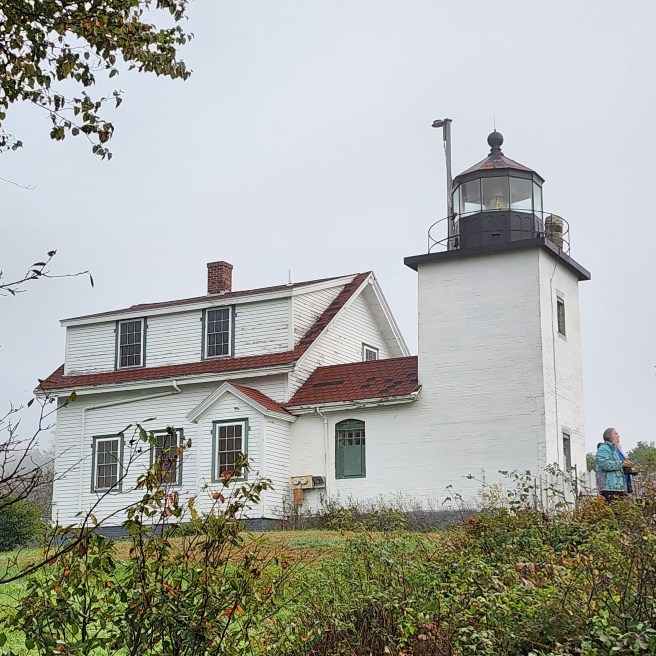
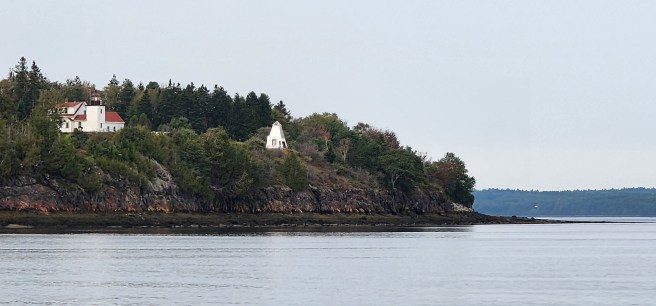
When I undertook Quaking Dover, Covid broke out. My laps in the pool ended, as did Revels Singers in Boston. After finishing the first draft, I relocated to Way Downeast Maine in what became an ideal writer’s retreat. It was amazing what I could find online in my research and revision.
As I’ve said, our move was the next step in some necessary downsizing in our life. Over the past decade, I’ve shifted to the Web and am now largely paper-free. I am going to have to face considerably more purging when we get the rest of my book collection out of storage and try to fit what we can (or what I need) into this smaller house. And let’s not forget, there’s no barn here.
~*~
Quaking Dover did lead to live and streamed PowerPoint presentations, a further new skillset for me.
Among other things, my concentration isn’t what it was. I learned in a few months of working as a 2020 Census enumerator that my stamina has also faded – it was an exhausting job. My spelling’s declined. And I’m not as sharp-eyed as an editor, either. In fact, I’m more tolerant.
I’m reading mostly ebooks, avoiding the filled shelves conundrum.
I don’t feel an urgency trying to “understand my problem.”
Even the journaling is slowing.
And there was a round of renewed therapy, ending shortly before the death of my therapist.
 Having passed Searsport and now at anchor in Stockton Springs
 tidewalkers

 Jnana's Red Barn