READERS, READERS, WHEREVER YOU ARE

Are there many readers outside New York City? When it comes to literary fiction, at least, the majority of the work often seems to be set in the City, and maybe that becomes a self-fulfilling prophecy.

I do love the fact that so many subway riders are also transit readers, though, and maybe that plays a big influence in the book reading populace. Ditto for taking the bus.

But I’m always baffled by the question, “Who are your readers?” I like to think they come from everywhere, and from all walks of life.

And just who are you?

The marketing crowd, of course, likes to peg a genre to a demographic. Chick Lit is a prime example, which in turn created Hen Lit for an over-29 female readership. Romances we can guess. Maybe even the many strands of Sci Fi.

But I still like to hold out hope for a more diverse core of readers for my own work, including the new books appearing at Smashwords. Am I just being naive?

Heavens, is it really Boomer Lit? I’d hope not to be so limited.

CONTINUING SHADOWS OF THE HIPPIE EXPERIENCE

Look at a lot of the bikers or some of today’s teens and you can see they’re carrying some of the hippie legacy. The long hair, especially, and the desire to be as free as Gypsies. But something there doesn’t quite fit, either.

Too much military, for the bikers – the peace vibe ain’t there.

As for the teens, I don’t see the playful side that accompanied the late ’60s and early ’70s, along with all the desperation. Even the drug use seems different, maybe purely numbing rather than mind-expanding.

I’ve already mentioned some of the hippie streams I see continuing. But I haven’t said much about the darker side. I’m open for some suggestions and comments here. Feel free to weigh in. Anybody still picking up hitchhikers, for starters?

ESCAPE? OR ENCOUNTER?

A comment by Aaron James a few days back in response to my post “The Novel as a Time Machine” has prompted me to rethink my own expectations of literature, both as a reader and a writer. It was one of those elephant-in-the-room moments, actually, in which the most obvious thing can sometimes be the hardest to see.

Quite simply, when he said “a lot of people like to read as a form of escapism,” an alarm was triggered, based on a deeply engrained value from my formative years, the one that derided escapism as, well, unhealthy at its core and essentially fluffy. Looking back, I suspect the message was that escapism had the social relevance of sugar overload or a wild drunken night on the town. You know, it just wasn’t serious enough.

At a deeper level, I suspect the reaction also touches on the lingering historic distrust of the arts from my dad’s Quaker and Dunker roots, perhaps even some from my mother’s mix of Calvinist traditions (never mind Sir Walter Scott), and that’s even before we get to Tertullian and his critique of the “pagan” arts during the formation of the early church itself. You know, it all begins with assuming a role of another’s identity, something that’s simply counterfeit and a lie. (My apologies for way oversimplifying a marvelous line of reasoning. And, for the record, many modern Quakers are fine writers, actors, and artists.)

Still, as I was reflecting on Aaron’s comment, I had to admit how much I enjoy work that crosses from “reality” into a magical realm, one of fantasy or surrealism. I like to be taken places – or, as he hints, be given a sense of travel where exploring and learning are part of the sensation of the trip.

Is that escapism? Or is it encounter?

My inclination is to argue the latter. But does that make for a more rugged route? It even has me thinking about the “diet” we allow ourselves when it comes to literature – do we go vegan, for instance, or kosher, or out-and-out hedonistic? What’s “good” and what’s “bad”? And what’s simply another guilty pleasure?

AMPLIFYING THE LIST

When we were considering literature arising from the hippie experience a while back, one of the surprises came in the reader comments as we recognized the predominance of non-fiction rather than novels. (Who says literature must be exclusively fiction, anyway?)

Still, there are four novelists who recently resurfaced in my memory, and I think they deserve consideration for their efforts from the time:

  • Edward Abbey: The Monkey Wrench Gang, etc.
  • Ernest Callenbach: Ecotopia
  • John Nichols: The Milagro Beanfield War, etc.
  • Tom Robbins: Even Cowgirls Get the Blues, Still Life with Woodpecker, etc.

Noticing that these are all male, and that three focus heavily on the socio-political aspects of the movement, I have a nagging suspicion that we’re overlooking a range of female authors weighing in on their side of the experience. Any more nominations?

THE NOVEL AS A TIME MACHINE

Anyone else wonder about the appeal of stories set in another century? Just what’s the attraction?

The future, of course, is one direction, a whole set of “what if” projections that for now cannot be tested against historical development. (Admittedly, Orwell’s 1984 certainly has become an exception in the years since I first read it, gee, was it ’64? As has the movie 2001.)

The past, however, seems to be the more romantic option, beginning with historic period romances and Westerns. I suppose it’s not that far removed from those who inquire of astrologers or palmists or mediums about their past lives, although what I’ve always found most fascinating there is how many people who do so claim to have been Cleopatra or Anne Boleyn or Helen of Troy or the like, rather than one of the common, suffering, exploited populace. No, the stories tilt toward royalty, court intrigue, the power struggles of the rich and mighty – the glittering elite far removed from everyday life. (Maybe that’s our fascination with celebrities, too, as if wealth and beauty leads to true love and happiness, not that it ever seems to hold over the long haul. In pure weight, tragedies trump over comedies.)

My wife sometimes jests that I would have been more at home in 18th or 19th century America, especially in a context of the Enlightenment, scientific advancement, and perhaps opera, along with a flourishing Quaker culture. (Never mind that the Quaker discipline of the time banned music and fiction as superfluous, vain, and untrue.) Again, though, the projection is toward a place of refinement, culture, and ease rather than the long, hard, physical labor of the masses.

So what, ultimately, is the attraction of historical fiction? Is there some time or place you’d willingly be relocated to, if it were possible, even if you could never come back? And, while we’re at it, what about the importance of location, even over time itself? Who and where would you like to be? Just what is it about other eras? Ah, the intrigue! To say nothing of the underlying connection.
PEAS, PLEASE

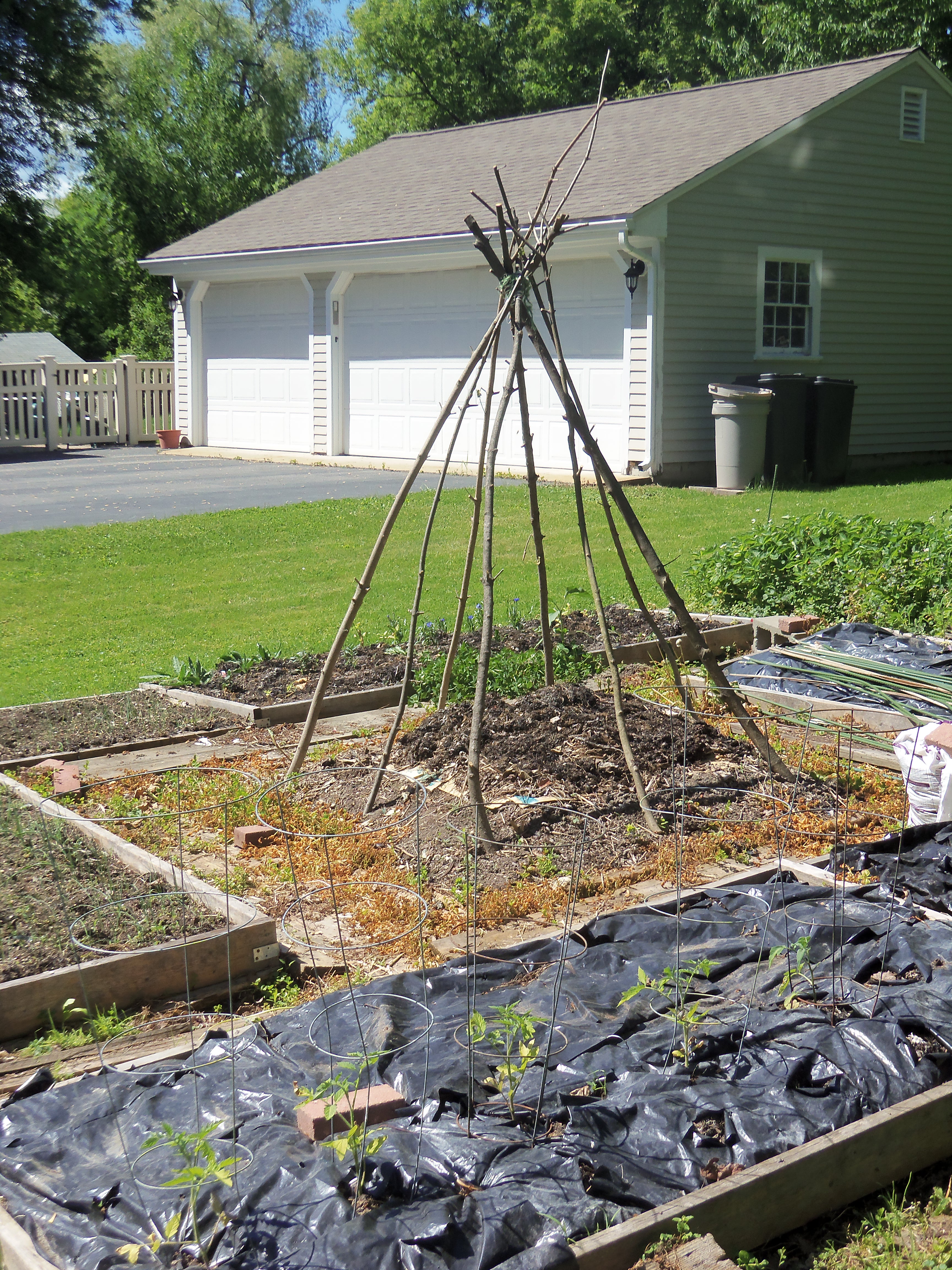
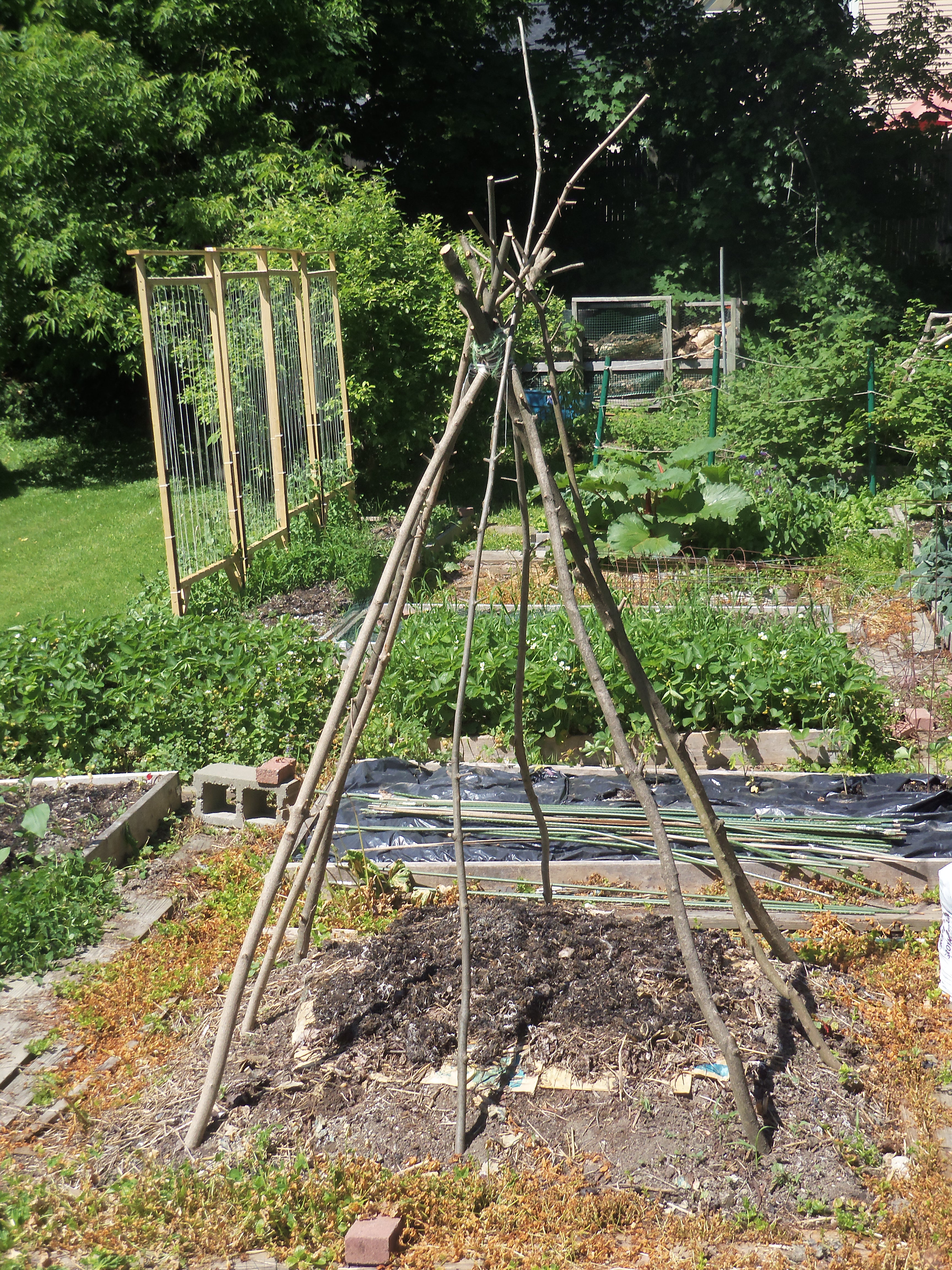
As gardeners know, growing peas can be a challenge. The vines like to climb and tangle ... and they get heavy. This year, thanks to elder daughter, a new design has appeared in our beds. It's quite elegant, I think.
As gardeners know, growing peas can be a challenge. The vines like to climb and tangle … and they get heavy. This year, thanks to elder daughter, a new design has appeared in our beds. It’s quite elegant, I think.
Here's a little perspective.
Here’s a little perspective.


VISUALS FROM THE HIPPIE ERA

Nobody, I bet, can think of the hippie era without thinking of wild color. Just try listening to the music without it. Or reading my Hippie Trails novels.

There’s the clothing, of course, as well as those incredible hand-lettered Fillmore concert posters, the Peter Max illustrations, and the record album covers. The old Rolling Stone weekly newspaper, from the years it was based in San Francisco. Maybe some hand-thrown pottery, macrame, or a paisley pattern or big brass belt buckle.

So what comes to your mind’s eye when someone says hippie?

What would you put on the list?