REMEMBERING THE ‘BIG TIME’

Found myself chuckling the other day as I was making photocopies on the computer printer. What came to mind was the memory of my old definition of knowing I’d made the big time as a writer would be when I had my own IBM Selectric typewriter and my own Xerox copier. Gee, it didn’t even have to be Xerox, now that I think of it. (And it wasn’t even something really big like a sailboat or shiny new BMW.)

My, how that dates me! But let me explain.

Not too long ago, writers like me were clunking away on big old manual keyboards, even in newspaper offices. The electric typewriters were more likely to be found in the jewelry store on the corner or at the bank than on the desks of people who had to type constantly as part of their employment. Well, really good secretaries also had them – with a lot of our admiration.

While the news writing could have cross-outs and handwritten insertions, serious literary submissions were expected to be perfect – and each submission to the journals was expected to be clean, meaning a copy seldom lasted long in the face of multiple rejections. (Remember, even top-flight authors can expect to receive an average of 20 rejections for each acceptance – or that was the story back when all this was going on. And simultaneous submissions were absolutely verboten.)

So that’s where the photocopier comes in. The small-press editors eventually began allowing copies rather than originals, which was a big blessing for poets like me. Still, it meant finding a decent place to make copies. When I lived in the desert of Washington state, for example, a trek to Seattle four hours away included several hours making fresh copies.

Once I’d moved up the management ladder a few notches, I did splurge on an electric typewriter, one I loved despite its annoying flying f that nobody could keep repaired. Half of the time it would land several spaces further down the line than where it was needed.

Newsrooms, meanwhile, finally got the Selectrics – not to facilitate reporters’ work but to allow the stories to be scanned directly into type, which raised an entire other nightmare. (Try editing one of those!)

What I really envied with the Selectric was the fact you could choose different fonts and sizes – those magical metal balls that flew around above the page you were typing.

~*~

So here we are, a few decades later. How obsolete all that has become! The computer keyboard allows instant corrections, unlike the bulky typewriter. Even the Selectric. And I have quite the array of fonts and sizes to select from, even before shopping around online for more. So much for the four or five choices in the Selectric, if that many. As for that photocopier, I can simply scan copies from the top of that computer printer for all but the most unusual projects.

As for IBM and Xerox? They’re hardly the monolithic powerhouses they were then.

My, how the field’s changed!

As have my measures of “big time.”
BACK TO THE OBSERVATION TOWER

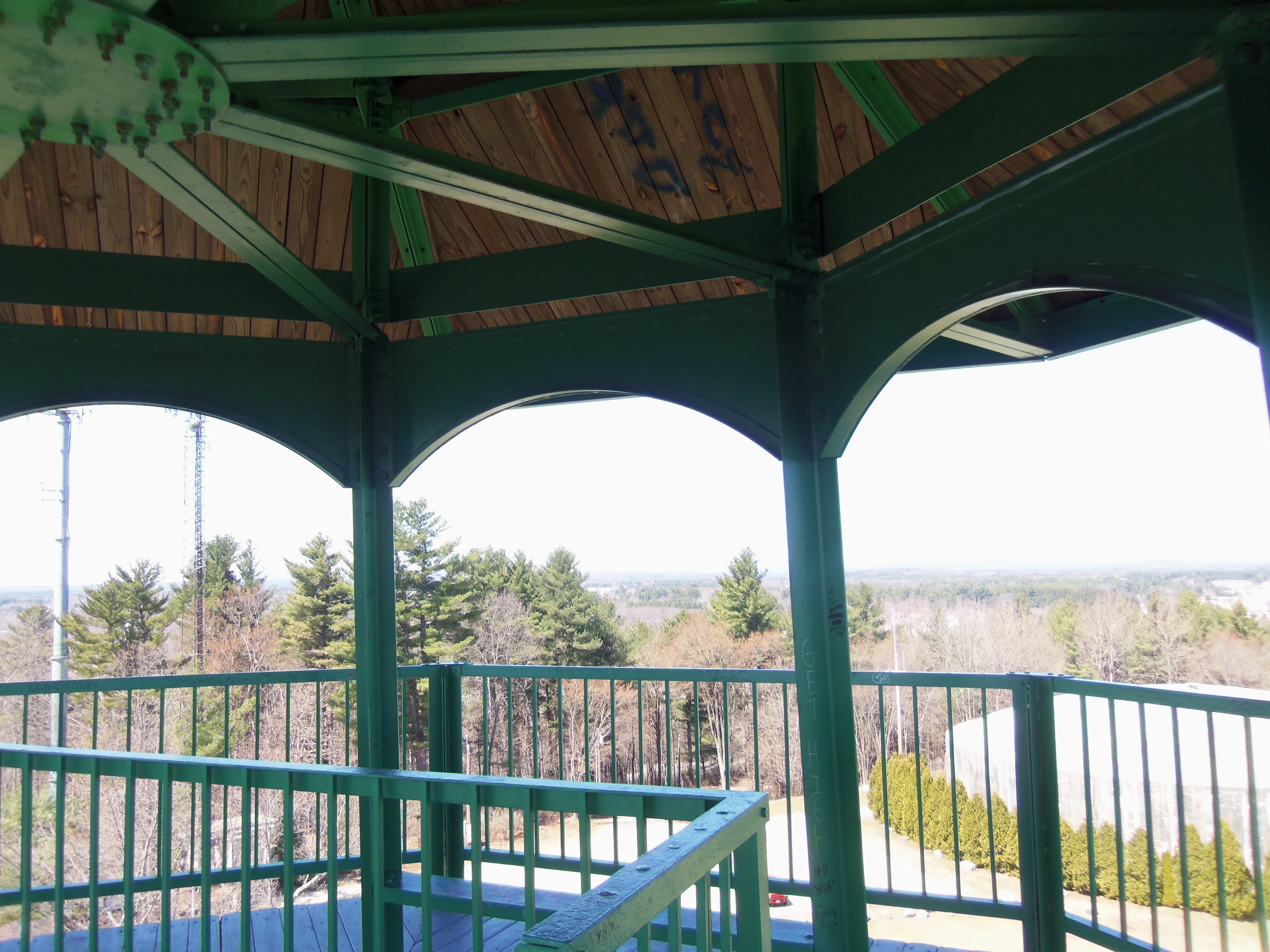
The top of the stairs.

The observation tower on Garrison Hill sits on the highest point in Dover. As I posted in an earlier look, along with some views, back on June 5, 2013, it has some stunning panoramas of New Hampshire and neighboring Maine.

Overhead.
Overhead.
Underfoot.
Underfoot.
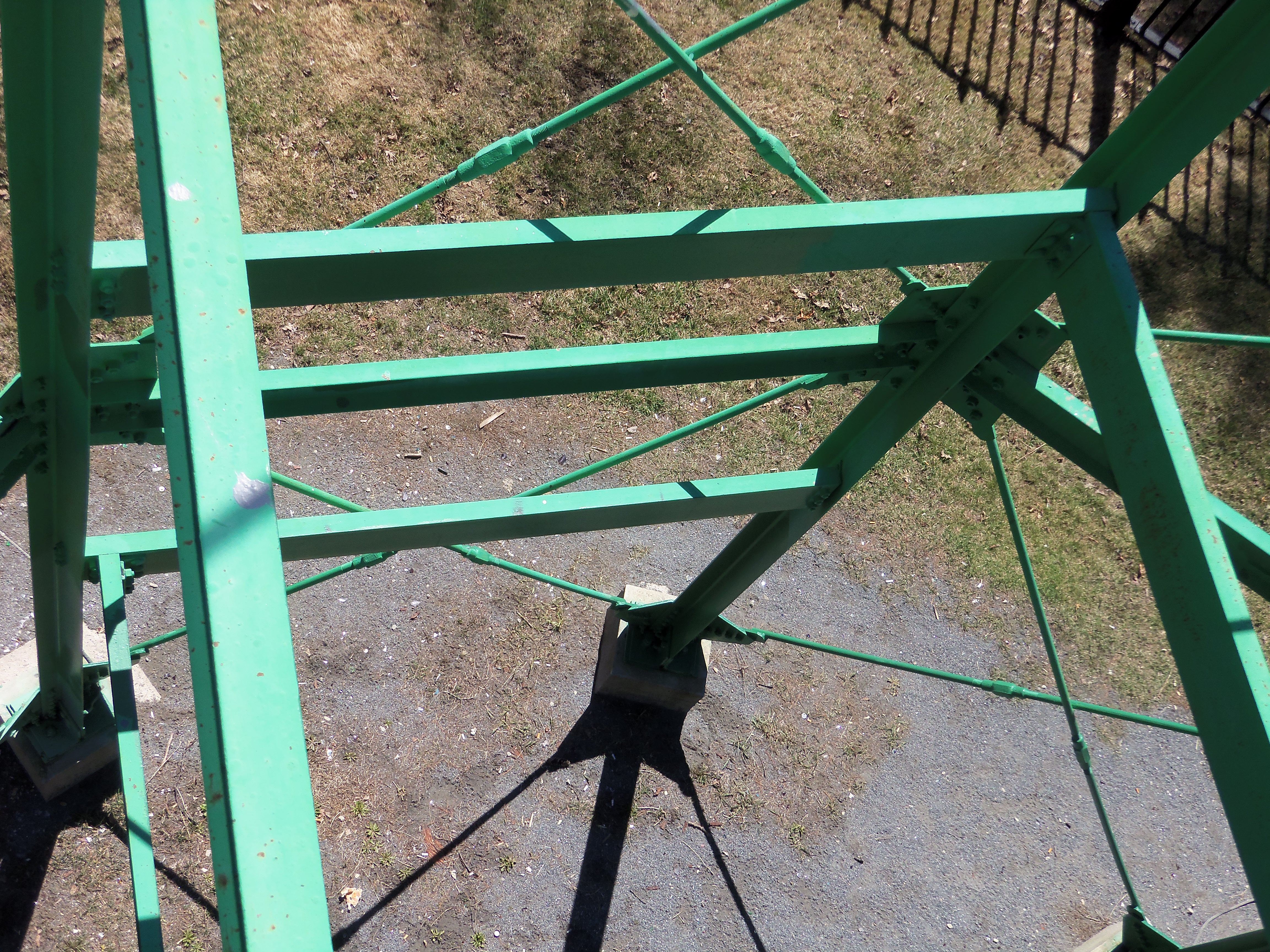
Holding it all together.
Definitely holding it all together.

The details of the interior, too, can be fascinating to observe as you climb or descend. Along with some of the running commentary.

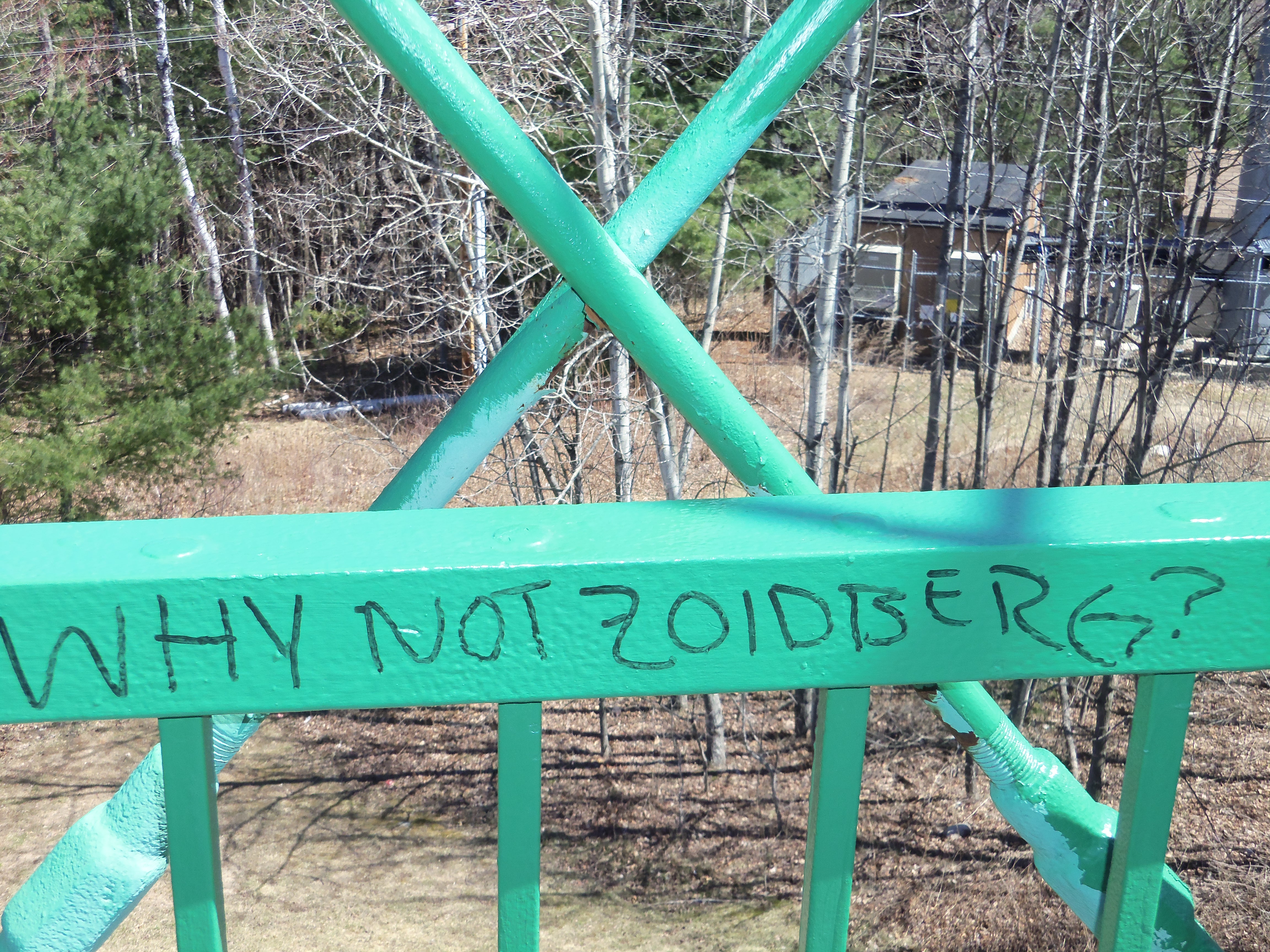
Why not Zoidberg?
Why not Zoidberg?

NO NOSTALGIA

There are people who feel nostalgia for the ‘50s or early ‘60s. Not me – except for the high culture, which was still deemed important — I was glad to see them go. Those decades, despite all of the lofty aspirations in some circles, really were confining and laced with hypocrisy and denial.

What I lament losing most in the decade of civil rights and hippie movements that followed, though, is a side that gave a sense of hope in its spiritual, political, and social justice yearnings. But not the narcissistic or hedonistic excesses that too often accompanied the movements.

To be honest, that stretch of my history had its own pluses and minuses … and a lot of lonely heartbreak. Seeing it honestly, then, means accepting both sides and their lessons. As well as continuing the mission.

SAVORING THE OPENNESS

When we view our mostly quiet worship in contrast to pastoral meetings, we make silence the measure while conveniently overlooking the focus of our practice. William Penn may have been critical of both styles of worship when he wrote:

“When you come to your meetings … Do you gather bodily only, and kindle a fire, compassing yourselves about the sparks of your own kindling, and so please yourselves, and walk in the light of your own fire, and in the sparks which you have kindled? … Or rather, do you sit down in True Silence, resting from your own Will and Workings, and waiting upon the Lord fixed with your minds in the Light wherewith Christ has enlightened you, refreshes you, and prepares you and your spirits and souls to make you fit for his service, that you may offer unto him a pure and spiritual sacrifice.”

An awareness of this focus also places in context this passage from Penn’s Advice to His Children (chapter II, section 27):

“Love silence even in the mind; for thoughts are to that, as words to the body, troublesome; much speaking, as much thinking, spends, and in many thoughts, as well as words, there is sin. True silence is the rest of the mind, and is to the spirit what sleep is to the body, nourishment and refreshment. It is a great virtue; it covers folly, keeps secrets, avoids disputes, and prevents sin.”

“Rest,” I might add, can also be recast as “centering.” In Biblical use, the word often also indicates freedom from oppression by the enemy, as well as peace of spirit. There is even a sense of gathering of strength. That is, I see nothing simpleminded in Penn’s concept of True Silence. Indeed, as I’ve noted, entering it can prove surprising elusive until its refreshment pours over us.

ABOUT THE TIME WE’D THOUGHT WE’D HEARD IT ALL, SOMETHING WOULD COME UP

One thing about being in the news business was how much that we covered was more or less routine. Yes, there were the variations on the given theme, but you could easily fall into a formula in covering them. Think of elections or a football game, for instance. Somebody wins, somebody loses, and you quote from both sides.

There would also be developments that simply fell outside the realm of what we’d covered, and when I started out as a journalist, community tastes were stricter than what now fills the coverage. Pedophile priests and sexually abusive parents, for instance, were never mentioned. Ditto, the private lives of politicians. And pit bull dog attacks were way off in the future.

Not so now, and it’s one of the reasons I burned out editing the low-life stories. After all, not even Hustler magazine would have touched much of the grossness that was now appearing even on the front page.

My goals in journalism were far loftier than soft porn, even in a courtroom setting.

~*~

Still, I was surprised how many times I felt I’d seen and heard all the basic stories, only to be hit by something that seemed completely new.

One of them was the arrest of one of our sportswriters on charges of pimping. Ouch! A professional with children? Somebody we knew?

And then the other day a report took that a couple of steps further.

Seems a man responding to an advertisement for a “social-type service” went to a local motel room only to be met by the woman, as expected. But there he also discovered another man and a pit bull dog, neither of them anticipated on his end.

In the ensuing events, as the story goes, the customer was beaten and robbed before escaping and being chased bleeding and naked by the pit bull into the parking lot before a phone call from the front office summoned police. (There was also something about brass knuckles that were tossed aside in the fray, but let’s stick to the basic outline.)

I keep wondering about the old “honor among thieves” code among outlaws. Aren’t there supposed to be some strict standards of behavior involved? Even among crooks, doesn’t a double-cross draws contempt, as does betrayal? In the case of prostitution, for instance, doesn’t that mean the pimp remains out of sight – or better yet, out of the room? And no dogs, unless they’re part of the, uh, proclivities of the john?

For the record, prostitution was not among the charges mentioned in this case. I raise the issue here more in the theoretical sense of illicit dealings. We could as easily substitute drug purchases or any number of other monetary exchanges. Remember, basic standards are assumed or the economic trade falls apart. Nobody would answer an escort-services listing if this was common practice.

So here we are with the new twists being the presence of the second man and the chase by the pit bull, only to find the ultimate recourse falls back on the police and criminal justice system.

As I said, it’s not your everyday news story. I’m left wondering how we would have handled such a police report in the “old days” or whether we would have published it at all. Or even if things like this even occurred back then.

REFITTED FOR HOUSING

Before:

At least the work had begun.
They saved the smokestack.
The fire escape was still holding on.

An abandoned mill, built on a railroad spur and relying on steam power, has found new life as affordable housing. Now touted as Woodbury Mills, it has 42 “apartment homes.” It’s one of several repurposed and renovated mills in the city.

And after:

Detailed touches.
Detailed touches.
The street side.
The street side.


TURNING TO THE WORD

Historically, Quakers understood the Word of God to be Christ, rather than the Bible. This insight, drawn largely from the opening of the Gospel of John, is one of the central differences between Friends and most Protestants, especially those of the Calvinist strands. Sometimes people will use “the Living Word” to distinguish between Jesus and Scripture, though I usually sense their usage soon becomes blurred.

I raise this not so much for theological argument as for an understanding of how we Friends individually interpret our experiences of the Divine. In the Gospel of John, the concept of Christ is also identified with the image of Light, which we often repeat in our Quaker circles. What interests me is the spectrum of experiences that can happen within that comprehension. At one end we have the ancient problem of a divinity so remarkable and expansive its name cannot be spoken (sometimes represented as YHWH, or pronounced in translation “the word of God” or simply “the Holy One”); at the other end is one so personal it knows “every feather” and “every hair” and is often felt as the person of Jesus. That is, something abstract and universal, on one hand, and something intimately present, on the other. Both can be overpowering and awesome.

In either case, Friends have reported this as Christ present amongst us, “coming and come.” In either case, Friends have discovered no need for an interpreter (trained preacher or priest) between us and the text, other than the Spirit or Light by which it was written. In either case, Friends have known a living and growing, continuing revelation. In Friends’ experience, the book is not closed but miraculously unfolding. This Word is quite different from approaching Scripture as a series of laws to be arrayed and obeyed. It’s what calls us to be a Society of Friends, rather than lawyers – a world of difference, indeed.

Light 1For a detailed overview of the metaphor of Light in its early Quaker manifestations, go to my chapbook here.