BACK IN THE POOL

Physical exercise has never been high on my list of activities – at least until I discovered hatha yoga a year after I graduated from college. From the time of required elementary-school gym classes, or phys ed as they became known in high school, I found the experience largely tedious – there were always better things to do. And calisthenics were simply mind-numbing. As for that lap around the track? The teacher who told a student it was good for a broken leg – true story, I was there – convinced me the male authority figure we were dealing with was an idiot. Or just insane. Yes, I did enjoy hiking and bicycling but they fell outside the sphere of “exercise.” Ditto for the contradancing.

The major exception was my first winter after college as I swam regularly at the local university indoor pool – a privilege that came through my roommate’s girlfriend, who happened to be the chief lifeguard. This was just before taking up yoga, come to think of it. (The school wised up later and started charging “outsiders.”)

And then? Well, I tried several times to get a regular routine going, but nothing ever took hold. And then when I retired from the office and changed medical plans, my new doctor began encouraging … maybe not running the way he does, but something cardio-vascular. Oh, my.

Tick-tock to last Christmas, when my beloved elder stepdaughter gave me a yearlong pass to our city’s indoor pool. Meant having to go through some hoops, of course – the whole matter of scheduling, locker rooms, gear. (I’ve always had to use nose plugs – my sinuses are horrible – so where do you find a new pair in January?)

Let me say, the first month was embarrassing – three laps just three times a week. And then Doc insisted it be daily, or in my case, five times a week. What happened to the two dozen lengths or more I used to do without pausing? These days, I could barely breathe.

Three months later, it’s up to nine laps – a quarter of a mile – but I do have to pause every length or two to catch my breath. But it’s getting easier, generating less resistance. I’m still not getting much sensation of flying, something I used to appreciate, but it’s coming. Or even a feeling of being one with the water.

But, hate to admit this, I miss the feeling on the days I can’t go – the weekend, mostly, when the available hours don’t match mine.

And then there are the casual conversations with fellow swimmers. Nice to know I’m not alone after all. As for the embarrassment? Ah! Not anymore. We just keep plugging along. Or I just say I’m trying to keep my physician happy. Not that it matters.
GRANITE STATE’S QUEEN CITY

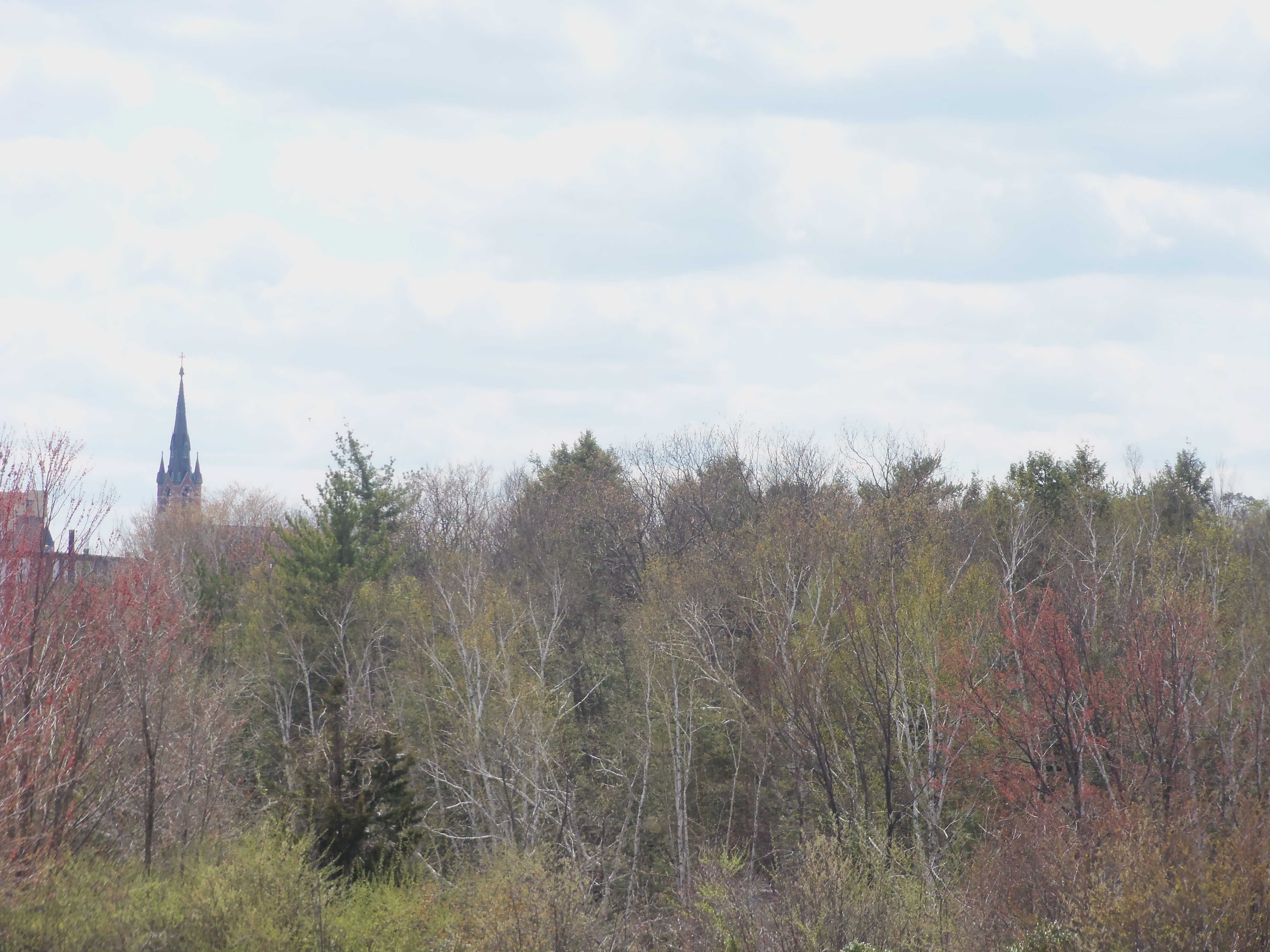
Seen from the falls, Ste. Marie Roman Catholic church crowns Manchester's French-Canadian West Side.
Seen from the falls, Ste. Marie Roman Catholic church crowns Manchester’s French-Canadian West Side.

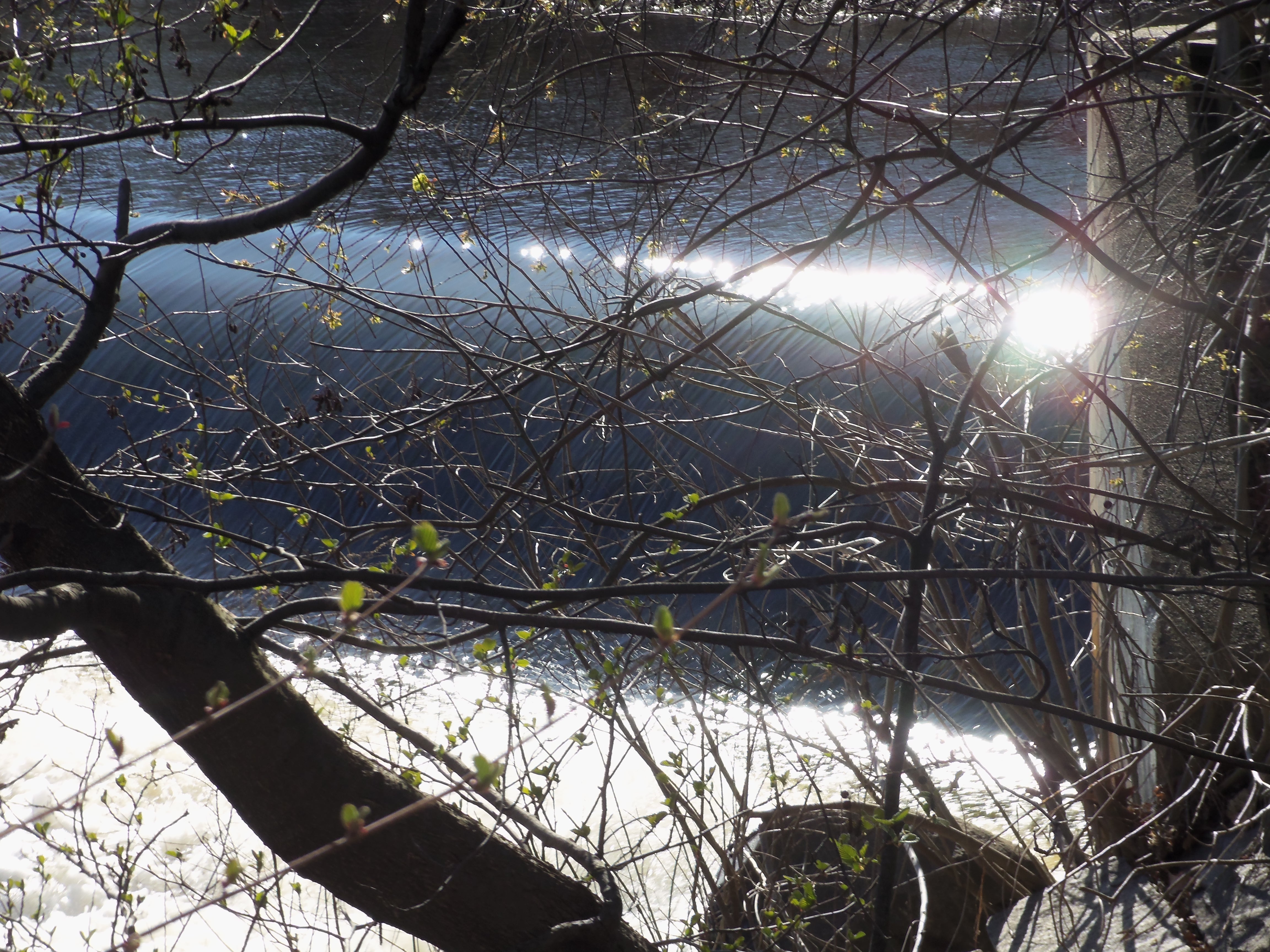
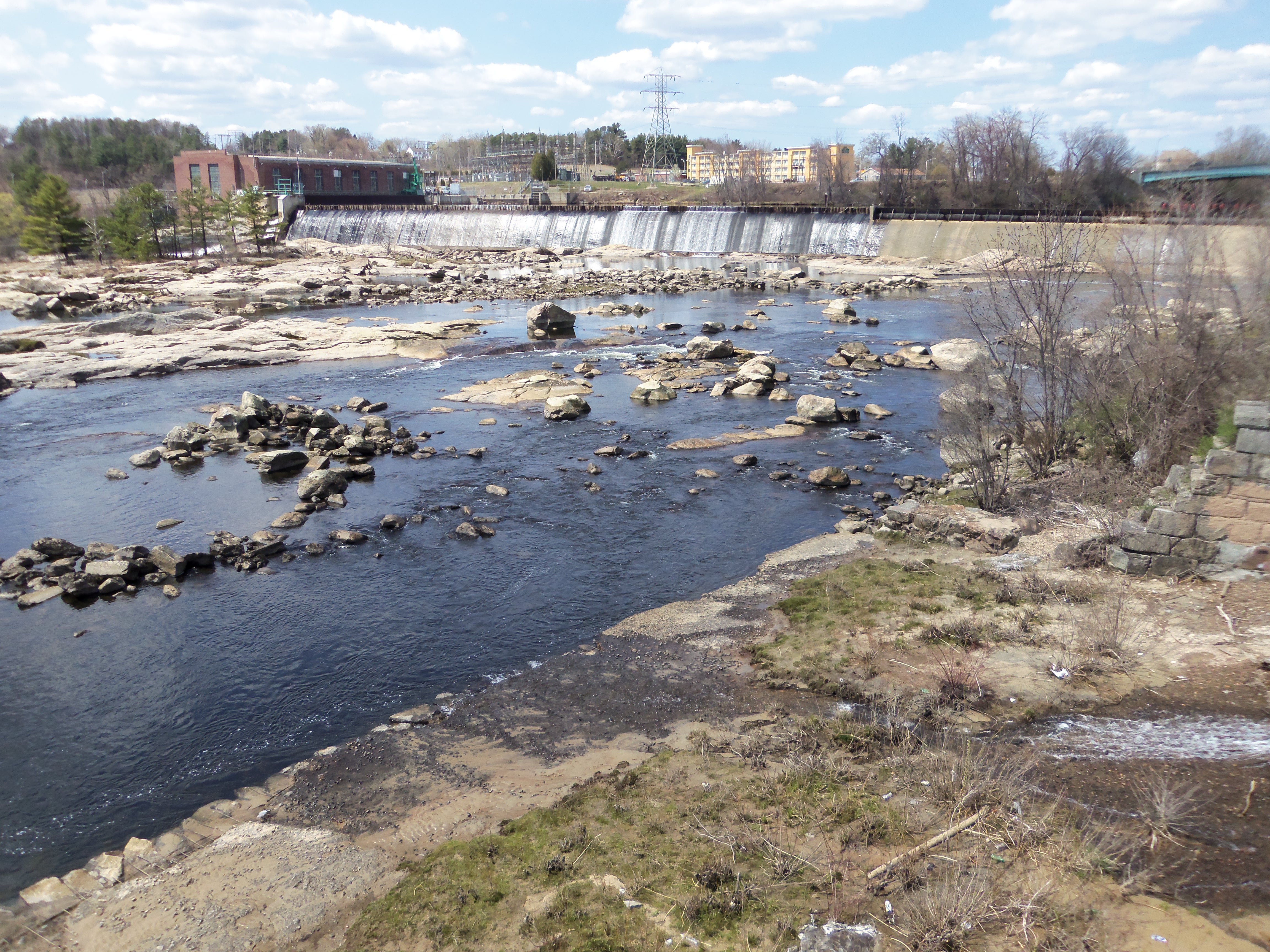
As the largest city in northern New England, Manchester was built on the water power captured at the Amoskeag Falls in the Merrimack River.

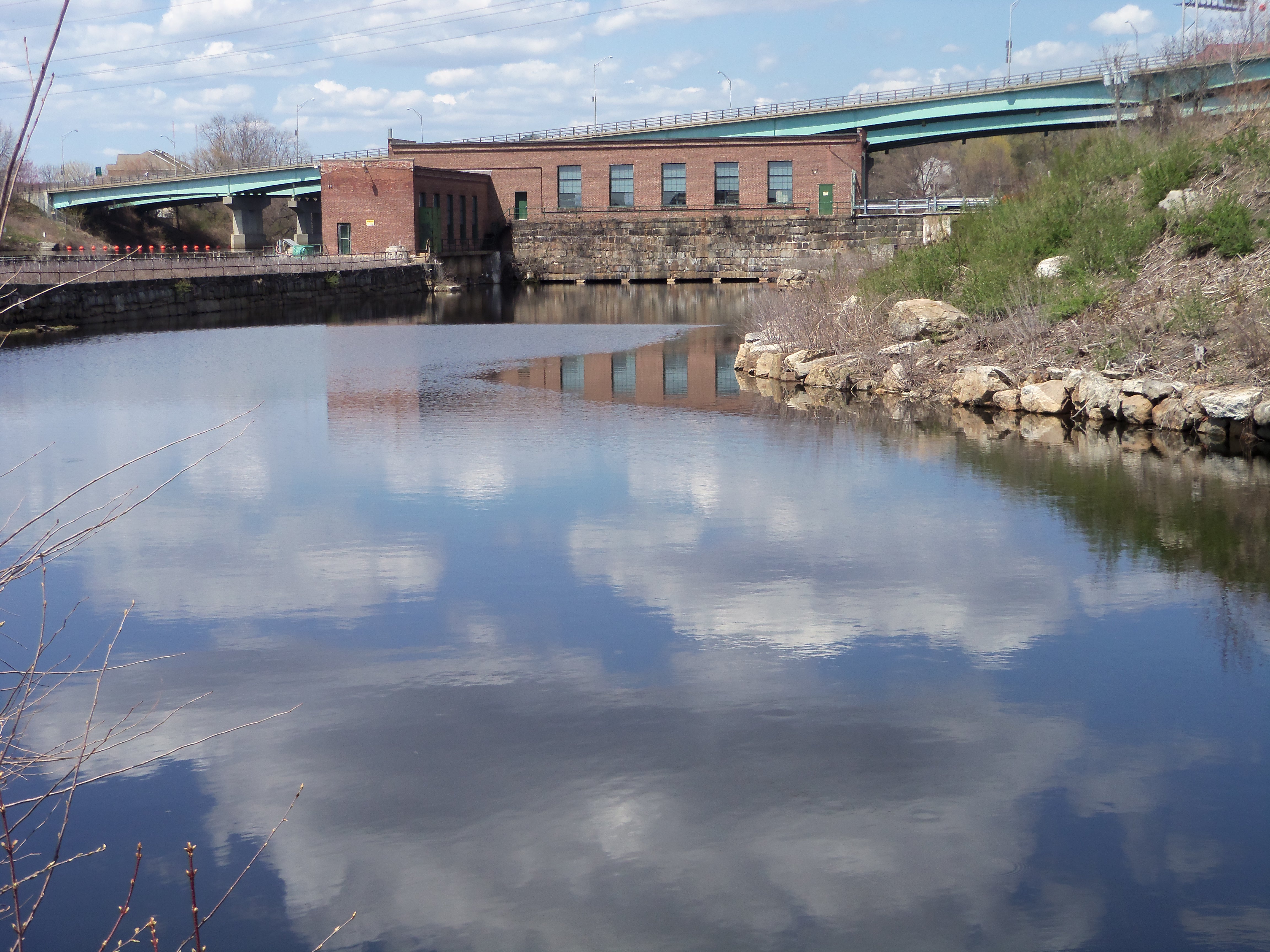
The Amoskeag Falls, now submerged behind the dam in the Merrimack River, were the source of the city's industrial power. A hydroelectric dam sits at the left of the photo.
The Amoskeag Falls, now submerged behind the dam in the Merrimack River, were the source of the city’s industrial power. A hydroelectric generating station sits at the left of the photo.
A large complex of mills on the east side of the river was powered by the water channeled through this canal.
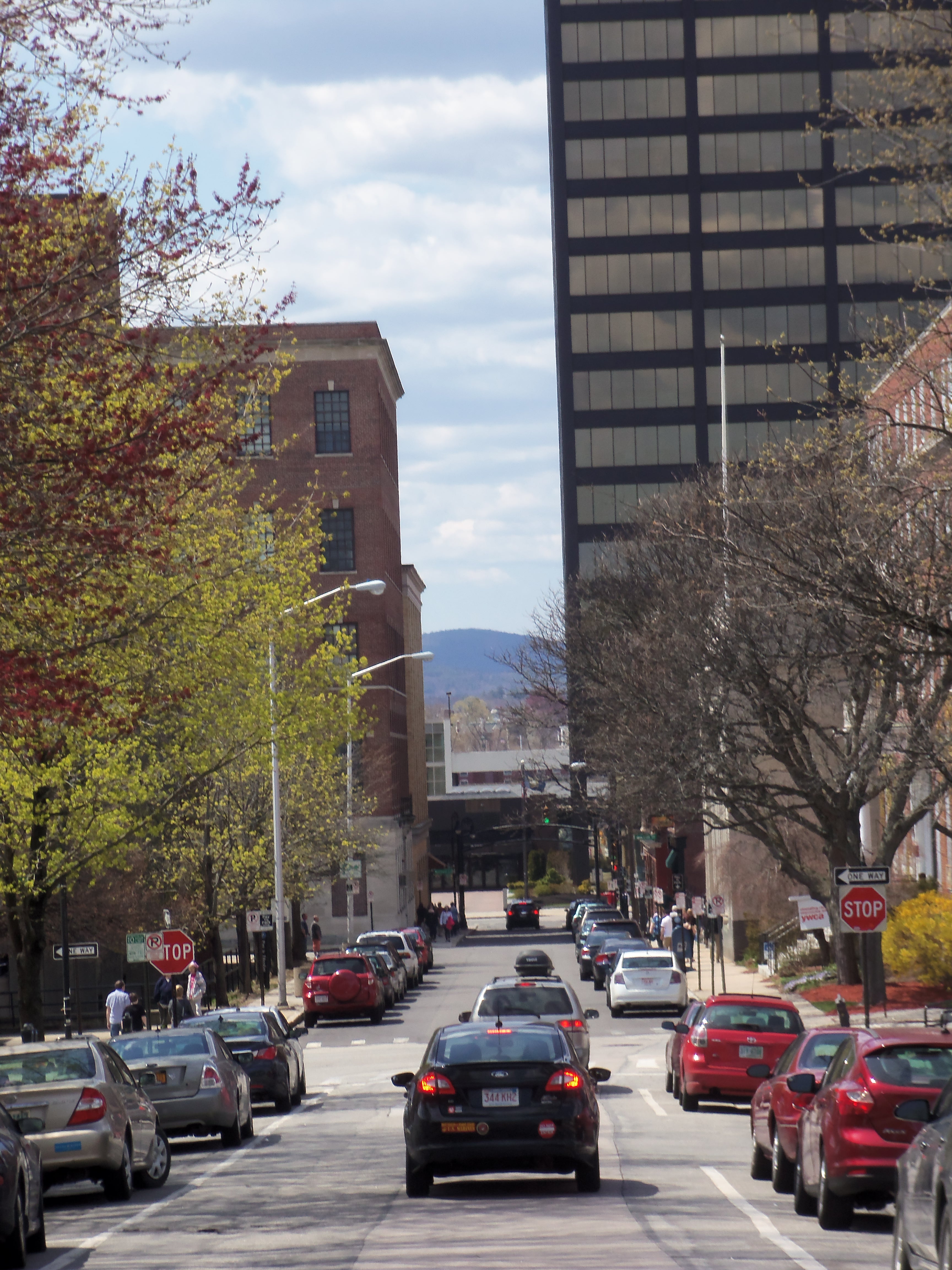
The downtown has undergone a revival. Here's one of the side streets.
The downtown has undergone a revival. Here’s one of the side streets.


A LITTLE AFTER THE FACT

So there we were a few days ago, finishing our Chinese dinners before dashing down the street to choir rehearsal. After cracking open my fortune cookie, rather than reaching into my pack for my eyeglasses, I asked my companion if he’d read my little slip to me. (Ah, the joys of getting older.)

After he recited my fortune, I replied, “You’re making that up, right?”

I was rather impressed, actually, and he does have a great sense of humor. Not bad for improv.

“No, here it is. You read it.” Which I did:

You are a lover of words someday
you will write a book.

LOOKING FOR THOSE LOCAL DISTINCTIONS

As I said at the time …

Greetings again from this old mill town along the Merrimack River.

There is still a special feel to an octavo-size, typeset journal – a unity of design and purpose carried throughout – even in this era of desktop design and photocopy wizardry. A major challenge, whether it’s in shaping a literary journal like yours, a daily newspaper, or even an old-fashioned country dance, is simply: what can we do to make our own locale distinctive?

An example: a few years ago, the New England contradance scene was becoming generic: you’d drive for miles to a village town hall only to find the same faces and same pieces you had faraway the week before. Fortunately, that seems to be changing as different callers, musicians, and promoters are striving to put their own distinctive signature – and a local stamp – on each venue. So there’s your challenge!

I’m struck by the fact that even familiar voices from our round of journals seem to sound different in varied locales. If you’ve ever been around paintings, as I was when married to an artist, and seen a piece go from her studio to our living room to an art gallery to a major museum, you would be amazed how different it appears it each setting. Publishing is the same.

ASPARAGUS

My fondness for asparagus arises in the years I lived in an orchard in the Yakima Valley, where, thanks to an earlier agricultural disaster, asparagus seeds had gotten into the irrigation water and spread everywhere. The green sprouts were often touted as “Local ’Grass.” As a consequence, we had about a month when we could take our knives and, being careful to avoid areas of pesticide use, return with a basket of stalks for lunch or dinner. I learned to glut out in season, realizing it would be another year before we’d indulge again.

Now that we have our own asparagus bed and repeat the ritual, albeit on a smaller scale, we’ve also come to regard the damage asparagus beetles inflict as well as the miracle appearance of lady bugs to the rescue. That, in itself, has convinced us of the value of organic farming.

As for Shiva, he’s the horny Hindu god of creation and destruction, and he wields a wicked blade.

KURT’S EXPANSE

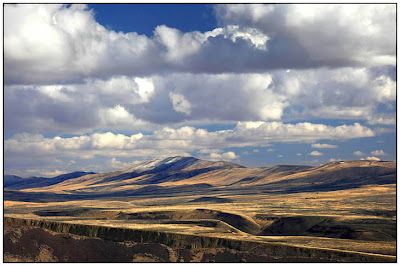
Trying to convey the experience of living in a desert to those who’ve known only moister climates often feels futile. It’s simply mindboggling, especially as you move away from the insulation of modern conveniences like air conditioning, automobiles, or even sunglasses. In its raw nature, this terrain is often life-threatening.

I’ve regretted not having a camera to record what I observed there, but one colleague from those years – another Ohio flatlander who relocated to the wet side of the Cascades after our journalist team was forced to scatter – has captured its essence better than anyone else I’ve come across.

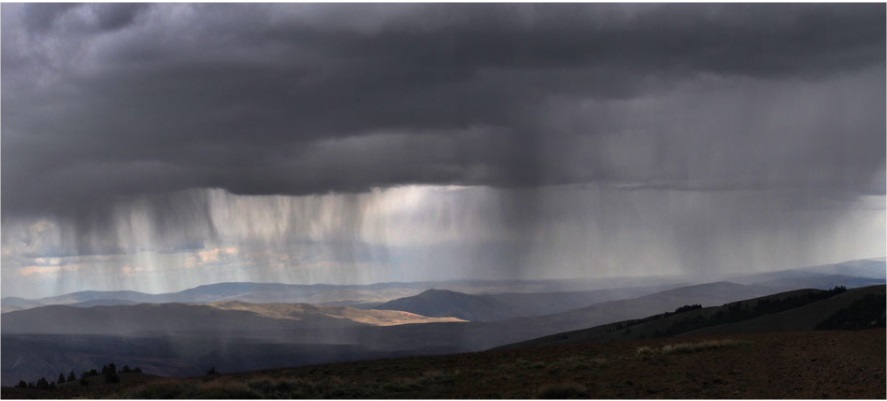
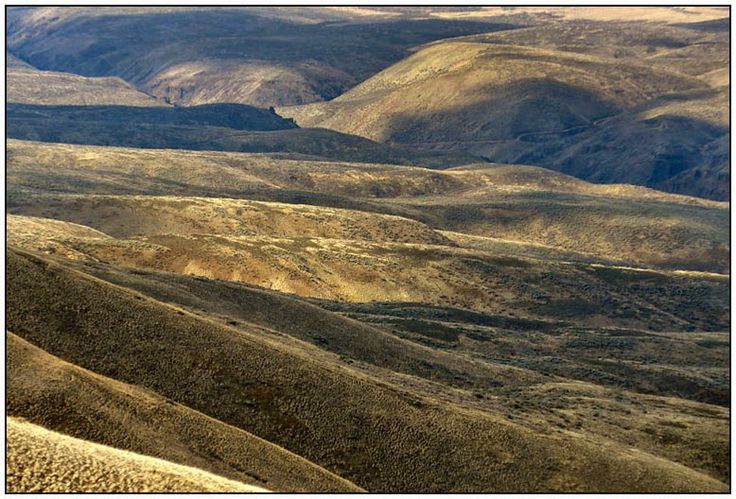
Here are some of Kurt E. Smith’s images over the years of the land I call Katonkah Country. He has much more on his Seeing Small blog, which comes highly recommended. What he captures is sometimes enormous.

Hardy 3


Yakima Valley

Yakima Desert~*~

For my related poetry collections and novels, click here.

INTO THE GREAT PLAINS

To grow a leafy tree requires more than thirty inches of rainfall or its equivalent each year. If you drive west across the United States, you can cross an imaginary line that passes through the Dakotas, Nebraska, Kansas, Oklahoma, and Texas, and beyond it deciduous, or leafy, trees are quite rare. Soon, so are conifers, the evergreens. Irrigation becomes a fact of life if you want to raise food or flowers or even a lawn.

The Great Plains eventually pass into desert – and you might be surprised to discover that most of Oregon, Idaho, and Washington state is actually desert. The rainy belt is little more than a thin band along the Pacific-facing side of the Cascade and Olympic mountains.

Quite simply, it’s a different world from the one most Americans know.

~*~

As for the Great Plains, let me recommend Kathleen Norris’ Dakota. It’s a unique and marvelous book.


SAMPLING A FEW QUAKER PERIODICALS

Now for the magazines rack. The one in the meeting library, where we display our current periodicals.

First is the monthly Friends Journal: Quaker Thought and Life Today, published in Philadelphia from a Friends General Conference perspective. In its elegant format, it’s a delight to hold. Admittedly, the articles often run the range of crunchy granola-head interests and sometimes a too “politically correct” editing and can leave one wondering just where Friends stand as a body, but there’s almost always something provocative, from one side or the other. Look, too, to see how it progresses under editor Martin Kelley.

Second is Quaker Life: A Ministry of Friends United Ministry published six times a year in Richmond, Indiana. This colorful, glossy magazine underwent a lively transformation in its few years under youthful editor Katie Terrell, who attempted to give each issue a distinctive focus – integrity, transforming lives, what does a new kind of Quaker look like, humor, authority, discernment, even controversy itself. Considering its audience of primarily Midwestern and Southern pastoral Friends, I’m often impressed by the number of writers from unprogrammed meetings, many of them in New England – as well as those from Third World nations. If you want to get a quick overview of how our spiritual roots influence us today, turn to historian Tom Hamm’s one-page question-and-answer column in each issue.

Also of note are the quarterlies. Quaker History can be anything but quaint when it’s examining the difficulties of integrating Sidwell Friends School in Washington, as well as its not-so-orderly roots, or the psychedelic influences of ergot-infected oats on the early Quaker movement. (The real Quaker oats?)

And Quaker Religious Thought, often focusing on a single topic such as Speaking Truth to Power or the strand of Holiness movement in Friends tradition, typically counterpoises the primary article with considered reactions. Sometimes a thorny theological issue can be too arcane for general discussion, but that’s offset by the others that prove unexpectedly stimulating.

*   *   *

Oh, yes – the extra magazine and newsletters piling up in your home? Consider dropping them off at the public library magazine swap pile, a local coffee house, or the Laundromat. You never know who might learn of us that way.