
A view into our side yard
You never know what we'll churn up in cleaning a stall
Here’s to all of you who are setting out on drafting a novel this month. I salute the NaNoWriMo (National Novel Writing Month) program for encouraging aspiring writers to compose 50,000 words during the period. Good luck to you, stick with it, and learn tons – about yourself and your world – as you do so. Keep your eyes and thoughts on that goal.
I want to add a caveat, though.
That finished first draft is where the labor really starts.
As one observer noted: Talent goes into the first draft; genius, in the revisions.
~*~
I’ve come to be a bigger believer in those revisions. They move the text from being what’s important to you privately and on to what’s important to engage with the reader.
The revisions are where you dig under the surface to liberate the unexpected ore and lore of universal value. The process requires clearing away a lot of the vegetation and dirt, as it were, and it gets messy.
The core of my own published fiction arises in three large drafts I composed in a year I took off as a sabbatical back in the mid-’80s. While those stories were ambitious and original, they also rambled in search for a focus. One now spans four novels. Another, three.
During the next quarter-century, in addition to working full-time in a newspaper office, I kept returning to these at home in my free time, along with a slew of poetry. One book – Subway Hitchhikers – was published in 2001 but got swallowed by the first Iraq war, a terrible book-selling year overall.
~*~
Starting in 2013, the revised novels began appearing in Smashwords editions. I’ve been touting the works here at the Red Barn.
While most of them dealt with aspects of the hippie era, something still felt unfinished, at least in my mind. What happened to the movement? What are its lingering accomplishments?
The thoughts were gathering but not coalescing. I knew where I wanted to start, had a new character to run with, even came up with the trigger, but the next steps pointed nowhere.
Then, in 2014, I came across an unusual structure for a novel that ignited my imagination. Rather than the usual 20 to 24 chapters typically arrayed in chronological order, this one had 16, and each one was a kind of panel or module that could be moved about somewhat randomly or even as elements of a mosaic. Yes, some of these would have to appear later than others, but there was an overall freed of ordering. It was like wandering about in a room of paintings.
Bingo!
Continue reading “Beware, that finished novel is only the beginning of the job”
In the decades since I took up yoga in the early 1970s, the movement has had its ups and downs. For a while, it looked like it was about to peter out altogether, especially as scandals hit many of the teachers or their organizations.
And then came the boom in popularity, far outrunning the earlier flowering.
Today, it’s hard to keep up with many of the trends, especially as they take on commercially branded identities. Back in the day, we knew it essentially as hatha, raja, karma, and so on … but not anymore. When you’re looking for a class, it can be rather confusing.
Here are ten on my radar. Many of the details come from Kristin McGee’s fine overview at the MBGmovement website.
Note that they’re all focused on physical fitness of one sort or another, rather than the meditative or ethical dimensions of the underlying religious foundation. Where are the swamis nowadays, anyway?
In our neck of the woods, it’s been a hard mast, meaning hard-shelled nuts have fallen in much higher-than-normal levels.
While the uncommon profusion is attributed to an unpredictable confluence of factors, it does provide a feast for squirrels, deer, and other wildlife. Any surplus surviving the predators then has a good chance to refurbish the forests and byways.
As has been noted, nature really is promiscuous.
Lean years, in contrast, limit the animal populations and their offspring.
Mast is most notably reported as acorns, but in our house, overshadowed by a black walnut tree, the golf ball-sized orbs are hammering the kitchen roof and trashcans. We keep thinking people are knocking at our backdoor or something big has fallen over downstairs or outside or even a crazy golfer neighbor is slicing his shots and hitting our house, one-two-three. They’re even a hazard to our parked cars.
Meanwhile, our squirrels are littering the stoops, patio table and chairs, and driveway with messes of shells that stain anything underneath black – is that the origin of black in the walnut variety’s name? But that’s not the only problem.
No, the nuts are so plentiful they make venturing out into the yard a treacherous course akin to walking on ball bearings or marbles. We haven’t fallen yet, but we’ve come close.
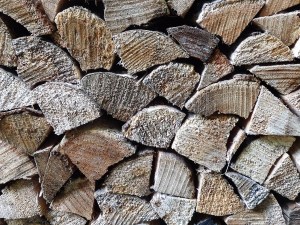
It’s especially troublesome when I have a load of firewood in my arms.
We aren’t alone in this, are we?

“You’re always nervous.”
“I run on nerves.”
Which part of my work would I most want “discovered”? Note, I didn’t say which part of me. How telling!
Apart from my journaling itself, it’s always hard for me to imagine writing that’s not intended for circulation, either among a small select circle or else a wide public. Anything else could be left as notes to myself. So I’m always surprised to hear otherwise, yet apparently there are many who practice the art purely for their own private pleasure.
On the other hand, I’ve also worked so hard, so long, to be invisible. To be among those sharply objective observers. The dispassionate yogi – even though ultimately, as I’m finding, passion is what counts, in life and in art. Read the Psalms, if you must, for divine confirmation.
For one thing, as I’m finally admitting, I’m finding how liberating and energizing the effort to candidly proclaim “I hate” x, y, or z can be. No more nice face requirement, but the full range of feeling, from noble to disgust.
Face it, there’s no visibility as a poet – and even novelists are surprisingly marginal these days.
So here it is, and there you are, doing whatever we do.
As you know, I’m fond of subways. So when one of my favorite lifeguards was telling me of her first semester away in the big city, I had to ask.
“Oh, no! I hate them!”
What?
“Everybody’s stinky and pressed together,”
It’s not always like that. She must have been riding at rush hour.
But she continued, “And then one threw up on my shoes.”
Hmmm.
I’m trying to remember if she said she then had to do the same.
I do know she hasn’t read my subways novel, though she did have some input into What’s Left.
Hmmm.
Sometimes, when you look into the eyes of desperation, you wonder what the downtrodden might be able to do to help themselves – and others.
In my novel What’s Left, her family has the resources to make some things happen, but they’re small fry in the face of the bigger issues. Here’s a passage I trimmed from the final version of the story:
Baba, of course, retreats earlier by heading to the monastery, just as all the big moves start unfolding. He returns to a different world, apart from the family core – and its true love.
Not that everybody’s talented. Barney and even Dimitri come up with odd jobs for the vagabonds who materialize around the loading docks of restaurants … the aimless hippie, too … and rather than a handout, Can you lend a hand? You know, scrubbing or raking or sweeping or helping move supplies from a delivery van – anything that then might lead to a free meal or spending the night in Barney’s old car. If we don’t have something at the restaurant, maybe there’s something else to do around Mount Olympus.
Oh, I’m so glad she stopped talking like this! In the final version, she’s pretty snippy.
I really do wish I had answers. Maybe we need to start small. Any suggestions for Barney and Dimitri in the novel, like helping unpack a truck or sweeping the walk?
What do you do to help others? Not family, but the wider community?
I hate being labeled in a demographic targeted with mailings that ask questions like this:
Is it hearing loss, or just … EARWAX?
I can still use a Q-tip, thank you. Now will they please go away?

