Author: Jnana Hodson
In downsizing to a remote fishing village in Downeast Maine, this eclectic writer feels everything's coming together.
Ten kinds of prayers
It is how striking the impulse to prayer arises across cultures and eras. I’ve even noted that one set of Zen Buddhist prayers in print is something even an atheist could endorse.
In her book, Help, Thanks, Wow: The Three Essential Prayers, Anne Lamott lays out a basic approach to the universal practice of turning to the Holy One, regardless of name. Her three types seem to cover it all.
Still, there other types, even before we touch on wildly different faiths and theologies. Here are a few, even as I search for some formal Greek theological terms I’ve filed away somewhere.
- Supplication or petition: Humble, kneeling, raising a request or concern for God’s action.
- Intercession: Pleading on behalf of the needs of others.
- Confession: Openly admitting one’s sin and desire for pardon.
- Consecration, benediction, or blessing: Joyfully approving a person or situation, with the speaker as an active co-participant.
- Agreement: Corporate prayer encouraging each other in our shared faith when gathered together.
- Surrender: In times when one feels the weakest, a yielding to God’s strength and leading.
- Prophetic: Speaking as an oracle of the Holy One or the Holy Spirit.
- Listening or waiting: Sitting silently, raising one’s heart to the Presence, open to answer.
- Contemplative: Eliminating outward distractions by focusing on a repeated word or phrase, drawing the one closer to God in calm stillness.
- Fasting: Think about this one, especially if you’ve never tried it.
~*~
And we haven’t even touched on postures or breathing, much less chanting or dancing …
How close should two families be?
In my novel What’s Left, Cassia’s grandmother and her sister marry two brothers. One is named Pericles.
Does the idea of siblings in one family marrying siblings in another bother you? Or does it seem like a natural possibility?
Kinisi 82
the alcoholic scoutmaster
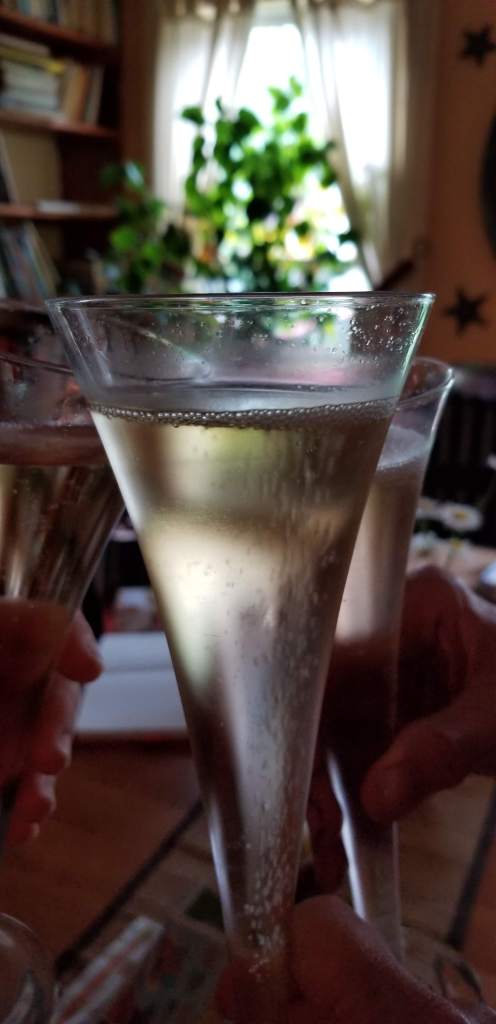
Bubbly in the afternoon
Sharpening the lineup
Removing Hippie Love from my shelf of available ebook offerings was a difficult decision.
From a writer’s point of view, having an alternative telling of Hippie Drum remained a fascinating experiment. Yes, it turned the story into erotica. But, with the release of What’s Left, I also realized it’s not something any daughter would want to know about her dad. And so, the two hippie books are gone, replaced by Pit-a-Pat High Jinks.
Quite simply, I believe Cassia’s story holds greater interest, at least for younger generations. After all, it’s really about today.
Ask me when it begins snowing
what did I know beforehand?) unpacking, making each room orderly, scrubbing and waxing floors, vacuuming, reorganizing files, going to the laundry with all my woven possessions, running errands, and without warning things fall into place
Reasons to like Watertown, Mass.
Greater Boston is comprised of many suburbs that were originally Colonial towns out in the country. As a result, much of the metropolitan area today retains a village feel in addition to its cosmopolitan chic.
Each town – or, in many cases, now city – is different, however subtly.
Let me illustrate with Watertown, where my choir rehearses.
- It’s on the Charles River, which once powered its paper mills and other factories. Today the river has lovely parks and pathways, as well as crewing teams practicing out on the water in season.
- The impressive Arsenal produced military armaments from 1816 through World War II. Today it’s a shopping district, and its restored antebellum commander’s mansion is a kind of museum.
- Settled in 1630, Watertown soon became the seat of the Whitney family of invention, investment, and horse-breeding fame.
- It’s largely overshadowed by neighboring Cambridge and the Harvard crowd. The famed Mount Vernon Cemetery, the first garden style burying ground in America, 1831, is usually thought of as being in Cambridge, when it fact it lies mostly in Watertown, with a who’s who of famous Americans buried in its rolling grounds.
- Watertown has a wide ethnic range of residents, mostly working class or professionals.
- The Armenian Library and Museum of America is well worth visiting for exhibits that acknowledge many genocides beyond their own. Watertown is the third largest center of the Armenian diaspora in the United States, surpassed by only two cities in California.
- When it comes to cheap eats, I think it definitely beats hipper Cambridge. Some of the best Chinese I’ve ever had was in a modest storefront in Watertown Square, and I’m really sold on the Iranian takeout just up the street. But we also like Wild Willy’s.
- The Perkins School for the Blind, founded in 1829, is the oldest such institution in the U.S. and is world famous. It manufactures its own machine to record text in braille. It moved to Watertown in 1912.
- I really like the public library, which even has its own coffee shop.
- The Gore Place is an opulent summer home built by a man who a fortune in speculating in Revolutionary War debt.
Comfort food

Sometimes a character dictates the story
For a writer, nothing is more magical than when a character begins dictating the story. Sometimes, you can’t type fast enough to keep up with her.
As I was saying about the “zipper” that sometimes appears while revising a work? This one, I’d say, is the most satisfying.
~*~
Now that I’ve confessed, it’s your turn.
Do you ever hear “voices” while doing something? Do they help or hinder your action?
~*~
My novel’s available at the Apple Store, Barnes & Noble’s Nook, Scribd, Smashwords, Sony’s Kobo, and other fine ebook distributors and at Amazon in both Kindle and paperback.