In writing my history of Dover, I had to face up to the problems of the word “Indian,” which can refer to someone from the Asian subcontinent as much as it does to an Indigenous person of North America. In the end I decided to avoid it altogether unless it was part of a direct quotation or traditional title.
The fact is, the Native tribes themselves can differ widely in their language, customs, and culture, so a generalized label can be downright misleading. And in a particular place, the same people may have been referred to by different labels, depending. You know, the way a Daytonian was also an Ohioan, Midwesterner, or even Buckeye, though not necessarily an Ohio State football fan.
In addition, the tribes themselves may have been much more fluid in their associations than the English and American authorities could comprehend, insisting instead on a more rigid classification.
That was the case with the Passamaquoddy and Penobscots in Maine.
In the Dover history, I ran up against that when some sources called the local Natives Abenaki, while others called them Cochecho or Penacook or something else.
As the Wabanaki Confederacy explains, though, all Abanaki are Wabanaki, but not all Wabanaki are Abanaki.
That said, let’s take a quick look at the Wabanaki.
It’s not a tribe. Rather, the confederacy today is an official alliance of four East Algonquian nations remaining in Maine – Mi’kmaq, Maliseet, Penobscot, and Passamaquoddy.
Historically, it was a looser alliance of tribes stretching from Newfoundland and Prince Edward across Nova Scotia, Cape Breton Island, New Brunswick, and part of Quebec in Canada on to the Western Wabanaki in the Merrimack Valley of New Hampshire and Massachusetts and perhaps beyond into Vermont.
Native names for the affiliation included “convention council” or “orator council,” “be related to one another,” “those united into one,” and “completely united.”
The tribes formed their council after a rise in raids by their ancient enemy the Iroquois League, especially the Mohawks.
In the colonial era, many members aligned with the French, who called the region of Maine the Wabanaki inhabited “Acadia.” Many of the Natives converted to Roman Catholic faith. The defeat of the French in 1763 proved costly for the tribes.
For thousands of years, Mount Desert Island – in today’s Acadia National Park – was a summer gathering place, where they arrived by seaworthy birchbark canoes.
They didn’t live in tepees. They lived in small round bark-covered buildings called wigwams.
Most of them grew squash, beans, and corn, and also harvested berries and other wild fruit.
They didn’t dress like the High Plains Natives out west. They had their own distinctive style.
They loved storytelling and legends. Mount Katahdin, for instance, was inhabited by a half-human, half-bird winged spirit called Pamola who could make the night wind blow or generate snowstorms. And the Maliseet had tales about the little people, who were like brownies or leprechauns.
When I moved to New England more than three decades ago, I tried to take in at least one whale-watch cruise each year, usually out of Newburyport, Massachusetts. But my first time of meeting a live whale came during my first-time ever time in a real sailboat, which was also my first time out on the Atlantic. At first, we saw minkes lolling along at a distance, some of them parallel to our course. And then, just as we were turning into the harbor on the Isles of Shoals, one came up right beside the bow, where I was standing. You can’t say this Ohio boy wasn’t impressed. Minkes may be the smallest of the whales around here, but our 32-foot craft wasn’t much bigger.
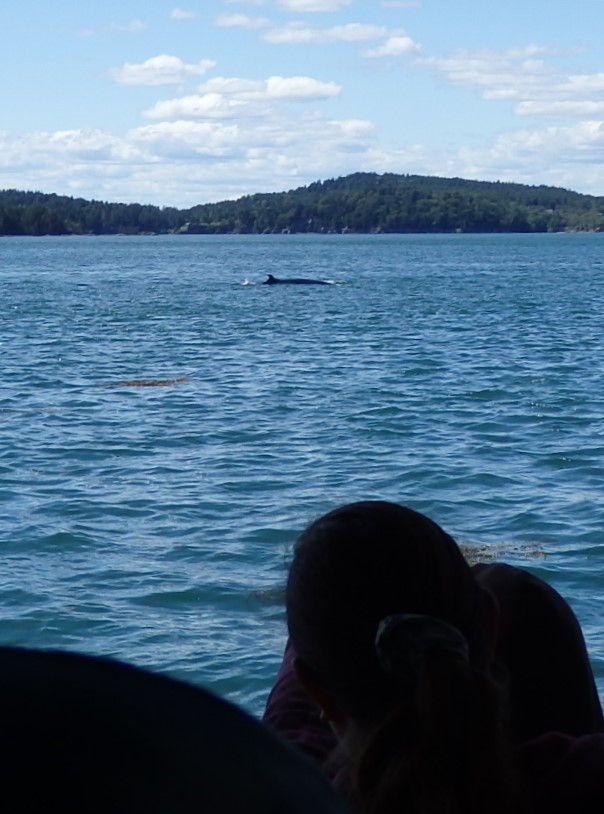
A minke is viewed between Campobello and Deer islands in New Brunswick on a cruise out of Eastport.
Whales migrate up the New England coast each May and linger in its nutrient-rich waters well into October.
One thing I quickly came to appreciate is that there are no guarantees about what you’ll encounter when you go out from shore. What I’ve often called a poor man’s cruise is an experience in itself, especially as you watch land recede and then disappear altogether behind you and there’s nothing save the expanse of sea and sky with occasional birds and boats as punctuation. On one outing, the only whales we found were a minke cow and her calf, which we followed at a leisurely pace. On another outing, so many minkes, humpbacks, and finbacks surrounded us – some close enough to be misted by their stinky blow, others breaching off in the distance – I lost count. Once, we had to be content with a trio of porpoises. You should be grateful for whatever presents itself.
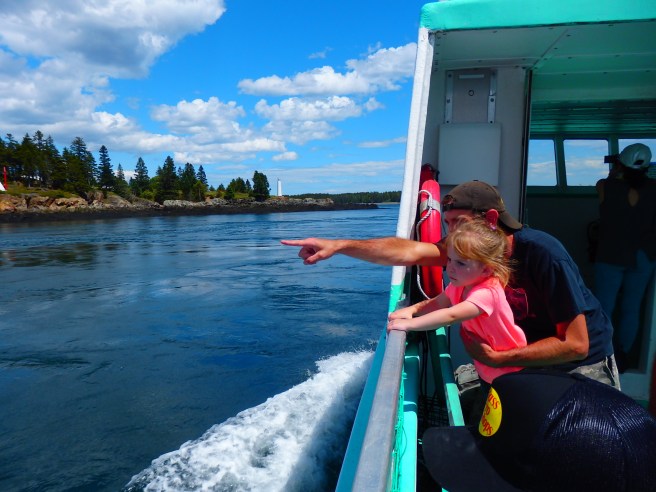
I was trying to get a good shot of the Cherry Island lighthouse but wound up with this moment of a father and daughter from Ohio.
Somehow, though, after I remarried, the annual event faded from the schedule – maybe a handful in 20 years, always with family and sometimes with the kids’ friends. I still have the memories.
Relocating to an old house a block from the ocean has now recharged that. I can walk to the whales. Seriously. In late season, they can even be seen from the shore here.
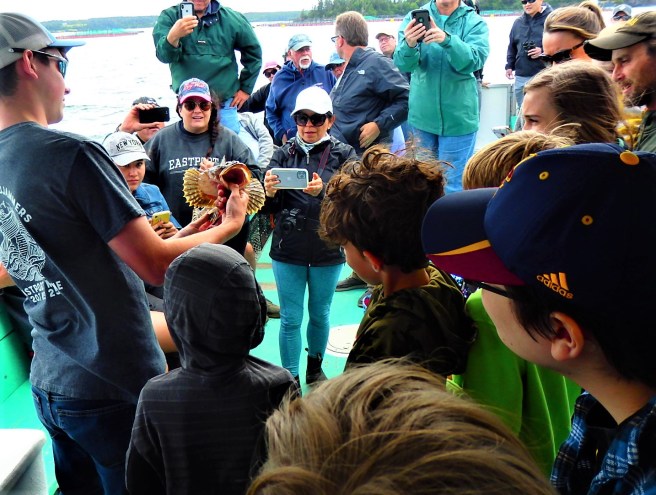
Here’s a sculpin fish that was in a lobster trap the cruise pulled up as part of its tour of the local waters.
More likely is walking down to Butch and Jana Harris’ Eastport Windjammers and setting forth in one of their refitted lobster boats. The vessels are smaller than the usual whale-watch models but put you much closer to the water. The route, from downtown Eastport out between Campobello and Deer islands in New Brunswick, doesn’t need to go into the open waters of the Bay of Fundy. On at least one of boats, you can even stand beside the captain – usually, but not always, Butch – and, on occasion, each of the kids on board gets to briefly take a turn steering at the wheel.
Don’t scoff when you connect “windjammer” with “lobster boat.” The enterprise comes by its name honestly. Up through 2014, its whale-watch cruises took place aboard Butch’s 118-foot, three-masted schooner, the Ada Lore. But on December 4 that year, a portion of the Breakwater collapsed, wrecking the schooner.
Pursuing whales from a wind-powered deck, I’ve been assured, is the most satisfying way of all to go forth.
I’m ready and willing, should the opportunity present itself.
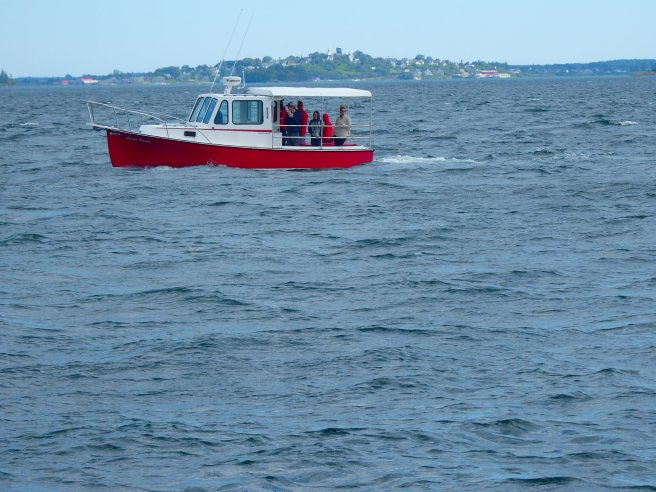
At times we were joined by what I jokingly call the world’s smallest whale-watch vessel, which sails out of neighboring Lubec. The captains work together by radio to share sightings and other info. Lubec is seen in the background.
What’s been your most memorable experience with the sea? Or some other body of water?
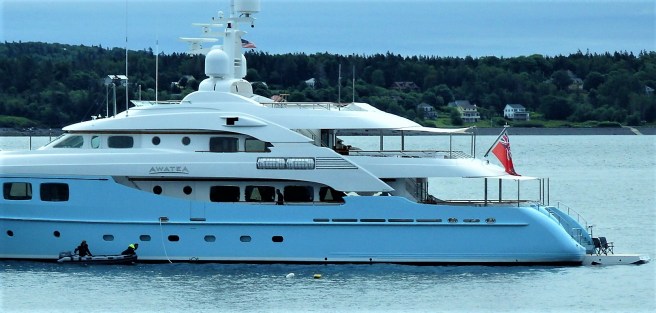
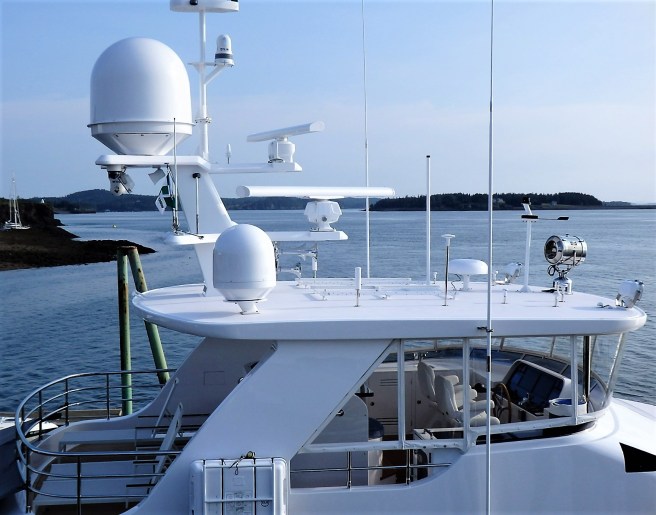
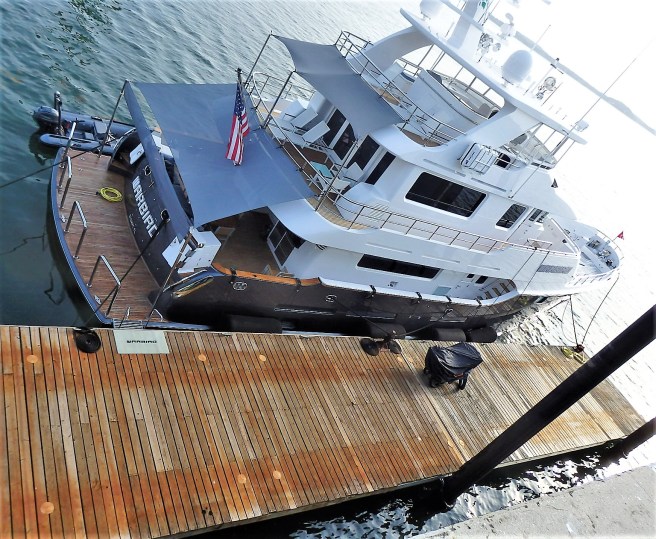
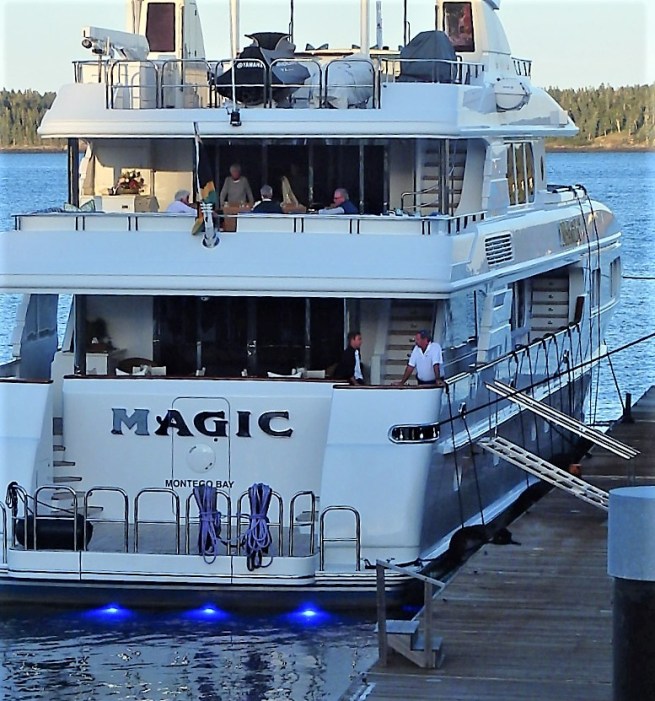
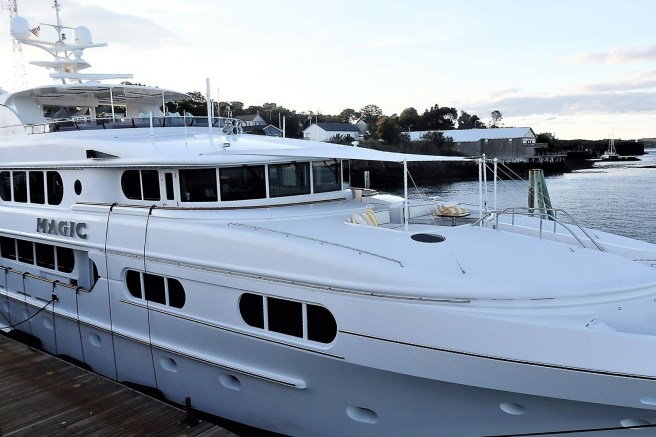
Each summer, a few superyachts make their way from the Bay of Fundy into Eastport and tie up for a night or two at the Breakwater pier downtown. They usually draw an envious gaggle, as well as pure curiosity and gossip.
I love the built-in love seat hidden by the pillar, although I wouldn’t mind one of those captain’s chairs for my workstation at home.The welcome mat was more for changing shoes to keep the interior clean. Note the bikes under the tarp, too.
Some of them even blog about their travels, referring to each other first-name only and touting the “good friends” they made in port.
Uh-huh.
Charters for $130,000 a week plus expenses and fees.It’s 130 feet long, holds ten guests in five room, takes a crew of seven, and cruises at 12 knots. The waitstaff was pretty impressive, even from a distance.Includes his and hers bathrooms in the master suite, a jacuzzi, and a gym.
Some are flagged in the USA, while others come by way of tax havens.
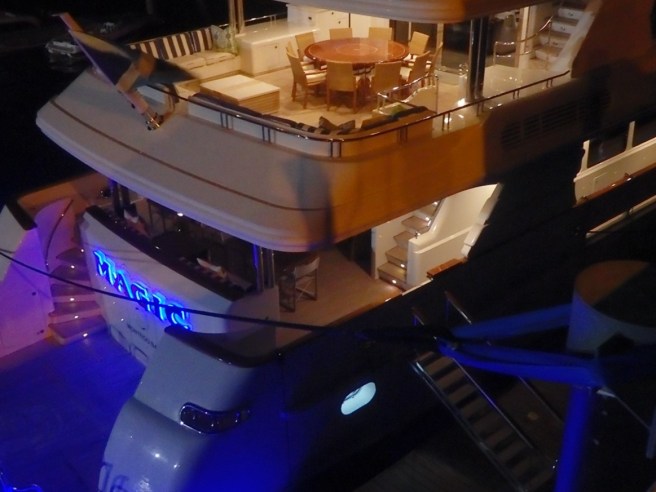
An evening cruise around the bay can put on the ritz.
For the first half of the 1700s, Dover Monthly Meeting was the most northern and eastern Quaker body in New England.
Friends were more or less accepted as members of the wider community, and in the 1720s they even built a second meetinghouse for those living near the village around the Lower Falls of the Cochecho – today’s downtown – in addition to the first meetinghouse serving those on Dover Neck.
A distinctive Quaker culture had set in, one that included Plain dress and thee-and-thou language. Friends referred to First-day rather than Sunday, for example, and First Month rather than January.
A piece of needlework now residing in the Quaker meetinghouse on Central Avenue quotes an advice from George Fox in 1658.
There was a tightening of discipline over daily conduct and over marriages within the faith.
The Meeting and its families were also visited by traveling ministers, some of them staying for extended stretches.
~*~
Relations between the town and its taxes and other civic requirements could often be touchy. For one thing, those appointed as constables were required to serve or pay stiff fines.
In reviewing the early history of New Hampshire and Maine, I presumed that titles like Major, which we’ve seen with Richard Waldron, reflected their role in the militia. Thus, when I came across a rank applied to a Quaker surname, I figured that the individual was no longer a member of Meeting. That changed when I came across a reference to Capt. John Canney as “a Quaker who ‘affirmed'” rather than take an oath of office when he became a representative to provincial assembly, 1742-1745. Most likely, then, is that Captain was a term given to constables, the way police and fire officers today can be given ranks. Or it could also be applied to skippers of vessels.
Quakers serving as constable did face moral quandaries. On October 10, 1729, for instance, “A petition from several Quakers in behalf of themselves and their friends at Dover, praying to be exempted from gathering the Minister’s rates as Constables, was presented to the Assembly.”
The issue of collecting taxes for a minister the Friends didn’t use or respect remained.
On May 3, 1731, “The ‘people called Quakers’ again petitioned to be excused, when constables, from gathering Minister’s rates; and the Assembly excused them by enacting that such persons shall be exempted from gathering such rates of any other persuasion, and that the town should make choice of those who were not Quakers to gather the same.”
There were also tensions over expenses for the First Parish meetinghouse, which doubled as town hall.
George Wadleigh notes that March 31, 1760, appears to have been the last “public town meeting held at the old meeting house on Pine Hill,” but instead of shifting the sessions to the new building, on October 13, “At a public town meeting held at the Quaker meeting house, a committee was appointed to sell the old school house standing on Pine Hill and pay the proceeds thereof to the selectmen.”
This would have taken place at the Friends second meetinghouse, a block west of the newer First Parish home.
Dover Friends second meetinghouse, now a private residence on Spring Street, where it was moved in the 1830s
On January 28, 1761, “The Quakers of Dover, by Joseph Austin, Thomas Tuttle and that many persons who had agreed to do so, by the purchase of pew privileges, had neglected it, &c. a town meeting was held at which the committee for examining their accounts made report that the whole amount expended,” for the Congregational church, ” was 248pds. 18s. 4d, old tenor: which report was accepted and the building committee was empowered to sue those men who owe money towards building the house.”
That wasn’t the only issue Friends were fired up about. At that same town session, “The Quakers of Dover, by Joseph Austin, Thomas Tuttle and Samuel Austin, for and on behalf of themselves and the rest of their brethren and by order of their monthly meeting held at Cochecho the 18th day of the 10th mo. 1760, petitioned the Assembly, setting forth that they were burthened with a tax to hire soldiers into the service, and praying, for reasons assigned, to be relieved therefrom. The Assembly assigned a day for a hearing thereon, and ordered them to cause the chief officer of the Regiment, & the selectmen of the town to be served with a copy of the petition and order thereon, at their own cost and charge, that they might appear and shew cause, if any they had, why the prayer should not be granted.”
On February 6, “It was voted that the prayer thereof be granted and that the tax ordered by the Treasurer’s warrant to be assessed on the people called Quakers in the towns of Dover, Durham, Somersworth, Rochester and Barrington in the year 1760, be remitted and that the same be added to the Province Tax of said towns for the year 1761.”
On March 30, “At a public town meeting it was voted to petition the General Court for a law to empower the First Parish to transact their affairs exclusive of the other town business.”
On June 11 the next year, the church was incorporated as a parish distinct from the town government. Though this separated the two, taxes would continue to support the church and its minister perhaps as late as 1819, when the state passed its religious toleration act.
Still, on July 2, 1761, “The committee for building the new meeting house having complained that the money for that purpose had not been fully paid them, that many persons who had agreed to do so, by the purchase of pew privileges, had neglected it, &c. a town meeting was held at which the committee for examining their accounts made report … and the building committee was empowered to sue those men who owe money towards building the house.”
Though the town paid for the First Parish meetinghouse, it also used the new Quaker meetinghouse for public events. Possibly the building was larger, intended to accommodate Friends from the smaller neighboring Meetings when they came together as a Quarter.
~*~
Check out my new book, Quaking Dover, available in an iBook edition at the Apple Store.
here you perceive it’s not within my nature to offer any spoken contention in the row of bricks other craftsmen would so often enwrap in false modesty if you can tolerate canned soup or a vulcanized cheese omelet, well, then you’ll also observe how turning together after so many years maybe occupied with survival in the rarified air the conundrum by God becomes devotion
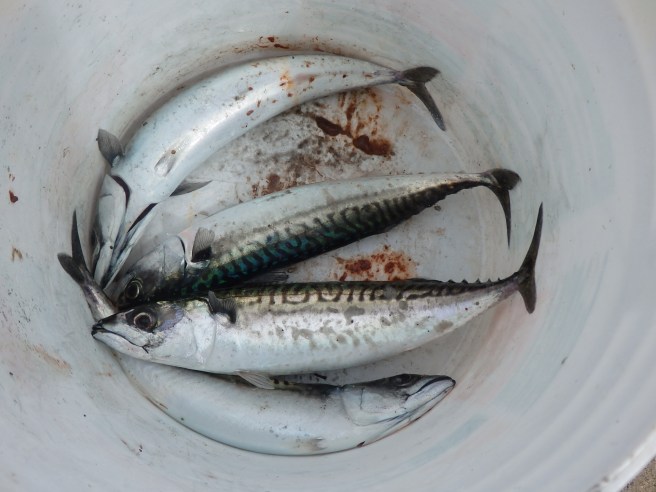
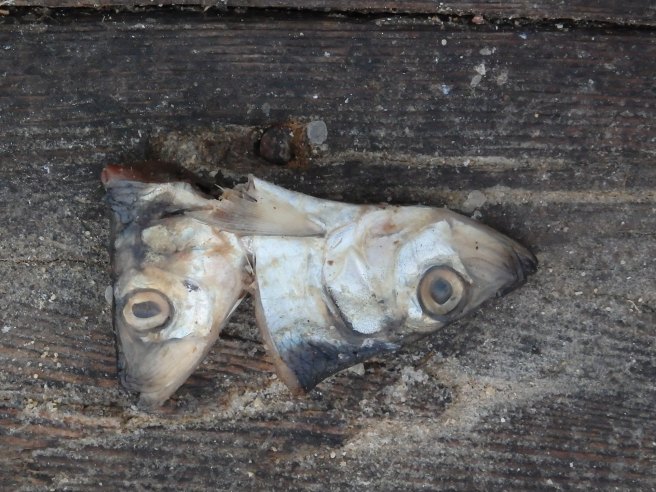
The humble mackerel – usually less than a pound apiece – is a popular fish caught around here. Its delicate nature means it doesn’t keep long, so for human consumption, it’s typically smoked for preservation. An oily fish, it tastes somewhat like salmon. More commonly, it’s used as bait in lobster traps.
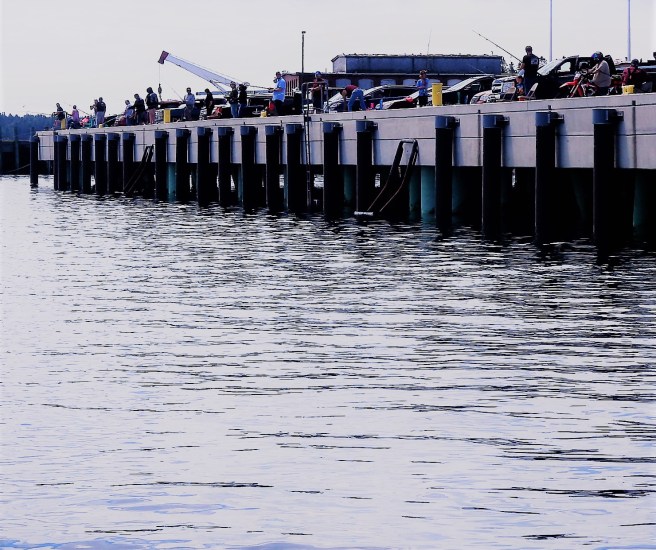
I think it’s a beautiful fish.The Breakwater is lined with fishermen.Two heads left on a pier, likely used as bait.
The Maine coast is 3,478 miles, not including islands. They raise the figure to 7,000 miles.
I live on an island.
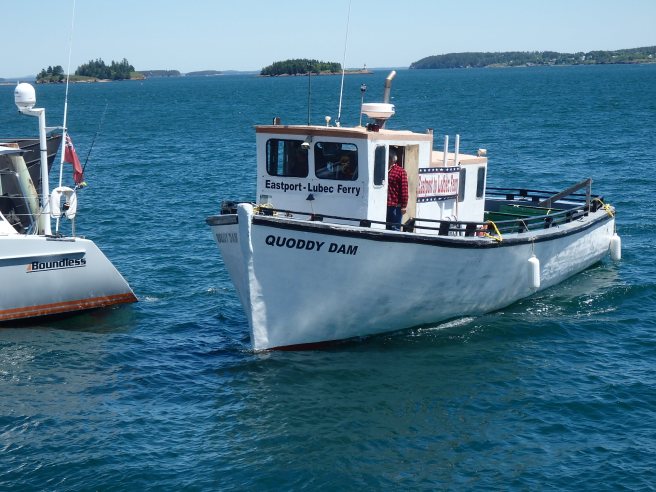
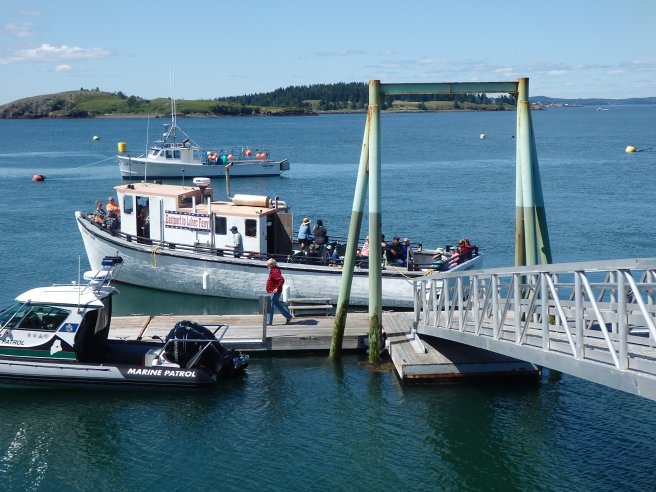
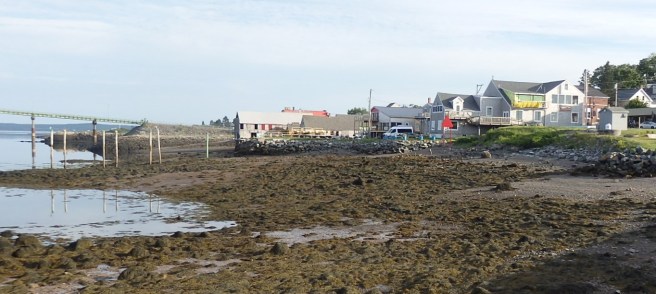
Just two miles away, as the crow flies, but an hour by land is the waterfront town of Lubec. One of the best ways for tourists to appreciate the coastal nature of Downeast is by taking the passenger ferry that runs between there and downtown Eastport. I promise you it’s much less crowded than Acadia.
We go down for a walkabout the town, a New Jersey-style pizza, and a sit in the brewpub’s beer garden. One day I watched seven gray seals cavort in the current. And then we catch a ride back, which runs along the other side of the channel from the one we followed down.
Folks from Lubec do something similar, including a stroll though Eastport’s art galleries.
Either way, you get fine insights the shoreline, history, and wildlife in a way you’d never get from land. There’s the Cargo Terminal, salmon farms, Roosevelt summer home, Treat Island. Maybe seals and eagles, too.
The ferry runs every two hours on Friday, Saturday, and Sunday, weather permitting.
The Quoddy Dam is a friendly little vessel, named as a joke about the federal project that was quickly jettisoned.
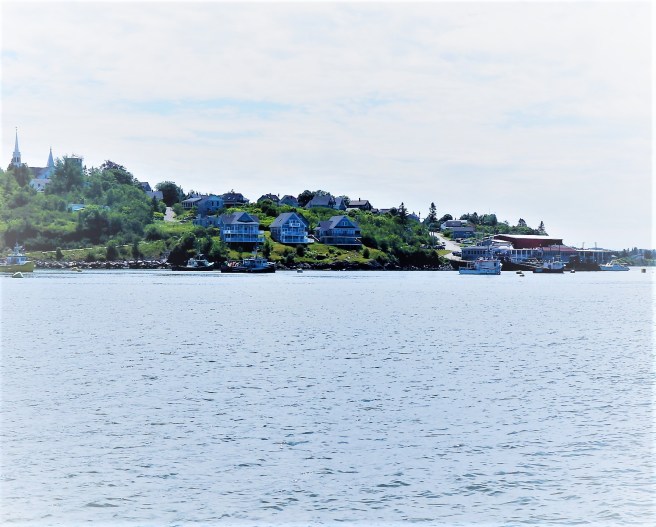
Approaching Lubec.
At the dock. Treat and Dudley islands are in the background, with Eastport sticking out to the right.
Getting to or from Eastport means driving through the Passamaquoddy’s Pleasant Point Reservation. And yes, I dutifully observe the 35 mile an hour speed limit. I also gladly pay the voluntary “toll” that helps fund the fireworks for the tribe’s annual festival. Besides, it’s a better bargain than a movie and, anyway, we’re all invited.
Having lived previously at the edge of the Yakama reservation in Washington state, I appreciate having an Indigenous population so close at hand.
Here are some things I’ve learned.
The first time I heard of the tribe was through a traditional healer and his apprentice who were our house guests maybe a dozen years ago back in Dover. And ever since, thanks to his warning, I never disrespect a mockingbird. Could that be why I’m still here?
The tribe generally proclaims itself as “people of the dawn” or even “keepers of the dawn.” I’ve already posted that the dawns around here – the first light in the USA – are unique and full of wonder. But the tribal name’s root reflects the importance of fishing in their culture – “pollock-spearer” or “those of the place where pollock are plentiful.”
Traditionally, for most of their 10,000 or more years, they summered in settled villages around the coasts and tributaries on both sides of the St. Croix River, where they harvested shellfish and worked the deep waters. In winter they dispersed inland, where they hunted large game.
Today their centers are Sipayak (the Pleasant Point Reservation adjoining Eastport), where 2,005 members are enrolled; Motahkomikuk (Indian Township an hour to the north), 1,364 members; and Qonasqamkuk in New Brunswick, 206. There are also uninhabited tribal tracts inland.
Economically, on-reservation families have a much higher poverty-income rate compared to Maine overall. The tribe is making efforts to improve income. A blueberry enterprise, a maple-syrup operation, and vacation sites are among its new directions.
About 500 people speak its Algonquian dialect. After a steep decline in numbers over recent decades, efforts to preserve and reclaim its use are under way. It is being taught in the elementary schools.
They’ve long been considered first-class loggers and woodworkers, as well as excellent basketry artists.
In 1993 the state banned the use of the word “Passamaquoddy” by businesses, products, and activities without the written authorization of the tribe. Those using it before that date, however, were exempted.
The tribe is one of four comprising the Wabanaki Confederacy today.
Joe Clabby’s two excellent histories about Eastport and the Passamaquoddy vicinity delineate seemingly endless governmental mismanagement, mistreatment, and betrayal of the tribe and others in Maine and the nation – even when its members have served with honor in the world wars. One entry, relatively minor in comparison, hits home for me. In 1950, longtime “Indian agent … Hiram Hall allowed the state to charge the Passamaquoddy Fund $8,000 per home for home construction (the homes are worth only $2,500.)” Not that it ended his career.
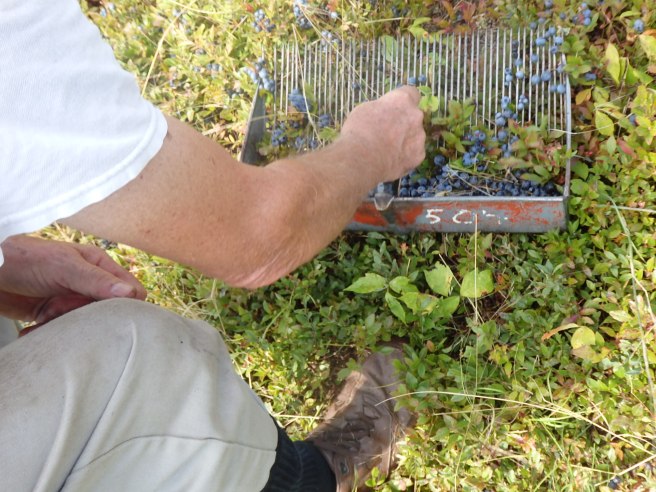
The handheld rake was invented in 1910. I can’t imagine trying to pick large quantities of blueberries without it.
What’s harvested by the ton in Washington County is not just blueberries, but wild blueberries – lowbush, laced with small pellets of complex, concentrated flavor, rather than the big, juicy, cultivated highbush kind.
What grows here, I’ll argue, is tastier and richer than the more coddled kind I had previously known and even grown.
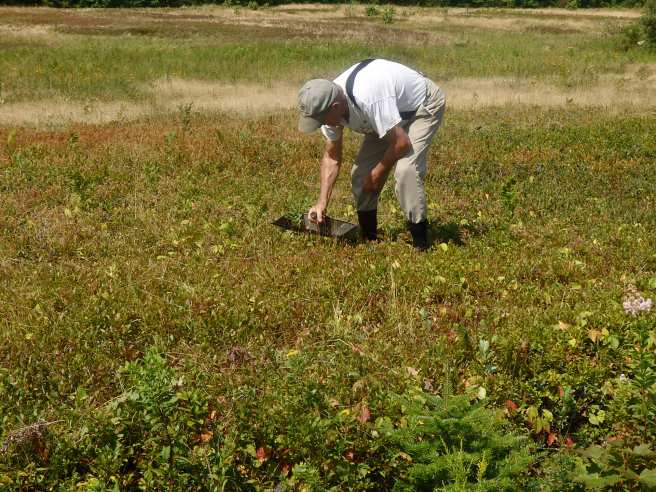
As you can see, traditional picking can be backbreaking work. But old-timers tell you it delivers better berries than the newer mechanized harvesters do.
Maine has a near monopoly in the production of the wild lowbush berries in the United States. Neighboring parts of Canada are also of note. Still, the output is only a fraction of what’s harvested from the domesticated highbush farmers in other states.
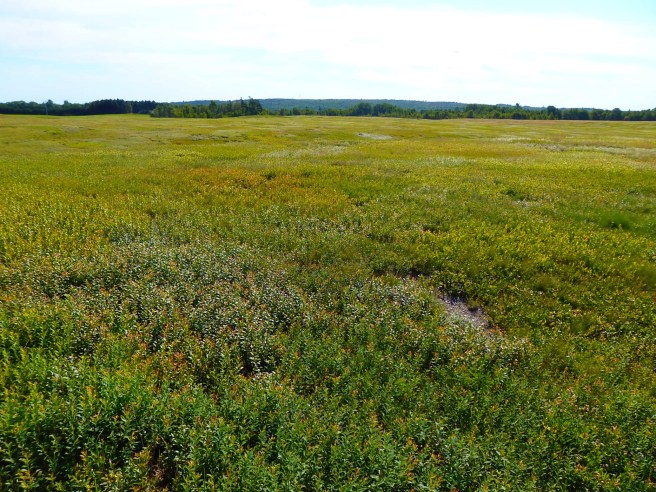
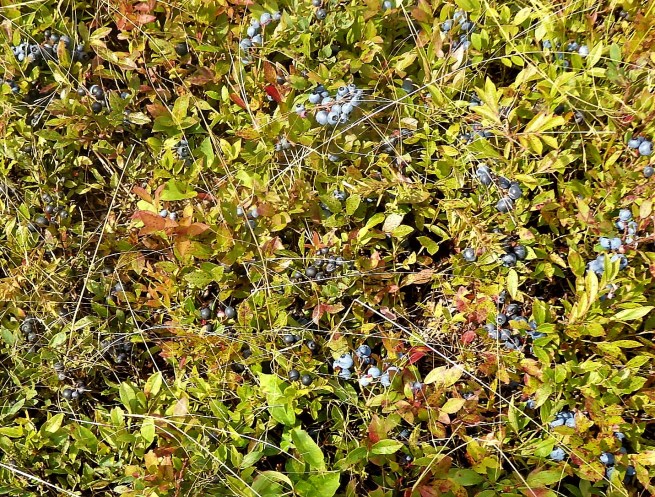
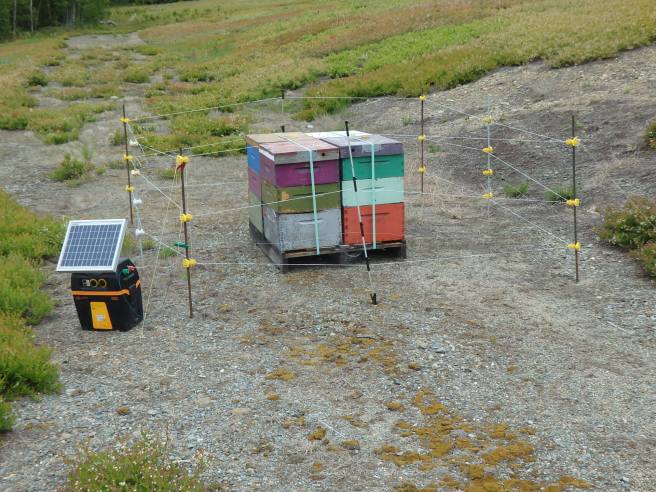
You can drive right past a blueberry barren like this and not know it’s loaded with ripe fruit.Here’s what a stop to look reveals.For a few weeks each spring, clusters of commercial honeybee hives are placed by the hundreds throughout the barrens. The electrical fencing is intended to keep bears out.
Just so you know.
What’s your favorite kind of berry? And your favorite way to eat (or drink) them?